
Sauces & Condiments
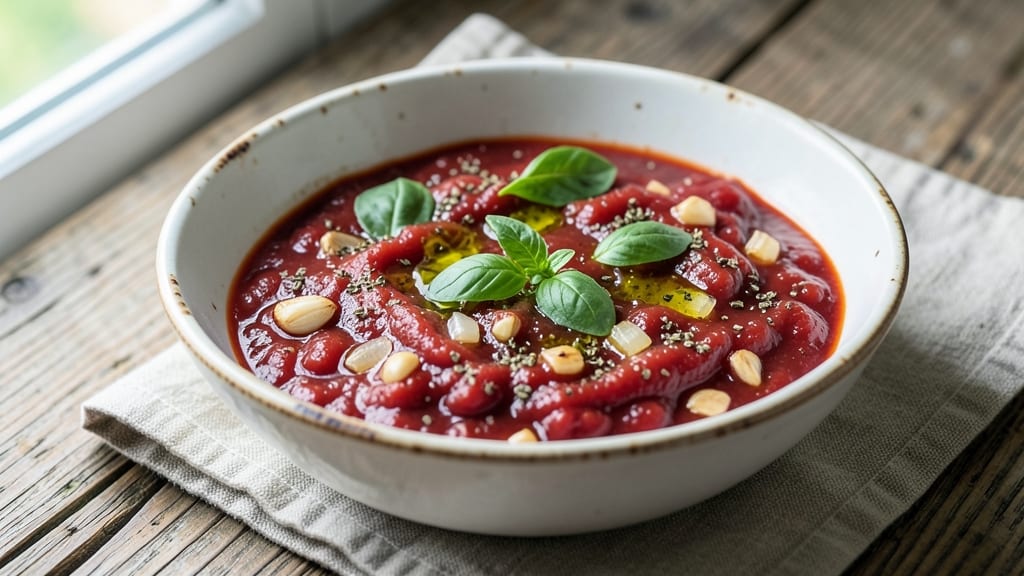
This Mutti tomato sauce recipe transforms simple crushed tomatoes into a rich, slow-simmered masterpiece that captures the soul of Italian cooking. 🌟 Growing up in an Irish-Italian household, I learned that the secret to restaurant-quality sauce isn't fancy ingredients—it's patience and technique.
The key lies in reducing the sauce for hours, letting the flavors meld into something deeper and more complex than store-bought versions.
What makes this sauce truly authentic is the balance of garlic, olive oil, and fresh herbs—simmered low and slow until the tomatoes break down into a velvety, concentrated base. I developed this recipe after years of testing, ensuring every spoonful delivers that perfect harmony of sweetness, acidity, and savory depth.
The result is a sauce so versatile it elevates everything from pasta to pizza or even as a dip for crusty bread.
Once you taste this sauce, you'll understand why it's worth the time—it keeps beautifully in the refrigerator for up to a week or can be canned for long-term storage. The slow-simmering process builds layers of flavor that store-bought sauces simply can't match.
Whether you're making a weeknight dinner or prepping for a holiday feast, this sauce will become your new kitchen staple.
Perfect for pasta dishes, pizza toppings, or as a base for braised meats, this sauce delivers authentic Italian flavor without the fuss. Let's get cooking—your taste buds will thank you.
Ingredients for mutti tomato sauce
Simple ingredients that transform into restaurant-quality sauce with patience and love.
| Ingredient | Amount | Notes |
|---|---|---|
| Extra-Virgin Olive Oil 🫒 | ½ cup | High quality, fruity variety |
| Crushed Tomatoes (Mutti Brand) 🍅 | 28 oz | San Marzano preferred |
| Yellow Onion 🧅 | 1 whole | Medium size, finely chopped |
| Garlic Cloves 🧄 | 4 cloves | Fresh, minced finely |
| Fresh Basil Leaves 🌿 | ½ cup | Packed, stems removed |
| Dried Oregano 🍃 | 1 tsp | Italian variety preferred |
| Salt 🧂 | 1 ½ tsp | Diamond Crystal kosher |
| Black Pepper 🌶️ | ½ tsp | Freshly ground preferred |
| Red Wine Vinegar 🍷 | 1 tbsp | For brightness |
| Sugar 🍚 | 1 tsp | Balances acidity |
The crushed tomatoes are non-negotiable here—Mutti or San Marzano are the gold standard for sweetness and consistency. I always grab the 28-ounce cans from Whole Foods or the Italian market, but any quality canned tomatoes work. The onions and garlic should be finely chopped (almost paste-like) to dissolve completely during the slow simmer. Fresh basil is ideal, but if you're using dried, cut the amount to one-third of what's listed. The olive oil matters too—extra-virgin with fruity notes adds depth that cheaper oils miss.
No San Marzano tomatoes? Crushed Roma tomatoes are your next best bet—just add a pinch more sugar to balance the acidity. Running low on red wine vinegar? Balsamic vinegar at half the amount works in a pinch, but it'll taste slightly different. The sugar can be swapped for honey if you prefer, though it'll caramelize more during cooking. For a meatier flavor, add 1/4 cup tomato paste at the start. And if you're short on time, jarred marinara can be mixed in at the end (though purists will scoff).
This sauce tastes better with age—3-4 days in the fridge lets the flavors fully develop. For long-term storage, portion into jars and freeze for up to 6 months. I always make double batches because it disappears fast. The sauce thickens as it cools, so add a splash of water if it's too stiff. And trust me, the first batch won't be perfect—adjust salt and sugar to your taste as you go!
Why You'll Love This Recipe
- No Chopping Needed: I swear by this—just one onion and a few garlic cloves, both minced in under two minutes. The Mutti crushed tomatoes handle the rest, so you’re not stuck dicing or peeling.
- Garlic-Basil Magic: That first sizzle of olive oil with garlic? Pure alchemy. The crushed tomatoes mellow into something rich, while fresh basil at the end gives it a bright finish—like summer in a jar.
- Weeknight to Party Fix: Slap it on pasta for Tuesday, or drizzle it over grilled chicken for a dinner party. The same sauce works everywhere, and it’s always the crowd-pleaser.
- Fridge Goldmine: Make a double batch—it keeps for days without losing flavor. I freeze half for lazy nights, then thaw it straight into simmering dishes. Budget-friendly? Absolutely.
Step-by-step instructions for slow-simmered Mutti tomato sauce
Here's how to build rich, authentic Italian flavor from scratch—no shortcuts, just pure technique.
🍳 Step 1: Sauté Onion and Garlic Until Translucent
Heat the 0.5 cup extra-virgin olive oil in a heavy-bottomed saucepan over medium heat. Add the finely chopped yellow onion and cook for 8-10 minutes until completely translucent and just beginning to caramelize at the edges. This foundational step develops sweetness that carries through the entire sauce.
Push the onions to the sides of the pan and add the minced garlic cloves. Cook for 30 seconds until fragrant—don't let it brown or it'll turn bitter. Here's the thing: garlic burns in seconds, so keep your eye on it. Once it smells heavenly, you're ready for the tomatoes.
🍳 Step 2: Build the Sauce with Crushed Tomatoes
Pour in the 28 oz crushed Mutti tomatoes, stirring to combine with the onion-garlic mixture. Add the 1 tsp dried oregano, 1.5 tsp salt, and 0.5 tsp black pepper. Bring to a gentle simmer over medium-low heat, then reduce heat to maintain a barely simmering state—this is where the magic happens.
Here's where patience pays off: let it cook uncovered for 25-30 minutes, stirring occasionally. You're looking for the sauce to thicken slightly and develop deeper color. The acidity will mellow, and the flavors will meld into something truly complex. Don't rush this step—this is the foundation of your sauce's character.
🍳 Step 3: Balance and Finish with Bright Flavors
After the initial simmer, stir in the 1 tbsp red wine vinegar and 1 tsp sugar. The vinegar adds brightness that cuts through the richness, while the sugar balances the acidity. Let it simmer another 10 minutes to let these flavors integrate completely. Taste and adjust seasoning—you might need a pinch more salt or pepper depending on your tomatoes.
Real talk: this is the moment that matters. The sauce should be rich but not heavy, with a proper balance of sweet, sour, and umami. If it's too acidic, add a small pinch of sugar. If it's too flat, a splash of vinegar can wake it up. Trust your taste buds—Italian cooking is all about seasoning to your preference.
🥘 Step 4: Incorporate Fresh Basil at the End
Remove the sauce from heat and stir in the 0.5 cup fresh basil leaves. Here's the key: adding basil at the end preserves its bright, fresh flavor instead of letting it cook down into the sauce. Let it steep for 5 minutes off the heat, then taste again. The basil should infuse just enough to brighten the sauce without overpowering it.
For the best texture, I like to remove about 2 tablespoons of the basil leaves before serving—this makes for beautiful garnish that adds an extra layer of freshness. The remaining basil will keep the sauce vibrant and aromatic. Let the sauce rest for 10 minutes before serving to allow all the flavors to fully develop and settle.
Pro Tips For Making Mutti Tomato Sauce
- Sweat the Onion Slowly: Don’t rush the onion—cut it into even ¼-inch slices and cook them in olive oil over medium-low heat for 8-10 minutes until golden and translucent. I learned this the hard way: skipping this step leaves your sauce tasting raw and sharp, even after hours of simmering.
- Crush Garlic Lightly: Use a flat of your knife to gently crush 3-4 garlic cloves (no need to mince) and let them bloom in the oil for 30 seconds before adding tomatoes. This prevents bitterness and ensures the flavor melds smoothly—no need to worry about burning.
- Skip the Stir-Fry: Once the tomatoes hit the pot, resist the urge to stir constantly. Let them sit undisturbed for 5 minutes on medium heat to break down naturally—this deepens the flavor without risking a skin. (Yes, even if you’re impatient like me.)
- Finish with Whole Basil: Tear fresh basil leaves by hand and add them in the last 5 minutes of cooking—never chop them ahead. The heat releases their oils without turning bitter, and the leaves stay vibrant. (Pro tip: Save a few for garnish if you’re feeling fancy.)
Troubleshooting your mutti tomato sauce
Sauce Too Thin?
If your sauce ends up too watery, don't panic—simmering longer is the first fix. I've found that uncovered simmering for 1-2 additional hours at low heat reduces excess moisture. For a quicker fix, stir in 1 tablespoon tomato paste or 1 teaspoon cornstarch mixed with 1 tbsp water to thicken.
The key is patience: authentic Italian sauces are meant to be rich, not watery. 💫
Sauce Too Acidic?
Crushed tomatoes can sometimes pack more acidity than expected. Balance it with ½ tsp sugar or 1 tsp honey to mellow the sharpness. If you're using San Marzano tomatoes, they're naturally sweeter, but Mutti can vary.
Taste as you go—this is where Italian cooking becomes personal. A pinch of balsamic vinegar can also add depth without overpowering.
Garlic Burns Too Fast?
Garlic is notorious for burning before it develops flavor. My trick? Cook it on low heat and remove it from the pan as soon as it's fragrant (30 seconds max). If you miss the window, strain the sauce through a fine-mesh sieve to remove any bitter bits.
For extra insurance, try roasting the garlic whole at 400°F for 10 minutes before mincing—this mellows the flavor and prevents burning.
Sauce Splutters or Boils Over?
Sauces can get rowdy when they reduce too quickly. Keep the heat at a gentle simmer—you should barely see bubbles. If it starts spluttering, reduce the heat immediately. A wooden spoon helps stir gently without splashing.
For extra control, I sometimes place a lid at a slight angle to allow steam to escape while containing most of the moisture.
Basil Loses Its Flavor?
Adding basil too early lets its flavor cook out completely. Always stir it in off the heat and let it steep for 5 minutes before serving. For a stronger basil punch, use ½ cup packed leaves and remove ¼ cup before serving as garnish.
If you're using dried basil, cut the amount to ⅓ tsp—it's much more concentrated than fresh.
Storage Issues?
Sauce can develop a skin or separate if stored improperly. Always cool it completely before refrigerating in airtight containers. For long-term storage, freeze in glass jars with 1 inch headspace—they reheat better than plastic.
When reheating, add 1-2 tbsp water to prevent drying out. If the sauce separates, stir vigorously or blend briefly to recombine.
Nutrition facts
Frequently asked questions
Can I substitute Mutti tomatoes with another brand?
Yes, but quality matters! For the best results, use San Marzano tomatoes (the gold standard) or crushed Roma tomatoes. If using regular crushed tomatoes, add ½ tsp extra sugar to balance any extra acidity. The key is avoiding brands with added salt or preservatives—they can alter the sauce's flavor balance.
How long should I simmer the sauce for maximum flavor?
For deep, complex flavor, simmer uncovered for at least 1 hour at a gentle bubble. The longer it cooks (up to 3 hours), the richer and more concentrated the sauce becomes. This slow reduction is what transforms simple tomatoes into restaurant-quality sauce. Just keep the heat low to prevent burning.
What's the best way to use this sauce beyond pasta?
This versatile sauce shines in so many ways! Use it as a pizza sauce (add ¼ cup grated Parmesan before baking), for braising meats (like chicken or pork chops), or as a dip for garlic bread. It also works beautifully in soups or as a marinade for grilled vegetables. The possibilities are endless—don't be afraid to experiment!
Why does my sauce taste flat after cooking?
Flat flavor usually means one of two things: under-seasoning or not enough reduction. First, taste and adjust with salt, pepper, or a splash of red wine vinegar (1 tsp). Second, return the sauce to low heat and simmer uncovered for another 30-45 minutes to concentrate the flavors. If it's still lacking depth, try adding 1 tsp tomato paste to enhance richness.
Can I make this sauce in a slow cooker?
For a hands-off approach, combine all ingredients (except basil) in your slow cooker and cook on low for 6-8 hours or high for 3-4 hours. Stir occasionally and add the basil at the very end. The slow cooker method works especially well if you're making a large batch—just