
Sauces & Condiments
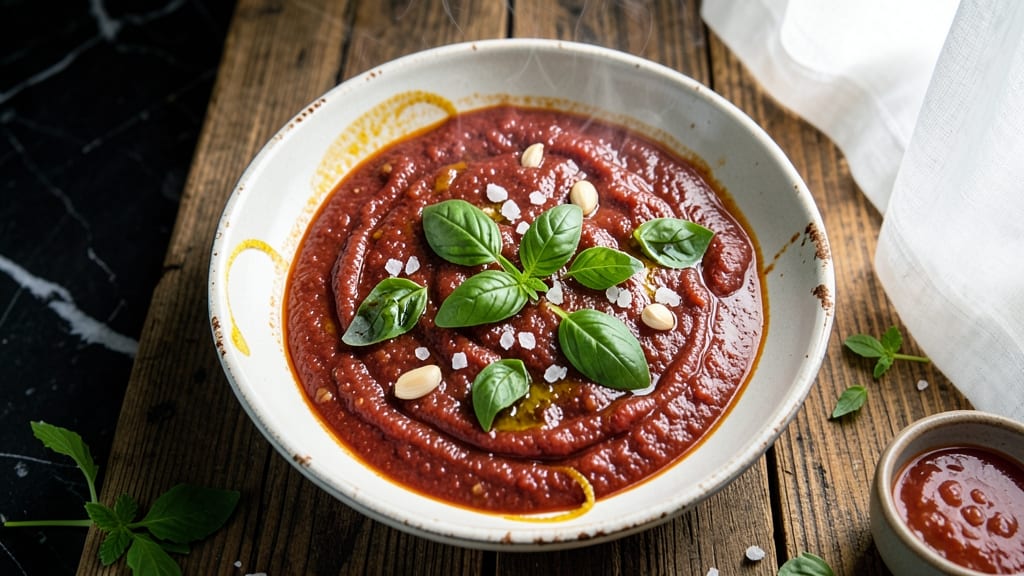
This all-natural pizza sauce recipe delivers vibrant, preservative-free tomato flavor that transforms your homemade pizza into something truly special. The secret lies in fresh, high-quality ingredients—no canned tomatoes or artificial additives—simmered until the flavors meld into a rich, velvety sauce with just the right balance of sweetness and acidity.
What sets this apart is the technique of cooking down the sauce slowly, which intensifies the tomato flavor without losing that bright, fresh taste you crave.
With just 6 simple ingredients, you'll create a sauce that's packed with umami from garlic and herbs, a touch of sweetness from onions, and a bright pop from fresh basil.
The key to success is patience—letting the sauce reduce on the stove until it reaches that perfect consistency where it clings beautifully to your pizza crust without overwhelming the cheese.
This isn't just another pizza sauce; it's a flavor experience that makes every bite taste like it came from a neighborhood pizzeria.
The result is a sauce that's rich, aromatic, and full of depth—ideal for both classic Margherita and bold pepperoni pies. What's more, it keeps well in the fridge for up to 5 days or can be frozen for 3 months, making it perfect for meal prep.
Whether you're a pizza enthusiast or just looking to elevate your homemade pies, this sauce delivers restaurant-quality flavor without the preservatives or artificial ingredients.
For added versatility, consider making a small batch with red pepper flakes for a spicy kick or fresh oregano for a Mediterranean twist. The possibilities are endless, but the foundation remains the same: bright, natural tomato flavor that makes every pizza unforgettable. Let's get started!
Ingredients for all natural pizza sauce
Six simple ingredients transform into a vibrant, preservative-free pizza sauce bursting with bright tomato flavor.
| Ingredient | Amount | Notes |
|---|---|---|
| Fresh Roma Tomatoes 🍅 | 2 lbs | Ripe, crushed by hand |
| Yellow Onion 🧅 | 1 whole | Medium size, finely chopped |
| Garlic Cloves 🧄 | 4 cloves | Fresh, minced finely |
| Fresh Basil Leaves 🌿 | ¼ cup | Packed, finely chopped |
| Extra-Virgin Olive Oil 🫒 | 2 tbsp | High quality, fruity |
| Diamond Crystal Kosher Salt 🧂 | 1 tsp | Adjust to taste |
| Freshly Ground Black Pepper 🌶️ | ½ tsp | Freshly cracked |
The tomatoes make or break this sauce—Roma tomatoes have the perfect balance of sweetness and acidity, but any ripe vine-ripened variety works. Local farmers markets often have the freshest, or grab a small bag from the produce section at Whole Foods—just make sure they're red all the way through, not green at the core. The basil? Fresh is non-negotiable—dried just won't cut it here. For the olive oil, California-grown brands like Corto or California Olive Ranch add that fruity depth that cheap oils miss. And the garlic? Freshly minced releases way more flavor than jarred minced garlic.
No Roma tomatoes? Heirloom varieties or even plum tomatoes work in a pinch—just remove the seeds and crush them well. Fresh basil wilt fast? Dried basil at half the amount gets you close, though it won't have that same bright pop. Running low on olive oil? Avocado oil works too, but it has a slightly different flavor profile. The salt is where you can play—Diamond Crystal kosher salt dissolves easily, but Maldon flakes add a nice texture if you're feeling fancy. Want more depth? Add a pinch of red pepper flakes or a splash of balsamic vinegar for complexity.
This sauce keeps beautifully—5 days in the fridge sealed in a jar, or 3 months frozen in ice cube trays for single-use portions. I always make a double batch—the extra goes on pasta, bruschetta, or even as a marinade. For freezing, let it cool completely first to prevent ice crystals. And if you're prepping for a pizza night, make it a day ahead—the flavors develop even more overnight. Trust me, your next pizza night will thank you.
Why You'll Love This Recipe
- Here’s what sold me: the way the garlic softens into the sauce while the basil brightens it at the end. It’s not just pizza sauce—it’s the kind of rich, aromatic base that makes every bite feel like a little celebration.
- No Jar Needed: I keep a bag of Roma tomatoes in my fridge just for this—no canned sauces, no hidden preservatives. Just chop, simmer, and you’re done. That first taste of fresh tomato? It’s the kind of flavor you’ll reach for again.
- Garlic-Basil Magic: Here’s what sold me: the way the garlic softens into the sauce while the basil brightens it at the end. It’s not just pizza sauce—it’s the kind of rich, aromatic base that makes every bite feel like a little celebration.
- Weeknight to Potluck: Between us, this sauce is my secret weapon for lazy nights and impressing guests. Freeze half for future pizzas, and the rest? Perfect for drizzling over grilled chicken or even pasta. Always a crowd-pleaser.
Step-by-step instructions for homemade pizza sauce
Here's how to make a vibrant, preservative-free sauce that's brighter and fresher than anything store-bought.
Prep and Cook the Base Ingredients
Heat a large skillet over medium heat and add the 2 tablespoons extra-virgin olive oil. Once shimmering, add the 1 whole yellow onion and cook for 5-6 minutes until softened and translucent. You'll know it's ready when the edges start to turn golden—this builds flavor without burning.
Add the 4 cloves garlic cloves and cook for 30 seconds until fragrant. Don't let it brown—garlic burns quickly and turns bitter. Remove the pan from heat and let it cool for 2 minutes. This prevents the sauce from cooking too fast later and losing its bright color.
Crush the Tomatoes by Hand
While the onion and garlic cool, take the 2 pounds fresh Roma tomatoes and crush them by hand. I like to work in batches—hold a tomato over a large bowl and press down firmly with your palm. The goal is to break the skins while keeping the seeds and pulp intact. This gives you a chunky texture that's perfect for pizza sauce.
If you're worried about seeds, just squeeze the tomatoes gently through a fine-mesh strainer to remove any excess liquid. You want to keep most of the juice—it's packed with flavor. Transfer the crushed tomatoes to the skillet with the cooked onion and garlic.
Simmer the Sauce Until Thickened
Return the skillet to medium-low heat and bring the sauce to a gentle simmer. Let it cook uncovered for 20-25 minutes, stirring occasionally. You're looking for a sauce that's thickened but still vibrant—not dried out. The acidity from the tomatoes will help it reduce naturally, but don't rush this step.
Taste the sauce after 20 minutes—it should be rich and tangy, with the onion and garlic flavors melded in. If it's too thin, simmer for another 5 minutes. If it's too thick, add 1-2 tablespoons water to loosen it. The sauce should coat the back of a spoon but still be spreadable.
Finish with Fresh Basil and Seasonings
Remove the skillet from heat and stir in the ¼ cup fresh basil leaves and 1 teaspoon Diamond Crystal kosher salt. The basil adds a bright, herbal note that cuts through the richness of the tomatoes. Let it steep for 5 minutes off the heat—this infuses the flavor without cooking the leaves to oblivion.
Finally, add the ½ teaspoon freshly ground black pepper and give it one last taste. Adjust the salt if needed—remember, the sauce will absorb some of the saltiness from the pizza dough and toppings. Transfer the sauce to a clean jar and let it cool completely before using or storing.
Store and Use for Maximum Freshness
Let the sauce cool to room temperature, then transfer it to an airtight container. It'll keep in the refrigerator for up to 5 days, or you can freeze it for up to 3 months. The flavor actually improves slightly after a day or two as the ingredients meld together.
When ready to use, give it a quick stir—sometimes the basil settles at the bottom. Spread it generously on your pizza dough (about ¼ cup per 12-inch pizza) and top as desired. The bright, fresh flavors will shine through even with simple toppings.
Pro Tips For Making All Natural Pizza Sauce
- Sear the Onions: Cook the diced yellow onion in olive oil until it’s deep golden—not just soft. I learned this the hard way: pale onions taste bland, and they’ll make your sauce taste like it’s missing something. Five minutes over medium heat, stirring often, is all it takes.
- Crush, Don’t Chop, Tomatoes: Use your hands to break Roma tomatoes into rough chunks instead of dicing them. The skins add texture and body, and crushing them releases more juice—no need for extra water. (Yes, even if you’re impatient like me.)
- Low and Slow for Garlic: Add minced garlic to the pot after the onions are cooked, then simmer it just until fragrant—about 30 seconds. Burnt garlic ruins the sauce, and raw garlic tastes harsh. Keep the heat low and walk away for a minute.
- Reserve the Basil: Tear fresh basil leaves at the end and stir in only half—keep the rest for garnish. Cooking basil too long turns it bitter, and a handful of raw leaves on top makes all the difference. (Your future self will thank you.)
Wine and beer pairings for all natural pizza sauce
Italian White Wines
For this bright, herbaceous pizza sauce, I always reach for a crisp Italian white wine like Vermentino from Sardinia or Pinot Grigio from Alto Adige. The citrusy acidity in these wines mirrors the fresh basil and tomato notes in your sauce, cleansing your palate between bites.
A glass of Soave Classico (made from Garganega grapes) also works beautifully—its almond undertones complement the sauce's umami depth. 🍷
Light Italian Reds
If you prefer red wine, opt for something light and fruity like Chianti Classico or Montepulciano d'Abruzzo. These medium-bodied wines have enough acidity to stand up to the sauce without overpowering it.
I love a Sangiovese-based Chianti with its bright cherry notes—it pairs perfectly with the tomato's natural sweetness. Avoid heavy, tannic reds like Cabernet Sauvignon.
Crisp Italian Beers
For beer lovers, a crisp Italian lager like Peroni or Moretti is ideal—its light, refreshing profile lets the sauce's flavors shine. If you're feeling adventurous, try a Belgian witbier like Hoegaarden, which adds a citrusy contrast that enhances the basil's brightness.
A pilsner-style beer from Italy, like Birra del Borgo, is another fantastic match. 🍺
Non-Alcoholic Pairings
Don't drink alcohol? No problem! A sparkling blood orange soda like San Pellegrino Aranciata Rossa adds a refreshing fizz that cuts through the sauce's richness. For something more savory, try a Italian mineral water like Acqua Panna with a splash of balsamic vinegar—it's a clever, palate-cleansing alternative.
Even a cucumber-infused water with a pinch of sea salt works wonderfully.
Regional Wine Twists
For a Southern Italian twist, pair your sauce with a Frappato from Sicily—its juicy, berry-like flavors complement the tomato's acidity. In Northern Italy, a Lambrusco (a lightly sparkling red) adds a fun, effervescent contrast.
If you're serving this sauce with white pizza, a Prosecco from Veneto elevates the dish to new heights with its floral notes. 💫
Nutrition facts
Frequently asked questions
Can I use canned tomatoes instead of fresh?
Fresh tomatoes give the brightest, most vibrant flavor, but you can use high-quality canned tomatoes in a pinch. Choose whole peeled San Marzano tomatoes (no salt added) and crush them by hand to remove excess liquid. For every 1 can (28 oz), reduce the simmering time to 15 minutes since canned tomatoes have less water content. The texture will be slightly smoother, but the flavor will still be delicious!
How do I adjust the thickness of the sauce?
If your sauce is too thin after simmering, cook it uncovered for another 5-10 minutes to evaporate excess liquid. For a thicker texture, mash some of the cooked tomatoes with a fork or blend briefly. If it's too thick, thin it with 1-2 tablespoons water or tomato juice. The ideal consistency should coat the back of a spoon but still be spreadable—like a thin pudding.
Can I make this sauce without garlic?
Garlic adds depth, but you can omit it for a milder flavor. Replace it with 1 teaspoon garlic powder or ½ teaspoon onion powder for a similar savory note. If you're sensitive to garlic, try adding ½ teaspoon dried oregano instead—it complements the tomatoes beautifully while keeping the sauce aromatic. The sauce will still taste great, just with a different profile!
Why does my sauce taste bland after freezing?
Freezing can mute flavors, but you can easily revive your sauce! Thaw it in the fridge overnight, then reheat it gently on the stove. Add a pinch of salt, a splash of balsamic vinegar (1 teaspoon), or a few drops of lemon juice to brighten the flavors. Stir in 1 tablespoon fresh basil or oregano just before using—this adds freshness and depth that freezing can't replicate.
Can I use this sauce for other dishes besides pizza?
This versatile sauce works perfectly for pasta (like spaghetti or linguine), bruschetta, or as a marinade for grilled chicken or fish. For pasta, reduce the sauce slightly longer to make it thicker. For bruschetta, spread it on toasted baguette slices and top with fresh mozzarella. The bright, herby flavor shines in all these dishes—just adjust the seasoning to taste!