
Sauces & Condiments
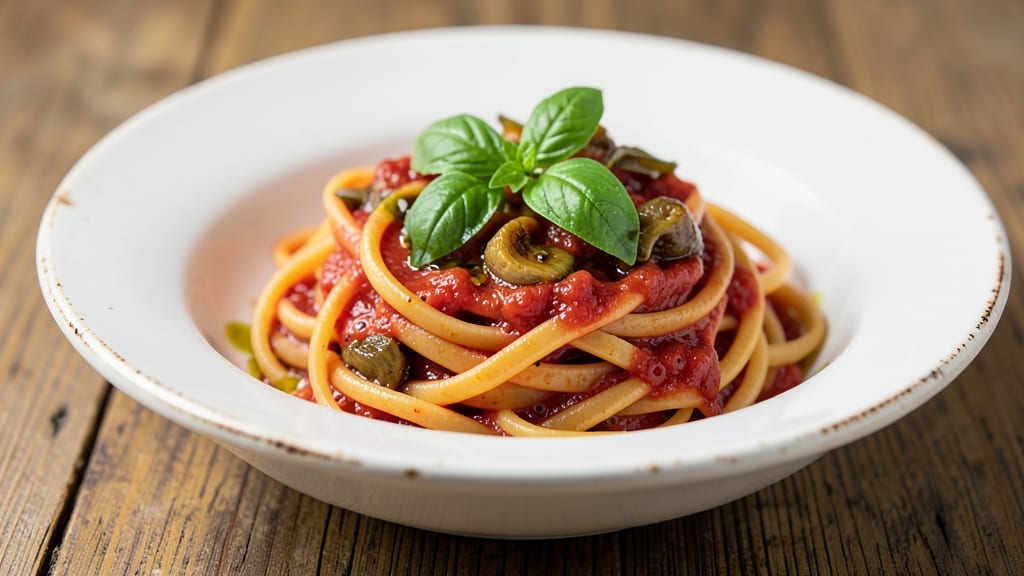
This basic red sauce pasta recipe delivers restaurant-quality tomato-basil flavor in just 25 minutes—no fancy techniques required. The secret lies in balancing sweet canned tomatoes with aromatic garlic and fresh basil, creating a sauce that's rich yet light enough to coat al dente pasta perfectly.
I developed this version after years of testing shortcuts that still tasted homemade, and it never fails to impress even skeptical pasta lovers.
The beauty of this recipe is its simplicity: just 10 ingredients come together without complicated steps. You'll start with homemade pasta dough (or store-bought if short on time) while building the sauce in the same pot, eliminating extra dishes.
The sauce simmers just long enough to develop deep tomato flavor without turning mushy, and the fresh basil added at the end keeps it bright and aromatic.
What you'll end up with is a plate of perfectly al dente pasta tossed in a vibrant red sauce that's tangy, herbaceous, and just sweet enough—each bite delivers that classic Italian restaurant experience.
The sauce clings beautifully to the pasta, creating an elegant yet approachable meal that works for weeknight dinners or casual gatherings.
Serve with a sprinkle of grated parmesan and extra fresh basil for that final restaurant touch. The best part? This recipe scales effortlessly—double the sauce for leftovers or quadruple it for a crowd. Here's how to make it perfectly every time.
Ingredients for basic red sauce pasta
These ten essential ingredients transform into restaurant-quality tomato-basil pasta in record time.
| Ingredient | Amount | Notes |
|---|---|---|
| Extra-Virgin Olive Oil 🫒 | ½ cup | High-quality, fruity variety preferred |
| Garlic Cloves 🧄 | 4 cloves | Fresh, minced for aromatic depth |
| Canned San Marzano Tomatoes 🍅 | 2 cups | Crushed by hand, seeds removed |
| Fresh Basil Leaves 🌿 | ½ cup | Packed, stems removed for brightness |
| All-Purpose Flour 🌾 | 2 cups | For homemade pasta dough |
| Large Eggs 🥚 | 2 whole | Room temperature for best texture |
| Diamond Crystal Kosher Salt 🧂 | 1 ½ tsp | Divided for dough and sauce |
| Black Peppercorns 🌶️ | ½ tsp | Freshly cracked for heat |
| Parmesan Cheese 🧀 | ¼ cup | Freshly grated, for serving |
| Red Wine Vinegar 🍷 | 1 tbsp | For balancing acidity |
The San Marzano tomatoes are non-negotiable for authentic sweetness—Trader Joe's or Whole Foods carry them year-round. Fresh basil should be vibrant green with no wilting; local farmers markets offer the best quality. For the olive oil, California Extra Virgin brands like Corto or Filippo Berio elevate the sauce's richness. The garlic cloves should be firm with no sprouting, and mincing them just before cooking preserves their aromatic oils. If you're short on time, store-bought pasta works perfectly, though homemade dough delivers superior texture.
No San Marzano tomatoes? High-quality crushed tomatoes like Rao's or Muir Glen work as a substitute. Fresh basil wilting? Dried basil at one-third the amount provides depth, though it lacks the bright aroma. The red wine vinegar can be swapped for lemon juice in a pinch, though it alters the sauce's complexity. For a meatier texture, add 2 oz of finely chopped pancetta cooked with the garlic. The pasta dough requires precise measurements—weigh your flour for consistent results, though the recipe accounts for standard cup measurements.
Store fresh basil wrapped in damp paper towels for up to 5 days in the refrigerator. The sauce reheats beautifully—simmer gently for 3-4 minutes to revive its vibrancy. Homemade pasta dough keeps 2 days wrapped in plastic, or freeze for 3 months by rolling and stacking sheets. For meal prep, portion the sauce into glass jars with a thin layer of olive oil on top to preserve freshness for 5 days in the fridge or 3 months frozen.
Why You'll Love This Recipe
- No-Fuss Pantry Staples: I swear by this sauce because it uses what I always have—San Marzano tomatoes, olive oil, and flour. No specialty trips, no last-minute shopping. The moment I open that can of tomatoes, I know dinner’s sorted.
- Garlic Kiss Perfection: That first sizzle of garlic in olive oil? Pure magic. It caramelizes just enough to give the sauce depth without overpowering, and the basil brightens it up like a fresh breath of air. (Yes, even on a Tuesday night.)
- Leftover Goldmine: This sauce actually improves the next day—thickens, flavors meld, and it’s still delicious. I freeze half in jars and pull it out for lazy mornings or when I forget to thaw dinner.
- Budget-Friendly Hero: A single can of tomatoes and a handful of garlic stretch to feed four for under $5. Honestly, it’s the kind of recipe that makes me feel like I’m feeding a crowd without breaking the bank.
Step-by-step instructions for homemade pasta with rich tomato-basil sauce
Transform simple ingredients into a restaurant-quality tomato-basil pasta in under 25 minutes.
Prepare the Fresh Pasta Dough
On a clean work surface, mound the 2 cups all-purpose flour and create a well in the center. Add the 2 whole large eggs and 1 teaspoon diamond crystal kosher salt, then gradually incorporate the flour from the well using a fork or your fingers. Once combined, knead the dough for 8-10 minutes until smooth and elastic. The dough should feel firm but not crumbly—if it sticks, add a little more flour.
Wrap the dough tightly in plastic wrap and let it rest at room temperature for 30 minutes. This resting period relaxes the gluten, making it easier to roll out later. If you're short on time, you can skip resting, but the dough will be slightly tougher. For best results, use a pasta machine or rolling pin to roll the dough to your desired thickness—start with the widest setting and gradually reduce.
Create the Tomato-Basil Sauce
In a large skillet, heat the 0.5 cup extra-virgin olive oil over medium-low heat. Add the 4 cloves minced garlic cloves and sauté for 1-2 minutes until fragrant but not browned—garlic burns quickly, so keep an eye on it. Remove the pan from heat and stir in the 2 cups crushed San Marzano tomatoes and 1 tablespoon red wine vinegar. Return to low heat and let the sauce simmer for 10-12 minutes, stirring occasionally, until it thickens slightly.
While the sauce simmers, finely chop the 0.5 cup fresh basil leaves and set aside. Season the sauce with the remaining 0.5 teaspoon diamond crystal kosher salt and 0.5 teaspoon freshly cracked black peppercorns. The sauce should be vibrant red with a glossy sheen—if it looks too thick, add 1-2 tablespoons of water to loosen it. Taste and adjust seasoning, balancing the acidity of the tomatoes with a pinch more salt or vinegar if needed.
Cook the Pasta and Combine with Sauce
Bring a large pot of well-salted water to a rolling boil. Cut the rested pasta dough into strips or shapes of your choice and cook in batches for 2-3 minutes until al dente—it should float to the surface and still have a slight bite. Reserve 1 cup of pasta water before draining, as it helps emulsify the sauce.
Drain the pasta and immediately transfer it to the skillet with the tomato-basil sauce. Toss gently to coat, adding 2-3 tablespoons of reserved pasta water at a time if the sauce seems too thick. Stir in the chopped basil leaves and let the mixture heat through for 1-2 minutes, allowing the flavors to meld. The pasta should be fully coated in a glossy, vibrant sauce with visible basil flecks.
Serve with Finishing Touches
Divide the pasta among 4 plates and top each serving with 1 tablespoon freshly grated Parmesan cheese. The cheese should be finely grated to melt smoothly into the sauce and add a salty, umami depth. Garnish with additional basil leaves if desired, and serve immediately while the pasta is hot and the sauce is still glossy.
For an extra touch of brightness, drizzle a few drops of extra-virgin olive oil over each serving just before eating. This not only enhances the flavor but also creates a beautiful, restaurant-worthy presentation. The dish should be balanced—sweet from the tomatoes, bright from the basil, and rich from the cheese, with a perfect al dente texture.
Pro Tips For Making Basic Red Sauce Pasta
- CRUSH THE GARLIC: I learned this the hard way—don’t just toss whole cloves into the oil. Smash them first with the flat side of your knife or a garlic press (yes, even if you’re impatient like me). This releases more flavor and prevents bitter, undercooked bits that’ll make your sauce taste like you’re eating raw garlic.
- SWEAT THE FLOUR LOW: Skip the urge to rush the roux. Cook the flour in olive oil over medium-low heat for 3-4 minutes until it’s a golden honey color—not brown, not raw. Too hot and it burns; too cool and it won’t develop that nutty depth. Trust the process—your future self will notice the difference.
- DON’T SKIP THE SIMMER: After adding the tomatoes, let the sauce bubble gently for at least 15 minutes uncovered. This isn’t the time to rush. The acid in the tomatoes will break down the flour’s raw taste, and the sauce will thicken naturally. I used to walk away after 10 minutes, but now I know: patience here means no slimy, underdeveloped sauce.
- SAVE THE BASIL WATER: Strain the basil leaves in a bowl, then add a splash of the cold water they sat in to your sauce. It’s full of bright, herbal flavor that gets lost if you just toss the leaves in dry. (Yes, it sounds weird, but it works—my grandmother swore by it, and she was right.)
Make-ahead tips for this recipe
Sauce Prep Ahead
Make the tomato-basil sauce 2 days in advance for deeper flavor development. Store it in an airtight glass container with a thin layer of extra-virgin olive oil on top to preserve freshness.
When reheating, simmer gently for 3-4 minutes over low heat—this revives its vibrancy without breaking down the tomatoes. I always double the sauce for leftovers, as it tastes even better the next day. 🍅
Pasta Dough Storage
Homemade pasta dough keeps 2 days wrapped tightly in plastic at room temperature. For longer storage, roll and stack sheets, then freeze for 3 months. Thaw overnight in the fridge before using.
Store-bought pasta works too—just cook it 1 minute less than package instructions to maintain al dente texture when reheating. 🌾
Freezer-Friendly Assembly
Assemble the full dish and freeze in portioned glass containers for 3 months. Thaw overnight in the fridge, then reheat in a skillet with 1-2 tablespoons of water for 5-6 minutes on medium-low heat.
The sauce will cling beautifully to the pasta, and the flavors will meld perfectly. This is my go-to for busy weeknights! ⏰
Meal Prep Hack
Prep the sauce and cook the pasta separately, then combine just before serving. Store sauce in glass jars and pasta in a separate container. When ready to eat, toss everything together in a skillet with 1 tablespoon of olive oil and heat through for 2-3 minutes.
This keeps the pasta from getting mushy during storage. 💡
Portion Control
Divide the sauce into quart-sized freezer bags with 1 inch headspace for expansion. Label with dates—sauce lasts 3 months frozen. For individual servings, portion pasta into gallon-sized bags with 2 tablespoons of sauce, seal tightly, and freeze.
Reheat portions in the microwave for 90 seconds on 50% power, then finish in a skillet. 📅
Reheating Perfection
For stovetop reheating, combine pasta and sauce in a skillet with 2 tablespoons of pasta water. Cover and heat on low for 4-5 minutes, stirring occasionally. The steam helps restore the sauce's glossy texture. Avoid high heat—it can make the sauce split or the pasta turn mushy. 🔥
Nutrition facts
Frequently asked questions
Can I use store-bought pasta instead of homemade dough?
This recipe works perfectly with high-quality dried pasta like spaghetti, penne, or fettuccine. For best results, cook it 1 minute less than package instructions (about 7-8 minutes for al dente) since it'll finish cooking in the warm sauce. Just be sure to reserve 1 cup pasta water to adjust the sauce consistency.
Why does my tomato sauce turn out too acidic or watery?
Acidity comes from overcooking tomatoes or adding too much vinegar. Simmer the sauce for only 10-12 minutes and taste before adding more acid. For watery sauce, reduce heat to low and cook uncovered for 5-10 minutes longer, stirring occasionally. If needed, mix 1 tablespoon cornstarch with 2 tablespoons water and stir in at the end.
What's the secret to getting that glossy restaurant-style sauce?
The shine comes from reserved pasta water and a final drizzle of extra-virgin olive oil. Toss the pasta with sauce, then add 2-3 tablespoons pasta water while stirring vigorously. Finish with 1 teaspoon olive oil—this creates a silky, clinging sauce that looks (and tastes) professional.
Can I make this sauce without fresh basil?
Yes! Use 1 teaspoon dried basil (or 1/4 teaspoon basil extract) for every 1/2 cup fresh basil called for. For extra depth, add 1/4 teaspoon dried oregano along with the dried basil. The sauce will still be flavorful, though fresh basil gives that signature bright aroma.
How do I prevent the pasta from sticking together?
Always use a large pot with plenty of water (at least 4 quarts for 12 oz pasta) and add 1 tablespoon salt per gallon of water. Stir immediately after adding pasta, then stir again every 30 seconds for the first 2 minutes. For extra insurance, add 1 tablespoon olive oil to the cooking water.