
Sauces & Condiments
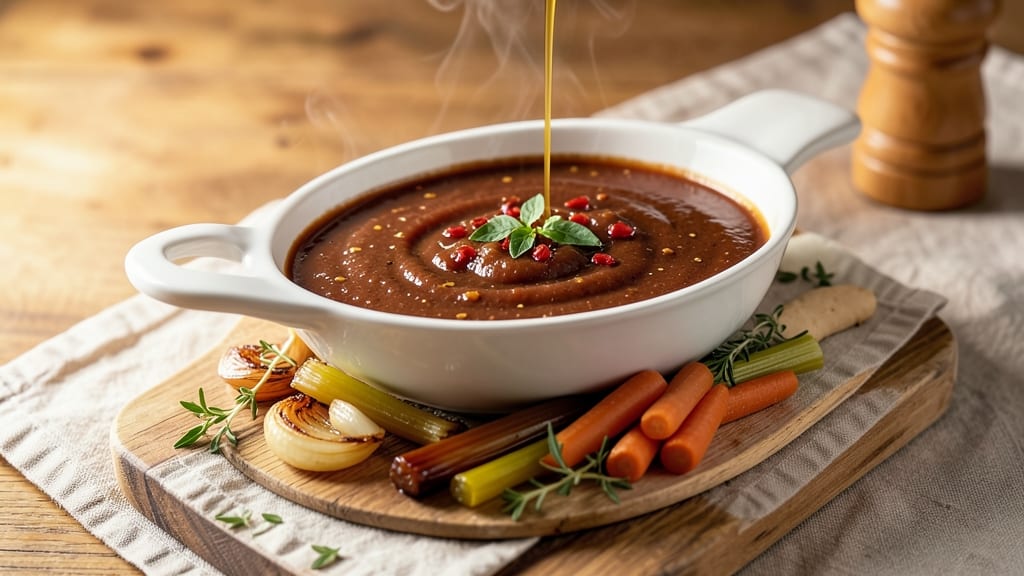
This basic Espagnole sauce recipe forms the backbone of classic French cuisine, transforming simple braises into deeply flavorful masterpieces. The foundation—a rich, dark roux—builds complexity through slow reduction with aromatic vegetables and stock, creating a sauce that elevates everything from beef bourguignon to roasted chicken.
I’ve refined this technique over years of testing, ensuring it delivers restaurant-quality depth without requiring advanced skills.
The process begins with a dark roux, where equal parts fat and flour cook until nutty and deep brown—a crucial step that prevents the sauce from breaking during reduction. Tomato paste and mirepoix (carrots, celery, onions) form the flavor base, while beef stock and herbs infuse richness.
The key to success lies in patience: simmering the sauce until it thickens to a velvety consistency, allowing flavors to meld into a harmonious, umami-packed liquid.
What sets this Espagnole apart is its versatility. Use it as a base for gravies, braises, or even pasta dishes, or reduce it further for a glaze. The vegetarian version replaces beef stock with mushroom or vegetable stock, proving its adaptability.
Once mastered, this sauce becomes your culinary secret weapon—transforming simple proteins into showstopping centerpieces with minimal effort.
For those new to French techniques, don’t let the name intimidate you. This recipe breaks down each step clearly, from roux development to final seasoning, ensuring foolproof results every time.
Whether you’re cooking for a special dinner or weeknight braise, Espagnole sauce delivers unmatched depth with just a few pantry staples.
Ingredients for basic espagnole sauce
Nine pantry staples transform into a restaurant-quality sauce base for braising and beyond.
| Ingredient | Amount | Notes |
|---|---|---|
| Unsalted Butter 🧈 | ½ cup | Cold, cubed for roux |
| All-Purpose Flour 🌾 | ½ cup | White or bread flour preferred |
| Tomato Paste 🍅 | 2 tbsp | High-quality, no sugar added |
| Yellow Onion 🧅 | 1 whole | Medium-sized, diced |
| Carrot 🥕 | 1 whole | Medium-sized, diced |
| Celery Stalk 🧄 | 2 whole | Medium-sized, diced |
| Beef Stock 🍲 | 2 cups | Homemade or high-quality store-bought |
| Red Wine 🍷 | ½ cup | Dry, like Cabernet Sauvignon |
| Fresh Thyme 🌿 | 1 tbsp | Leaves only, chopped |
| Fresh Bay Leaf 🍃 | 1 whole | Dried works too |
| Salt 🧂 | 1 tsp | Diamond Crystal preferred |
| Black Pepper 🌶️ | ½ tsp | Freshly ground |
The roux is where magic happens. Unsalted butter and flour must cook until deep brown—about 15 minutes—so don’t rush. Whole Foods or Penzeys carry high-quality flour if you want to splurge, but regular all-purpose works fine. For the mirepoix (onion, carrot, celery), buy fresh—wilted veggies turn bitter. I usually grab these from the produce section right before dinner, but prepped ahead, they’ll keep in the fridge for 5 days. The beef stock? Homemade is ideal, but Kitchen Basics or Pacific Foods brands are solid shortcuts.
No red wine? Dry white wine or extra beef stock works in a pinch. Fresh thyme is ideal, but dried at one-third the amount gets you close. The tomato paste can be the squeeze-tube kind from Trader Joe's—it’s perfect for this recipe and lasts forever. For the flour, if you’re gluten-sensitive, white rice flour works as a 1:1 substitute. The key is patience with the roux—don’t walk away, or you’ll risk burning. Stir constantly until it’s the color of toasted breadcrumbs.
This sauce keeps beautifully. Store it in glass jars in the fridge for up to 1 week, or freeze portions for 3 months. I always make extra—it’s perfect for reheating over rice or pasta. For the vegetarian version, swap beef stock for mushroom or vegetable stock. The sauce thickens as it cools, so if it’s too stiff, just add a splash of water or stock. Trust me, the second batch always tastes better.
Why You'll Love This Recipe
- Pantry Magic: I swear by this sauce because it uses what I already have—no fancy shopping required. That jar of tomato paste? The butter sitting in my fridge? Boom—flavor without the grocery run.
- Rich Without Effort: The butter and flour create this velvety base that’s actually rich, not heavy. Add the carrot and onion, and you get that subtle sweetness that makes it taste like you slaved over it for hours.
- Weeknight Swiss Army: This sauce turns any protein into something special—roast chicken, steak, even lentils. I make a big batch on Sundays and freeze portions because it’s my secret weapon for busy nights.
- Budget-Friendly Luxury: Tomato paste and carrots stretch this sauce far, and the flavor? It feels expensive. I’ve served it to guests who assumed I’d spent hours prepping—turns out, they just love a good roux.
Step-by-step instructions for basic Espagnole sauce
Here's how to build this foundational sauce—rich, deep, and packed with umami.
Create the Roux Foundation
In a heavy-bottomed saucepan, melt the 0.5 cup unsalted butter over medium heat. Once fully melted, whisk in the 0.5 cup all-purpose flour all at once. This creates a roux, the backbone of your sauce. Cook it for 3-4 minutes, stirring constantly with a wooden spoon, until it turns a rich, golden brown color—this is your signal that the raw flour taste is fully cooked out.
I like to press the roux against the pan occasionally to ensure even cooking. If it starts to darken too quickly, reduce the heat slightly. This step is critical—rushing it leads to a grainy sauce, while burning it adds bitterness. The roux should coat the back of a spoon smoothly, with no floury texture remaining.
Sweat the Vegetables
Add the diced yellow onion, diced carrot, and diced celery stalk to the saucepan. Stir well to coat the vegetables in the roux. Reduce the heat to medium-low and let them cook for 8-10 minutes, stirring occasionally. You're not browning them—just gently sweating out their moisture until they're soft and translucent. The onions should be tender when pierced with a knife, and the carrots and celery should yield slightly.
This step develops the base flavors. If the vegetables start to stick, add a splash of beef stock to deglaze and keep everything moist. The goal is to create a smooth, cohesive mixture—no dry spots, no burnt bits. Real talk: skipping this step means your sauce will taste flat and one-dimensional.
Build Depth with Tomato Paste and Wine
Stir in the 2 tbsp tomato paste and cook for 2 minutes, stirring constantly. This deepens the sauce's color and adds a subtle sweetness that balances the richness. Next, pour in the 0.5 cup red wine and scrape up any browned bits from the bottom of the pan—this is where all the flavor lives. Let the wine simmer for 3-4 minutes until it reduces by half, leaving behind concentrated flavor.
Here's the thing—don't rush this reduction. The wine needs time to mellow and integrate with the other flavors. If it reduces too quickly, you'll end up with a harsh, alcoholic taste. The sauce should smell complex: nutty from the roux, earthy from the vegetables, and slightly fruity from the wine.
Develop the Sauce with Stock and Aromatics
Pour in the 2 cups beef stock, stirring to combine. Add the 1 whole fresh bay leaf, 1 tbsp fresh thyme, 1 tsp salt, and 0.5 tsp black pepper. Bring the mixture to a gentle simmer, then reduce the heat to low and let it cook uncovered for 20-25 minutes. Stir occasionally to prevent sticking, and skim off any foam that rises to the surface—this keeps the sauce clean and velvety.
This simmering time is where the magic happens. The sauce should reduce until it coats the back of a spoon smoothly. If it thickens too much, whisk in a splash of beef stock to loosen it. The final consistency should be rich but pourable—not gluey. Taste and adjust the seasoning: you might need a pinch more salt or pepper to balance the flavors.
Strain and Finish
Remove the sauce from heat and strain it through a fine-mesh sieve into a clean saucepan. This step ensures a silky texture by removing any vegetable bits. Press on the solids with a spoon to extract every last drop of flavor. Return the strained sauce to the pan and simmer gently for 5-10 minutes to reduce it further if needed. The sauce should be thick enough to coat the back of a spoon but still flow freely.
For extra richness, you can finish it with a pat of cold butter, whisked in at the end. This adds a luxurious sheen and balances the acidity. Serve immediately or let it cool slightly before using in braises, stews, or as a base for other sauces. This sauce keeps well in the fridge for up to 5 days or can be frozen for 3 months—just reheat gently over low heat, stirring often to prevent scorching.
Pro Tips For Making Basic Espagnole Sauce
- Cook Onions Low and Slow: I used to rush this and end up with bitter, caramelized bits instead of sweet, soft onions. Once the onions are in the butter, turn the heat down to medium-low and let them cook for 10–12 minutes until they’re translucent and just starting to turn golden—no need to rush, or you’ll burn the butter and ruin the whole sauce.
- Deglaze Before Adding Paste: After browning your onions and carrots, splash in a splash of water or stock and scrape the bottom of the pan before stirring in the tomato paste. That stuck-on fond adds depth—if you skip it, you’re missing out on flavor that’s hard to replace later.
- Use Cold Butter for Roux: Take the butter straight from the fridge and cut it into cubes before making the roux. Cold butter emulsifies better with the flour, so your sauce won’t seize up or turn grainy—trust me, I’ve seen it go wrong when the butter’s too soft.
- Simmer, Don’t Boil: Once the tomato paste is fully incorporated, keep the heat at a gentle simmer. Boiling burns the sauce and makes it taste flat. A slow, steady bubble is all you need—this is where the flavors meld, not where you race the clock.
Perfect pairings for this basic espagnole sauce
Classic Braised Dishes
Espagnole sauce shines in beef bourguignon—simmer it with tender beef chuck, mushrooms, and pearl onions for a French bistro classic. I like to deglaze the pan with extra red wine after browning the meat, then add the sauce to create a deep, wine-infused gravy.
For a lighter twist, use it as a base for coq au vin, where chicken thighs braise until fall-off-the-bone tender, absorbing the sauce's rich umami. 🍷
Pasta and Risotto
Toss this sauce with pappardelle or tagliatelle for an Italian-French fusion dish. I often finish the pasta with a splash of heavy cream and fresh parsley to balance the sauce's depth.
For risotto, stir Espagnole into the final stages instead of stock—it adds instant complexity without overpowering the rice. A sprinkle of Parmigiano-Reggiano elevates it to restaurant-level elegance. 🍝
Sauce Deglazing
Use Espagnole to deglaze pans after searing steak, lamb, or duck. The sauce's richness cuts through charred bits, creating a silky pan sauce in minutes.
For example, after searing ribeye steaks, add the sauce and reduce it with a splash of beef stock—finish with a pat of butter for a luxurious table sauce. This technique works equally well for pork chops or venison. 🥩
Vegetarian Adaptations
Swap beef stock for mushroom or vegetable stock to make a vegetarian version. The sauce still delivers deep umami when paired with portobello mushrooms or eggplant. I love using it as a base for lentil stews or as a drizzle over roasted cauliflower steaks.
A splash of balsamic vinegar adds brightness to balance the richness. 🌱
Gravy and Pan Sauces
Reduce Espagnole by half to create a glazing sauce for roasted meats. Brush it over duck breasts or pork tenderloin during the last 10 minutes of roasting for a caramelized crust.
For gravy, whisk the sauce with pan drippings from roasted chicken or turkey—it transforms ordinary juices into a velvety, flavorful sauce. 🍗
Global Fusion Twists
Add a pinch of smoked paprika and cumin to give it a Spanish-inspired kick, perfect for paella or tapas-style dishes. For an Asian fusion, stir in soy sauce and ginger to create a umami-rich glaze for grilled meats.
The sauce's versatility makes it a secret weapon for reinventing classic flavors. 🌶️
Nutrition facts
Frequently asked questions
What's the difference between Espagnole sauce and demi-glace?
Espagnole is the foundational sauce made from a dark roux, vegetables, and stock—it's your flavor base. Demi-glace is actually Espagnole sauce reduced further and combined with red wine reduction, creating a richer, glossier sauce. Think of Espagnole as the building block and demi-glace as its more refined cousin.
Can I make this sauce without wine?
Substitute the 0.5 cup red wine with an equal amount of beef stock or apple cider vinegar for acidity. If using vinegar, reduce it by half first to mellow the flavor. The sauce will still develop depth—just without the fruity wine notes.
Why did my Espagnole sauce turn grainy?
Graininess usually means your roux wasn't cooked long enough or you stirred too vigorously while reducing. The roux needs to reach a deep brown color (15+ minutes) to fully develop its binding properties. If it happens, strain the sauce through a fine-mesh sieve and whisk in 1 tsp cold butter to smooth it out.
How do I adjust the thickness of finished Espagnole?
If too thick, whisk in 1-2 tbsp warm stock to loosen. For a thicker sauce, simmer uncovered until reduced by 10-15 minutes. Pro tip: The sauce thickens as it cools, so adjust while still warm. For a glaze, reduce it by half—perfect for drizzling over roasted meats.
What's the best way to reheat leftover Espagnole?
Reheat gently over low heat, stirring constantly to prevent scorching. For extra richness, whisk in 1 tbsp cold butter at the end. If it's too thick, add a splash of stock. Never microwave—it breaks the sauce's silky texture and can make it oily.