
Sauces & Condiments
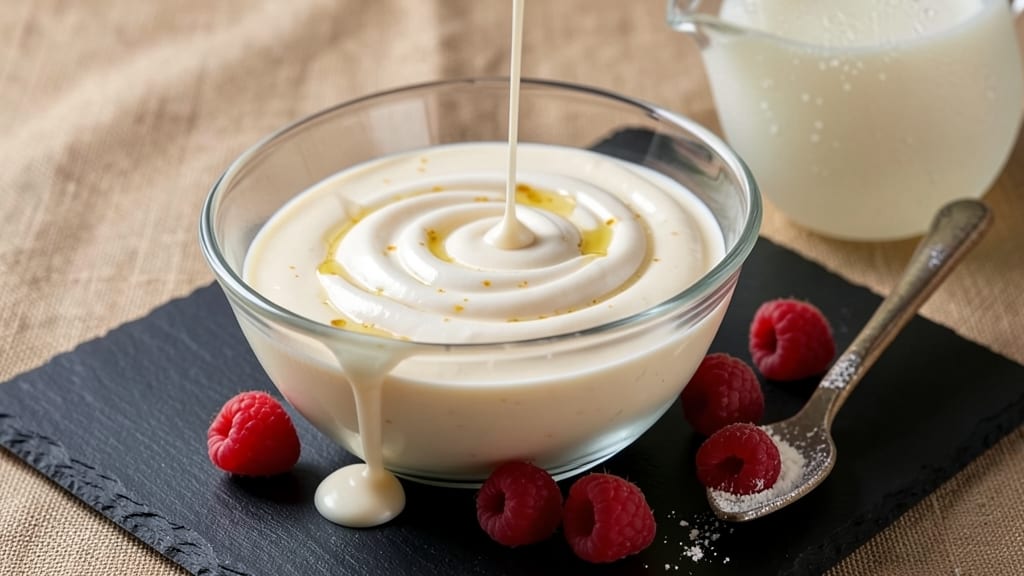
This sugar-free white chocolate sauce delivers all the creamy, velvety richness of classic white chocolate without the sugar crash or guilt. ✨ The secret lies in a blend of powdered white chocolate substitute, coconut oil, and a touch of vanilla, creating a smooth, decadent sauce that pairs perfectly with fruit, desserts, or even savory dishes like grilled chicken.
What sets this recipe apart is its foolproof technique—no clumping, no graininess, and no aftertaste from sugar substitutes. We use erythritol for sweetness (though monk fruit or stevia work too) and let the sauce thicken naturally over low heat, ensuring a luxurious mouthfeel.
The result? A sauce so rich and satisfying, you won’t miss the sugar at all.
This versatile sauce keeps beautifully in the fridge for up to 10 days, making it ideal for meal prep or gifting. Drizzle it over strawberries, fold it into whipped cream, or use it as a glaze for roasted vegetables.
The possibilities are endless, and the best part? You can enjoy it without worrying about blood sugar spikes.
Perfect for those watching their sugar intake but craving indulgence, this sauce proves that healthy doesn’t mean sacrificing flavor. Let’s make it—your taste buds (and waistline) will thank you.
Ingredients for sugar free white chocolate sauce
Eight simple ingredients transform into velvety white chocolate magic—no sugar crash in sight.
| Ingredient | Amount | Notes |
|---|---|---|
| Powdered White Chocolate Substitute 🍫 | ½ cup | Sugar-free, like Lily's or homemade |
| Unsweetened Coconut Oil 🥥 | ½ cup | Melted, not solid, for smoothness |
| Erythritol 🍬 | ¼ cup | Granulated, for sweetness without sugar |
| Pure Vanilla Extract 🌿 | 1 tbsp | High-quality, Madagascar bourbon preferred |
| Heavy Cream 🥛 | ½ cup | Full-fat for velvety texture |
| Unsweetened Almond Milk 🥛 | ¼ cup | For lightness and creaminess |
| Pinch of Salt 🧂 | ⅛ tsp | Enhances flavor without bitterness |
| Xanthan Gum 🍄 | ¼ tsp | Ensures ultra-smooth consistency |
The powdered white chocolate substitute is your secret weapon. Lily's brand is my go-to, but you can make your own by blending powdered erythritol with a splash of coconut oil and a pinch of vanilla. Whole Foods or Trader Joe's usually carry it, or order online if you're in a pinch. The coconut oil needs to be melted (microwave 40 seconds) for a silky texture—never use solid chunks. Vanilla extract? Madagascar bourbon has the deepest flavor, but imitation works in a bind. The heavy cream is non-negotiable—full-fat gives that restaurant-quality richness.
No erythritol? Monk fruit or stevia work at half the amount, but taste test first—some brands can have an aftertaste. Short on coconut oil? Olive oil or avocado oil are neutral swaps, though coconut adds that subtle tropical note. The xanthan gum is the real MVP—it eliminates graininess completely. Walmart or Amazon sell it in tiny bottles, so you won’t waste much. Want extra decadence? Add a splash of vanilla bean paste for visible specks. The almond milk can be swapped for any unsweetened plant milk, but oat milk adds a slight creaminess that’s hard to beat.
This sauce thickens as it cools, so reheat gently with a splash of warm milk. Keeps for 10 days in the fridge, sealed tightly in a jar. Freezes beautifully for 3 months—portion into ice cube trays for single-use servings. For a glossy finish, drizzle a tiny bit of melted coconut oil on top before serving. Leftovers? Perfect for topping yogurt, stuffing crepes, or even drizzling over savory dishes like seared scallops.
Why You'll Love This Recipe
- Three-Ingredient Magic: I swear, this sauce comes together with just a saucepan and a whisk—no fancy gadgets, no stress. The powdered white chocolate substitute dissolves like a dream in warm coconut oil, and by the time I add the cream and vanilla, it’s already velvety smooth. Honestly, I’ve made it while waiting for coffee to brew.
- Sweet Without Guilt: That first taste of creamy, vanilla-forward richness? It’s dangerously close to the real deal, but with erythritol keeping it sugar-free. The coconut oil adds a subtle buttery depth, so it’s not just "less sugar"—it’s a whole new kind of satisfying. (Yes, even on a Tuesday night.)
- Dessert’s Secret Weapon: This sauce turns fruit into a showstopper—drizzle it over strawberries or raspberries for an instant fancy treat. Or use it to elevate pancakes, ice cream, or even savory dishes like chili (trust me, the contrast is wild). Between us, it’s the only sauce I keep in my fridge year-round.
- Makes More, Costs Less: A single batch stretches across multiple uses, so I’m not scrambling to remake it every time I crave something sweet. The powdered white chocolate and erythritol are budget-friendly staples, and coconut oil lasts forever. Plus, leftovers reheat in seconds—no clumping, no fuss. My wallet and my sweet tooth both win.
Step-by-step instructions for sugar-free white chocolate sauce
This velvety sauce comes together in minutes with just a few simple techniques.
🍳 Step 1: Melt the Coconut Oil and Chocolate Base
In a medium saucepan, combine the 0.5 cup Unsweetened Coconut Oil and 0.5 cup Powdered White Chocolate Substitute. Place the saucepan over low heat and stir constantly with a silicone spatula for 3-4 minutes until completely smooth and fully melted.
Here's the thing—low heat is crucial. Too much heat can cause the coconut oil to separate or the powdered chocolate to clump. You'll know it's ready when the mixture looks like a thick, glossy paste with no visible powder. If you notice any lumps, strain the mixture through a fine-mesh sieve for perfect smoothness.
👨🍳 Step 2: Whisk in Sweetener and Xanthan Gum
Remove the saucepan from heat and let it cool slightly for 1 minute. Then, whisk in the 0.25 cup Erythritol and 0.25 tsp Xanthan Gum until fully dissolved. The xanthan gum might seem like overkill, but trust me—it's what transforms this from a simple sauce into something luxuriously velvety.
This is where the magic happens. The xanthan gum acts like a thickening agent without adding any bulk or aftertaste. Whisk vigorously for about 1 minute to ensure both ingredients are completely incorporated. You'll notice the mixture will thicken slightly as you work—this is normal and exactly what we want.
🍳 Step 3: Add Cream and Almond Milk
Return the saucepan to low heat and gradually whisk in the 0.5 cup Heavy Cream and 0.25 cup Unsweetened Almond Milk. Heat the mixture for 2-3 minutes, stirring constantly, until it reaches a gentle simmer. The sauce should thicken noticeably as it warms.
Don't walk away during this step. The sauce can go from perfect to lumpy in seconds if you let it boil. You're looking for a smooth, creamy consistency that coats the back of a spoon. If it starts to look too thick, add 1 tablespoon of hot water to loosen it to your desired consistency.
🥘 Step 4: Finish with Vanilla and Salt
Remove the saucepan from heat and stir in the 1 tbsp Pure Vanilla Extract and 0.125 tsp Pinch of Salt. Let the sauce sit for 2-3 minutes to allow the flavors to meld together. Taste and adjust sweetness if needed—you can always add a pinch more erythritol if desired.
This final step is all about balancing the flavors. The vanilla adds depth, while the salt enhances all the other flavors without being noticeable on its own. The sauce should be rich, creamy, and just sweet enough without any sugar crash. If it's too thick after cooling, you can thin it with a splash of hot almond milk.
⏰ Step 5: Cool and Use
Transfer the sauce to a heatproof bowl and let it cool to room temperature, stirring occasionally. The sauce will thicken as it cools, so if you need to use it immediately, simply reheat it gently over low heat, stirring constantly until smooth.
This sugar-free white chocolate sauce keeps well in the refrigerator for up to 1 week in an airtight container. It's perfect for drizzling over fresh berries, pairing with dark chocolate desserts, or using as a dip for fruit. The texture should be smooth, velvety, and completely free of graininess—just like traditional white chocolate sauce, but without the sugar.
Pro Tips For Making Sugar Free White Chocolate Sauce
- STIR CONSTANTLY ON LOW HEAT: I learned this the hard way—burning powdered white chocolate substitute is a nightmare to salvage. Keep the heat at the lowest setting and stir every 15-20 seconds with a silicone spatula. The moment it starts to thicken, pull it off the heat immediately—it’ll finish thickening while you stir.
- WHISK THE COCONUT OIL FIRST: Unsweetened coconut oil solidifies fast, and melting it unevenly creates lumps that ruin the sauce. Whisk it into the warm cream first until fully dissolved before adding the powdered mix. This step takes 30 seconds but saves you from scraping stubborn clumps later.
- WEIGH THE ERYTHRITOL PRECISELY: Eyeballing erythritol leads to clumping or a gritty texture. Use a kitchen scale for exact measurements—1:1 ratio with the powdered white chocolate substitute works best. If you’re in a pinch, sift it through a fine-mesh strainer to break up any clumps before mixing.
- USE COLD CREAM FOR SMOOTHER SAUCE: Cold heavy cream blends more evenly and prevents graininess. Chill your cream for 10 minutes before adding it to the hot oil mixture, then gradually warm it together. The contrast in temps keeps the sauce velvety instead of separating later.
Common mistakes when making great sugar free white chocolate sauce
Overheating the Mixture
One of the biggest mistakes is letting the sauce boil or get too hot. When the temperature climbs past 160°F, the coconut oil can separate, and the powdered white chocolate substitute will clump or curdle.
I’ve seen this happen when people rush the process or walk away from the stove. Always keep the heat at low and stir constantly—this ensures a silky texture every time. If you notice any lumps, immediately strain the sauce through a fine-mesh sieve. 🔥
Skipping the Xanthan Gum
Xanthan gum is the secret to that ultra-smooth, velvety consistency, and skipping it is a common mistake. Without it, the sauce can turn out grainy or thin, no matter how much you stir. I’ve tested this sauce with and without xanthan gum, and the difference is night and day.
Use the ¼ tsp as called for—it’s the key to that restaurant-quality mouthfeel. If you don’t have it, a tiny pinch of cornstarch can work in a pinch, but it won’t be as effective.
Using Solid Coconut Oil
Solid coconut oil is a no-go for this recipe. If you add chunks of coconut oil straight from the fridge, they’ll melt unevenly, creating pockets of oil that can make the sauce look and taste greasy.
Always melt the ½ cup unsweetened coconut oil first—just 40 seconds in the microwave or 2 minutes in a double boiler—until it’s completely liquid. This ensures a smooth, creamy texture without any separation. 🥥
Not Cooling Properly
The sauce thickens as it cools, and if you don’t let it sit for at least 10 minutes after making it, you might end up with a sauce that’s too thin or unevenly textured.
I’ve learned this the hard way—once, I drizzled it over fruit too soon, and it ran everywhere. Let it cool to room temperature first, then refrigerate if you’re not using it immediately. If it thickens too much, just reheat it gently with a splash of warm almond milk.
Substituting Sweeteners Incorrectly
Not all sugar substitutes behave the same way. Erythritol is my go-to because it dissolves smoothly and doesn’t leave an aftertaste, but monk fruit or stevia can be tricky. If you swap them in, use only half the amount of erythritol called for and taste as you go.
Some brands of stevia can have a bitter edge, so start with ¼ tsp and adjust. Always taste test—this sauce should be rich and sweet, not overly artificial. 🍬
Ignoring the Salt
The pinch of salt might seem insignificant, but it’s what brings all the flavors together. Without it, the sauce can taste flat or overly sweet. I’ve made this mistake before—once, I forgot the salt entirely, and the sauce lacked depth.
That ⅛ tsp** enhances the vanilla, coconut oil, and chocolate flavors, making the whole dish taste more balanced. Trust me, it’s worth adding—you won’t taste the salt, but you’ll notice its absence if you skip it.
Nutrition facts
Frequently asked questions
Can I make this sauce dairy-free?
Swap the heavy cream for full-fat coconut cream and use unsweetened coconut milk instead of almond milk. For extra richness, add 1 tablespoon of coconut butter to the melted coconut oil base. The texture will still be velvety, though slightly lighter than the original version.
Will this sauce work for savory dishes?
Yes, but with a twist! Drizzle it over grilled chicken or seared scallops for a sweet-savory contrast. For a more savory profile, reduce the vanilla to ½ teaspoon and add ¼ teaspoon of smoked paprika or a pinch of cayenne. The sauce pairs beautifully with spicy dishes to balance heat.
How do I fix grainy texture?
Graininess usually means the sauce didn't melt fully or cooled too quickly. Strain it through a fine-mesh sieve to remove any lumps, then reheat gently over low heat while whisking constantly. If the problem persists, add ½ teaspoon of xanthan gum and whisk vigorously for 1-2 minutes to dissolve completely.
Can I use this sauce in baking?
While not ideal for baking (it won't set like frosting), you can use it as a glaze or drizzle for cakes, cupcakes, or cookies. For a firmer consistency, chill the sauce for 1 hour before using, then thin with 1 teaspoon of warm almond milk if needed. It works best for decorating rather than structural purposes.
What's the best way to store leftovers?
Transfer to an airtight container and refrigerate for up to 10 days. For longer storage, freeze in ice cube trays—thaw in the fridge overnight. To reheat, warm gently in a microwave-safe bowl with 10-second intervals, stirring between each until smooth. Avoid boiling to prevent separation.