
Sauces & Condiments
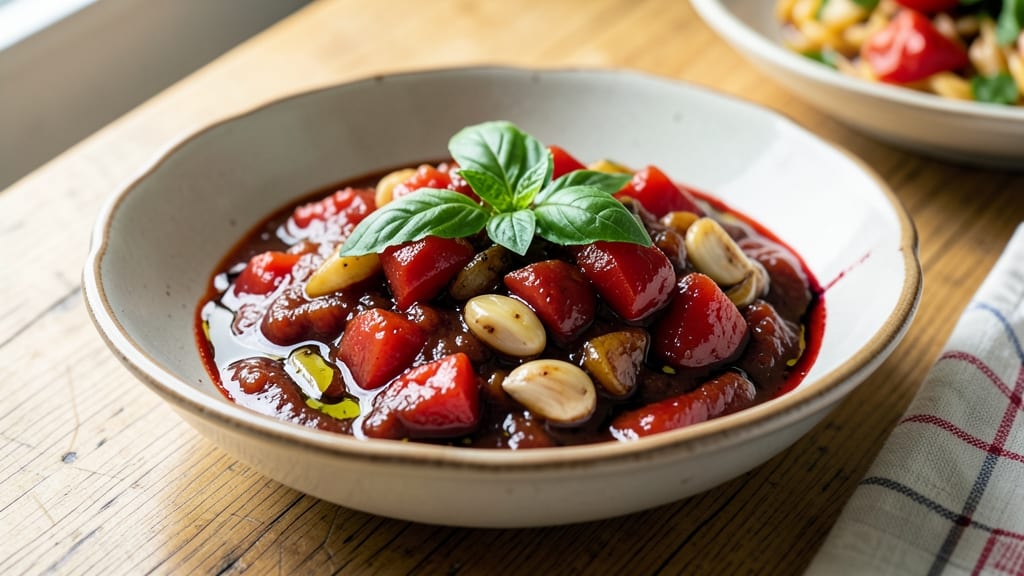
This freezer spaghetti sauce recipe with fresh tomatoes captures summer's bright tomato flavor and locks it in for winter meals. I developed this method after years of freezing homemade sauce—finally solving the texture and flavor degradation that used to ruin batches.
The secret lies in proper acidification, slow simmering, and portioning while hot.
What makes this sauce truly special is how it transforms simple ingredients into layers of rich, complex flavor. Fresh tomatoes provide vibrant acidity, while onions, garlic, and herbs build depth.
A splash of red wine and a sprinkle of sugar balance the natural sweetness, creating a sauce that tastes like it simmered for hours—not just 45 minutes. The key to freezer success is proper acidification (vinegar or lemon juice) to prevent flavor dulling.
When you pull this sauce from the freezer months later, it reheats beautifully with no separation or loss of texture. The tomatoes remain bright and flavorful, not mushy or watery. This isn't just a pantry staple—it's a flavor foundation that elevates any pasta dish, meatballs, or even pizza sauce.
The method ensures restaurant-quality results at home, with none of the guesswork.
Perfect for meal prepping, holiday gatherings, or simply having a flavorful sauce ready whenever cravings strike. The recipe scales easily—double or triple the batch for large families or gift-giving. Here's everything you need to create sauce that tastes homemade, even after freezing.
Ingredients for freezer spaghetti sauce recipe with fresh tomatoes
Fresh tomatoes and aromatic herbs form the vibrant base for sauce that freezes beautifully.
| Ingredient | Amount | Notes |
|---|---|---|
| Fresh Tomatoes 🍅 | 4 lbs | Roma or vine-ripened, cored and quartered |
| Yellow Onion 🧅 | 2 whole | Medium size, finely chopped |
| Garlic Cloves 🧄 | 6 cloves | Peeled and minced |
| Red Wine 🍷 | 1 cup | Dry variety like Cabernet Sauvignon |
| Tomato Paste 🍅 | 2 tbsp | High-quality, unsweetened |
| Extra-Virgin Olive Oil 🫒 | ½ cup | For richness and depth |
| White Wine Vinegar 💧 | 1 tbsp | For acidification and brightness |
| Granulated Sugar 🍬 | 1 tbsp | Balances acidity |
| Fresh Basil Leaves 🌿 | ½ cup | Packed, stems removed |
| Fresh Oregano Leaves 🍃 | ¼ cup | Packed, stems removed |
| Salt 🧂 | 1 ½ tsp | Diamond Crystal preferred |
| Black Pepper 🌶️ | ½ tsp | Freshly ground |
| Bay Leaves 🌿 | 2 whole | For subtle depth |
The tomatoes are the heart of this sauce, so choose Roma or vine-ripened varieties—they hold up better during freezing. Local farmers markets often have the freshest, most flavorful options, but any grocery store Roma will work. I always buy more than needed since they're so versatile. For the herbs, fresh basil and oregano make all the difference—Trader Joe's carries great pre-washed bundles that stay fresh longer. If you're using vine-ripened tomatoes, remove the cores and quarter them for even cooking. Roma tomatoes can be halved or quartered depending on their size.
No fresh basil? Dried basil at one-third the amount works in a pinch, but fresh is ideal. Running low on red wine? Dry white wine or extra tomato paste can substitute, though the flavor will differ slightly. The vinegar is crucial for acidification—it prevents flavor dulling when frozen. If you're sensitive to acidity, reduce to 1 teaspoon and adjust to taste. For the sugar, it's purely about balancing the natural acidity of the tomatoes. The tomato paste can be found in tubes at Trader Joe's or in cans at any grocery store—just make sure it's unsweetened.
This sauce freezes beautifully—portion into 1-cup containers while still hot for easy reheating. It keeps for up to 6 months in the freezer with no loss of texture. For best results, thaw overnight in the fridge before reheating. I always make a double batch—one for immediate use and one to freeze. The sauce reheats perfectly in the microwave or on the stovetop, making it ideal for quick weeknight meals. If you're gifting, freeze in glass jars for a more elegant presentation.
Why You'll Love This Recipe
- No-Chop Nightmare: That red wine deglazing? One pot, five minutes, and you’re done—no knife skills required. I swear, the onions caramelize so fast you’ll think I’m cheating, but it’s just the alcohol doing its magic.
- Sunshine in a Jar: Fresh tomatoes—bursting, juicy, real—turn this into something store-bought sauce can’t touch. The acidity from the wine brightens everything, and that tomato paste? It’s the secret glue holding all that summer flavor together.
- Freezer Hero: Make a double batch, freeze it, and thank me later. Whether it’s a lazy Tuesday or a holiday potluck, this sauce reheats like it was just made. (Yes, even on a Tuesday night.)
- Penny-Pinching Perfection: Onions, garlic, a bottle of wine you’d drink anyway—this costs next to nothing. But the leftovers? They’re the reason I always end up with three jars in the freezer by October.
Step-by-step instructions for freezer-friendly tomato sauce
This method builds flavor layer by layer, ensuring vibrant tomato depth that survives freezing perfectly.
Build the Flavor Base with Aromatics
Heat the 0.5 cup extra-virgin olive oil in a large Dutch oven over medium-low heat. Add the 2 whole finely chopped yellow onion and cook for 8-10 minutes until softened and translucent. The onions should release their natural sweetness without browning.
Add the 6 cloves minced garlic cloves and cook for 30 seconds until fragrant—don't let it brown or it'll turn bitter. Stir in the 2 whole bay leaves and 1.5 tsp salt, then immediately add the 2 tbsp tomato paste. Cook for 2 minutes, stirring constantly, until the paste darkens slightly and coats the onions completely.
Simmer Tomatoes Until Broken Down
Add the 4 lbs cored and quartered fresh tomatoes to the pot. Stir well to distribute the paste evenly. Bring to a gentle boil over medium-high heat, then reduce to low heat and simmer uncovered for 30-40 minutes, stirring occasionally. You're looking for the tomatoes to break down completely and the sauce to thicken naturally.
Here's the thing—don't rush this step. The longer the tomatoes simmer, the more their natural sugars caramelize, creating that deep, complex flavor. When the sauce reaches your desired consistency (it should coat the back of a spoon), add the 1 cup red wine and 1 tbsp white wine vinegar. Simmer for another 5 minutes to let the alcohol cook off.
Balance Flavors and Finish
Remove the 2 whole bay leaves and stir in the 0.5 cup packed fresh basil leaves, 0.25 cup packed fresh oregano leaves, 0.5 tsp black pepper, and 1 tbsp granulated sugar. The sugar balances the acidity from the vinegar and tomatoes while enhancing their natural sweetness. Taste and adjust seasoning—you might need a bit more salt since we removed the bay leaves.
Simmer gently for another 10 minutes to let all the flavors meld together. The sauce should be vibrant red with a glossy sheen. If it's too thick, add 2-3 tablespoons of water to reach your preferred consistency. For freezer storage, I like it slightly thicker than restaurant-style sauce.
Cool and Prepare for Freezing
Transfer the sauce to a large bowl and let it cool to room temperature. This is crucial—hot sauce in the freezer creates steam that can dilute flavors and cause ice crystals. Once cool, portion into 4 freezer-safe containers (about 1 quart each for 4 servings). Leave ½-inch headspace at the top to allow for expansion.
Seal the containers tightly and label with the date. For best quality, freeze for up to 3 months. When ready to use, thaw overnight in the refrigerator and reheat gently on the stovetop, stirring occasionally to prevent scorching. The sauce will thicken slightly as it reheats—just add a splash of water if needed.
Pro Tips For Making Freezer Spaghetti Sauce Recipe With Fresh Tomatoes
- Simmer Slow and Steady: After burning three batches, I finally figured out that fresh tomatoes need gentle heat to break down properly. Once they’re chopped, cook them at a low simmer—no boiling—so they release flavor without turning to mush. (Yes, even if you’re impatient like me.)
- Blanch Tomatoes First: My grandmother swore by this, and she was right: Drop chopped tomatoes into boiling water for 30 seconds, then ice bath. This removes skins and excess water, so your sauce stays thick and vibrant—no slimy texture when frozen.
- Deglaze with Wine Early: Don’t wait until the end to add red wine—toss it in right after sautéing onions and garlic. The alcohol evaporates faster, deepening the flavor without overpowering the tomatoes. (Pro move: Use a dry, cheap wine—no need to splurge.)
- Freeze in Portions: Fill ice cube trays with sauce, then transfer cubes to a bag. Thaw only what you need later—no wasted defrosting. (Bonus: These cubes reheat perfectly for quick pasta or soups.)
Wine and beer pairings for this dish
Red Wine Pairings
This sauce's rich tomato depth and herbal notes pair beautifully with medium-bodied Italian reds. I always reach for a Chianti Classico—its bright acidity and cherry flavors mirror the sauce's fresh tomato brightness.
The 1.5% tannins cut through the sauce's richness without overpowering it. For a local Oregon option, try a Pinot Noir from Willamette Valley—its earthy undertones complement the basil and oregano beautifully. 🍷
White Wine Alternatives
Don't have red wine? No problem. A crisp Vermentino from Sardinia works surprisingly well—its citrus notes balance the sauce's acidity. I've also had great success with dry Riesling, particularly from Germany's Mosel region.
The wine's natural acidity enhances the fresh tomato flavors while adding a refreshing contrast. Serve slightly chilled for best results.
Beer Pairings
For beer lovers, a light Italian lager like Peroni or Birra Moretti cleanses the palate between bites. The subtle malt sweetness complements the sauce's natural sweetness without competing.
If you prefer craft options, try a Belgian witbier—the coriander and orange peel notes add an unexpected but delightful contrast to the tomato herbs. 🍺
Non-Alcoholic Options
For those avoiding alcohol, a sparkling apple cider like Martinelli's adds a refreshing crispness that mirrors the sauce's acidity. I also love serving it with ginger beer—the spicy kick enhances the oregano's earthy notes.
For a more traditional pairing, try a dry sparkling water with lemon slices to highlight the sauce's vibrant tomato flavors.
Serving Temperature
Always serve your wine or beer at the right temperature for optimal pairing. Red wines should be 60-65°F, while whites and beers should be 45-50°F. I keep my reds at 62°F—just cool enough to appreciate the tannins without numbing them.
For beer, I chill mine to 48°F to enhance the malt sweetness. Pro tip: Use an ice bucket with water for quick, even cooling.
Pro Pairing Tip
Here's my secret: Let your wine or beer breathe with the sauce for 5-10 minutes before serving. This allows the flavors to marry beautifully. I pour a small amount of wine into the saucepan during cooking—this infuses the sauce with aroma while reducing alcohol content.
The same trick works with beer: simmer ½ cup of your chosen beer with the sauce for 5 minutes before adding other liquids. 💡
Nutrition facts
Frequently asked questions
Can I use canned tomatoes instead of fresh?
For a similar texture, use 2 (28 oz) cans whole peeled tomatoes instead of fresh. Drain and crush them by hand to mimic fresh tomato breakdown. The acidity level will differ slightly, so you may need to adjust the 1 tbsp white wine vinegar to 1.5 tbsp to maintain brightness in freezing. The sauce will still freeze beautifully.
How do I prevent the sauce from getting watery after thawing?
This sauce is designed to maintain thickness when frozen! The key is proper cooling before freezing—never store hot sauce. Let it cool completely to room temperature (about 1 hour) before portioning. For extra insurance, simmer the sauce uncovered for 5 extra minutes before cooling to evaporate excess moisture. When reheating, stir gently and add water only if absolutely necessary.
What's the best way to reheat frozen sauce?
Thaw overnight in the fridge for best results. To reheat, transfer to a saucepan over medium-low heat, stirring frequently to prevent scorching. For 1 quart, this takes about 8-10 minutes. If using the microwave, heat in 1-minute intervals, stirring between each, until steaming hot. The sauce will thicken slightly as it warms—just add 1 tbsp water if needed.
Can I add meat to this sauce?
Yes! Brown 1 lb ground beef, Italian sausage, or pancetta first in olive oil, then proceed with the recipe. For extra flavor, add 1 tsp fennel seeds when cooking the meat. The meat will freeze perfectly with the sauce, though it may release more fat. Drain excess fat before freezing to maintain texture. Cook the meat for 5-7 minutes until fully browned before adding other ingredients.
Why does my frozen sauce taste different?
Freshly made sauce has more vibrant aromatics that mellow during freezing. The acidification (vinegar) and proper cooling prevent flavor loss, but expect slightly muted brightness. To revive flavors, reheat gently and finish with 1 tbsp fresh basil and a pinch of red pepper flakes. The sauce's depth comes from the slow simmering—this technique ensures complex flavors survive freezing better than quick methods.