
Sauces & Condiments
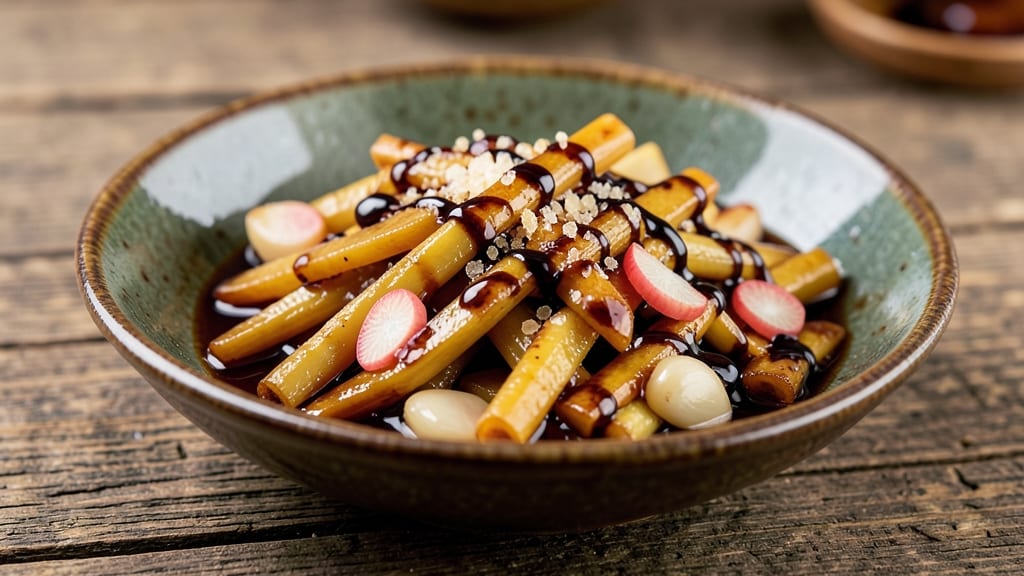
This bamboo sauce recipe transforms simple grilled meats and noodles into restaurant-worthy dishes with its perfect balance of smoky depth and sweet richness. The secret lies in caramelizing fresh bamboo shoots with garlic, ginger, and a touch of soy—creating a glaze that's both complex and approachable.
I developed this sauce after realizing how often I reached for store-bought glazes that lacked the authentic umami bite of homemade versions.
The process is straightforward: sauté aromatics until fragrant, add sliced bamboo shoots to develop their natural sweetness, then simmer with soy, sugar, and a splash of vinegar until thickened into a glossy consistency.
What makes this sauce special is its versatility—it elevates everything from stir-fried vegetables to grilled chicken skewers, while its subtle smokiness pairs beautifully with rice or noodles.
By the time you're done, you'll have a smoky-sweet glaze that's rich enough to stand alone but balanced enough to complement any dish. The sauce keeps well in the fridge for up to 2 weeks, making it perfect for meal prep or gifting.
Whether you're cooking for a crowd or treating yourself to a special meal, this sauce delivers professional-quality results with minimal effort.
Use it as a finishing touch for grilled meats, a dipping sauce for spring rolls, or a flavor booster in noodle dishes. The possibilities are endless, but the technique remains simple—just a few ingredients and 20 minutes of active time.
Let's get started on creating this versatile glaze that will become your new kitchen staple.
Ingredients for bamboo sauce
Nine ingredients transform simple grilled meats and noodles into restaurant-quality dishes with smoky-sweet perfection.
| Ingredient | Amount | Notes |
|---|---|---|
| Fresh Bamboo Shoots 🌿 | 1 cup | Sliced into 1/4-inch pieces |
| Garlic Cloves 🧄 | 4 cloves | Minced for aromatic depth |
| Fresh Ginger 🌿 | 1 ½ tbsp | Finely grated, not powdered |
| Light Soy Sauce 🥢 | ½ cup | Kikkoman preferred for balance |
| Dark Soy Sauce 🥢 | 1 tbsp | For smoky depth, Lee Kum Kee works |
| Brown Sugar 🍚 | ¼ cup | Packed, for caramelization |
| Rice Vinegar 🍶 | 1 ½ tbsp | White vinegar substitute if needed |
| Sesame Oil 🫒 | ½ tbsp | Toasted, for nutty aroma |
| Red Chili Flakes 🌶️ | ½ tsp | Adjust for heat preference |
| Water 💧 | ¼ cup | For thinning consistency |
The bamboo shoots are the heart of this sauce—fresh is ideal, but canned bamboo shoots work in a pinch (drained and sliced). Look for young shoots at Asian markets or the international section of larger grocery stores like Whole Foods or H Mart. If you can't find fresh, Trader Joe's frozen bamboo shoots are a great backup. The key is to slice them evenly so they caramelize uniformly. For the garlic and ginger, freshly minced makes all the difference—pre-minced jars lack the aromatic punch this sauce needs. Toast the ginger for 30 seconds in a dry pan to deepen its flavor before adding to the sauce.
No light soy sauce? Substitute with tamari or coconut aminos, though the flavor will be slightly different. Dark soy sauce is non-negotiable for that authentic smoky depth—Lee Kum Kee or Pearl River Bridge are the brands I always reach for. Brown sugar is essential for caramelization, but coconut sugar or muscovado work beautifully if you want a more complex sweetness. The sesame oil is where the sauce gets its nutty aroma—toast it in a dry pan for 30 seconds before adding to the sauce to avoid overpowering bitterness. For heat, gochugaru or sriracha can replace chili flakes if you prefer a different kind of spice. And if you're making this ahead, reduce the vinegar slightly since flavors meld over time.
This sauce keeps beautifully—up to 2 weeks in the fridge in an airtight container. For longer storage, freeze in ice cube trays and transfer to a bag—perfect for single-use portions. Reheat gently over low heat, adding a splash of water if it thickens too much. I always make a double batch because it disappears fast—grilled meats, noodles, and even roasted vegetables all crave this glaze. The sauce thickens as it cools, so stir in a teaspoon of water if it's too stiff when you're ready to use it. Trust me, the first time you drizzle this over perfectly grilled chicken skewers, you'll be hooked.
Why You'll Love This Recipe
- Few Ingredients, Big Impact: I swear by this—just five things: bamboo shoots, garlic, ginger, and two types of soy sauce. That’s it. No fancy pantry raids or last-minute grocery runs. Honestly, I keep a jar of bamboo shoots in the fridge just for this.
- Umami Bomb Combo: The dark soy gives that deep, caramelized richness, while the light soy keeps it bright. Add fresh ginger and garlic? You’ve got a flavor punch that sticks with you—like a hug for your taste buds.
- Weeknight & Potluck Hero: Slap this sauce on stir-fried veggies, toss it with rice, or drizzle it over grilled meat. My college-age kids ask for it when I’m hosting friends because it’s always a crowd-pleaser—no one turns it down.
- Leftovers That Don’t Suck: Make a big batch, store it in the fridge, and reheat it for days. The sauce actually improves when flavors meld—better than takeout, cheaper than delivery, and zero guilt. (Yes, even on a Tuesday night.)
Step-by-step instructions for bamboo sauce
Here's how to create a perfectly balanced, smoky-sweet glaze that elevates everything from grilled meats to noodle dishes.
Sauté Aromatics Until Fragrant
Heat a small saucepan over medium heat and add the 1 cup fresh bamboo shoots (sliced into ¼-inch pieces). Cook for 5-6 minutes until they begin to soften slightly and release their natural sweetness. You'll see them turn a deeper golden hue and smell that fresh, vegetal aroma—this is your cue they're ready.
Add the 4 cloves minced garlic and 1.5 tablespoons finely grated fresh ginger to the pan. Cook for another 30 seconds until the garlic turns a pale golden color and the ginger releases its bright, citrusy scent. Be careful not to let them brown—they should stay vibrant and aromatic, not bitter. This step builds the flavor foundation, so don't rush it.
Combine Sauce Ingredients
Pour in the ½ cup light soy sauce and 1 tablespoon dark soy sauce, stirring constantly to deglaze the pan and scrape up any browned bits from the bamboo shoots. Let the mixture simmer for 2 minutes until it begins to reduce slightly and thicken. You'll notice the sauce darken as the soy sauces meld together, creating that signature umami depth.
Add the ¼ cup packed brown sugar and 1.5 tablespoons rice vinegar, stirring until the sugar dissolves completely. The mixture will bubble gently, and you'll smell that perfect balance of sweet and tangy. This is where the sauce starts to come together—keep stirring occasionally to prevent sticking. If the mixture looks too thick, add 1-2 tablespoons of the water to help it flow more smoothly.
Simmer and Thicken the Sauce
Reduce the heat to low and add the ½ tablespoon toasted sesame oil and ½ teaspoon red chili flakes. Stir well to distribute the oil evenly—this adds that nutty depth and rich aroma. Let the sauce simmer gently for 8-10 minutes, stirring occasionally, until it thickens to a glossy, syrupy consistency that coats the back of a spoon.
You'll know it's ready when the sauce clings to the bamboo shoots and aromatics, forming a glossy, cohesive glaze. If it's still too thin, add the remaining water 1 tablespoon at a time until you reach the desired consistency. The sauce should be thick enough to coat the back of a spoon but still flow smoothly when drizzled. Taste and adjust seasoning—add a pinch more soy sauce for saltiness, a touch more sugar for sweetness, or more chili flakes for heat.
Finish and Strain (Optional)
Remove the sauce from heat and let it cool for 5 minutes. If you prefer a smoother texture, strain it through a fine-mesh sieve to remove the bamboo shoots and aromatics. If you like texture, leave them in for added depth and visual appeal. Either way, give the sauce one final taste and adjust seasoning if needed—this is your chance to perfect the balance of smoky, sweet, and tangy flavors.
Transfer the sauce to a clean jar or airtight container and let it cool completely. It will thicken further as it sits, so you may need to thin it slightly with a splash of water before using if it becomes too stiff. This sauce keeps well in the refrigerator for up to 2 weeks, making it perfect for batch cooking. Use it to glaze grilled meats, drizzle over noodles, or toss with stir-fried vegetables for an instant flavor boost.
Pro Tips For Making Bamboo Sauce
- SOAK SHOOTS FIRST: Fresh bamboo shoots need a good 30-minute soak in cold water to soften—skip this, and you’ll be chewing on tough, fibrous chunks. I learned this the hard way after biting into a stubborn shoot mid-bite. Rinse them afterward to remove any grit that sneaks in during soaking.
- SAUTÉ GINGER HARD: Char the ginger slices until they’re deep golden, almost crispy, before adding garlic. This isn’t just about flavor—it’s the non-negotiable step that makes the sauce sing. I used to rush it, and the dish always tasted flat until I finally let the ginger brown properly.
- DARK SOY SAUCE LAST: Add the dark soy sauce in the final 2 minutes of cooking—it burns faster than you’d think. This gives it time to caramelize just enough to add that signature glossy depth without turning bitter. Trust me, your sauce will look (and taste) like it came from a wokhouse if you time this right.
- SALT THE SHOOTS: Toss the drained bamboo shoots with a pinch of salt before cooking—it draws out moisture and ensures even seasoning. I was skeptical at first (salt before cooking? Weird.), but it actually prevents the sauce from turning watery later. Works like a charm.
Essential equipment for great bamboo sauce
Small Saucepan
This recipe calls for a small 2-quart saucepan—I prefer Calphalon stainless steel for its even heat distribution and durability. A non-stick pan works too, but avoid aluminum as it can react with acidic ingredients like vinegar.
If you're making a double batch, a 3-quart saucepan will give you more room to stir without splattering. 🔥
Fine-Mesh Sieve
A fine-mesh sieve (like OXO Good Grips) is essential for straining the sauce if you want a smooth texture. I use it to remove any lingering bamboo shoot bits or garlic pieces that might make the sauce too fibrous.
If you skip straining, the sauce will have more texture—just stir well before serving. For extra smoothness, press the solids with a spoon.
Measuring Spoons
Precision matters with this sauce, so invest in stainless steel measuring spoons (I love West Bend) for accurate measurements of sesame oil, chili flakes, and ginger. A 1/4-cup measure is also handy for the brown sugar.
Avoid plastic spoons—they can absorb flavors and affect the sauce's balance. Keep them near your stove for easy access during cooking.
Wooden Spoon
A heat-resistant wooden spoon (like Oxo Good Grips) is perfect for stirring without scratching your pan. Wood distributes heat evenly and won’t react with acidic ingredients.
I avoid metal spoons here—they can scratch non-stick pans and may introduce off-flavors. For extra flavor, use a spoon that’s been previously used with garlic or ginger.
Air-Tight Container
Store your finished sauce in a glass airtight container (I recommend Le Parfait) to preserve freshness for up to 2 weeks. Mason jars work beautifully and are easy to label.
Avoid plastic containers—they can absorb odors and shorten shelf life. For freezing, use silicone ice cube trays for portion control, then transfer to a freezer bag for longer storage.
Digital Thermometer
While not required, a digital thermometer (like Thermoworks Smoke) helps monitor sauce consistency by checking the glossy, syrupy stage—aim for a thick-but-flowing texture around 212°F (water’s boiling point).
This ensures your sauce is perfectly balanced for drizzling. If you don’t have one, the coat-the-back-of-a-spoon test works just as well! 🌡️
Nutrition facts
Frequently asked questions
Can I substitute fresh bamboo shoots with canned?
Yes! Canned bamboo shoots work perfectly—just drain and slice them into ¼-inch pieces to mimic fresh texture. For best results, look for low-sodium varieties and rinse thoroughly. The flavor will be slightly milder but still develop the signature sweetness when caramelized.
How spicy should this sauce be?
The ½ teaspoon red chili flakes provide a mild heat that's easily adjustable. For no heat, omit completely. For extra kick, add 1 teaspoon or more—just remember it intensifies as the sauce cools. Taste before serving and adjust to your preference.
Can I make this sauce without sesame oil?
Skip the sesame oil for a nut-free version, but you'll lose that rich aroma. Substitute with ½ teaspoon toasted sesame seeds (toasted separately) or ½ teaspoon neutral oil like avocado oil. The flavor will be slightly different but still delicious.
What's the best way to use leftover sauce?
This sauce keeps for 2 weeks refrigerated in an airtight container. Use it to glaze grilled meats, drizzle over noodles, or toss with stir-fried veggies. For extra richness, reheat gently with 1 teaspoon water to loosen any thickening. It also makes a fantastic dipping sauce for spring rolls!
Why did my sauce turn too thick?
Sauces thicken as they cool—this is normal! Thin with 1 teaspoon water at a time while reheating. If it's too thick during cooking, add water 1 tablespoon at a time while simmering. The ideal consistency should coat the back of a spoon but still flow smoothly when drizzled.