
Sauces & Condiments
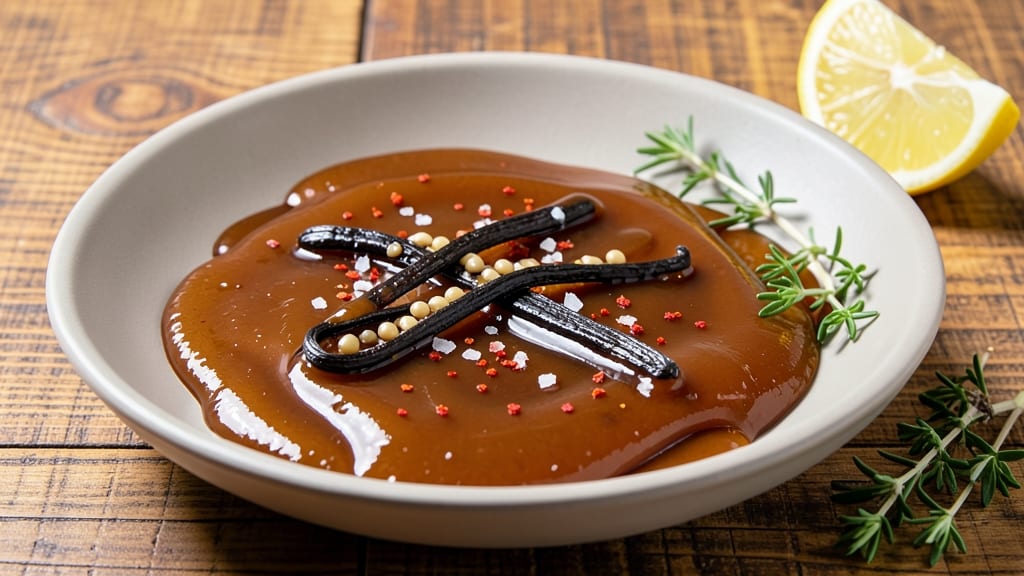
This balsamic glaze sauce recipe transforms simple ingredients into a rich, caramelized drizzle that elevates everything from grilled meats to fresh salads. The secret lies in reducing balsamic vinegar with sugar until it reaches a glossy, syrupy consistency—deep, tangy, and irresistibly sweet.
I’ve perfected this technique over years of testing, ensuring it’s foolproof yet restaurant-quality at home.
The process is simpler than it sounds: simmer vinegar, sugar, and a pinch of salt until it thickens into a glossy glaze, then finish with a splash of red wine vinegar for brightness. No special equipment needed—just patience and a heavy-bottomed pan to prevent burning.
The result? A sauce that’s versatile enough for breakfast (drizzled over eggs) or dinner (poured over steak), yet bold enough to stand alone.
Once cooled, this glaze keeps for weeks in the fridge, making it the ultimate pantry staple. Use it to glaze roasted vegetables, enhance caprese salads, or drizzle over vanilla ice cream for a sophisticated dessert touch.
The caramelized edges and tangy depth make it a game-changer for home cooks who want restaurant-worthy flavor without the fuss.
For extra depth, add vanilla bean or chili flakes during reduction—each variation unlocks new possibilities. Let’s make this sauce, because once you taste it, you’ll never buy bottled glaze again.
Ingredients for balsamic glaze sauce
Six core ingredients transform simple pantry staples into restaurant-quality caramelized balsamic glaze.
| Ingredient | Amount | Notes |
|---|---|---|
| Balsamic Vinegar 🍷 | 1 cup | High-quality aged variety preferred |
| Granulated Sugar 🍚 | ¾ cup | White or brown sugar works |
| Red Wine Vinegar 🍷 | 1 tbsp | For finishing brightness |
| Fine Sea Salt 🧂 | ¼ tsp | Kosher or Diamond Crystal |
| Vanilla Bean 🌿 | 1 whole | Optional for depth |
| Cayenne Pepper 🌶️ | ⅛ tsp | Optional for subtle heat |
| Unsalted Butter 🧈 | 1 tbsp | For glossy finish |
The balsamic vinegar is non-negotiable—aged, dark balsamic like Baldor Special Reserve or Di Martino delivers the deepest flavor. I always grab a smaller bottle (around 10 oz) since it’s pricey, but the flavor difference is worth it. Sugar matters too: turbinado or demerara adds subtle caramel notes, but plain white sugar works perfectly fine if that’s what you’ve got. For the red wine vinegar, Maille is my go-to—it’s consistent and bright. The vanilla bean? Splurge on a high-quality one from Penzeys if you’re adding it, but it’s optional for those who prefer a simpler profile.
No aged balsamic? Substitute with 3/4 cup regular balsamic vinegar plus 1 tbsp blackstrap molasses for depth. Short on sugar? Honey or maple syrup at a 1:1 ratio works, but the texture may be slightly thinner. The butter finish is crucial for that glossy sheen—European-style unsalted butter like Plugrá adds richness, but any brand will do. Want more complexity? Add 1/2 tsp smoked paprika during reduction for a BBQ-inspired twist. For a sweeter glaze, reduce the sugar slightly to 2/3 cup and add 1/4 cup orange juice at the end.
This glaze thickens as it cools, so store it in a clean glass jar with a tight seal. Keeps for 3-4 weeks in the fridge or 6 months in the freezer—just reheat gently in a saucepan. For a quick glaze, microwave 20-second bursts until smooth. I always make extra—it disappears fast on roasted Brussels sprouts, grilled chicken, or even vanilla ice cream. The key is patience: don’t rush the reduction, or it’ll burn. A heavy-bottomed saucepan is your best friend here.
Why You'll Love This Recipe
- Five-Ingredient Magic: I swear, this glaze comes together with just a saucepan and 10 minutes of simmering—no peeling, dicing, or fancy techniques. The vanilla bean seeds are the only "fuss," but even that’s optional if you’re in a rush.
- Sweet-Savory Balance: That first taste of caramelized sugar cutting through the tangy balsamic? It’s like a flavor hug. The red wine vinegar adds this bright, almost fruity edge—way more interesting than store-bought versions.
- Dress-Up Anything: Drizzle it over grilled chicken, toss it with roasted veggies, or slather it on bruschetta—it’s my go-to for weeknight dinners and fancy-ish gatherings. Honestly, I’ve even used it as a glaze for pork chops when I’m feeling lazy.
- Makes Leftovers Worth It: A single batch keeps for weeks in the fridge, and it only gets better as the flavors meld. I’ll make a big batch on Sundays, then use it all week—no waste, no last-minute grocery runs. Plus, it’s cheaper than buying fancy sauces.
Step-by-step instructions for balsamic glaze sauce
Transform simple ingredients into a luxurious caramelized drizzle with this precise method.
Combine Ingredients in a Saucepan
In a medium saucepan, combine the 1 cup balsamic vinegar and 0.75 cup granulated sugar. I like to use a heavy-bottomed pan for even heat distribution—this prevents scorching during the reduction. Add the 1 whole vanilla bean (split lengthwise and scraped if using) and 0.125 tsp cayenne pepper for subtle depth. Bring the mixture to a gentle boil over medium-high heat, stirring occasionally to dissolve the sugar completely.
Watch for the first signs of bubbling—this is when the sugar begins to caramelize. The mixture should reach a rolling boil within 3-4 minutes. Once boiling, immediately reduce heat to medium-low to maintain a steady simmer. This controlled heat is crucial for even reduction without burning the delicate vinegar flavors.
Simmer Until Thickened
Let the mixture simmer uncovered for 30-40 minutes, stirring occasionally with a wooden spoon. You're looking for a dramatic reduction where the liquid darkens to a rich amber color and thickens to a syrupy consistency—about the thickness of heavy cream. The sauce should coat the back of a spoon smoothly.
Here's where patience pays off: resist the urge to rush this process. The longer you simmer, the deeper the caramelized flavors develop. I usually check every 5 minutes after the initial 20 minutes to monitor progress. If the sauce begins to darken too quickly, reduce heat slightly to prevent over-browning.
Add Finishing Ingredients
Once the sauce reaches your desired thickness, remove it from heat and stir in the 1 tbsp red wine vinegar and 0.25 tsp fine sea salt. These final ingredients brighten the flavors and balance the sweetness. Let the sauce sit off heat for 5 minutes—this resting period allows the flavors to meld and the sauce to thicken slightly more.
For the glossy finish, whisk in the 1 tbsp unsalted butter until fully incorporated. The butter should melt smoothly into the warm sauce, creating a silky texture. If the sauce appears too thick after adding butter, you can thin it slightly with 1-2 teaspoons of hot water to achieve your preferred consistency.
Cool and Store Properly
Transfer the glaze to a clean glass jar or airtight container. Let it cool completely at room temperature—this is when the flavors truly develop. The sauce will thicken further as it cools, so don't be alarmed if it appears too thick immediately after cooking.
Store in the refrigerator for up to 2 weeks. When ready to use, gently reheat in a small saucepan over low heat, stirring occasionally until warmed through. This glaze works beautifully drizzled over grilled meats, pasta dishes, or even fresh fruit for a sophisticated touch. The balance of sweet, tangy, and subtle heat makes it incredibly versatile.
Pro Tips For Making Balsamic Glaze Sauce
- Simmer Slow and Steady: I learned this the hard way—rushing the reduction on high heat turns your glaze into a sticky mess instead of a glossy sauce. Keep it at a gentle simmer (small bubbles, occasional swirls) and let it work its magic for at least 20 minutes. The longer it cooks, the deeper the flavor, but don’t walk away—stir occasionally to prevent scorching.
- Scrape the Vanilla Bean: Don’t just drop in the pod and call it a day. Split the vanilla bean lengthwise, scrape out every last bit of those tiny black seeds, and toss them into the sauce. Those seeds carry the most flavor—trust me, I’ve tasted the difference. If you’re lazy (like me sometimes), at least make a shallow cut down the middle to release more aroma.
- Balance the Vinegars First: Taste your vinegar mix before adding sugar. If the red wine vinegar overpowers the balsamic, dilute it slightly with water—just a splash—to soften the sharpness. I used to add sugar blindly and end up with a glaze that tasted like syrup. Start with half the sugar, taste, then adjust. You’ll save yourself from a cloyingly sweet disaster.
- Strain for Smoothness: Skip the straining, and you’ll end up with tiny vanilla bean specks and sediment from the sugar caramelizing. Line a fine-mesh strainer with cheesecloth or a coffee filter for a silky texture—especially if you’re drizzling this over delicate dishes like berries or grilled fish. It’s a little extra effort, but the result looks (and tastes) polished.
Storing and reheating your leftovers
Refrigerator Storage
Transfer your cooled balsamic glaze to a clean glass jar with an airtight lid—I use Ball mason jars for their durability. Store it in the fridge for up to 2 weeks, where it continues developing deeper flavors.
The sauce will thicken further as it chills, so give it a quick stir before using. If it becomes too thick, simply reheat with 1-2 teaspoons of water to restore its glossy consistency. 🧊
Freezer Preservation
For long-term storage, portion the glaze into silicone molds or freezer-safe glass jars, leaving ½-inch headspace to prevent cracking. Freeze for up to 6 months—the texture remains stable, though it may separate slightly.
Thaw overnight in the fridge, then reheat gently on the stovetop with 1 tablespoon of water to restore its silky smoothness. This method is perfect for batch cooking when you know you’ll need it later. ❄️
Reheating Methods
For immediate use, warm the glaze in a small saucepan over low heat, stirring constantly until smooth—about 2-3 minutes. Avoid high heat, or it may lose its glossy finish.
If using a microwave, heat in 20-second bursts, stirring between each, until fully melted. The butter finish makes it especially sensitive to overheating, so keep an eye on it. 🔥
Thinning Techniques
If your glaze thickens too much after storage, revive it with hot water or broth. Start with 1 teaspoon and add gradually until you reach a drizzling consistency. For a quicker fix, whisk in 1 teaspoon of olive oil—it blends seamlessly and adds a subtle richness.
This trick works especially well if you’re using the glaze on grilled vegetables or salads. 🥄
Reviving Separated Glaze
If your glaze separates after freezing, don’t toss it! Place the jar in a bowl of warm water (like a double boiler) and stir gently until fully melted. The heat will help the ingredients recombine.
If it still looks grainy, strain it through a fine-mesh sieve before using. This method saves perfectly good glaze that might otherwise go to waste. 💡
Garnish and Flavor Boost
Before serving, elevate your glaze with a pinch of flaky sea salt or a dash of balsamic vinegar for brightness. For extra flair, top with toasted pine nuts or fresh thyme sprigs.
These finishing touches add texture and aroma, making your glaze feel restaurant-worthy. Save these garnishes in small jars to keep them fresh for weeks. ✨
Nutrition facts
Frequently asked questions
Can I make this balsamic glaze without sugar?
Yes, but the texture will be thinner and less caramelized. Replace the sugar with 3/4 cup honey or maple syrup for natural sweetness, or use 1/4 cup molasses for a deeper flavor. The reduction time may need adjustment since these sweeteners evaporate differently than sugar.
How do I know when the glaze is done?
It's ready when it reaches a syrupy consistency that coats the back of a spoon and darkens to a rich amber color. This typically takes 30-40 minutes of simmering. Test by letting a small amount cool—it should thicken noticeably when chilled.
What's the best way to use this glaze on meats?
For meats like steak or chicken, brush on a thin layer during the last 2-3 minutes of cooking. For extra flavor, marinate the meat in 1-2 tablespoons of the glaze for 15-30 minutes before grilling. The residual sugar helps create a delicious caramelized crust!
Can I make this glaze in a slow cooker?
Combine all ingredients in your slow cooker on low heat for 4-6 hours, stirring occasionally. The slow cooking method prevents scorching and creates a more mellow flavor. Just watch the liquid level—you may need to add 1-2 teaspoons of water if it gets too thick.
Why did my glaze turn bitter?
Over-reducing or burning the sauce causes bitterness. Always use medium-low heat and stir occasionally. If it gets too dark, immediately remove from heat and stir in 1 teaspoon of red wine vinegar to balance the flavors. For future batches, reduce the sugar slightly or simmer for less time.