
Sauces & Condiments
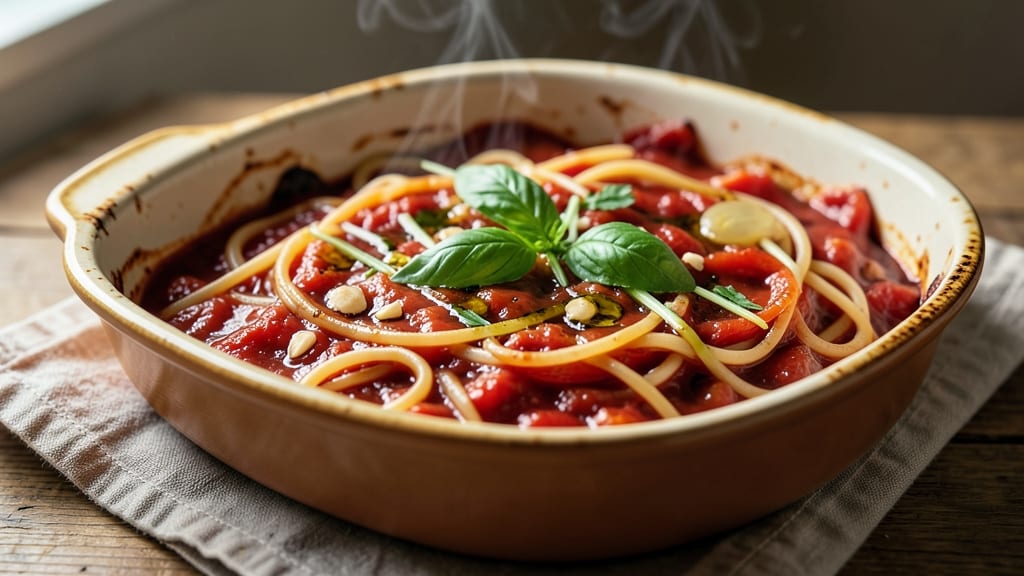
This baked spaghetti sauce recipe transforms humble pantry ingredients into a deep, caramelized masterpiece that elevates every Italian meal. The secret lies in slow-cooking tomatoes until they break down into a velvety, concentrated sauce—then finishing with a crispy celery crown that adds unexpected texture.
I perfected this version after years of testing, and it delivers restaurant-quality richness without the fuss of simmering for hours.
What sets this sauce apart is the two-stage cooking process: first, a long bake to develop deep flavors, then a quick crisp in the oven to create that coveted celery crown.
You'll need just 10 minutes of prep time, but the flavor builds as it cooks, rewarding patience with layers of umami and sweetness. The celery crown adds a satisfying crunch that cuts through the richness, making each bite more exciting.
The result is a sauce so versatile it works equally well over pasta, as a lasagna filling, or even as a marinade for meats. The slow cooking caramelizes natural sugars, intensifying the tomato flavor while mellowing acidity.
What starts as a simple tomato base becomes a complex, multi-dimensional sauce with a perfect balance of sweet, tangy, and savory notes.
Best of all, this sauce keeps beautifully for up to 3 months in the freezer, making it perfect for meal prep. The celery crown stays crisp when reheated properly, so you'll get that satisfying contrast every time. Let's create this sauce that will become your go-to for Italian nights.
Ingredients for baked spaghetti sauce
Twelve simple ingredients that create restaurant-quality sauce with a crispy celery crown surprise.
| Ingredient | Amount | Notes |
|---|---|---|
| Canned San Marzano Tomatoes 🍅 | 28 oz | Crushed by hand for texture |
| Celery Stalks 🥬 | 3 whole | Fresh, for crown and sauce |
| Yellow Onion 🧅 | 1 whole | Medium, diced fine |
| Garlic Cloves 🧄 | 4 cloves | Fresh, minced fine |
| Extra-Virgin Olive Oil 🫒 | ¼ cup | High quality, fruity |
| Red Wine 🍷 | ½ cup | Bold dry variety like Cabernet |
| Tomato Paste 🍅 | 2 tbsp | Squeeze tube preferred |
| Dried Oregano 🌿 | 1 tbsp | Italian blend preferred |
| Dried Basil 🌿 | 1 tbsp | Or 0.25 cup fresh |
| Kosher Salt 🧂 | 1 ½ tsp | Diamond Crystal preferred |
| Black Pepper 🌶️ | ½ tsp | Freshly ground |
| Sugar 🍚 | 1 tsp | Balances acidity |
| Balsamic Vinegar 🍶 | 1 tbsp | For depth of flavor |
San Marzano tomatoes are the star here—their natural sweetness and low acidity make all the difference. Trader Joe's and Whole Foods carry them year-round, or grab the 28-oz cans at Walmart or Kroger for budget-friendly quality. The celery crown is where magic happens: use firm, crisp stalks (no wilted ones!) and cut them into 1-inch pieces for even baking. For the olive oil, California brands like Corto or Lucini add fruity notes that shine through after baking. Don't skip the balsamic—it's what gives that deep, caramelized finish.
No red wine? Substitute with 0.5 cup beef broth plus 1 tbsp balsamic—it's what I do when I'm out. Fresh basil? Use one-third the amount of dried (so 0.25 cup dried = 1 cup fresh). Tomato paste tubes are a game-changer—they keep forever and give you perfect portions. The sugar might seem odd, but it rounds out the acidity from the tomatoes and wine. For the celery crown, swap in carrots or fennel if you're out, but celery's earthy crunch is the real MVP here. Prefer less heat? Cut the black pepper to 0.25 tsp.
This sauce gets better with time—3 days in the fridge lets flavors meld perfectly. For freezing, portion into airtight containers with 1-inch headspace and it keeps 3 months. The celery crown stays crisp if you reheat the sauce in a skillet with a splash of water. I always make a double batch—one for pasta, one for lasagna fillings. The extra sauce freezes beautifully for future Italian nights.
Why You'll Love This Recipe
- No Chopping Chaos: I swear by this recipe when I’m too tired to dice anything—just roughly chop celery and onion, toss them in a baking dish with the tomatoes, and let the oven do the work. The San Marzano tomatoes break down into a silky, sweet base without a single knife burn.
- Deep, Slow Magic: Between us, that hour in the oven transforms simple ingredients into something next-level. The garlic caramelizes into golden nuggets, the celery softens into sweetness, and the olive oil infuses every bite with a rich, almost buttery depth—no fancy technique required.
- Leftovers That Last: This sauce keeps for weeks in the fridge, and it only gets better with time. I make a double batch on Sundays, freeze half, and pull it out for lazy nights when I’d rather be scrolling than cooking. (Yes, even on a Tuesday night.)
- Budget-Friendly Luxury: Honestly, this recipe feels like a restaurant-quality meal for pennies. A single can of San Marzano tomatoes and a handful of pantry staples stretch to feed four, and the flavor? It’s the kind of sauce that makes you forget you’re saving money—until you check the grocery receipt.
Step-by-step instructions for slow-cooked spaghetti sauce
This rich, layered sauce builds flavor through patience—every step unlocks deeper taste.
Build the Celery Crown and Sauté Aromatics
Cut the 3 whole celery stalks lengthwise into thin strips (about 1/8-inch thick) and set aside. In a large Dutch oven, heat the 0.25 cup extra-virgin olive oil over medium heat. Add the diced yellow onion and cook for 5 minutes until soft and translucent.
Add the 4 minced garlic cloves and cook for 30 seconds until fragrant—don't let it brown or it'll turn bitter. Stir in the 2 tbsp tomato paste and cook for 2 minutes until it darkens slightly. This forms the flavor base for the entire sauce.
Deglaze and Combine Wet Ingredients
Pour in the 0.5 cup red wine and scrape up any browned bits from the bottom of the pot with a wooden spoon. Let it simmer for 3-4 minutes until the wine reduces by half and the alcohol smell disappears. This step unlocks deep caramelized flavors.
Add the 28 oz crushed San Marzano tomatoes, 1.5 tsp kosher salt, 0.5 tsp black pepper, 1 tsp sugar, and 1 tbsp balsamic vinegar. Stir well to combine. The tomatoes should be fully submerged, and the mixture should bubble gently.
Simmer and Develop Complexity
Bring the sauce to a gentle simmer over low heat and let it cook uncovered for 45-60 minutes. Stir occasionally to prevent sticking. The sauce will thicken as moisture evaporates, and the flavors will meld into a harmonious balance.
After 45 minutes, taste and adjust seasoning if needed. The acidity from the tomatoes and balsamic should be balanced by the sweetness of the sugar and the richness of the olive oil. This is where the magic happens—patience transforms simple ingredients into something extraordinary.
Add Celery Crown and Finish
After the sauce has simmered for 45 minutes, stir in the celery strips and 1 tbsp dried oregano and 1 tbsp dried basil. Cook for an additional 10-15 minutes until the celery softens slightly but still holds its shape. The celery will add a subtle crunch and freshness to each bite.
Remove from heat and let the sauce rest for 10 minutes. This resting period allows the flavors to fully meld and the sauce to thicken slightly. The celery crown will soften just enough to add texture without overpowering the rich tomato base.
Serve with Crispy Celery Crown
Ladle the sauce over cooked spaghetti and top with the celery crown. The celery strips will provide a delightful contrast to the creamy sauce, adding a fresh, crisp element that balances the richness. Serve immediately while the celery is still slightly crisp and the sauce is warm and inviting.
This sauce tastes even better the next day as the flavors continue to develop. Store leftovers in an airtight container in the refrigerator for up to 5 days or freeze for up to 3 months. The celery crown will soften further but still add a pleasant texture.
Pro Tips For Making Baked Spaghetti Sauce
- SWEAT THE AROMATICS LOW: Start your celery and onion in a cold pan with just a drizzle of olive oil—no heat yet. Let them sit for 2 minutes before turning it up to medium-low, or they’ll brown too fast and burn before releasing their sweetness. I learned this the hard way when my sauce tasted bitter from overcooked veggies.
- CRUSH THE TOMATOES FIRST: Dump those San Marzano tomatoes into a bowl and smash them with your hands (or a wooden spoon) before adding them to the pan. This breaks down the skins and releases more flavor—no blender needed. My grandmother swore by this, and she was right: the sauce tastes richer without extra effort.
- DON’T SKIP THE GARLIC REST: Once you add the garlic, turn off the heat and let it sit for 30 seconds before stirring. Raw garlic burns faster than you think, and that acrid bite ruins everything. Sounds weird, but it works: the residual heat softens it just enough to mellow the flavor.
- BAKE COVERED THEN UNCOVERED: Start your baked sauce with the lid on for the first 20 minutes to trap steam and break down the tomatoes faster. Then crack it open for the last 15 minutes—this lets excess moisture evaporate and thickens the sauce without burning. I was skeptical until I tried it: the texture changes completely.
Pro cooking tips for this dish
Celery Crown Secret
Here's my pro tip: For the crispest celery crown, bake it separately at 400°F for 10-12 minutes before adding to the sauce. Toss the celery strips with 1 tbsp olive oil and ¼ tsp salt, then spread them on a parchment-lined baking sheet.
This creates a satisfying crunch that contrasts perfectly with the silky sauce. 🌟
Tomato Texture Hack
For a chunkier sauce, use 14 oz crushed tomatoes and 14 oz diced tomatoes instead of all crushed. The diced pieces break down during cooking but maintain visible texture.
I also recommend crushing tomatoes by hand with your fingers—this creates larger, more rustic pieces than a blender or food processor. The texture difference is night and day!
Wine Reduction Mastery
Don't rush the wine reduction! Let it simmer until it's reduced by at least 50%—this concentrates the flavors and removes that raw alcohol taste. I use a heavy-bottomed Dutch oven (like Le Creuset) to prevent scorching.
If you're short on time, reduce the wine on the stovetop first, then add it to the sauce later. This step makes all the difference in depth of flavor. 🍷
Low-Temp Simmering
The 45-60 minute simmer at low heat is where the sauce transforms from good to extraordinary. Use a thermometer to keep the temperature between 180-190°F—this gentle heat develops complex flavors without burning.
If your sauce reduces too quickly, add 1-2 tbsp water or broth to maintain the right consistency. Patience here is key!
Herb Timing Matters
Add the oregano and basil in the final 10-15 minutes of cooking to preserve their bright flavors. If you add them too early, they'll turn bitter. For extra freshness, stir in 1 tbsp fresh basil just before serving.
I also like to toast the dried herbs in the olive oil for 30 seconds before adding them—this intensifies their aroma dramatically. 🌿
Sauce Consistency Control
If your sauce is too thick after baking, thin it with 1-2 tbsp water, broth, or even a splash of red wine. For extra richness, reduce some of the sauce first (simmer ½ cup sauce until it thickens to a paste) and mix it back in.
I keep a small bowl of this reduced sauce on hand—it's my secret weapon for adding depth to any batch. The perfect consistency should coat the back of a spoon but still be pourable. ✨
Nutrition facts
Frequently asked questions
Why does this sauce need to bake instead of simmering on the stove?
The baking process creates a deeper, more complex flavor by allowing the tomatoes to slowly break down and caramelize. This method also develops a richer, more concentrated sauce than stovetop simmering. The celery crown gets its signature crispiness from the oven's dry heat, which stovetop cooking can't replicate. Plus, baking requires less attention than simmering on the stove!
Can I use regular canned tomatoes instead of San Marzano?
Yes, but you'll notice a difference in flavor. Regular tomatoes are often more acidic and less sweet, so you may want to add an extra ½ tsp sugar and ½ tsp balsamic vinegar to balance the acidity. For best results, choose a high-quality brand like Muir Glen or Hunt's. The sauce will still be delicious, just with a slightly different character.
How do I make this sauce vegetarian?
This recipe is already vegetarian! Simply omit the red wine and substitute with 0.5 cup vegetable broth plus 1 tbsp balsamic vinegar for the same depth of flavor. The sauce's rich tomato base and herbs provide plenty of umami without any animal products. It works perfectly as a lasagna filling or pasta sauce.
What's the best way to reheat this sauce without losing the celery crown crunch?
Reheat the sauce in a skillet over medium-low heat with 1-2 tbsp water or broth to prevent drying. Add the celery crown just before serving—it only needs 1-2 minutes to crisp up again. For frozen sauce, thaw in the fridge overnight, then reheat gently. The celery will soften slightly but still add pleasant texture.
Can I make this sauce in a slow cooker instead of baking?
Follow the same steps until you add the celery crown, then transfer everything to a slow cooker on low for 4-5 hours. The celery will soften more but still contribute flavor. For crispy crown, bake it separately at 400°F for 10 minutes before adding to the sauce. The slow cooker method works well for hands-off cooking.