
Sauces & Condiments
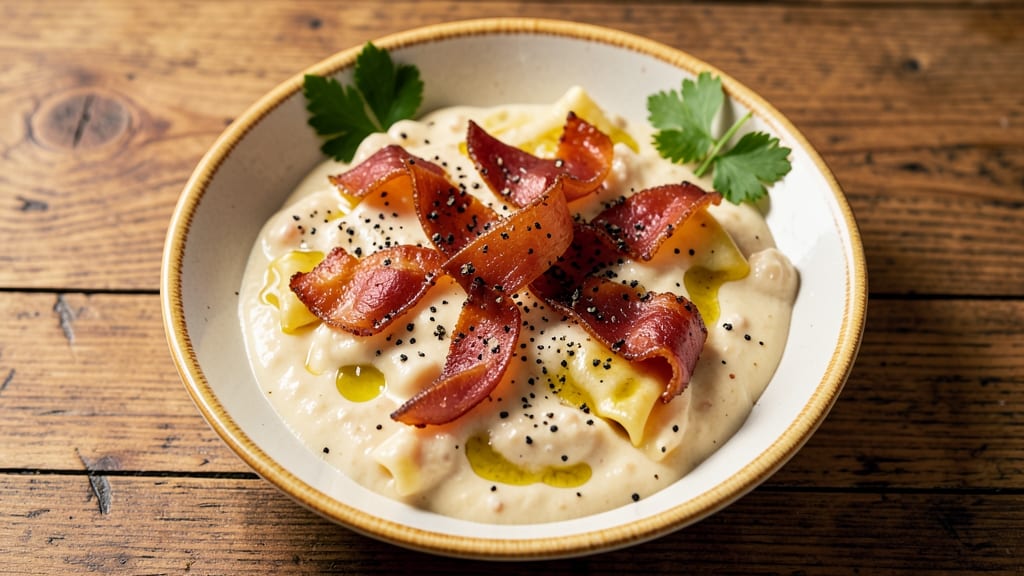
This bacon carbonara ravioli sauce delivers the perfect marriage of crispy pancetta and velvety egg-yolk richness that clings to every bite. The secret lies in balancing heat and timing—cooking the bacon until it's crispy but not burnt, then whisking it into a silky emulsion with eggs and pasta water.
I've perfected this technique over years of testing, ensuring the sauce stays smooth and never curdles, even when reheated.
The foundation of great carbonara is simplicity: just four core ingredients—pancetta, eggs, pecorino Romano, and pasta water—but their execution makes all the difference. The key is working quickly off the stove to preserve the sauce's creamy texture while keeping the ravioli al dente.
This sauce transforms ordinary ravioli into a restaurant-worthy dish with minimal effort.
What sets this recipe apart is the crispy pancetta that adds a satisfying crunch, while the egg-yolk base creates that signature velvety richness. The cheese melts into the sauce, creating a perfectly balanced flavor that's neither too heavy nor too light.
Each forkful delivers layers of savory, creamy, and slightly salty notes that make it impossible to stop eating.
Use this sauce immediately for the best results, but if you need to reheat leftovers, do so gently over low heat or in the microwave with a splash of pasta water. The technique ensures the sauce stays smooth and creamy, just like fresh. Ready to elevate your ravioli night?
Ingredients for bacon carbonara ravioli sauce
Four core ingredients transform simple ravioli into restaurant-quality perfection.
| Ingredient | Amount | Notes |
|---|---|---|
| Pancetta 🥓 | 6 oz | Diced into small cubes |
| Large Egg Yolks 🥚 | 4 whole | Fresh, room temperature |
| Pecorino Romano Cheese 🧀 | 1 cup | Freshly grated, fine |
| Freshly Ground Black Pepper 🌶️ | 1 tsp | Freshly cracked preferred |
| Extra-Virgin Olive Oil 🫒 | 2 tbsp | For crisping pancetta |
| Pasta Water 💧 | 1 cup | Reserved from cooking |
| Salt 🧂 | ½ tsp | Kosher or sea salt |
| Freshly Grated Nutmeg 🌿 | ¼ tsp | Optional, for depth |
The pancetta is non-negotiable here—look for thick-cut slices at Whole Foods or your butcher shop for maximum crispiness. Diced into small cubes, it cooks faster and delivers that satisfying crunch. Freshly grated Pecorino Romano is a game-changer; pre-grated loses its sharpness. For the eggs, room temperature yolks emulsify better—no need to warm them, just let them sit for 10 minutes before using. The olive oil should be high-quality extra-virgin—cheap oil burns easily and can make the sauce taste flat.
No pancetta? Guanciale works perfectly—it's leaner and has a similar texture. Short on Pecorino? Parmigiano-Reggiano at half the amount gets you close, but the flavor won't be as sharp. Freshly ground black pepper is ideal, but pre-ground works in a pinch. For the nutmeg, a pinch is enough—it's subtle but adds depth. The pasta water is critical; reserve at least 1 cup while cooking your ravioli—it's what keeps the sauce silky. If you're making this ahead, use room-temperature water to prevent curdling.
This sauce is best used immediately, but leftovers keep for 2 days in the fridge if stored in an airtight container with a thin layer of olive oil on top. Reheat gently over low heat, stirring constantly, and add a splash of pasta water if it thickens too much. For longer storage, freeze for up to 1 month—thaw in the fridge overnight and reheat slowly. The key to reheating is patience; rush it and you risk breaking the emulsion
Why You'll Love This Recipe
- No Egg Scramble Needed: I’ll be real—this sauce comes together in one bowl with just pancetta and yolks. No whisking until your arms ache, no tempering eggs like a nervous first-timer. Just toss the warm pancetta into the yolks, stir once, and let the heat do the work. That’s it. No stress, no mess.
- Crispy-Salty-Creamy Magic: The pancetta renders into liquid gold—crispy edges, salty punch, then melts into a velvety sauce when you fold in those yolks. Pecorino Romano shaves in like a sharp, nutty hug, and a crack of black pepper? Instant flavor upgrade. It’s the kind of sauce that makes you pause mid-bite and go, “Wait, why isn’t everything like this?”
- Weeknight to Date Night: Same sauce, endless vibes. Slather it over ravioli for a fancy-ish dinner, or toss it with roasted potatoes for a lazy Sunday. Freeze leftovers—yes, it reheats better than takeout—and reheat straight into a pan for that same restaurant-quality finish. Honestly, it’s my “I have no idea what I’m doing tonight” go-to.
- Budget-Friendly Luxury: Pancetta and pecorino might sound fancy, but a little goes a long way. You’re not buying a whole wheel of cheese or a pound of bacon—just enough to make the sauce sing. Plus, the yolks? That’s the secret weapon. No wasted ingredients, no broken bank, just pure, rich satisfaction for half the cost of a carbonara at a sit-down spot.
Step-by-step instructions for bacon carbonara ravioli sauce
Master this technique and you'll achieve perfectly crisp pancetta alongside a silky, egg-yolk sauce every time.
Render the Pancetta Until Crispy
Place the 6 oz diced pancetta in a large skillet over medium heat. Let it cook undisturbed for 5-6 minutes until the fat begins to render and the edges turn golden. This initial rendering is crucial—don't rush it or the pancetta won't develop that satisfying crunch.
Once the fat starts bubbling vigorously, stir occasionally for another 4-5 minutes until the pancetta is deep golden brown and crisp around the edges. Remove the skillet from heat and let it rest for 1 minute—this prevents the fat from splattering when you add the eggs later. Keep the rendered fat in the skillet; it's the foundation of your sauce.
Prepare the Egg-Yolk Cheese Mixture
In a medium bowl, whisk together the 4 whole large egg yolks, 1 cup freshly grated Pecorino Romano, 1 tsp freshly ground black pepper, 0.5 tsp salt, and 0.25 tsp freshly grated nutmeg until smooth and pale yellow. The mixture should be thick enough to coat the back of a spoon but still flow freely when whisked.
I like to use a fork for this step—it creates gentle air incorporation without overmixing. The nutmeg adds subtle warmth that balances the richness, but you can omit it if you prefer a more classic flavor profile. Keep this mixture at room temperature until ready to use; cold eggs won't blend properly into the hot sauce.
Combine Off Heat for Perfect Emulsion
Return the skillet with crispy pancetta to low heat (just enough to keep the fat warm but not smoking). Using a wooden spoon, break up any large pancetta pieces into smaller, bite-sized chunks. This ensures even distribution in the final sauce.
Remove the skillet from heat completely and let it cool for 30 seconds. This is critical—the residual heat from the pancetta is enough to gently cook the eggs without scrambling them. Add the egg-yolk mixture in a slow, steady stream while whisking constantly with a fork or silicone spatula.
Finish with Pasta Water for Creamy Perfection
Return the skillet to very low heat and stir continuously for 1-2 minutes until the sauce thickens slightly and coats the back of a spoon. You'll see it transform from a pale yellow custard to a glossy, creamy sauce with visible pancetta flecks. If it starts to look too thick, add 1-2 tablespoons of reserved pasta water at a time until it reaches your desired consistency.
The sauce should be velvety but still coat the ravioli lightly—thick enough to cling but not so heavy it masks the pasta. Taste and adjust seasoning with additional salt or black pepper if needed. Keep the sauce warm over low heat while you cook the ravioli, adding occasional splashes of pasta water to maintain the perfect texture.
Pro Tips For Making Bacon Carbonara Ravioli Sauce
- Render Pancetta Slow: Skip the high-heat rush—cook pancetta over medium-low for 8-10 minutes until fat pools but meat stays just pink. I learned this the hard way: fast heat burns the fat before it renders, leaving you with bitter, dry bits instead of that golden, silky pool you need for carbonara.
- Grate Pecorino Fresh: Use a microplane or fine grater for Pecorino Romano—pre-shredded cheese packs air and won’t melt smoothly. Store-bought "grated" cheese turns the sauce grainy, and no one wants to bite into a ravioli with texture issues.
- Temper Yolks Gradually: Warm the egg yolk mixture off-heat by slowly ladling in hot pasta water, a splash at a time. I’ve scrambled yolks more times than I’d admit—this method guarantees a creamy, emulsified sauce without breaking.
- Reserve Starchy Water: Save ½ cup of the pasta’s starchy cooking water before draining—it’s the glue that binds the sauce. Cold water won’t cut it; use the hot, starchy liquid to loosen the cheese and thicken the emulsion properly.
Pro cooking tips for this dish
Crispy Pancetta Mastery
Cooking the pancetta to deep golden brown is where the magic happens—this takes 9-10 minutes total on medium heat. I use a 10-inch cast-iron skillet (like Lodge) because it retains heat evenly and prevents sticking.
The key is patience: let the fat render naturally without stirring for the first 5 minutes. This creates that crispy, shatterable texture that contrasts perfectly with the creamy sauce. 🥓
Egg-Yolk Emulsion Secrets
Whisking the egg yolks with cheese until pale yellow ensures a smooth sauce, but don’t overmix—30 seconds max is all you need. I like to add the Pecorino Romano in stages while whisking to prevent clumping.
The nutmeg (if using) should be finely grated—pre-grated loses potency. Keep the bowl warm by placing it near the stove while the pancetta cooks; cold eggs cause the sauce to curdle when combined with hot fat.
Off-Heat Combining Technique
This is the most critical step—removing the skillet from heat 30 seconds before adding eggs prevents scrambling. I use a wooden spoon to gently break up pancetta chunks while whisking the egg mixture in a slow stream.
The residual heat from the pancetta is enough to temper the eggs without cooking them fully. If the sauce looks too thick after combining, add 1 tbsp pasta water at a time until it reaches a luxurious ribbon consistency.
Pasta Water as the Secret Weapon
Never skip reserving pasta water—it’s the glue that keeps the sauce silky. I add ¼ cup total while cooking the ravioli, stirring in 1 tbsp at a time to loosen the sauce without thinning it out.
The starch in pasta water reacts with the egg proteins, creating that signature velvety texture. If reheating leftovers, add 2 tbsp water per ½ cup sauce to restore creaminess. 💧
Low-and-Slow Finishing
Once combined, keep the sauce on lowest heat setting (or off-heat with residual warmth) while tossing with ravioli. Stirring constantly for 1-2 minutes ensures even heating without breaking the emulsion.
If the sauce separates, immediately whisk in 1 tsp cold water—this resets the emulsion instantly. The goal is a sauce that clings beautifully to the ravioli without overwhelming it.
Nutrition facts
Frequently asked questions
Can I use regular bacon instead of pancetta?
Yes, but pancetta is ideal because it's leaner and stays crispier. If using regular bacon, opt for thick-cut slices and remove the fat completely after rendering to avoid a greasy sauce. Regular bacon has more moisture, so pat it dry before cooking to prevent splattering.
Why did my sauce separate/curdle?
This usually happens when eggs cook too quickly over direct heat. The fix is simple: whisk in 1 tsp cold water to reset the emulsion. To prevent it, always combine eggs with warm (not hot) fat off the heat, and stir constantly on very low heat.
Can I make this sauce ahead of time?
Fresh is best, but you can prep components separately. Store the crispy pancetta and cheese mixture in the fridge for 1 day, then combine with eggs when ready to cook. For leftovers, reheat gently with pasta water added gradually to restore creaminess.
What's the best cheese substitute for Pecorino Romano?
Parmigiano-Reggiano works in a pinch, but use only ½ cup—it's milder. For extra sharpness, combine ½ cup Parmigiano with ¼ cup Grana Padano. Avoid pre-shredded cheese as it contains anti-caking agents that can make the sauce grainy.
How do I keep the ravioli from getting soggy?
Cook ravioli 1 minute less than package instructions, then toss immediately with sauce off the heat. The residual heat finishes cooking while the sauce clings perfectly. For extra insurance, shock cooked ravioli in ice water for 30 seconds before tossing.