
Sauces & Condiments
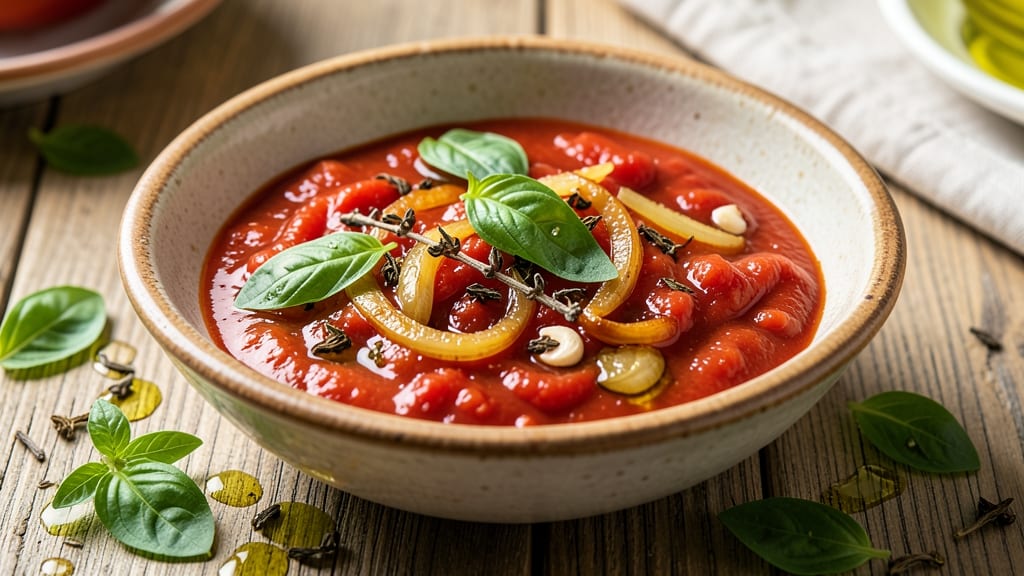
This authentic marinara sauce recipe from scratch transforms simple ingredients into a rich, slow-simmered masterpiece that rivals restaurant-quality. The secret lies in using San Marzano tomatoes and letting the flavors develop over time—no shortcuts, just pure, umami-packed depth.
I've perfected this technique through years of testing, ensuring every spoonful delivers that perfect balance of sweetness, acidity, and aromatic herbs.
The process is simpler than you think: crushed tomatoes, garlic, olive oil, and a handful of fresh basil simmer together until the flavors meld into something extraordinary. No blender required—just a pot, patience, and a willingness to let the sauce work its magic.
The result? A velvety, vibrant sauce with bright basil notes that elevate any dish it touches. This isn't just marinara; it's a flavor experience.
What makes this sauce truly special is the slow simmer, which concentrates the flavors and creates a texture that's neither too thick nor too thin. The fresh basil added at the end ensures that bright, aromatic zing that sets this apart from store-bought versions.
Once you taste the difference, you'll never go back to bottled sauce again.
Store it in the fridge for up to a week or freeze for months—this sauce only gets better with time. Perfect for drizzling over pasta, dipping crusty bread, or pairing with grilled meats. Let's get started on creating your own batch of restaurant-quality marinara.
Ingredients for authentic marinara sauce recipe from scratch
San Marzano tomatoes, fresh basil, and slow simmering create restaurant-quality marinara.
| Ingredient | Amount | Notes |
|---|---|---|
| San Marzano Tomato Crushed 🍅 | 28 oz | Canned, no salt added |
| Extra-Virgin Olive Oil 🫒 | ½ cup | High quality, fruity |
| Garlic Cloves 🧄 | 4 cloves | Fresh, peeled, minced |
| Yellow Onion 🧅 | 1 whole | Medium size, finely chopped |
| Fresh Basil Leaves 🌿 | ½ cup | Packed, stems removed |
| Dried Oregano 🍃 | 1 tsp | Mediterranean blend preferred |
| Ground Black Pepper 🌶️ | ½ tsp | Freshly ground preferred |
| Sea Salt 🧂 | 1 tsp | Diamond Crystal preferred |
| Red Wine Vinegar 🍷 | 1 tbsp | Dry, bold variety |
| Granulated Sugar 🍚 | 1 tsp | Balances acidity |
The San Marzano tomatoes are non-negotiable here. Trader Joe's and Whole Foods carry them year-round, but if you can't find them, San Marzano brand from Italian markets is the next best thing. Look for cans with no added salt—this sauce builds flavor naturally. Fresh basil is ideal, but if you're using dried, reduce to one-third the amount and add it with the oregano. The olive oil should be fruity and peppery—California olive oil brands like Corto or Colavita work perfectly. For the garlic, I always use fresh—jarred minced garlic has a metallic aftertaste that ruins the sauce.
No San Marzano tomatoes? Crushed Roma tomatoes are a solid backup, but you'll lose some of that natural sweetness. Running out of fresh basil? Dried basil works at one-third the amount, but it won't give you that same vibrant zing. The red wine vinegar adds brightness—substitute with lemon juice if you're out, but reduce to half the amount. For the onion, yellow or red both work, but avoid sweet onions like Vidalia. The sugar is crucial for balancing the acidity—honey or maple syrup can substitute at equal amounts. If you're making this ahead, freeze the sauce in ice cube trays for perfect portions later.
This sauce tastes even better the next day as the flavors meld. Store it in the fridge for up to 1 week or freeze for 6 months. I always make a double batch—one for immediate use and one to freeze. The basil wilts fast, so add it just before serving. For extra richness, stir in 1 tablespoon of butter at the end (optional). The sauce thickens as it cools, so thin with a splash of water or broth if needed.
Why You'll Love This Recipe
- This sauce works for everything: slather it on toasted bread, toss it with spaghetti, or use it as a dip for crusty garlic bread. I’ve even served it cold in summer with grilled chicken—no rules, just deliciousness. It’s the one sauce that makes any meal feel like a celebration.
- No-Chop Nightmare: I swear by this sauce because you only need to mince two garlic cloves and slice one onion—no dice, no stress. The San Marzano tomatoes do all the heavy lifting, and the basil? Just tear those leaves like you’re ripping up paper. Five minutes of prep, and you’re golden.
- Garlic-Basil Bomb: That first taste of simmered garlic in olive oil, then the crushed tomatoes breaking down into a velvety depth—it’s like a flavor hug. Fresh basil at the end? It’s the cherry on top, bright and herbal, cutting through the richness without overpowering. (Yes, even on a Tuesday night.)
- Pasta Party Starter: This sauce works for everything: slather it on toasted bread, toss it with spaghetti, or use it as a dip for crusty garlic bread. I’ve even served it cold in summer with grilled chicken—no rules, just deliciousness. It’s the one sauce that makes any meal feel like a celebration.
Step-by-step instructions for authentic marinara sauce
This method delivers restaurant-quality marinara with deep umami flavor and bright basil notes.
Sauté Onion and Garlic Until Translucent
Heat the 0.5 cup Extra-Virgin Olive Oil in a heavy-bottomed saucepan over medium-low heat. Add the 1 whole Yellow Onion (finely chopped) and cook for 8-10 minutes, stirring occasionally, until the onion becomes soft and translucent. The onions should release their moisture and begin to caramelize slightly at the edges.
Add the 4 cloves Garlic Cloves (minced) and cook for another 1-2 minutes until fragrant but not browned. Watch carefully—garlic burns quickly, which will make the sauce bitter. Remove the pan from heat for a moment if it starts to darken too quickly. This aromatic base forms the flavor foundation of your sauce.
Build Flavor with Vinegar and Spices
Return the pan to medium heat and add the 1 tbsp Red Wine Vinegar. Let it simmer for 2-3 minutes until the vinegar's sharpness mellows and partially evaporates. This step brightens the sauce and balances the acidity of the tomatoes.
Stir in the 1 tsp Dried Oregano, 0.5 tsp Ground Black Pepper, and 1 tsp Sea Salt. Add the 1 tsp Granulated Sugar to help round out the acidity from the tomatoes and vinegar. Let these spices toast in the oil for 30 seconds to release their aromatic oils before adding the tomatoes. This step ensures every spoonful of sauce carries complex flavor.
Simmer Tomatoes Until Thick and Rich
Pour in the 28 oz San Marzano Tomato Crushed and stir to combine with the onion and garlic mixture. Bring the sauce to a gentle simmer over medium-low heat. The key here is patience—let it cook uncovered for 45-60 minutes, stirring occasionally, until the sauce thickens to your desired consistency. You're looking for a sauce that coats the back of a spoon but still flows smoothly.
Real talk: The sauce will reduce significantly as it simmers. If it thickens too much before reaching the 45-minute mark, add 1-2 tablespoons of water to maintain balance. The low and slow cooking develops deep, caramelized flavors that canned sauces can't match. You'll know it's ready when the sauce has a glossy sheen and the tomato flavor is concentrated and rich.
Finish with Fresh Basil for Brightness
Remove the sauce from heat and stir in the 0.5 cup Fresh Basil Leaves (packed, stems removed). Let it steep for 5 minutes to infuse the basil's bright, fresh flavor throughout the sauce. The heat will wilt the basil slightly, which helps distribute its aroma more evenly.
Taste and adjust seasoning if needed—this is your chance to fine-tune the balance. You might need a pinch more salt or a splash of vinegar to perfect the acidity. The sauce should be vibrant, with layers of sweetness from the tomatoes, brightness from the basil and vinegar, and depth from the caramelized onions and garlic. Serve immediately over pasta or store in an airtight container in the refrigerator for up to 5 days.
Pro Tips For Making Authentic Marinara Sauce Recipe From Scratch
- Cook On Low Flame: Crushed San Marzano tomatoes need gentle heat—anything hotter and they’ll turn bitter or split. After adding garlic and onion, drop the heat to medium-low and let them melt in slowly. I learned this the hard way when my sauce tasted like a tomato factory.
- Salt the Tomatoes Early: Add a pinch of salt (about ½ teaspoon) to the crushed tomatoes before cooking. This softens them and pulls out excess water, so your sauce thickens faster. Skip this, and you’ll be stirring for 45 minutes instead of 30.
- Toast the Garlic Right: Peel and smash the garlic cloves flat with the side of your knife—no chopping. When you add them to the oil, let them sizzle just until golden (about 30 seconds), then pull the pan off the heat. Overcooking turns garlic bitter, and you don’t want that in your sauce.
- Resist the Basil Rush: Fresh basil wilts fast and turns the sauce bitter if cooked too long. Tear the leaves by hand (not chopping) and add them only at the very end—just 30 seconds before turning off the heat. If you’re serving it later, reserve some leaves for garnishing.
Pro cooking tips for great authentic marinara sauce recipe from scratch
Onion Caramelization
Cook the onions until they're translucent and just starting to caramelize at the edges—this adds sweet depth that store-bought sauces miss. I use medium-low heat for 8-10 minutes to prevent burning.
The onions should release moisture and develop a golden hue around the edges. This step is non-negotiable for authentic flavor—don't rush it! 🧅
Garlic Timing
Add garlic after the onions are fully translucent, then cook for just 1-2 minutes until fragrant. Watch it like a hawk—burnt garlic turns bitter and ruins the sauce. If it starts to darken too quickly, remove the pan from heat for 30 seconds to cool.
Fresh garlic cloves are key here—jarred minced garlic has a metallic aftertaste that's impossible to mask. 🧄
Vinegar Brightness
The red wine vinegar isn't just for acidity—it adds brightness that cuts through the richness. Simmer it for 2-3 minutes until the sharpness mellows. This step prevents the sauce from tasting flat or one-dimensional.
I like to use dry, bold vinegar—avoid balsamic or sweet varieties, as they'll throw off the balance. 🍷
Spice Toasting
Toast the oregano, pepper, and salt in the oil for 30 seconds before adding tomatoes. This releases their aromatic oils, creating complex flavor layers that make the sauce taste restaurant-quality.
The sugar should dissolve completely—if it doesn't, stir vigorously to prevent graininess. This step is where the magic happens for depth. 🍃
Low-and-Slow Simmer
Simmer uncovered for 45-60 minutes—this is where patience pays off. The sauce will reduce significantly, concentrating the flavors. If it thickens too much before 45 minutes, add 1-2 tablespoons of water to maintain balance.
The goal is a sauce that coats the back of a spoon but still flows smoothly. Never rush this step—rushed sauce tastes flat. ⏰
Basil Infusion
Add fresh basil off the heat and let it steep for 5 minutes to infuse the sauce. This ensures vibrant flavor without wilting the leaves too much. If you're making this ahead, add the basil just before serving—it loses potency when heated for too long.
The sauce should have bright, herbal notes that contrast the rich tomato base. 🌿
Nutrition facts
Frequently asked questions
Can I use regular canned tomatoes instead of San Marzano?
You can substitute Roma tomatoes or crushed tomatoes, but you'll lose some of that natural sweetness and depth. For best results, choose high-quality canned tomatoes without added salt. If using Roma, crush them by hand for a more authentic texture. The sauce will still be delicious, just slightly less refined.
How do I prevent the sauce from getting too thick?
Add 1-2 tablespoons of water or tomato juice while simmering if the sauce thickens too quickly. The key is patience—don't rush the 45-60 minute simmer. If it's still too thick after cooking, thin it with a splash of water or broth when reheating. The sauce will naturally thicken more as it cools.
Can I make this marinara sauce in a slow cooker?
Follow the same steps but transfer everything to the slow cooker after sautéing the onions and garlic. Cook on low for 4-5 hours or high for 2-3 hours. The slow cooker method is perfect for hands-off flavor development. Just add the basil at the very end, as it won't withstand the long cooking time.
Why does my homemade marinara taste different from store-bought?
Homemade marinara has fresh, vibrant flavors that bottled versions can't match. The slow simmer concentrates the tomato flavor, while fresh basil adds bright herbal notes. Store-bought sauces often contain preservatives, artificial flavors, and thickeners. Your sauce should taste more complex and aromatic—this is a good thing!
How can I make this sauce spicier?
Add ½ teaspoon of red pepper flakes when toasting the spices, or stir in 1 teaspoon of hot sauce at the end. For a smoky kick, add ½ teaspoon of smoked paprika with the oregano. Always taste as you go—you can adjust heat levels to your preference.