
Sauces & Condiments
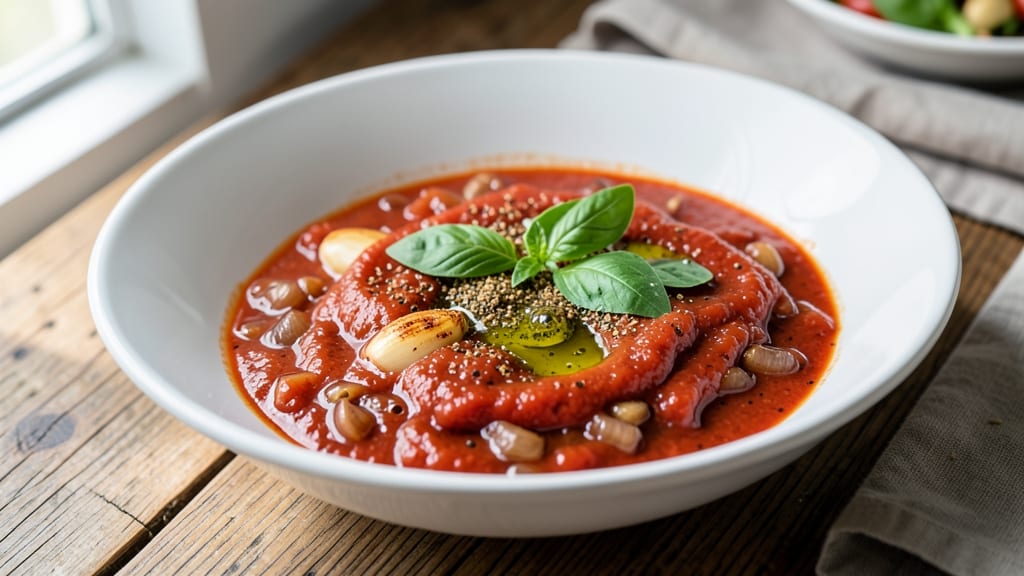
This authentic Italian red sauce recipe from scratch transforms simple ingredients into a velvety, aromatic sauce that captures the essence of Nonna's kitchen. The secret lies in slow simmering—no rushed techniques here—just time, fresh tomatoes, and a balance of garlic, basil, and olive oil that builds layers of flavor. I've perfected this method over years of testing, ensuring every spoonful delivers that restaurant-quality depth you crave without shortcuts.
The foundation begins with fresh tomatoes—whether ripe heirlooms or canned San Marzano—that release their natural sweetness as they break down. Garlic and olive oil form the aromatic base, while basil adds that signature freshness that defines Italian cuisine.
What sets this sauce apart is the patience: simmering low and slow allows flavors to meld naturally, creating a sauce that's rich yet bright, never overly heavy.
By the time you're done, you'll have a sauce that's authentic in every sense—silky in texture, vibrant in color, and packed with tomato-basil harmony. It's the kind of sauce that transforms simple pasta into a meal worth celebrating, or elevates grilled meats and roasted vegetables into something extraordinary.
The best part? It tastes even better the next day as flavors deepen.
Ready to make sauce that tastes like home? This recipe delivers on tradition without compromise—just fresh ingredients, time, and a little love. Let's get started with the full instructions.
Ingredients for authentic italian red sauce recipe from scratch
Fresh tomatoes, aromatic garlic, and fragrant basil create this velvety red sauce that captures Nonna's kitchen authenticity.
| Ingredient | Amount | Notes |
|---|---|---|
| Extra-Virgin Olive Oil 🫒 | ½ cup | High-quality, fruity variety preferred |
| Yellow Onion 🧅 | 1 whole | Finely chopped for aromatic base |
| Garlic Cloves 🧄 | 4 cloves | Peeled and thinly sliced |
| Canned San Marzano Tomatoes 🍅 | 28 oz | Whole, crushed by hand |
| Fresh Basil Leaves 🌿 | 1 cup | Packed, stems removed |
| Dried Oregano 🍃 | 1 tsp | Italian variety for authentic flavor |
| Red Wine 🍷 | ½ cup | Dry, bold variety like Chianti |
| Tomato Paste 🍅 | 2 tbsp | Smooth, not chunky |
| Kosher Salt 🧂 | 1 ½ tsp | Diamond Crystal preferred |
| Freshly Ground Black Pepper 🌶️ | ½ tsp | For finishing touch |
The tomatoes are the heart of this sauce, and San Marzano is non-negotiable for that sweet, meaty depth. Look for the plum-shaped cans at Italian markets or well-stocked grocery stores—they're worth the splurge. For onions, yellow or red both work, but avoid sweet varieties like Vidalia. Garlic should be freshly peeled and sliced just before cooking to preserve its aromatic oils. The olive oil matters too: extra-virgin with a fruity note elevates everything.
No San Marzano tomatoes? High-quality crushed tomatoes in a can will suffice, but avoid those with added salt or preservatives. Fresh basil is ideal, but dried oregano at one-third the amount works in a pinch. Red wine can be swapped for dry white wine or additional tomato juice if unavailable. For the tomato paste, squeeze tubes from Trader Joe's are perfect—they're convenient and last months. If you prefer a smoother sauce, blend a portion of the finished sauce for a velvety texture, but traditionalists leave it rustic.
This sauce develops deeper flavor overnight, so make it a day ahead if possible. Store in an airtight container in the fridge for up to 5 days, or freeze for 3 months in portion-sized containers. To reheat, warm gently on the stove with a splash of water or pasta water—never boil, or it'll break down. The sauce thickens as it cools, so adjust consistency with a bit of water or reserved pasta water when serving.
Why You'll Love This Recipe
- No Chopping Chaos: I swear by this sauce because it only asks for one onion to dice—no endless prep, no knife wars with the kids. The San Marzano tomatoes do all the heavy lifting while you sip your wine and pretend you’re in a Tuscan kitchen.
- Garlic-Golden Magic: That moment when you crush fresh garlic into warm olive oil? Pure alchemy. The onions caramelize just enough to sweeten the sauce, and the basil—torn by hand, not chopped—releases its perfume like a secret. (Yes, even on a Tuesday night.)
- Leftovers That Save Me: This sauce actually improves the next day. I freeze half in jars for lazy nights, and the other half becomes my go-to for quick pasta, bruschetta, or even a lazy Sunday omelet. No sad, watery jarred sauce here—just rich, concentrated flavor.
- Budget-Friendly Luxury: San Marzano tomatoes might sound fancy, but they’re cheaper than you think, and a little olive oil goes a long way. Honestly, this is the kind of sauce that makes you feel like you’re eating at a trattoria without the price tag—especially when you’re stretching it over fettuccine for the whole family.
Step-by-step instructions for authentic Italian red sauce
This method delivers restaurant-quality depth with simple ingredients and precise technique.
Develop the Aromatic Base
Heat the 0.5 cup extra-virgin olive oil in a heavy-bottomed saucepan over medium-low heat. Add the finely chopped yellow onion and cook for 8-10 minutes, stirring occasionally, until softened and translucent. This slow cook ensures the onions caramelize slightly without browning.
Add the 4 peeled garlic cloves and cook for another 1-2 minutes until fragrant. Watch carefully—the garlic burns quickly. Remove the pan from heat immediately once you detect that nutty aroma. This aromatic foundation forms the flavor backbone of your sauce.
Build Flavor with Wine and Tomato Paste
Return the pan to medium heat and deglaze with the 0.5 cup red wine, scraping up any browned bits from the bottom. Allow the wine to reduce by half—this takes about 3-4 minutes. This step removes alcohol while concentrating flavor.
Add the 2 tablespoons tomato paste and stir vigorously for 1 minute to distribute evenly. The paste will darken slightly, creating a rich, umami base. This is the moment that matters: proper distribution ensures balanced flavor throughout the sauce.
Simmer the Tomatoes Low and Slow
Add the 28 oz canned San Marzano tomatoes, crushing them by hand as you pour. Stir in the 1 teaspoon dried oregano and 1.5 teaspoons kosher salt. Bring to a gentle simmer, then reduce heat to low. Partially cover and let cook for 45-60 minutes, stirring occasionally.
Real talk: Don't rush this step. The slow simmer allows flavors to meld and the sauce to develop its signature depth. You'll notice the sauce gradually thickens and darkens—this is normal and desirable. The acidity should soften as the tomatoes break down.
Finish with Fresh Basil
Remove the sauce from heat and stir in the 1 cup fresh basil leaves (stems removed). Let it steep for 5 minutes, then taste and adjust seasoning. Add 0.5 teaspoon freshly ground black pepper and more salt if needed—this sauce should be vibrant, not bland.
For best results, let the sauce rest for 10 minutes before serving. This allows the flavors to fully integrate. The final texture should be velvety with just enough body to cling beautifully to pasta or meat.
Pro Tips For Making Authentic Italian Red Sauce Recipe From Scratch
- Sweat the Onion Low: I learned this the hard way—dicing onions and frying them on high heat turns them bitter before they even soften. Instead, use medium-low heat and let them cook slowly for 8-10 minutes, stirring occasionally, until they’re translucent and just starting to caramelize. That’s when they’ll actually flavor your sauce instead of making it taste like sad office coffee.
- Crush the Garlic: Minced garlic burns in seconds. For this sauce, smash 3-4 cloves with the flat side of your knife first, then finely chop—this way, the oil absorbs the flavor without turning acrid. Add it to the pot after the onions have sweated, and stir in immediately so it doesn’t have time to darken. (Yes, even if you’re impatient like me.)
- Salt the Tomatoes: San Marzano tomatoes are sweet, but they’re not salted. Before crushing them into the pot, sprinkle in ½ teaspoon of flaky sea salt—this balances the acidity and lets the natural sweetness shine. Stir it in while the onions are cooking so the salt dissolves evenly. (Your future self will notice the difference.)
- Simmer Uncovered, Stir Often: This isn’t the prettiest method, but it’s the tastiest. After adding the tomatoes, bring the sauce to a boil, then reduce to a gentle simmer and let it cook uncovered for 30-40 minutes. Stir every 5-10 minutes to prevent sticking and let the flavors meld—no need to babysit, but don’t walk away. The longer it reduces, the deeper the flavor, but resist the urge to rush it.
Essential equipment for authentic italian red sauce recipe from scratch
Heavy-Bottomed Saucepan
Your saucepan is the unsung hero of this recipe—I swear by a stainless steel or enameled cast iron pan like All-Clad or Le Creuset. These materials distribute heat evenly and prevent scorching, which is critical for that slow, even simmer.
A 3-4 quart size gives you enough room to stir without overcrowding. 🌡️
If you don’t have a dedicated saucepan, a deep skillet (like Calphalon) works in a pinch, but avoid thin aluminum—the sauce may cook unevenly. Pro tip: Preheat your pan for 2-3 minutes before adding oil to ensure even cooking from the start.
Wooden Spoon
A wooden spoon (preferably olive wood or beech) is non-negotiable for stirring. Wood won’t scratch your pan like metal utensils, and it won’t react with acidic ingredients like tomatoes. I keep a 12-inch spoon nearby to reach all corners of the pan while simmering. 🥄
Avoid plastic spoons—they can melt under high heat, and metal spoons can introduce unwanted flavors over time. If you’re blending part of your sauce, a heatproof silicone spatula is great for transferring hot sauce to an immersion blender.
Immersion Blender
For that silky-smooth texture, an immersion blender (like Ninja or Cuisinart) is a game-changer. It lets you blend directly in the pot, preserving heat and preventing spills. I blend about half the sauce for 10-15 seconds to achieve a velvety consistency without losing the rustic charm. 💫
No blender? A high-speed blender works too—just transfer the hot sauce carefully (use a ladle) and blend until smooth. Strain it back through a fine-mesh sieve to remove any basil stems or tomato skins if needed.
Fine-Mesh Sieve
A fine-mesh sieve (like OXO Good Grips) is your secret weapon for straining out any unwanted bits—especially if you’re using fresh basil stems or crushing tomatoes by hand. It ensures your sauce is silky smooth without losing flavor. I keep one in my kitchen specifically for sauces. 🧂
No sieve? A cheesecloth or even a clean kitchen towel layered over a bowl works in a pinch. Just press gently to extract all the liquid—no need to wring it dry, or you’ll dilute the sauce.
Kitchen Timer
Timing is everything in this sauce, and a kitchen timer (even your phone’s) keeps you from burning the garlic or rushing the simmer. I set it for 45 minutes during the low-and-slow phase and check it every 10 minutes to stir and adjust heat. 🏰
Pro move: Place your timer where you can see it from the stove—no distractions! If you’re multitasking, consider a smart timer with alerts (like Amazon Basics) to avoid overcooking.
Nutrition facts
Frequently asked questions
Can I use fresh tomatoes instead of canned San Marzano?
Fresh tomatoes work beautifully but require extra prep! Use about 3-4 pounds of ripe tomatoes (like Roma or vine-ripened) and peel, seed, and chop them before cooking. The key is to remove excess water—salt the chopped tomatoes and let them sit for 15 minutes in a colander to drain before adding to your sauce. This prevents a watery texture.
How do I make this sauce meatier for Bolognese?
For a rich ragù, brown 1 pound ground beef or pancetta first in olive oil, then set aside. After deglazing with wine, add the meat back to the pan and cook until no longer pink. Stir it into the sauce during the 45-minute simmer, then add 1 cup beef or chicken stock to keep it moist. For extra depth, add a splash of red wine reduction.
Why does my homemade sauce taste different from store-bought?
Authentic Italian sauce relies on fresh ingredients and slow cooking—store-bought versions often use preservatives, salt, and high heat to speed up production. The key differences are: no added sugar (enhances natural sweetness), fresh basil added at the end (not dried), and low-and-slow simmering (develops complex flavors). Patience is everything!
Can I make this sauce in a slow cooker?
Follow the same steps for the aromatic base, then transfer everything to a 3-4 quart slow cooker. Cook on low for 6-8 hours or high for 3-4 hours, stirring occasionally. The texture will be thicker—add 2-3 tablespoons water if needed. Finish with fresh basil just before serving to preserve its bright flavor.
What if I don't have red wine?
No problem! Use 0.5 cup dry white wine or substitute with 0.5 cup tomato juice + 1 tsp balsamic vinegar for acidity. The wine's purpose is to deglaze and concentrate flavors, so any acidic liquid works. Just avoid sweet wines—they'll make the sauce taste off-balance. For extra depth, add 1 tsp soy sauce or 1 crushed anchovy (optional).