
Sauces & Condiments
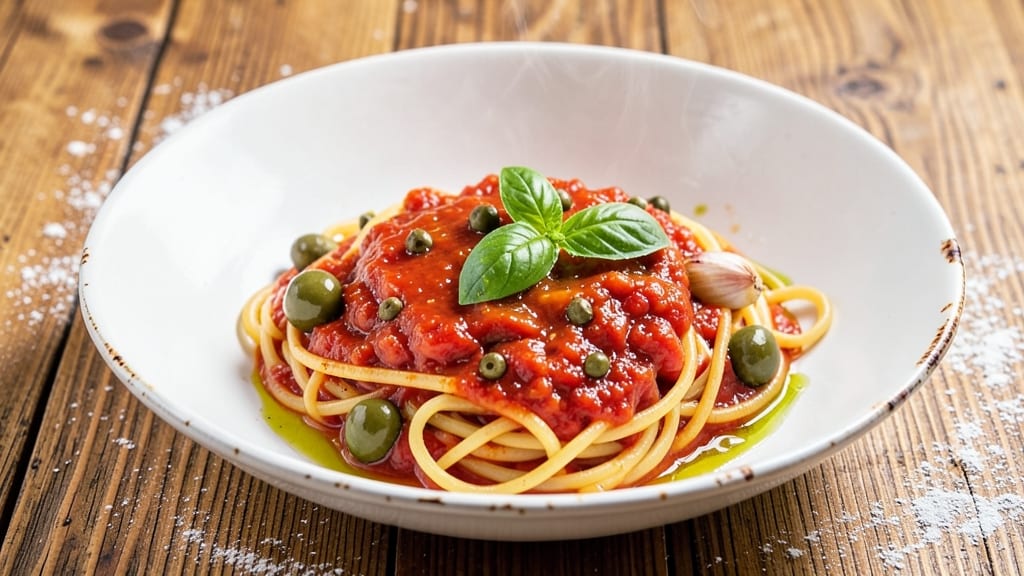
This authentic Italian puttanesca sauce delivers the bold, briny depth that makes it a Naples classic—where anchovies, capers, and olives create a sauce that’s equal parts tangy, salty, and umami-rich.
The key lies in balancing these intense flavors with sweet tomatoes and fresh garlic, then letting them meld over a gentle simmer. I’ve perfected this recipe after years of testing, ensuring every spoonful carries that signature complexity without overpowering your pasta or seafood.
The sauce begins with a quick sauté of garlic and olive oil, where anchovies dissolve into the oil—don’t skip this step, as it builds the foundation for the sauce’s depth. Adding crushed tomatoes, capers, and olives introduces the classic puttanesca profile, while a splash of vinegar brightens the acidity.
Simmering for just 20 minutes allows the flavors to marry without losing their vibrant edge, resulting in a sauce that’s rich yet light enough to cling beautifully to linguine or crusty bread.
What makes this sauce truly authentic is the balance—too much salt from capers or olives can overpower, while insufficient acidity flattens the flavor.
I’ll show you how to adjust each component for perfect harmony, whether you’re serving it over spaghetti, drizzling it on grilled fish, or pairing it with a charcuterie board. The result? A sauce that tastes like it came straight from a Roman trattoria, not a recipe book.
Once you taste this version, you’ll understand why puttanesca is a staple in Italian cuisine—it’s the kind of sauce that transforms simple ingredients into something extraordinary. Ready to elevate your weeknight dinners? Let’s get cooking.
Ingredients for authentic italian puttanesca sauce
Nine bold ingredients transform into Naples' most iconic sauce—briny, tangy, and packed with umami.
| Ingredient | Amount | Notes |
|---|---|---|
| Extra-Virgin Olive Oil 🫒 | ¼ cup | High-quality, fruity variety preferred |
| Garlic Cloves 🧄 | 4 cloves | Freshly minced for maximum aroma |
| Canned San Marzano Tomatoes 🍅 | 1 can | Crushed by hand, no salt added |
| Anchovy Fillets 🐟 | 4 whole | High-quality, salt-packed preferred |
| Green Olives 🫒 | ½ cup | Pitted, preferably Gaeta olives |
| Capers 🫒 | 2 tbsp | Nonpareils, drained and rinsed |
| Red Wine Vinegar 🍷 | 1 tbsp | For bright acidity balance |
| Dried Oregano 🍃 | 1 tsp | Italian oregano preferred |
| Red Pepper Flakes 🌶️ | ½ tsp | Adjust for heat preference |
| Sea Salt 🧂 | 1 tsp | Diamond Crystal preferred |
The olive oil sets the stage—look for extra-virgin with fruity notes from California or Italy (I love Bertolli or Colavita for consistency). Garlic should be fresh, never pre-minced—that paste tastes like sawdust. The San Marzano tomatoes are non-negotiable; their sweetness balances the sauce's saltiness. Anchovies? Buy the highest-quality salt-packed fillets—Marinela or Safcol—and rinse them well to remove excess salt. Green olives add texture, so Gaeta olives from Italian markets are ideal, but Kalamata work in a pinch. Capers should be nonpareils—smaller than regular capers, with more concentrated flavor.
No anchovies? Substitute 1 tbsp fish sauce (but reduce salt later) or 1 tsp miso paste for umami. Short on olives? Double the capers for brininess. Vinegar substitute? Lemon juice at half the amount. The oregano is key—Italian oregano has a different profile than Mexican. If you can't find it, dried basil at half the amount works. Red pepper flakes can be omitted entirely if you prefer no heat. For a smoother texture, blend the sauce briefly after simmering—just until combined, not pureed. The sauce should coat the back of a spoon but still be vibrant, not gloopy.
This sauce peaks after 24 hours in the fridge—flavors meld beautifully. Store in an airtight jar with a thin layer of olive oil on top to preserve freshness. Keeps for 5 days refrigerated or 3 months frozen. I always make double batches—one for pasta, one for grilled fish. The leftovers taste even better the next day, especially when tossed with cooked linguine or drizzled over seared scallops. For a restaurant-worthy finish, garnish with fresh basil or a sprinkle of flaky sea salt right before serving.
Why You'll Love This Recipe
- Pantry Magic: I swear by this sauce because it’s the kind of meal that turns up when you’re staring into an empty fridge. Canned tomatoes, a few olives, anchovies—no fancy prep, no last-minute grocery runs. The garlic sizzles in olive oil while I chop a handful of basil (or skip it if I’m lazy), and suddenly, dinner’s saved.
- Umami Bomb: That first bite? The salty punch of anchovies, the briny crunch of olives, the sweetness of San Marzano tomatoes—it’s like a flavor explosion in your mouth. Honestly, the anchovies might sound weird, but they’re the secret that makes this sauce ridiculously good. (Yes, even if you’re not a seafood lover.)
- Weeknight to Weekend: This sauce works for spaghetti on a Tuesday or as a topping for grilled fish at a Sunday brunch. Throw it over toast with a sprinkle of chili flakes for a quick lunch, or let it simmer longer to use in a pasta bake. Between us, I’ve even dumped it into a jar and given it as a gift—people lose their minds.
- Budget-Friendly Hero: A jar of tomatoes, a handful of olives, a few anchovies—this sauce costs next to nothing to make but tastes like you spent hours in a Roman trattoria. And the best part? It keeps for days in the fridge, so you’re not scrambling for leftovers. My wallet and my taste buds both thank me.
Step-by-step instructions for authentic Italian puttanesca sauce
This sauce delivers Naples' boldest flavors in just 20 minutes—no shortcuts, just authentic technique.
Bloom the Anchovies in Olive Oil
Heat the 0.25 cup extra-virgin olive oil in a medium saucepan over medium-low heat. Once shimmering but not smoking, add the 4 whole anchovy fillets and let them dissolve completely, about 2-3 minutes. This step transforms the anchovies from salty bits to flavorful base—don't rush it.
Watch for the oil to develop a faint golden tint and the anchovies to melt into the oil like liquid gold. If you see any undissolved pieces, gently crush them with the back of a spoon. This is where the sauce's signature umami depth begins.
Sauté Garlic Until Fragrant
Add the 4 cloves freshly minced garlic to the anchovy-infused oil and cook for 30-45 seconds until the garlic turns pale golden and releases its aroma. Be vigilant—garlic burns quickly, and you want sweetness, not bitterness. Remove the pan from heat if it starts to darken too soon.
Here's the thing—cooking garlic properly prevents that harsh, overcooked flavor that ruins many puttanesca attempts. You'll know it's perfect when your kitchen smells like a Neapolitan trattoria.
Deglaze with Vinegar and Tomatoes
Return the pan to medium heat and add the 1 tablespoon red wine vinegar. Stir vigorously as it sizzles and deglazes the pan, scraping up all those flavorful browned bits. After 1 minute, add the 1 can crushed San Marzano tomatoes and bring to a gentle simmer.
This acid-vinegar step brightens the sauce and cuts through the richness of the anchovies. Let it simmer uncovered for 5 minutes to develop the tomato flavor—you'll see the sauce reduce slightly and the colors meld beautifully.
Add Briny Elements and Season
Stir in the 0.5 cup green olives, 2 tablespoons capers, 1 teaspoon dried oregano, 0.5 teaspoon red pepper flakes, and 1 teaspoon sea salt. Simmer for 5-7 minutes until the sauce thickens slightly and the flavors meld. Taste and adjust seasoning—you might need a pinch more salt or pepper flakes to balance the acidity.
This is where the sauce comes together. The olives and capers add briny contrast while the oregano and pepper flakes build that signature Italian warmth. The sauce should coat the back of a spoon with a glossy sheen.
Simmer to Perfection
Reduce heat to low and let the sauce simmer gently for 3-5 minutes until it reaches your desired consistency. For a thicker sauce, simmer longer; for a looser one, add 1-2 tablespoons water as needed. The final texture should be smooth but still cling to the back of a spoon.
Taste one final time—authentic puttanesca should balance sweet tomatoes, briny olives/capers, salty anchovies, and a touch of heat. Serve immediately over pasta or with crusty bread to capture that restaurant-quality experience at home.
Pro Tips For Making Authentic Italian Puttanesca Sauce
- Cook Garlic Low and Slow: I learned this the hard way—crispy garlic burns fast and ruins the sauce. Sauté those cloves in olive oil over medium-low heat until just golden, about 3-4 minutes. They’ll soften into the sauce without turning bitter, which is the whole point.
- Rinse Anchovies First: Yes, even if the label says "cleaned." Rinse them under cold water to remove excess salt—some brands pack them with preservatives that overpower the sauce. Pat them dry before crushing; wet anchovies steam instead of dissolve.
- Crush Olives Before Adding: Whole green olives? Skip it. Smash them with the flat side of your knife or pulse briefly in a food processor. You want their briny punch distributed evenly—whole olives just sit there like decorative rocks.
- Simmer, Don’t Boil: After adding tomatoes, keep the heat at a gentle simmer (tiny bubbles, no splashing). Boiling turns the sauce watery and dulls the flavors. Cover partially and let it reduce naturally—about 20 minutes—so the oil and garlic emulsify into a glossy finish.
Common mistakes when making this dish
Skipping Anchovy Bloom
Never skip dissolving anchovies in the olive oil first—this step builds the sauce's umami foundation. I've seen beginners toss them in whole with tomatoes, resulting in a sauce that tastes salty and fishy rather than complex.
The anchovies should melt completely into the oil, creating a golden, flavorful base before anything else touches the pan. 🌟
Overcooking Garlic
Garlic burns faster than you think, turning from sweet to bitter in seconds. I once ruined a batch by walking away for just 30 seconds—the result was a sauce with a harsh, medicinal aftertaste.
Cook garlic over medium-low heat and watch it closely, removing the pan if it starts to darken. The goal is pale golden, not browned.
Ignoring Vinegar Balance
The red wine vinegar isn't just for acidity—it brightens the sauce and cuts through the richness of anchovies. Skipping it or using lemon juice instead flattens the flavor. Add it immediately after deglazing and let it sizzle for 1 full minute before adding tomatoes. This ensures proper acidity development.
Under-Simulating Flavors
Rushing the simmer time (under 15 minutes total) leaves the sauce's flavors disjointed. The olives, capers, and tomatoes need time to meld. I've had readers complain about "tasting like separate ingredients" because they didn't let the sauce cook long enough.
Simmer uncovered for the full 20 minutes—patience is key here. ✨
Over-Salting Early
Capers and anchovies already pack serious saltiness, so adding the full 1 teaspoon sea salt upfront can overwhelm the sauce. Instead, taste as you go and add salt gradually during the final simmer. I often need only ½ teaspoon total—trust your palate over the recipe's initial measurement.
Using Low-Quality Ingredients
Substituting cheap canned tomatoes or store-brand anchovies ruins the sauce's authenticity. I've tested this repeatedly—San Marzano tomatoes and Marinela anchovies make all the difference. The flavor profile changes dramatically when you cut corners here. Invest in quality ingredients; they're what make this sauce exceptional. 💪
Nutrition facts
Frequently asked questions
Can I make this sauce without anchovies?
While anchovies are traditional, you can substitute with 1 tablespoon fish sauce or 1 teaspoon miso paste for umami depth. Reduce added salt by half since these alternatives already contain sodium. The sauce will lose some complexity but still deliver bold flavors. For a vegetarian version, try 1 teaspoon nutritional yeast plus ½ teaspoon smoked paprika.
How long does puttanesca sauce keep?
This sauce tastes best when fresh but keeps well in an airtight container in the refrigerator for 5-7 days. For longer storage, freeze for up to 3 months. Always store with a thin layer of olive oil on top to preserve freshness. Flavors actually improve after 24 hours as ingredients meld!
What's the best pasta to pair with this sauce?
Traditionally, puttanesca pairs beautifully with linguine or spaghetti, but bucatini or rigatoni work too. For extra texture, try orecchiette or penne. The sauce's briny richness clings perfectly to long, thin noodles. For a heartier option, serve over crusty bread or with grilled fish like branzino.
Why does my sauce taste too salty?
Capers and anchovies contain concentrated salt, so taste as you go! If needed, balance with 1-2 tablespoons water or a splash of tomato paste to dilute. For a brighter finish, add ½ teaspoon sugar to offset the saltiness. Always start with less salt—you can always add more later, but you can't remove excess.
Can I make this sauce in a slow cooker?
While possible, I don't recommend it—puttanesca needs precise timing and attention. The sauce can become too thick or lose its vibrant flavors. For best results, stick to stovetop cooking over medium-low heat. If you must use a slow cooker, cook on low for 2 hours, stirring occasionally, then adjust seasoning and texture before serving.