
Sauces & Condiments
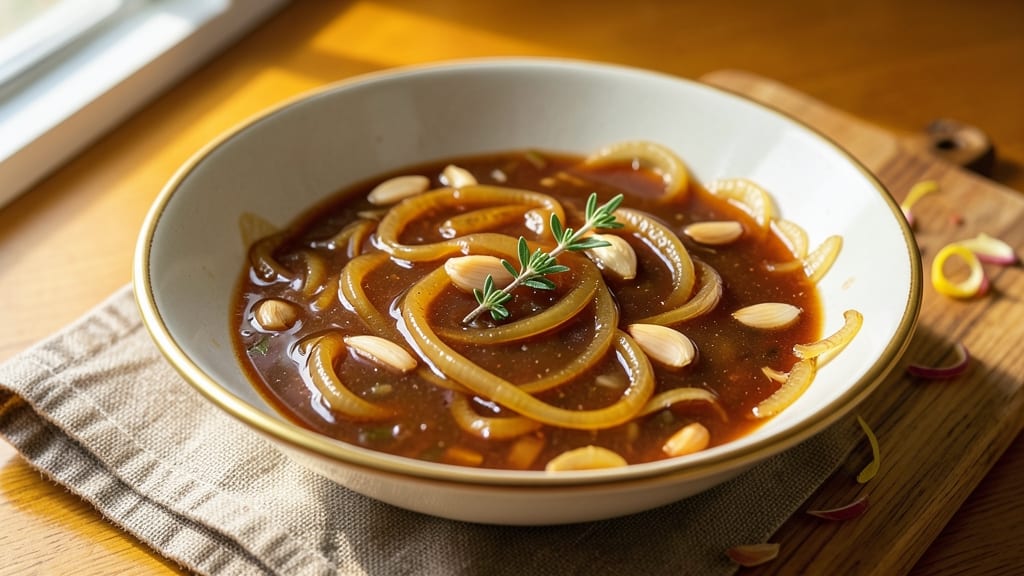
This au jus sauce recipe without drippings delivers restaurant-quality depth using simple pantry staples and a foolproof technique. The secret lies in building layers of flavor through aromatics, wine reduction, and careful simmering—transforming basic ingredients into a rich, velvety sauce that rivals traditional pan drippings.
I developed this method after realizing most recipes rely on meat juices, which aren't always available or desirable.
The process begins with sautéing onions and garlic until golden, then deglazing with wine to dissolve flavorful browned bits. A splash of vinegar brightens the sauce while stock provides body, and a final reduction concentrates the flavors into a glossy, aromatic sauce.
The result is a versatile condiment that works equally well drizzled over roasted meats, slathered on sandwiches, or served as a dipping sauce for fries.
What makes this sauce special is its balance of acidity, sweetness, and umami—achieved through precise timing and ingredient ratios. The sauce thickens naturally as it reduces, creating that signature glossy finish without requiring thickeners.
It's the kind of sauce that elevates simple weeknight meals into something memorable, all while keeping prep straightforward.
Perfect for meal preppers or those who prefer plant-based cooking, this au jus transforms basic ingredients into something extraordinary. The technique is adaptable—use beef stock for classic flavor or vegetable stock for a lighter version. Here's how to make it from scratch in just 20 minutes.
Ingredients for au jus sauce recipe without drippings
Eleven pantry staples create a velvety sauce that rivals traditional pan drippings without meat juices.
| Ingredient | Amount | Notes |
|---|---|---|
| Yellow Onion 🧅 | 1 whole | Thinly sliced, about 1.5 cups |
| Garlic Cloves 🧄 | 4 cloves | Minced, peeled |
| Dry Red Wine 🍷 | ½ cup | Bold variety like Cabernet Sauvignon |
| Apple Cider Vinegar 🍏 | 1 tbsp | For brightness |
| Beef Stock 🥩 | 2 cups | High-quality, low-sodium preferred |
| Vegetable Stock 🥬 | 2 cups | For plant-based version |
| Extra-Virgin Olive Oil 🫒 | 2 tbsp | For sautéing aromatics |
| Unsalted Butter 🧈 | 2 tbsp | Cold, for finishing |
| Granulated Sugar 🍚 | 1 tsp | Balances acidity |
| Diamond Crystal Kosher Salt 🧂 | 1 tsp | Adjust to taste |
| Fresh Thyme Leaves 🌿 | ¼ tsp | Or 1/8 tsp dried |
The onions and garlic form the aromatic foundation—sauté until deeply golden for maximum flavor development. Yellow onions work best here for their sweetness, but red onions add color if you prefer. For the wine, Cabernet Sauvignon or Merlot provide the boldest flavor profile, though any dry red will suffice. Trader Joe's and Total Wine offer excellent budget-friendly options. The beef stock should be rich but not overly salty—Pacific Foods or Kirkland Signature are reliable choices. For plant-based versions, Imagine or Pacific Foods vegetable stock delivers excellent umami depth.
No red wine? Dry white wine or beef broth with 1 tbsp balsamic vinegar works in a pinch. Fresh thyme is ideal, but dried thyme at one-quarter the amount maintains the herbal notes. The sugar balances the acidity from vinegar, so don't skip it—brown sugar adds subtle caramel notes if you prefer. For extra richness without butter, 1 tbsp nutritional yeast provides a cheesy depth. The sauce thickens naturally during reduction, so avoid adding cornstarch unless you prefer a heavier texture.
This sauce freezes beautifully for up to 3 months—portion into ice cube trays for single-use portions. For best results, store in airtight containers with a thin layer of olive oil on top to preserve freshness. The sauce can be made ahead and gently reheated, though it's best enjoyed fresh. 2 cups yields enough for 4-6 servings, making it perfect for meal prep. If making the plant-based version, add 1 tsp soy sauce for additional umami depth.
Why You'll Love This Recipe
- No Pan Required: I swear by this—just a pot, a knife, and 15 minutes. The onions caramelize while I chop garlic, no extra pans or mess. Honestly, it’s the kind of sauce that makes me feel like I’ve earned my dinner.
- Wine-Infused Depth: That splash of dry red wine? It’s not just flavor—it’s character. The vinegar brightens it up, but the wine lingers, rich and savory, like a little secret in every bite. (Yes, even on a Tuesday night.)
- Leftovers That Shine: This sauce keeps for days in the fridge, and it only gets better. I’ll freeze half for when I’m too tired to cook, then reheat it with a splash of water—still bold, still good. No sad, watery afterthoughts here.
- Budget-Friendly Luxury: Onion, garlic, wine, stock—these are pantry staples that don’t break the bank. I’ve made this for steak night, sandwiches, even scrambled eggs when I’m lazy. It’s the kind of recipe that stretches your dollar without sacrificing taste.
Step-by-step instructions for pan-roasted au jus sauce
This method builds rich, concentrated flavor from scratch using simple pantry staples.
Sauté Aromatics Until Deeply Fragrant
Heat the 2 tablespoons extra-virgin olive oil in a medium saucepan over medium heat. Add the thinly sliced yellow onion and cook for 5 minutes until softened and translucent. The onions should release their natural sweetness without browning.
Add the minced garlic cloves and 0.25 teaspoon fresh thyme leaves, stirring constantly for 30 seconds until the garlic becomes lightly golden and aromatic. This step develops the foundation of your sauce's flavor profile. If the garlic begins to brown too quickly, reduce the heat slightly to prevent bitterness.
Deglaze with Wine and Vinegar
Pour in the 0.5 cup dry red wine, scraping up any browned bits from the bottom of the pan with a wooden spoon. This deglazing step captures all the caramelized onion and garlic flavors that would otherwise burn. Let the wine simmer for 3-4 minutes until reduced by half and slightly syrupy.
Add the 1 tablespoon apple cider vinegar and 1 teaspoon granulated sugar, stirring to combine. The vinegar brightens the sauce while the sugar balances its acidity. Simmer for another 2 minutes, allowing the flavors to meld together. This preparation creates a balanced acid-sweet base that will carry through the entire sauce.
Build the Sauce with Stocks and Seasonings
Pour in the 2 cups beef stock and 2 cups vegetable stock, stirring to incorporate. Add the 1 teaspoon diamond crystal kosher salt and bring the mixture to a gentle simmer. Reduce the heat to low and let it cook uncovered for 15-20 minutes until the liquid reduces by about one-third and thickens slightly.
This reduction process intensifies the flavors and creates the characteristic glossy texture of au jus. Stir occasionally to prevent the sauce from sticking to the bottom of the pan. The sauce should coat the back of a spoon but remain pourable. If it thickens too much before reaching the desired consistency, add 1-2 tablespoons water to adjust.
Finish with Butter for Richness
Remove the saucepan from heat and stir in the 2 tablespoons cold unsalted butter, cut into small pieces. Allow the butter to melt completely, creating a velvety finish. This step adds body and a subtle richness that elevates the sauce from simple to restaurant-quality.
Taste and adjust the seasoning with additional salt if needed. The sauce should be well-balanced with bright acidity, deep umami from the stocks, and a touch of sweetness. Strain through a fine-mesh sieve if you prefer a completely smooth texture, or leave it slightly textured for added depth. Serve immediately alongside roasted meats or use as a base for other dishes.
Pro Tips For Making Au Jus Sauce Recipe Without Drippings
- Sweat the Onions Slowly: I learned this the hard way—drowning onions in liquid turns your au jus into a watery mess. Instead, cook them over medium-low heat with a splash of water, lid on, until they’re translucent and just starting to caramelize. That’s when you know they’ve released their flavor without burning.
- Deglaze with Vinegar First: Sounds weird, but it works: after browning your onions and garlic, hit the pan with the apple cider vinegar before the wine. The acid cuts through any stuck bits instantly, making the wine’s job easier. Skip this, and you’ll be scrubbing your pan later.
- Reduce the Wine Aggressively: High heat. Seriously, crank it up to medium-high and let that red wine reduce by half in 3-4 minutes. If you simmer it too gently, you’ll end up with a thin, boozy sauce instead of a rich, concentrated base. (Yes, even if you’re impatient like me.)
- Strain Twice for Clarity: After simmering the stock, strain the sauce through a fine-mesh sieve once to catch big bits, then pour it through a coffee filter or cheesecloth for a silky finish. I skip this when I’m lazy, but the dish is noticeably better when I don’t—especially if you’re serving it over sliced steak.
Make-ahead tips for leftovers
Prep Ahead Components
Start by prepping your aromatics the night before—thinly slice the yellow onion and mince the garlic cloves, then store them in an airtight container in the fridge. This saves 10 minutes of prep time when you're ready to cook.
I also like to measure out the red wine and stock into a separate container so everything is ready to go. 💡
Stock Reduction Shortcut
For a quicker reduction, use 1 cup beef stock instead of 2 cups and reduce it by half before adding the remaining stock. This cuts down the simmering time from 15-20 minutes to about 8-10 minutes.
Just be sure to taste and adjust the seasoning afterward, as the concentrated flavors will be more intense. This works especially well for weeknight meals when time is tight.
Freezer-Friendly Portions
Make a big batch and freeze it in ice cube trays for single-use portions. Once frozen, transfer the cubes to a labeled freezer bag. Each cube makes about 2 tablespoons of sauce—perfect for drizzling over sandwiches or roasted vegetables.
Thaw overnight in the fridge or microwave for 30 seconds on defrost mode. ❄️
Make-Ahead Sauce Base
Prepare the sauce up to the butter-finishing step and store it in an airtight container in the fridge for up to 3 days. When ready to use, simply reheat gently over low heat and stir in the cold butter at the end.
This is a game-changer for meal prep—just add the butter when you're ready to serve, and the sauce will taste fresh and rich.
Vegetable Stock Swap
If you're making the plant-based version, prepare the vegetable stock ahead of time and store it in the fridge or freezer. I like to make a big batch of stock and freeze it in 1-cup portions for easy use.
This way, you always have a flavorful base ready whenever you need it. The sauce keeps all its depth and complexity, just with a lighter touch. 🌱
Long-Term Storage Tips
For longer storage, pour the finished sauce into sterilized glass jars or airtight containers, leaving about ½ inch of headspace at the top. Cover with a thin layer of olive oil to preserve freshness and prevent oxidation.
The sauce will keep in the freezer for up to 3 months without losing its vibrant flavor. Label everything clearly so you can find it easily when you need a quick flavor boost. 📅
Nutrition facts
Frequently asked questions
Can I make this au jus sauce without wine?
Replace the 0.5 cup dry red wine with 0.5 cup beef broth plus 1 tablespoon balsamic vinegar for depth. For a non-alcoholic version, use 0.5 cup apple juice and 1 tablespoon white vinegar. The key is balancing acidity and umami—just adjust seasoning to taste after simmering.
How do I adjust this for a vegetarian/vegan version?
Swap the beef stock for vegetable stock and add 1 teaspoon soy sauce or 1 tablespoon mushroom powder for umami. Use vegan butter instead of regular butter for finishing. The sauce will still be rich and flavorful, just with a plant-based twist.
Why did my sauce turn out too thin?
This usually happens if you didn't reduce the liquid enough or used too much stock. For future batches, simmer uncovered for 20-25 minutes until reduced by one-third. If it's still too thin, remove from heat and let it cool slightly—the sauce will naturally thicken as it cools. For an immediate fix, mix 1 teaspoon cornstarch with 1 tablespoon cold water and stir in while warm.
What's the best way to reheat leftover au jus?
Gently reheat over low heat on the stovetop, stirring occasionally. Avoid microwaving as it can make the sauce watery. If it thickens too much while reheating, add 1-2 teaspoons water to restore consistency. For best results, always finish with 1 tablespoon cold butter to restore its velvety texture.
Can I use this sauce for dishes other than meat?
This versatile sauce works beautifully with roasted vegetables, grilled tofu, or even as a dipping sauce for fries. For extra flavor, stir in 1 teaspoon Dijon mustard or 1 tablespoon chopped fresh herbs like parsley or tarragon. The bright acidity and depth make it perfect for elevating plant-based dishes too.