
Sauces & Condiments
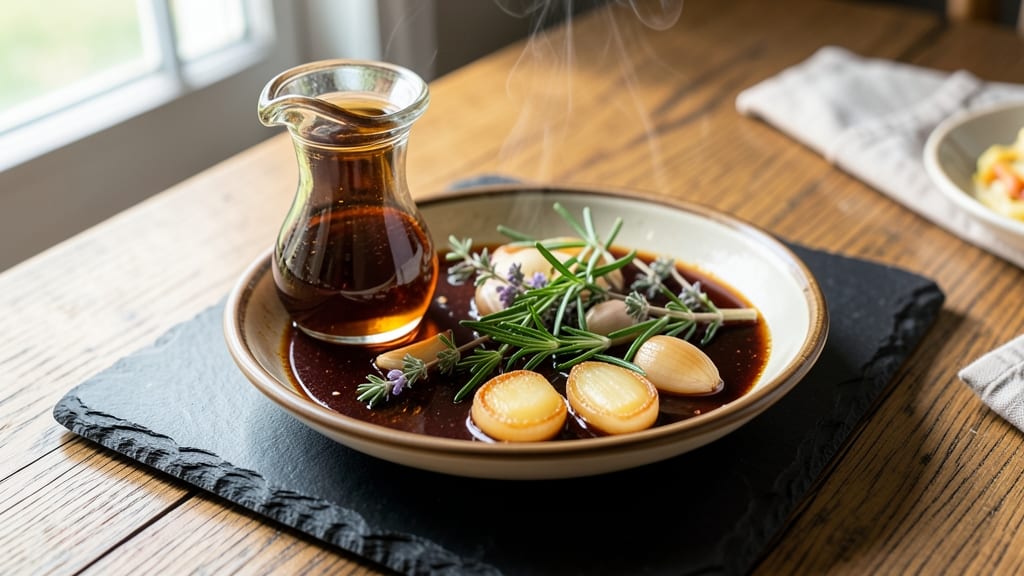
This au jus dipping sauce recipe transforms ordinary pan drippings into a smoky-rich sauce that elevates every bite of roast beef or steak. The secret lies in carefully simmering beef stock, red wine, and aromatic vegetables until the flavors meld into a velvety, deeply savory sauce.
Unlike store-bought versions, this homemade version delivers layers of depth—caramelized edges, subtle acidity, and a touch of smokiness that clings to every forkful.
What sets this sauce apart is its versatility—it works as a dipping sauce for crispy roast beef slices, a tangy companion to fried chicken, or even a bold condiment for burgers and fries.
The process is straightforward: deglaze the pan after cooking meat, simmer with aromatics, then strain for a smooth, restaurant-quality finish. Optional cornstarch thickening ensures the perfect consistency, whether you prefer it silky or slightly reduced.
By the time you’re done, you’ll have a sauce that’s infinitely better than bottled au jus—packed with umami, balanced with acidity, and infused with the essence of roasted meat.
The aroma alone will have everyone at the table asking for seconds. This isn’t just a sauce; it’s the star of the meal.
Ready in just 20 minutes, this recipe requires minimal effort but delivers maximum flavor. Whether you’re hosting a steak night or craving a quick upgrade for leftovers, this sauce is your secret weapon. Let’s make it.
Ingredients for au jus dipping sauce
Six aromatic ingredients plus pan drippings transform into this restaurant-worthy au jus.
| Ingredient | Amount | Notes |
|---|---|---|
| Beef Stock 🥩 | 2 cups | High-quality, homemade preferred |
| Red Wine 🍷 | 1 cup | Bold dry variety like Cabernet |
| Shallot 🧅 | 2 whole | Minced, adds sweet depth |
| Garlic Cloves 🧄 | 4 cloves | Minced, aromatic base |
| Fresh Rosemary 🌿 | ¼ cup | Chopped, for herbal note |
| Fresh Thyme 🌿 | ¼ cup | Leaves only, earthy flavor |
| Pan Drippings 🍳 | 1 cup | From cooked beef or steak |
| Cornstarch 🌾 | 1 tbsp | Optional for thickening |
| Cold Water 💧 | 1 tbsp | For cornstarch slurry |
| Salt 🧂 | 1 tsp | Kosher or sea salt |
| Black Pepper 🌶️ | ½ tsp | Freshly ground preferred |
The beef stock is non-negotiable here. Kirkland Signature or Pacific Foods are my go-tos for quality—look for deep red color and no sediment. Red wine? Any bold, dry variety works—Cabernet, Merlot, whatever's open. Fresh herbs make all the difference: Trader Joe's sells pre-chopped thyme and rosemary if you're short on time, but fresh is always better. Shallots add sweetness without overpowering, so don't skip them. For the pan drippings, let them cool slightly before scraping into your sauce—hot fat can make the sauce separate.
No red wine? Beef broth with a splash of balsamic vinegar works in a pinch, though you'll lose some depth. Fresh herbs wilt fast, so dried thyme at one-third the amount is fine if needed. The cornstarch is optional but game-changing for that silky texture—Bob's Red Mill is my preferred brand. If you're making this ahead, store the unthickened base in the fridge for up to 3 days and thicken later. The sauce can be reduced further for a more concentrated flavor, but keep an eye on it—it burns fast.
This sauce reheats beautifully—just warm gently on the stove, stirring constantly. Keeps 5 days in the fridge sealed tightly, or 3 months frozen in ice cube trays for perfect portions. I always make extra—it's the perfect way to use up leftover roast drippings. For a smokier version, add 1/4 tsp smoked paprika at the end. The acidity from the wine balances the richness, so don't be tempted to skip it—even if you're not drinking it.
Why You'll Love This Recipe
- Here’s what sold me: this sauce tastes better the next day. I’ll make a big batch for Sunday dinner, and by Wednesday, it’s still rich and savory—no sad, watery aftertaste. Plus, it stretches my grocery budget without sacrificing flavor.
- Pantry-Friendly Magic: I swear by this sauce because it uses what’s already in my fridge—no special shopping trips. That deep red wine and beef stock combo? It’s the kind of flavor that makes you pause mid-bite, even when I’m just reheating leftovers.
- Herb-Packed Punch: Between us, the rosemary and garlic in this sauce are chef’s kiss—bright, earthy, and just sharp enough to cut through greasy fries or crispy roasted potatoes. Honestly, I’ve tried store-bought versions, but this? It’s the real deal.
- Game for Any Meal: This sauce is my secret weapon for game day, potlucks, or lazy Sundays. Drizzle it over grilled meats, dip those fries, or even pour it into a slow cooker for hours—it gets better the longer it sits. (Yes, even on a Tuesday night.)
Step-by-step instructions for smoky-rich au jus dipping sauce
Transform simple pan drippings into a velvety, aromatic sauce that elevates every steak bite.
Bloom the Aromatics in Pan Drippings
Pour the 1 cup pan drippings into a medium saucepan and place over medium heat. Add the 2 whole minced shallots and 4 cloves minced garlic, stirring constantly for 3-4 minutes until the shallots soften and become translucent. You'll notice the aroma deepen—this is where the sauce builds its foundation.
Here's the thing—don't rush this step. The shallots should melt into the drippings without browning, creating a sweet, mellow base. If you see any browning, reduce the heat slightly. Once the garlic becomes fragrant (about 1-2 minutes after the shallots soften), it's time to move forward.
Add Wine and Stock for Depth
Pour in the 1 cup red wine and scrape up any browned bits from the bottom of the pan with a wooden spoon. This deglazing captures all the meaty flavor that would otherwise stick to your pan. Bring the mixture to a gentle simmer, then add the 2 cups beef stock.
Simmer uncovered for 10-12 minutes until the liquid reduces by about one-third. You're looking for a syrupy consistency that coats the back of a spoon. Stir occasionally, but don't let it boil vigorously—this can make the sauce cloudy. The wine should cook off completely, leaving only its rich essence behind.
Infuse with Herbs and Season
Add the 0.25 cup chopped fresh rosemary and 0.25 cup fresh thyme leaves to the simmering liquid. Let it steep for 5 minutes to infuse the sauce with their earthy flavors. Then strain the sauce through a fine-mesh sieve into a clean saucepan, pressing gently on the herbs to extract all their flavor.
Return the strained sauce to the stove and stir in the 1 tsp salt and 0.5 tsp black pepper. Taste and adjust seasoning if needed—this is your chance to perfect the balance. The sauce should be rich but not salty, with a subtle herbal note that complements the meaty depth.
Thicken to Perfect Consistency
In a small bowl, whisk together the 1 tbsp cornstarch and 1 tbsp cold water until smooth. Slowly ladle the cornstarch slurry into the simmering sauce while stirring constantly. The sauce will begin to thicken immediately—keep stirring for 2-3 minutes until it reaches a glossy, coatable consistency.
Real talk: If the sauce thickens too much, whisk in a splash of hot water to loosen it. You want it to be thick enough to coat the back of a spoon but still flow easily when drizzled. The perfect au jus should cling beautifully to steak, offering every bite a burst of smoky, herby flavor.
Serve Warm and Enjoy
Transfer the au jus to a serving bowl or gravy boat and keep it warm over low heat. The sauce will continue to thicken slightly as it sits, so you might need to stir it occasionally. Serve immediately alongside your steak for maximum flavor impact.
This sauce is best enjoyed while warm, as its rich, velvety texture and deep flavors complement the tender, juicy meat perfectly. Don't be afraid to drizzle it generously—every drop is packed with flavor that enhances each bite of your steak.
Pro Tips For Making Au Jus Dipping Sauce
- Sweat the Shallots: Don’t chop them fine—leave them in ¼-inch batons and cook them low and slow in a cold pan until translucent. I learned this the hard way: tiny shallots burn before they soften, and you end up with bitter bits instead of sweet, mellow flavor.
- Deglaze with Wine Heat: Pour the red wine over the cooked shallots and garlic after they’ve released their oils, then immediately walk away for 30 seconds. The alcohol needs time to evaporate before you add the stock—otherwise, you’ll end up with a boozy, underdeveloped sauce instead of rich, concentrated flavor.
- Strain the Stock Early: If your beef stock has bits of meat or fat, strain it through a fine-mesh sieve before using it in the sauce. I used to skip this and wondered why my au jus had a gritty texture—now I just strain it cold for cleaner results.
- Finish with Cold Rosemary: Toss in a sprig of fresh rosemary at the very end, then remove it before serving. Cold rosemary releases its oils better than warm, and you avoid the bitter, overcooked taste that happens when it steeps too long. (Yes, even if you’re impatient like me.)
Storing and reheating your au jus dipping sauce
Fridge Storage
Let your au jus cool completely before transferring to an airtight container—I use glass Pyrex with tight-sealing lids. Store in the fridge for up to 5 days, though the flavor actually improves after 24 hours as the herbs meld further.
The sauce thickens slightly when chilled, so stir gently before reheating. 🥫
Freezer Prep
For longer storage, portion the sauce into ice cube trays—this makes perfect single-use servings later. Once frozen solid, transfer cubes to a freezer bag and flatten to save space.
This au jus keeps for 3 months without losing quality. When ready to use, thaw overnight in the fridge or reheat directly from frozen. 🧊
Reheating Perfection
For the best texture, reheat on the stovetop over low-medium heat—never microwave, as it can make the sauce grainy. Add 1-2 tablespoons of water or beef stock if it thickens too much during reheating.
Stir constantly and keep the heat gentle to avoid scorching. The sauce should reach 165°F before serving. ⏱️
Reviving Leftovers
If your au jus separates after refrigeration, simply whisk vigorously to recombine the layers. For extra richness, add a splash of red wine or beef stock while reheating.
The cornstarch thickening ensures it holds together beautifully, so don't worry if it looks separated initially—just a little warmth and stirring will restore its velvety consistency. ✨
Thickening Adjustments
If your reheated sauce is too thin, make a quick slurry with ½ teaspoon cornstarch and 1 teaspoon cold water, then whisk into the warm sauce. For a smoother finish, strain through a fine-mesh sieve again to remove any herb bits that may have loosened during storage.
This keeps your au jus looking as polished as it tastes. 🍽️
Make-Ahead Tips
Make this sauce a day ahead for even deeper flavor—it's perfect for meal prep! Store the unthickened base separately and add the cornstarch slurry just before serving. This way, you can adjust the consistency fresh every time.
I often prepare a big batch after Sunday dinner and use it all week for steak nights. 💡
Nutrition facts
Frequently asked questions
Can I make this au jus without red wine?
Yes! Swap the wine for an equal amount of beef broth and add 1 tablespoon balsamic vinegar for acidity. For extra depth, use 1/4 cup tomato paste instead of wine. The sauce will still be delicious, though slightly less complex.
How do I use leftover roast drippings for this sauce? Simply scrape all the drippings from your roasting pan into a measuring cup. You'll need about 1 cup total—if you have less, add a little beef stock to make up the difference. The drippings contain concentrated meaty flavor that makes this sauce truly special. Just
What if my au jus turns out too thin?
Don't worry—you can easily fix it! Mix 1 teaspoon cornstarch with 1 tablespoon cold water, then whisk into the warm sauce while simmering. Stir constantly for 2-3 minutes until thickened to your liking. If it gets too thick, thin with a splash of hot water or stock.
Can I use this sauce for other meats besides beef?
This versatile sauce works beautifully with lamb, pork, or even chicken thighs. For poultry, reduce the wine to 1/2 cup and add 1/2 teaspoon poultry seasoning instead of rosemary. The herby, savory profile complements all rich meats wonderfully.
Why did my au jus get cloudy when simmering?
Cloudiness usually means the sauce boiled too vigorously, causing proteins to break down. To fix it, strain through a fine-mesh sieve lined with cheesecloth. For prevention, keep the heat at a gentle simmer and avoid stirring too vigorously. The perfect au jus should be clear with just a slight sheen.