
Sauces & Condiments
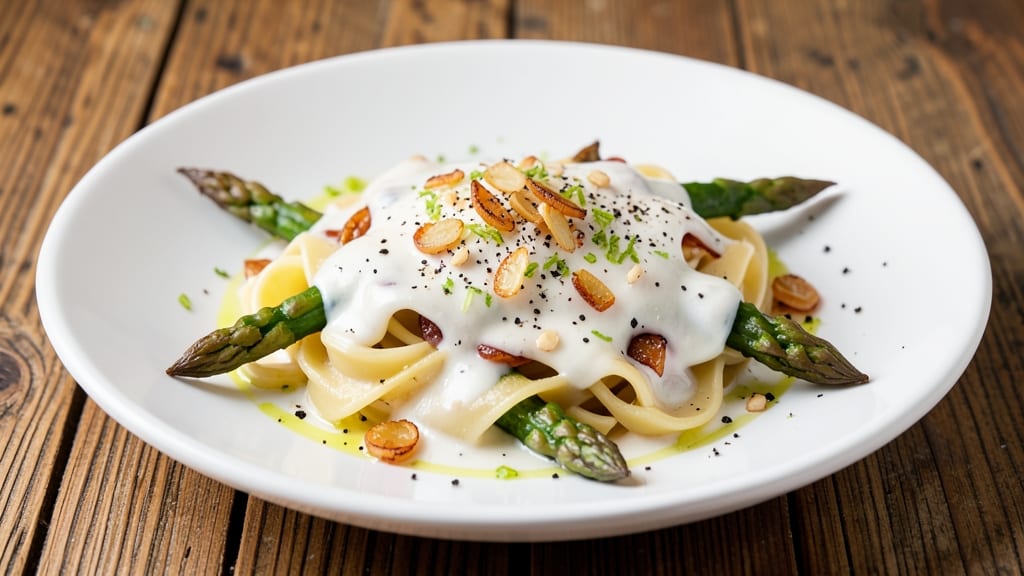
This asparagus pasta sauce recipe transforms spring’s brightest green vegetable into a creamy, earthy sauce that clings perfectly to al dente noodles. 💚 The secret lies in blending tender asparagus with garlic, lemon zest, and a touch of cream—creating a sauce that’s vibrant, balanced, and packed with fresh flavor without overpowering the pasta.
What makes this dish special is how it elevates simple ingredients into something restaurant-worthy, all while keeping prep under 30 minutes for a weeknight-friendly meal.
The sauce begins with sautéed shallots and garlic, which form the aromatic base before roasted asparagus joins the pot. A splash of white wine brightens the flavors, while a velvety blend of cream and grated parmesan adds richness without heaviness.
The result is a silky, bright green sauce that coats each strand of pasta, delivering a perfect balance of crunch from the asparagus spears and creaminess from the sauce. This isn’t just a side—it’s the star of the plate.
What you’ll end up with is a visually stunning, flavor-packed dish that’s as satisfying as it is elegant. The asparagus adds a satisfying crunch, while the sauce delivers layers of garlic, lemon, and umami that make every bite unforgettable.
It’s the kind of meal that feels special but doesn’t require hours in the kitchen—ideal for impressing guests or treating yourself to a spring-inspired feast. Serve with a simple arugula salad and crusty bread to soak up every last drop of that luscious sauce.
This recipe works equally well with penne, fettuccine, or even gluten-free pasta—just adjust the cooking time to keep those noodles perfectly al dente. The sauce also freezes beautifully, so you can prep ahead and enjoy this spring favorite whenever the mood strikes. Let’s get cooking!
Ingredients for asparagus pasta sauce
Spring’s brightest green meets creamy, earthy pasta perfection—just 14 ingredients for restaurant-quality results.
| Ingredient | Amount | Notes |
|---|---|---|
| Fresh Asparagus Spears 🌱 | 1 lb | Trim tough ends, cut into 2-inch pieces |
| Shallots 🧅 | 2 whole | Minced, vibrant purple preferred |
| Garlic Cloves 🧄 | 4 cloves | Minced, fresh for best aroma |
| Extra-Virgin Olive Oil 🫒 | ½ cup | High-quality, fruity variety |
| Dry White Wine 🍷 | ½ cup | Sauvignon Blanc or Pinot Grigio |
| Heavy Cream 🥛 | ½ cup | Full-fat for velvety texture |
| Parmesan Cheese 🧀 | ½ cup | Freshly grated, aged minimum 24 months |
| Lemon Zest 🍋 | 1 tbsp | From organic lemon, no pith |
| Lemon Juice 🍋 | 1 tbsp | Freshly squeezed |
| Pasta 🍝 | 12 oz | Penne or fettuccine, al dente preferred |
| Salt 🧂 | 1 ½ tsp | Diamond Crystal kosher salt |
| Freshly Ground Black Pepper 🌶️ | ½ tsp | Cracked peppercorns preferred |
| Fresh Basil Leaves 🌿 | ¼ cup | Chopped, for garnish |
| Butter 🧈 | 2 tbsp | Unsalted, for finishing |
The asparagus is your flavor anchor here. Look for bright green spears with tight tips—avoid woody, dry stalks. Whole Foods and Trader Joe's carry the freshest cuts, but any grocery store should have them in spring. Trim the ends with a sharp knife—don’t snap them, or you’ll lose precious flavor. For the shallots, purple varieties add subtle sweetness, but yellow works too. The garlic? Fresh is non-negotiable—jarred minced loses its punch fast. I always buy a whole bulb and keep it in the fridge for maximum flavor.
No white wine? Substitute chicken broth with a splash of apple cider vinegar—it mimics the acidity perfectly. Heavy cream too rich? Half-and-half or whole milk works, though the sauce will be slightly lighter. The Parmesan makes or breaks this—grate it yourself from a wedge (pre-grated gets clumpy). Short on lemon? Orange zest plus a little juice gives a similar brightness. For the pasta, gluten-free options like brown rice penne work great—just cook them 1 minute less than the package says. And if you’re feeling fancy, toss in a handful of toasted pine nuts at the end for crunch.
This sauce keeps 3 days in the fridge, sealed tight with a layer of olive oil on top to preserve color. Freezes beautifully for up to 3 months—portion into ice cube trays before transferring to a bag for easy reheating. The pasta? Cook it just before serving to keep it al dente. Leftovers reheat best with a splash of water or broth to loosen the sauce. Store the butter in a cool, dark place—it’s only used at the end, so don’t worry about keeping it out too long.
Why You'll Love This Recipe
- No Chopping Nightmare: I swear by this trick—just trim the asparagus ends and snap off the woody bits. That’s it. No fancy dicing, no peeling, no mess. The shallots and garlic? One knife each, max.
- Wine’s Secret Weapon: That splash of dry white wine isn’t just for show—it brightens the sauce like magic. The acidity cuts through the richness, and suddenly, your pasta tastes like a fancy Italian bistro. (Yes, even on a Tuesday night.)
- Leftovers That Beg for More: This sauce actually improves the next day. The asparagus softens just enough to melt into the sauce, while the garlic and shallots deepen in flavor. I make a double batch every time—lunches for days.
- Spring’s First Fancy Meal: No one will guess it’s a weeknight dinner. The crisp-tender asparagus spears add a restaurant-worthy touch, and the olive oil finish makes it feel special. Serve it over pasta, or—honestly—just eat it with a spoon.
Step-by-step instructions for asparagus pasta sauce
Here's how to transform spring's brightest vegetable into a luscious, vibrant sauce that clings perfectly to pasta.
🍳 Step 1: Sauté Shallots and Garlic Until Translucent
Heat the 0.5 cup extra-virgin olive oil in a large skillet over medium-low heat. Add the 2 whole minced shallots and cook for 5-6 minutes until they become soft and translucent, their edges just beginning to turn golden. This slow cooking prevents them from burning while developing their natural sweetness.
Lower the heat to low and add the 4 cloves minced garlic. Stir constantly for 30 seconds until fragrant—you'll smell that unmistakable garlic aroma that signals it's ready. Here's the thing: garlic burns in seconds, so keep your eye on it. If it starts to darken, remove the pan from heat for 10 seconds to cool slightly before continuing.
🍳 Step 2: Cook Asparagus Until Bright Green and Tender-Crisp
Push the shallot-garlic mixture to one side of the skillet and add the 1 lb trimmed and cut asparagus spears in a single layer. Cook for 4-5 minutes until the asparagus is bright green and tender-crisp—you want it to offer just a slight resistance when pierced with a fork. The spears should maintain their vibrant color, not turn dull or mushy.
Real talk: don't overcrowd the pan. If you need to cook in batches, that's fine—just remember to reserve the cooking liquid from the first batch to maintain sauce consistency. Once the asparagus reaches the perfect texture, transfer it to a plate and set aside. You'll be adding it back later, but we want it to finish cooking in the sauce.
🍳 Step 3: Deglaze with Wine and Reduce to Syrup-Like Consistency
Return the skillet to medium heat and pour in the 0.5 cup dry white wine. Immediately scrape up all those browned bits from the bottom of the pan with a wooden spoon—this is where all the flavor lives. Let the wine simmer for 3-4 minutes until reduced by half, until it forms a syrupy consistency that coats the back of a spoon.
Here's where it gets fun: the wine should smell rich and concentrated, almost like the alcohol has evaporated but the fruitiness remains. If it reduces too quickly, lower the heat slightly. You're aiming for a glossy, reduced sauce that will form the base of your pasta dish—this step builds the foundation for all that bright, vibrant flavor.
🥘 Step 4: Build the Creamy Sauce with Parmesan and Lemon
Reduce heat to low and stir in the 0.5 cup heavy cream, 0.5 cup freshly grated parmesan cheese, 1 tbsp lemon zest, and 1 tbsp lemon juice. Add the 12 oz cooked pasta (reserve 1 cup pasta water) and toss everything together for 2-3 minutes until the pasta is fully coated and the sauce has thickened slightly.
This is the moment that matters: the sauce should cling to the pasta like a second skin, with a velvety texture that's neither too thin nor too thick. If it's too thick, add 2-3 tablespoons of reserved pasta water at a time until it reaches your desired consistency. The lemon zest and juice brighten the dish, cutting through the richness of the cream and adding that fresh, spring-like quality we're after.
🔪 Step 5: Finish with Butter and Fresh Basil
Remove the skillet from heat and stir in the 2 tbsp butter until melted and fully incorporated. The butter adds a final layer of richness and helps emulsify the sauce. Add the reserved 1 lb asparagus spears and toss gently to warm through for 1-2 minutes—just enough to heat the asparagus without making it mushy.
Finish with the 0.25 cup chopped fresh basil leaves, 1.5 tsp salt, and 0.5 tsp freshly ground black pepper. Taste and adjust seasoning if needed—you might need a touch more salt to balance the bright lemon and rich cream. The basil adds a fresh, herbal note that ties everything together beautifully. Serve immediately while the pasta is hot and the sauce is silky.
Pro Tips For Making Asparagus Pasta Sauce
- Trim the Asparagus Right: Cut the tough ends off the asparagus spears at a 45-degree angle—this makes them look intentional in the sauce and prevents that awkward, chewy bite you hate. (Yes, even the thick ones—don’t skip this, or you’ll regret it later.)
- Sweat Shallots Low and Slow: Shallots release flavor best when cooked gently—think 3-4 minutes on medium-low heat until translucent, not brown. I used to rush this, and the sauce always tasted flat; now I let them melt into the oil like butter.
- Deglaze with Wine, Then Wait: Pour in the white wine and let it bubble away for 30 seconds before adding asparagus—this ensures the alcohol fully evaporates, so your sauce doesn’t taste sharp. (I know, it’s tempting to add everything at once, but trust me.)
- Blanch Asparagus First: Drop asparagus into boiling salted water for 1 minute before tossing it into the sauce—this crisps the tips and softens the stalks just enough. Skipping this means either mushy spears or undercooked, rubbery centers. (Your future self will notice.)
Make-ahead tips for asparagus pasta sauce
Sauce Prep Ahead
Make the sauce 24 hours ahead and store it in an airtight container in the fridge. The flavors meld beautifully overnight, becoming even more vibrant.
Reheat gently on the stovetop over low heat for 5-7 minutes, stirring occasionally and adding 1-2 tablespoons of water or pasta water if it thickens too much. 💚
Pasta Cooking Timeline
Cook the pasta just before serving—it’s best al dente and loses texture when reheated. For meal prep, boil it 1 minute less than package instructions, drain immediately, and toss with 1 tablespoon olive oil to prevent sticking.
Store in the fridge for up to 2 days or freeze for 1 month. Reheat in boiling water for 1-2 minutes before tossing with the sauce.
Asparagus Prep Shortcut
Roast the asparagus a day ahead for extra flavor and convenience. Toss trimmed spears with 1 tablespoon olive oil, ½ teaspoon salt, and ¼ teaspoon black pepper, then roast at 400°F for 12-15 minutes until tender-crisp.
Store in the fridge for up to 3 days or freeze for 2 months. Reheat in the sauce for 1-2 minutes to maintain texture.
Freezer-Friendly Packaging
Portion the sauce into ice cube trays before transferring to a freezer bag for easy reheating. Label with the date—it stays fresh for 3 months. To use, thaw overnight in the fridge, then reheat on the stovetop with a splash of water.
For the pasta, freeze it raw in a single layer on a tray before bagging—this prevents clumping. Cook from frozen in boiling water for 2-3 minutes extra than package instructions.
Make-Ahead Serving Suggestions
Prep all components separately for a stress-free meal: sauce in one container, pasta in another, and asparagus in a third. Reassemble by tossing the sauce with reheated pasta and adding the asparagus at the end.
Serve with garlic bread (store-bought or homemade) and a simple arugula salad dressed with lemon vinaigrette—both keep well in the fridge for 3-4 days. 🌿
Reheating for Best Texture
Reheat the sauce and pasta separately to avoid a soggy mess. Warm the sauce on the stovetop over low heat until just simmering, then toss with the pasta. Add the asparagus last to keep it crisp.
For extra creaminess, stir in 1 tablespoon heavy cream while reheating. If the sauce separates, whisk vigorously or blend briefly with an immersion blender for a silky finish.
Nutrition facts
Frequently asked questions
Can I use frozen asparagus instead of fresh?
Fresh asparagus gives the best texture and flavor, but frozen works in a pinch! Thaw it completely first, then pat dry thoroughly to avoid making your sauce watery. For best results, roast the thawed asparagus at 400°F for 10-12 minutes before adding to the sauce—this helps restore some of that fresh, tender-crisp quality.
How do I adjust this for gluten-free pasta?
Gluten-free pasta absorbs sauce differently, so cook it 1 minute less than package instructions and toss with 1 extra tablespoon olive oil after draining. Use brown rice or chickpea pasta—they hold up best to creamy sauces. The sauce recipe stays exactly the same, but you might need to add 1-2 extra tablespoons pasta water to reach your desired consistency.
What if I don't have white wine?
No problem! Substitute with ½ cup chicken broth plus 1 teaspoon apple cider vinegar—it mimics the acidity perfectly. For extra brightness, add ½ teaspoon lemon juice directly to the sauce at the end. The flavor won't be identical, but it'll still taste delicious with that same vibrant, spring-like quality.
Can I make this sauce dairy-free?
Swap the heavy cream for ½ cup full-fat coconut milk and use vegan parmesan (or nutritional yeast for a cheesy flavor). The sauce will have a slightly different texture but still be rich and flavorful. For extra creaminess, stir in 1 tablespoon cashew cream at the end.
Why did my asparagus turn mushy?
Overcooking is the most common mistake—asparagus should be tender-crisp, not soft like cooked carrots! Cook it for 4-5 minutes max in the skillet (or 12-15 minutes if roasting). For extra protection, blanch fresh asparagus in boiling water for 1 minute before adding to the sauce—this helps preserve its texture while still letting it absorb flavors.