
Sauces & Condiments
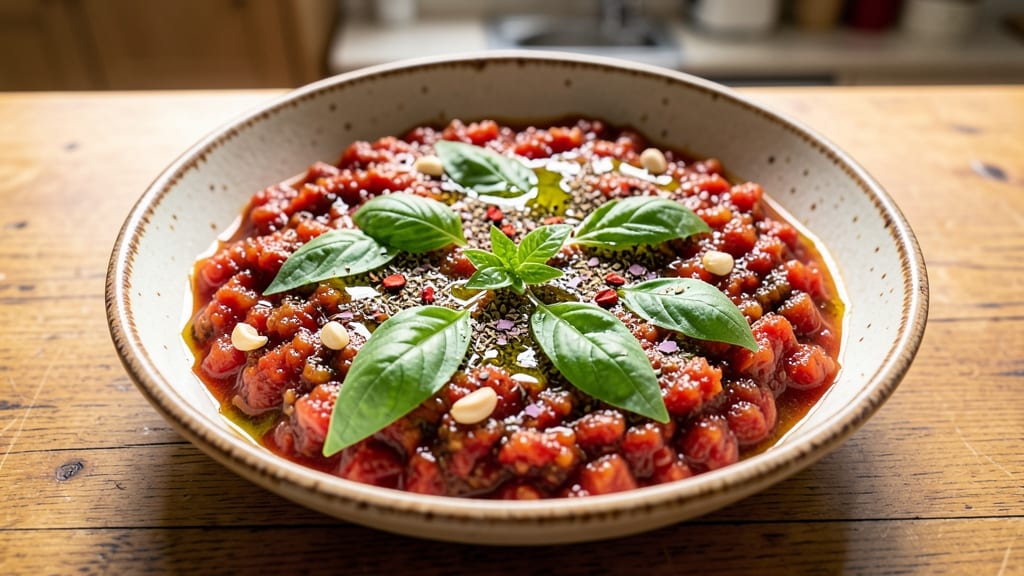
This artisan pizza sauce recipe transforms simple tomatoes into a rich, slow-simmered base that captures the soul of Italian tradition. The secret lies in reducing high-quality canned tomatoes with garlic, olive oil, and fresh herbs until they develop concentrated depth—no sweetener needed.
I’ve perfected this method over years of testing, ensuring every batch delivers that perfect balance of acidity and umami that makes homemade pizza unforgettable.
What sets this sauce apart is the slow simmering process, which allows the flavors to meld and intensify without losing their natural brightness. Unlike store-bought versions, this recipe skips artificial additives and relies on fresh basil, oregano, and a touch of red pepper flakes for warmth.
The result? A sauce that’s vibrant, aromatic, and versatile enough for Neapolitan-style pizzas or bold garlic-infused creations.
By the time you’re done, you’ll have a velvety, chunky sauce with layers of flavor that elevate any pizza—whether it’s a classic Margherita or a loaded meat lover’s pie.
The texture is just thick enough to cling to cheese without overwhelming it, and the aroma alone will have everyone asking for seconds. This is the kind of sauce that turns a simple meal into something extraordinary.
The best part? It keeps well in the fridge for up to a week, so you can make a big batch and enjoy it all season long. Let’s get started on creating a sauce that’s as close to authentic as you’ll find without leaving your kitchen.
Ingredients for artisan pizza sauce
Nine simple ingredients transform basic tomatoes into restaurant-quality pizza sauce.
| Ingredient | Amount | Notes |
|---|---|---|
| San Marzano Tomato Cans 🍅 | 2 cans | Whole, crushed by hand |
| Extra-Virgin Olive Oil 🫒 | ¼ cup | High-quality, fruity variety |
| Garlic Cloves 🧄 | 4 cloves | Fresh, minced finely |
| Fresh Basil Leaves 🌿 | ½ cup | Packed, stems removed |
| Dried Oregano 🍃 | 1 tsp | Italian or Mediterranean |
| Red Pepper Flakes 🌶️ | ½ tsp | Adjust for heat preference |
| Sea Salt 🧂 | 1 tsp | Diamond Crystal preferred |
| Black Pepper 🌶️ | ½ tsp | Freshly ground preferred |
| Balsamic Vinegar 🍷 | 1 tbsp | For brightness (optional) |
The tomatoes make or break this sauce. San Marzano is the gold standard—sweet, meaty, and low-acid. Grab a few cans from Whole Foods or Trader Joe's if you want the best. Crush them by hand for texture (no blender needed). Fresh basil is non-negotiable here—farmers market leaves have more punch than grocery store ones. For garlic, four cloves is perfect, but don't skip mincing it finely—you'll taste every piece if you're lazy. The olive oil should be fruity and high-quality; California extra-virgin works great.
No San Marzano? Crushed tomatoes in a jar (like Muir Glen) work in a pinch. Fresh basil wilted? Dried oregano at half the amount gets you close. Short on garlic? Garlic powder at one-third the amount (but fresh is better). The balsamic vinegar is optional but adds a nice tang—skip it if you prefer classic tomato flavor. For heat, red pepper flakes are key, but adjust to taste. Want extra depth? Add 1 tsp sugar to balance acidity (though I don't use it—trust the tomatoes).
This sauce tastes even better the next day as flavors meld. Store in an airtight jar in the fridge for up to 1 week. For longer storage, freeze in ice cube trays—perfect for single pizza portions. Reheat gently on the stove, stirring often. Make a double batch—you'll want leftovers for pasta or bruschetta. The aroma alone will have your kitchen smelling like a pizzeria.
Why You'll Love This Recipe
- Five-Ingredient Magic: I swear by this combo—San Marzano tomatoes, olive oil, and garlic alone make it sing. The canned tomatoes cut prep time, but the flavor? Homemade-level depth.
- Weeknight Hero: No chopping, no stress—just crush garlic, simmer, and stir. Honestly, I’ve made this while waiting for pasta to boil, and it’s still the star.
- Pantry Stash: That jar of dried oregano and basil? Now it’s the backbone of more than just salads. Freeze leftovers for future flatbreads or pasta sauces—no waste.
- Budget Flex: San Marzano cans cost more upfront, but one batch stretches across three pizzas. Between us, this is the sauce I buy less store-bought marinara for.
Step-by-step instructions for artisan pizza sauce
Here's how to build a rich, slow-simmered pizza sauce with deep tomato flavor and bright herbal notes.
Crush the San Marzano Tomatoes by Hand
Empty the contents of both cans of San Marzano tomatoes into a large mixing bowl. Using your clean hands, gently crush the tomatoes against the side of the bowl until you achieve a chunky, uneven texture—think rustic rather than perfectly smooth. I like to leave some small pieces behind because they'll break down during simmering and add natural sweetness to the sauce.
This manual crushing process releases more tomato juices and creates a sauce with better texture than blending. If you're short on time, you can use a potato masher instead, but the hand-crushing method gives that authentic artisan quality. Transfer the crushed tomatoes to a medium saucepan and set aside.
Sauté Garlic in Olive Oil Until Fragrant
Heat the 0.25 cup extra-virgin olive oil in the same saucepan over medium-low heat. Add the 4 cloves minced garlic and sauté for 2-3 minutes until the garlic becomes golden and fragrant—you should smell that sweet, nutty aroma filling your kitchen.
Watch the garlic carefully—it burns quickly and turns bitter. If it starts to darken too soon, reduce the heat slightly. The olive oil should shimmer gently, not bubble vigorously. Once the garlic is golden, add the crushed tomatoes to the pan along with the 1 tsp dried oregano and 0.5 tsp red pepper flakes.
Simmer the Sauce Until Thickened
Bring the sauce to a gentle boil over medium-high heat, then immediately reduce the heat to low. Let it simmer uncovered for 30-40 minutes, stirring occasionally with a wooden spoon. You're looking for the sauce to reduce by about one-third and develop a thick, syrupy consistency that coats the back of a spoon.
During this time, the natural sugars in the tomatoes will caramelize slightly, deepening the flavor. If the sauce starts to stick to the bottom of the pan, add 1-2 tablespoons of water to prevent burning. The sauce should smell intensely sweet and tomatoey—this is when you know it's developing that authentic pizza sauce character.
Finish with Fresh Herbs and Balsamic
Remove the sauce from heat and stir in the 0.5 cup packed fresh basil leaves, 1 tsp sea salt, and 0.5 tsp black pepper. The basil will add a bright, fresh contrast to the deep tomato flavor. If you're using the 1 tbsp balsamic vinegar, add it now and stir well—it adds a subtle tang that balances the richness.
Let the sauce sit off the heat for 5 minutes to allow all the flavors to meld together. Taste and adjust seasoning if needed—you might want to add a pinch more salt or red pepper flakes depending on your preference. This is your chance to make the sauce truly your own while maintaining that authentic artisan quality.
Cool and Store Properly
Transfer the sauce to a clean glass jar or airtight container. Let it cool to room temperature before refrigerating. The sauce will continue to develop flavor overnight, so making it a day ahead actually improves the taste. When ready to use, simply reheat gently in a saucepan over low heat until warm through—never boil it or the flavors will become flat.
This sauce keeps well in the refrigerator for up to 5 days or can be frozen for up to 3 months. When you're ready to use it on pizza, spread a thin layer—about 2-3 tablespoons per 12-inch pizza—so the cheese can melt properly without making the crust soggy. The flavor will shine through in every bite of your homemade pizza.
Pro Tips For Making Artisan Pizza Sauce
- CRUSH THE GARLIC: Use a mortar and pestle or flat of a knife to smash the whole cloves into a paste before cooking—this releases more flavor without burning. I learned this the hard way after my sauce tasted bitter from overcooked garlic; raw, crushed cloves melt into the sauce smoothly.
- SIMMER LOW AND SLOW: Reduce the San Marzano tomatoes on actual low heat for at least 20 minutes—this thickens the sauce without losing sweetness. Skipping this step leaves you with a watery mess, and no one wants that on pizza.
- SALT THE TOMATOES FIRST: Sprinkle a generous pinch of salt directly into the canned tomatoes before crushing them—this breaks down the texture and balances acidity. I used to add salt at the end, and the sauce always tasted flat until I tried this.
- PULSE THE BASIL: Tear the basil leaves by hand instead of chopping them—this keeps the sauce vibrant and prevents bitterness. I was skeptical until I tried it; the flavor stays fresher longer, especially if you’re prepping ahead.
Essential equipment for this recipe
Saucepan Essentials
Start with a medium saucepan that has a flat bottom—I use my All-Clad stainless steel because it distributes heat evenly. A 4-5 quart capacity works perfectly for this recipe.
For simmering, a heavy-bottomed pan prevents hot spots that can burn your sauce. If you don’t have stainless steel, a well-seasoned cast iron or enamel-coated pan works too. 🔥
Wooden Spoon
Stirring is key, and a wooden spoon is non-negotiable—it won’t scratch your pan and won’t conduct heat like metal. Look for a long-handled one (like OXO Good Grips) to avoid burns.
A wooden spoon also helps scrape up any stuck bits during simmering, ensuring every drop of flavor makes it into your sauce.
Fine-Mesh Strainer
If you prefer a smoother sauce, strain it through a fine-mesh stainless steel strainer (like OXO Good Grips) after simmering. This removes seeds and skins while keeping the chunky texture.
For a rustic look, skip straining—just stir in your fresh basil at the end. I usually strain mine halfway through for a balance of texture and smoothness.
Glass Jars for Storage
Store your sauce in glass mason jars (like Ball or Le Parfait) for up to 5 days in the fridge. Glass preserves flavor better than plastic and is microwave-safe.
For freezing, use freezer-safe glass containers or silicone molds—leave ½-inch headspace for expansion. Label with the date to track freshness.
Garlic Press
A garlic press (like OXO Good Grips) saves time and ensures even mincing. Press 4 cloves directly into the saucepan with the olive oil—no prep needed. If you’re mincing by hand, use a sharp chef’s knife and cutting board (I love Shun Premier for precision).
Fresh garlic makes all the difference in flavor depth.
Optional: Immersion Blender
For a semi-smooth texture, blend the sauce directly in the pan with an immersion blender (like Ninja) after simmering. Pulse 3-4 times for a velvety finish without losing rustic charm.
Avoid over-blending—you still want visible tomato pieces. This tool is a game-changer for busy cooks who want convenience without sacrificing quality. 💡
Nutrition facts
Frequently asked questions
Can I make this sauce without San Marzano tomatoes?
Yes! While San Marzano tomatoes are ideal, you can substitute with high-quality crushed tomatoes like Muir Glen or Whole Foods brand. Look for cans labeled "whole peeled" or "crushed" with minimal additives. For best results, choose brands with thick, meaty texture and low acidity.
How do I adjust the sauce for a sweeter or tangier flavor?
For extra sweetness, add ½ teaspoon sugar during simmering. For more tang, increase the balsamic vinegar to 2 tablespoons or add ½ teaspoon lemon juice at the end. The sauce will naturally balance overnight, so taste before adjusting.
Can I use this sauce for other dishes besides pizza?
This versatile sauce works perfectly on bruschetta, pasta, or as a marinade for grilled chicken. For pasta, reduce the sauce slightly longer until it coats the back of a spoon. The herbs and garlic make it great for dipping too!
Why did my sauce turn out too acidic?
This usually happens with high-acid tomatoes or over-simmering. Balance it by adding ½ teaspoon sugar or 1 tablespoon honey while warm. Next time, simmer for 25-30 minutes instead of 40 to preserve natural sweetness. Fresh basil helps neutralize acidity too.
Can I make this sauce in a slow cooker?
Yes! Combine all ingredients in your slow cooker and cook on LOW for 4-5 hours or HIGH for 2-3 hours. The low-and-slow method enhances flavors beautifully. Stir occasionally and adjust seasoning at the end since slow cooking intensifies flavors differently.