
Sauces & Condiments
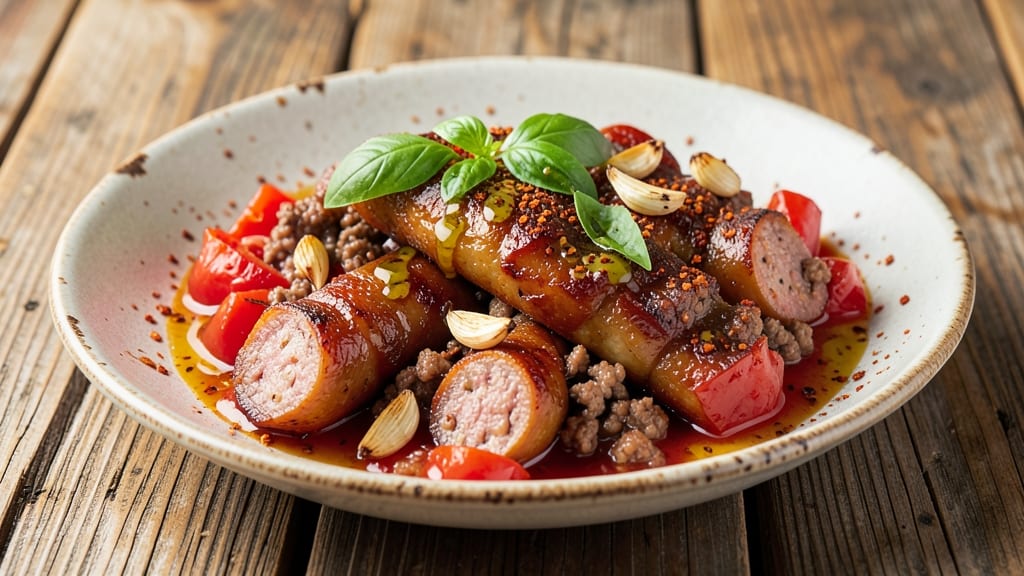
This arrabbiata meat sauce recipe delivers the fiery, tomato-forward intensity of Rome’s most beloved pasta sauce—bold enough to stand alone but perfect for twirling with spaghetti.
The secret lies in balancing heat with acidity: crushed red pepper flakes sing against bright San Marzano tomatoes, while garlic and olive oil create a velvety base. I’ve perfected this version with Italian sausage for deep, savory richness, though ground beef works just as well for a leaner profile.
What sets this sauce apart is the technique: browning the meat first develops deep flavor, while deglazing the pan captures every caramelized bit. Simmering low and slow lets the spices meld without overpowering the tomatoes, resulting in a sauce that’s both vibrant and complex.
The key? Don’t rush the cooking—patience here transforms simple ingredients into something restaurant-worthy.
By the time you’re done, you’ll have a sauce that’s spicy, tangy, and irresistibly velvety, clinging to every strand of pasta. Serve it over al dente spaghetti or penne, garnished with fresh basil and a sprinkle of pecorino.
For a complete meal, pair with garlic bread to soak up every last drop—this is comfort food at its most passionate.
The beauty of arrabbiata lies in its adaptability. Double the batch for leftovers (it tastes even better the next day) or adjust the heat to suit your preference.
Whether you’re feeding a crowd or treating yourself to a weeknight dinner, this sauce delivers the bold, unapologetic flavors of Italian cooking without the fuss.
Ingredients for arrabbiata meat sauce
Bold flavors start with these 14 ingredients—Italian sausage, San Marzano tomatoes, and fiery red pepper flakes.
| Ingredient | Amount | Notes |
|---|---|---|
| Italian Sweet Sausage 🌭 | 1 ½ lb | Casings removed, browned and crumbled |
| San Marzano Crushed Tomatoes 🍅 | 28 oz | High-quality canned tomatoes |
| Extra-Virgin Olive Oil 🫒 | ½ cup | For browning meat and deglazing |
| Garlic Cloves 🧄 | 6 cloves | Minced, fresh preferred |
| Crushed Red Pepper Flakes 🌶️ | 2 tbsp | Adjust for desired heat |
| Dried Oregano 🍃 | 1 tsp | Italian oregano preferred |
| Ground Black Pepper 🌶️ | ½ tsp | Freshly cracked |
| Kosher Salt 🧂 | 1 ½ tsp | Diamond Crystal preferred |
| Fresh Basil Leaves 🌿 | ¼ cup | Chopped, for finishing |
| Pecorino Romano Cheese 🧀 | ½ cup | Freshly grated, for serving |
| Red Wine 🍷 | ½ cup | Dry, bold variety like Chianti |
| Onion 🧅 | 1 whole | Medium, finely diced |
| Ground Beef 🥩 | 1 ½ lb | 80/20 fat ratio preferred |
| Tomato Paste 🍅 | 2 tbsp | High-quality, no sugar added |
The sausage and beef are the flavor anchors here. I always grab Italian sweet sausage from the butcher section—it’s sweeter and less fatty than hot sausage, which can overpower the delicate tomato base. If you’re using beef, go for 80/20 ground chuck (the fat ratio matters for browning). For the tomatoes, San Marzano cans are non-negotiable—they’re sweeter and less acidic, which balances the heat beautifully. Whole Foods or Trader Joe’s carry them, and they’re worth the splurge. The garlic? Freshly minced makes all the difference—pre-minced garlic lacks that bright, fresh punch.
No Italian sausage? Ground beef or Italian pork sausage works just as well, though the flavor profile shifts slightly. Short on red pepper flakes? Fresh chili peppers like arbol or serrano (seeds removed for less heat) can be finely chopped and used at half the amount. The tomato paste is key—avoid the sugar-added versions if you want to keep this sauce vibrant and bright. If you’re avoiding alcohol, substitute beef broth for the red wine—just add a splash of balsamic vinegar to mimic the acidity. The oregano? Italian oregano has a more robust flavor than Mexican, so if you can find it, grab a small jar from the international aisle.
This sauce tastes even better the next day as the flavors meld. Store it in an airtight container in the fridge for up to 5 days, or freeze for 3 months in portion-sized containers. For leftovers, reheat gently on the stove with a splash of water or pasta water to restore that velvety texture. The basil and pecorino are strictly for serving—add them right before eating so they stay fresh and aromatic. Double the batch if you’re feeding a crowd; it’s perfect for meal prep and freezes beautifully.
Why You'll Love This Recipe
- One-Pan Magic: Honestly, I swear by this recipe because it’s literally three ingredients in a skillet before you even think about tomatoes. Slice the sausage, toss it in olive oil, and let the casings crisp—no chopping, no peeling, no mess. The tomatoes and garlic join in 10 minutes flat, and you’re done.
- Spicy-Sweet Obsession: Between us, that San Marzano tomato base with crushed red pepper flakes and garlic is ridiculously good—bright, tangy, with just enough heat to linger. The sweet sausage melts into the sauce, so you get this perfect balance of smoky, spicy, and rich. (Yes, even on a Tuesday night.)
- Leftovers That Don’t Suck: This sauce tastes better the next day—seriously. I make a double batch on Sundays, freeze half, and heat it straight from the fridge for pasta or toast. No sad, watery reheats here; it just gets deeper in flavor. My freezer’s full of it, and I’m not complaining.
- Budget-Friendly Powerhouse: Italian sausage and canned tomatoes are cheap staples, but they punch way above their weight. A single batch feeds four for under $10, and the red pepper flakes stretch that heat across multiple meals. Plus, no fancy ingredients—just the good stuff you already have.
Step-by-step instructions for arrabbiata meat sauce
This one-pot Italian classic delivers bold spice and rich tomato flavor—let's build it layer by layer.
Brown the Italian Sweet Sausage and Ground Beef
Heat the 0.5 cup extra-virgin olive oil in a large, heavy-bottomed pot over medium-high heat. Add the 1.5 lb Italian sweet sausage and 1.5 lb ground beef (80/20 fat ratio), breaking it into small pieces as it browns. Cook undisturbed for 5-6 minutes until the meat releases from the pan and forms deep brown crusts.
Here's the thing—those browned bits are pure flavor. Don't rush this step, but don't let the meat burn. If it starts to smoke too aggressively, reduce heat slightly. Once the meat is fully browned, use a slotted spoon to transfer it to a plate, leaving all the rendered fat in the pot. You should have about 2-3 tablespoons of rich brown fat remaining.
Sauté Onions and Aromatics
In the same pot (no need to wipe it clean—those browned bits are flavor gold), add the 1 whole finely diced onion and cook for 4-5 minutes until softened and translucent. This should happen at medium heat—you want to cook the onions without browning them.
Next, add the 6 cloves minced garlic and stir for 30 seconds until fragrant. Immediately add the 2 tbsp crushed red pepper flakes and 1 tsp dried oregano, stirring constantly for 1 minute to toast the spices. You'll smell that distinctive, fiery aroma—this is where the arrabbiata gets its signature kick. Watch carefully—spices burn quickly.
Build the Sauce Base
Pour in the 0.5 cup red wine and scrape up all those browned bits from the bottom of the pot with a wooden spoon. This deglazing step captures all the meaty flavor. Let the wine simmer for 3-4 minutes until reduced by half, then stir in the 2 tbsp tomato paste and cook for 1 minute until it darkens slightly.
Now add the 28 oz San Marzano crushed tomatoes, 1.5 tsp kosher salt, and 0.5 tsp ground black pepper. Stir well to combine, then return the browned meat to the pot. Bring everything to a gentle simmer, then reduce heat to low. Cover and let it cook for 45-50 minutes, stirring occasionally, until the sauce thickens and flavors meld.
Finish and Serve
After the sauce has thickened, uncover the pot and increase heat to medium-low. Stir in the 0.25 cup chopped fresh basil leaves and let the sauce simmer uncovered for 5-7 minutes to allow excess moisture to evaporate. The sauce should coat the back of a spoon and have a vibrant red color with visible flecks of spice.
Taste and adjust seasoning—you might need a pinch more salt or red pepper flakes depending on your preference. Serve immediately over your choice of pasta, sprinkled with 0.5 cup freshly grated Pecorino Romano cheese. The sauce should be bold, slightly spicy, and perfectly balanced with sweet tomato and herby basil notes.
Pro Tips For Making Arrabbiata Meat Sauce
- Brown the Sausage: Use medium-high heat and leave those casings intact—don’t slice them open. The rendered fat will flavor the sauce, and the skin crisps into edible gold. I used to cut them, thinking it’d cook faster, but the sauce loses depth without that fat.
- Toast the Garlic: Cook the minced garlic in olive oil until it’s just golden—no waiting for brown bits. Overcooked garlic turns bitter, and you’ll taste it in every bite. Remove it when it smells nutty, not burnt.
- Simmer, Don’t Boil: Keep the sauce at a gentle bubble, not a rolling boil. High heat breaks down the tomatoes into mush, and you’ll end up with a watery, thin sauce instead of a rich, clinging one. Lower the heat if it’s splashing.
- Deglaze with Tomatoes: After browning the sausage, splash in the crushed tomatoes right away—don’t wait for the pan to cool. The acid cuts through the fat, lifting flavors instead of leaving a greasy film. Scrape up every bit of browned bits; they’re the secret.
Troubleshooting this recipe
Sauce Too Thin?
If your arrabbiata sauce is too watery, simmer uncovered for an extra 10-15 minutes—the heat will evaporate excess moisture. For faster thickening, mix 1 tbsp tomato paste with 2 tbsp water and stir in.
I’ve also had success adding ½ cup pasta water (the starch helps bind the sauce), but reduce heat immediately to prevent curdling. 🌡️
Heat Level Off?
Too mild? Add ½ tsp more crushed red pepper flakes and simmer for 5 minutes to let the heat infuse. For smoky depth, toast ¼ tsp smoked paprika in the same oil you browned the meat—it adds complexity without overpowering.
If the sauce tastes flat, a splash of lemon juice brightens the tomatoes.
Meat Too Greasy?
Drain excess fat after browning using a slotted spoon or paper towels, but leave 1-2 tbsp for flavor. If the sauce still feels heavy, simmer uncovered for 10 minutes—the fat will rise to the top and can be skimmed off.
For a lighter texture, blend ¼ cup of the sauce and stir it back in to emulsify.
Sauce Too Acidic?
Balance tangy tomatoes with a pinch of sugar (½ tsp) or a splash of ½ cup heavy cream to round out flavors. If the sauce tastes bitter, a small piece of fresh basil or a sprinkle of Pecorino Romano adds sweetness.
Never add more salt—it’ll make the acidity worse.
Pasta Too Dry?
Undercooked pasta? Reserve ½ cup pasta water before draining and toss it with the sauce. The starch acts as a glue, making the sauce cling to the noodles. For extra creaminess, stir in 1 tbsp butter or a splash of pasta water while tossing. 🍝
Spices Burned?
If your red pepper flakes or garlic turn bitter, start fresh—heat 1 tbsp olive oil in a separate pan, toast the spices for 30 seconds max, then stir into the sauce.
For a smoother texture, blend the sauce briefly with an immersion blender (pulse 2-3 times). Avoid metal utensils if you’re using nonstick pans—they can scratch and react with acidity.
Nutrition facts
Frequently asked questions about arrabbiata meat sauce
Can I make this arrabbiata sauce with chicken instead of sausage?
Yes, but the flavor will be much lighter. For best results, use 1.5 lb boneless, skinless chicken thighs cut into small pieces. Brown them thoroughly first, then proceed with the recipe. Chicken adds a milder profile, so you might want to increase the red pepper flakes to 2.5 tbsp for proper heat balance.
How do I adjust the heat level for kids or sensitive eaters?
Reduce the crushed red pepper flakes to 1 tbsp total and toast them for just 20 seconds to mellow the flavor. For extra mildness, remove the seeds and membranes from the peppers before crushing. You can also blend the finished sauce briefly to distribute the heat more evenly.
What's the best pasta shape for this sauce?
Traditional choices are spaghetti or linguine for their long strands that catch the sauce beautifully. For more texture, try penne or rigatoni—the ridges hold extra sauce. Avoid delicate shapes like angel hair which can break easily with the meat pieces.
Can I make this sauce in a slow cooker?
Brown the meat first, then transfer everything to your slow cooker and cook on low for 6-7 hours or high for 3-4 hours. The slow cooking enhances the meaty depth. Just add the fresh basil and Pecorino at the very end, as they won't hold up well to extended cooking.
What if I don't have red wine for deglazing?
Use ½ cup beef or chicken broth instead—it adds depth without alcohol. For extra brightness, add 1 tsp balsamic vinegar along with the broth. The acidity helps balance the richness of the meat and tomatoes beautifully.