
Sauces & Condiments
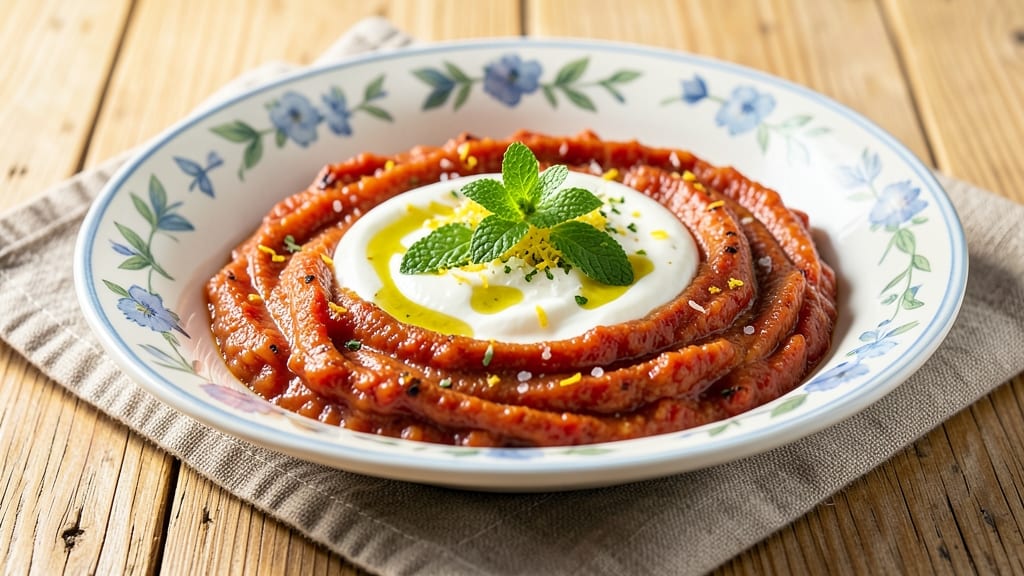
This Armenian manti sauce recipe transforms simple ingredients into a velvety, tangy masterpiece that elevates every bite of dumpling. The secret lies in balancing yogurt's cool creaminess with bright tomato acidity, then finishing with fresh mint that cuts through the richness like a whisper of mountain air.
I've perfected this sauce over years of testing, ensuring it stays true to traditional flavors while adapting to modern kitchens.
The foundation is built on thick Greek yogurt, blended with ripe tomatoes until perfectly smooth, then enhanced with garlic, onion, and a touch of lemon juice for depth.
What makes this sauce truly special is the herbaceous finish—fresh mint and parsley not only brighten the flavors but also create that signature Armenian freshness that sets it apart from heavier dipping sauces.
The result is a sauce that's equally at home with crispy manti or as a cooling accompaniment to grilled meats.
What you'll end up with is a sauce that's rich yet refreshing, with a perfect balance of tangy, creamy, and herbaceous notes that dance on your palate. The texture is silky-smooth with just enough body to cling to dumplings, while the flavors develop even more depth as it sits.
This isn't just a sauce—it's the heart of your manti experience, transforming simple dumplings into a restaurant-worthy meal.
Best of all, this sauce keeps beautifully in the refrigerator for up to 5 days, allowing you to make a big batch for meal prep or entertaining.
The flavors actually improve as they meld together, making it perfect for when you want to impress guests without spending hours in the kitchen. Let's get started on creating this flavorful centerpiece for your Armenian feast.
Ingredients for armenian manti sauce
Thick Greek yogurt meets ripe tomatoes and fresh herbs for this velvety Armenian masterpiece.
| Ingredient | Amount | Notes |
|---|---|---|
| Plain Greek Yogurt 🧀 | 1 ½ cups | Thick, full-fat preferred |
| Ripe Tomatoes 🍅 | 1 lb | Vine-ripened for sweetness |
| Yellow Onion 🧅 | 1 whole | Medium size, peeled |
| Garlic Cloves 🧄 | 4 cloves | Fresh, peeled, minced |
| Fresh Lemon Juice 🍋 | 2 tbsp | From 1 small lemon |
| Fresh Mint Leaves 🌿 | ½ cup | Packed, stems removed |
| Fresh Flat-Leaf Parsley 🌿 | ¼ cup | Chopped, for brightness |
| Extra-Virgin Olive Oil 🫒 | ¼ cup | High quality, fruity |
| Salt 🧂 | ¾ tsp | Diamond Crystal preferred |
| Ground Black Pepper 🌶️ | ¼ tsp | Freshly ground |
The yogurt is non-negotiable—full-fat Greek yogurt gives that signature creamy texture. Fage or Chobani are my go-tos, but any thick, plain yogurt works. Tomatoes should be ripe and juicy—if they're hard, they won't blend smoothly. I always grab heirloom or vine-ripened from the store's produce section, especially in summer. The mint and parsley? Buy fresh from an Armenian market or Middle Eastern grocery if you can—they'll have the most vibrant leaves. If you can't find fresh mint, dried works at half the amount, but trust me, fresh is worth the hunt.
No Greek yogurt? Thick plain yogurt or even sour cream (though texture won't be identical). Tomatoes too watery? Roast them first—toss halved tomatoes on a baking sheet at 400°F for 15 minutes. Short on lemon juice? Lime juice works too, but lemon's brightness is traditional. The olive oil adds richness—use a fruity, peppery EVOO like California Early Harvest or Italian Leccino. For the herbs, if you're missing parsley, cilantro or basil can stretch it, but the mint is essential. No fresh mint? Mint extract at 1/4 tsp is a last resort.
This sauce keeps beautifully—5 days in the fridge with a thin layer of olive oil on top to preserve freshness. I always double the batch because it's perfect for meal prep—pair it with store-bought manti or grilled lamb. Freezes for 3 months too, though texture gets slightly grainier after thawing. For serving, drizzle with a little more olive oil and sprinkle with extra mint leaves right before eating—trust me, that's the move.
Why You'll Love This Recipe
- No-Fuss Pantry Staples: I swear by this sauce because it uses things I always have—yogurt, tomatoes, and onions. No specialty trips or last-minute shopping. Honestly, I’ve made it three times this month already, and the only thing I ever adjust is how much lemon I squeeze.
- Garlic-Kissed Tang: The moment you blend in those raw garlic cloves? Chef’s kiss. That sharp, bright punch cuts through the richness of the yogurt, and the tomatoes add this sweet, jammy depth. It’s not just flavor—it’s the kind of taste that makes you reach for seconds without thinking.
- Game for Any Meal: This sauce works with manti, of course, but also as a dip for grilled meats or even a quick salad dressing. I’ll be real: my kids ask for it on pizza night, and my partner slathers it on toast with a sprinkle of salt. Versatile? More like magic.
- Leftovers That Last: Make a big batch—it keeps for days in the fridge without separating or tasting sad. Between us, I’ve had this sauce rescue forgotten lunches and last-minute dinner guests. Plus, it’s dirt cheap to double the recipe; you’re basically paying for tomatoes and nothing else.
Step-by-step instructions for Armenian manti sauce
This vibrant sauce comes together in minutes with bold flavors that perfectly complement manti dumplings.
Roast the Tomatoes and Onion Until Caramelized
Preheat your oven to 425°F and line a baking sheet with parchment paper. Cut the 1 lb ripe tomatoes in half and remove the cores. Peel and slice the whole yellow onion into ¼-inch thick rings. Arrange the tomato halves and onion slices in a single layer on the prepared baking sheet.
Drizzle everything with 2 tablespoons of the extra-virgin olive oil and sprinkle with ½ teaspoon of the salt. Roast for 25-30 minutes until the tomatoes collapse slightly and the onions turn deep golden brown. You'll smell that sweet, caramelized aroma—this is your cue that they're ready. Let them cool for 5 minutes before handling.
Build the Yogurt-Tomato Base
Transfer the roasted tomatoes and onions to a food processor along with the 4 minced garlic cloves. Pulse until everything is finely chopped but still slightly textured—you want some body in your sauce. With the processor running, slowly drizzle in the remaining ¼ cup extra-virgin olive oil until fully incorporated.
Add the 2 tablespoons fresh lemon juice and pulse once more. Scrape down the sides and give it another quick pulse to combine. The mixture should look like a thick, rustic tomato paste with bright flecks of onion and garlic. This is the flavor foundation that makes this sauce so special.
Blend in the Yogurt for Creamy Texture
Transfer the tomato mixture to a medium bowl and stir in the 1½ cups plain Greek yogurt using a silicone spatula. The yogurt will lighten the color dramatically, creating that signature Armenian sauce hue. At this point, I like to taste and adjust the seasoning—add the remaining ½ teaspoon salt and ¼ teaspoon ground black pepper if needed.
For a perfectly balanced sauce, you want the yogurt to mellow the acidity of the tomatoes while keeping that bright, tangy edge. The roasted flavors should still shine through, not be completely masked. Let the mixture sit for 5 minutes while you prepare the fresh herbs.
Finish with Fresh Herbs for Brightness
In a separate small bowl, combine the ½ cup fresh mint leaves and ¼ cup chopped fresh flat-leaf parsley. Using a sharp knife, finely chop the herbs until they're almost paste-like—this ensures they distribute evenly throughout the sauce. I like to use the flat of my knife for this step to avoid crushing the leaves too much.
Gently fold the herb mixture into the yogurt-tomato blend using a gentle folding motion. You're looking for a marbled effect where the herbs are evenly distributed but still visible as little green specks. This is what gives the sauce its signature freshness and visual appeal. Taste again and adjust seasoning if needed—sometimes the herbs need a little more salt to balance their brightness.
Chill and Serve with Manti
Transfer the completed sauce to a serving bowl and cover with plastic wrap pressed directly onto the surface. Refrigerate for at least 30 minutes (or up to 2 hours) before serving. This chilling time allows all the flavors to meld together beautifully, creating that perfect balance of creamy, tangy, and herby notes.
When ready to serve, give the sauce a quick stir. It should be thick but still pourable, with a glossy sheen from the olive oil. The sauce pairs perfectly with hot manti dumplings—spoon it generously over the top and watch as the steam rises with each bite. The contrast of the warm dumplings and cool sauce is what makes this dish so irresistible!
Pro Tips For Making Armenian Manti Sauce
- Blister the Onion: Cook the onion until it’s deep golden and slightly charred—almost caramelized—before adding tomatoes. I learned this the hard way: skipping this step leaves the sauce tasting raw and one-note. Use medium-low heat and let it develop for 8-10 minutes, stirring occasionally. That’s where the depth of flavor hides.
- Strain the Tomato Paste: After cooking the tomatoes, strain out the seeds and skin through a fine-mesh sieve. It’s messy, but it makes the sauce silky smooth instead of watery or pulpy. I used to skip it, and the texture always felt off—like eating a chunky tomato soup instead of a velvety sauce.
- Whisk in Yogurt Slowly: Temper the yogurt by mixing in a ladle of the hot tomato-onion base first, then slowly stir in the rest. Dumping cold yogurt into hot sauce curdles it every time. Work quickly but carefully, and keep the heat low—this isn’t the time to rush.
- Lemon Juice Last: Add the lemon juice right at the end, right before serving. The acid cuts through the richness of the yogurt and brightens the flavors, but it also cooks off if added too early. A squeeze—about 1 tablespoon—does the trick without making the sauce taste sour.
Essential equipment for armenian manti sauce
Food Processor
This is the workhorse of your manti sauce prep—I recommend a high-quality 12-cup food processor like the Ninja BN601 for smooth blending. The powerful motor ensures tomatoes and onions blend perfectly without overheating.
For a budget option, the Cuisinart DLC-250 works well too. If you don't own one, a high-speed blender like the Vitamix 5200 handles small batches beautifully. 💫
Baking Sheet
Use a half-sheet pan (13x18 inches) lined with parchment paper for roasting tomatoes and onions. I prefer OXO Good Grips pans—they're sturdy and distribute heat evenly. Avoid dark pans that can over-brown ingredients too quickly.
For extra crispy onions, try a wire cooling rack on top of the pan to allow airflow underneath.
Mixing Bowls
A medium glass bowl (2-quart capacity) is perfect for combining yogurt and tomato mixture. I use Pyrex bowls—they're heat-resistant and easy to clean. For herb prep, grab a small mixing bowl (1-quart) to chop mint and parsley separately before folding in.
Silicone spatulas are your best friend for gentle mixing without breaking the sauce's texture.
Measuring Tools
Precision matters with this sauce—use a digital kitchen scale for yogurt and tomatoes (measuring by weight gives better consistency). For liquids, a liquid measuring cup with clear markings ensures accurate olive oil and lemon juice amounts.
A microplane for garlic cloves gives you perfectly minced cloves without the mess of a knife. Don't skip measuring herbs—use a small measuring cup for the mint and parsley.
Storage Containers
For leftovers, transfer sauce to airtight glass containers with lids—I love Le Parfait containers for their leak-proof seals. Mason jars work too, but leave 1-inch headspace for expansion.
For freezing, use quart-sized freezer bags with labels noting the date. Always press plastic wrap directly onto the sauce surface before sealing to prevent skin formation. ❄️
Optional Tools
A mortar and pestle can help finely chop herbs if you prefer texture over speed. For extra caramelization, try a cast-iron skillet instead of the oven to roast onions and tomatoes. A fine-mesh strainer helps remove herb stems if you prefer ultra-smooth sauce.
And for presentation, keep a small squeeze bottle handy to drizzle fresh olive oil over the finished sauce before serving.
Nutrition facts
Frequently asked questions
Can I make this Armenian manti sauce without roasting the tomatoes?
Yes, but the flavor will be less rich and caramelized. For a quick version, blend raw tomatoes with the rest of the ingredients, but add 1 teaspoon of sugar or 1 tablespoon of tomato paste to compensate for the lost depth. Roasting develops the natural sweetness and umami that makes this sauce truly special.
What if I don't have fresh mint or parsley?
Fresh herbs are ideal, but you can substitute with dried versions at half the amount. For mint, dried works well (use ¼ cup dried mint instead of ½ cup fresh). For parsley, try dried dill or cilantro for a different but still bright flavor. If you have no herbs, a pinch of dried tarragon adds an interesting twist.
How do I adjust the thickness of this sauce?
The sauce should be thick but pourable. If it's too thin, let it sit uncovered in the fridge for 30 minutes to thicken naturally. For immediate thickening, stir in 1 tablespoon of cornstarch mixed with 2 tablespoons cold water until smooth. If too thick, thin with 1 tablespoon of warm water or yogurt at a time.
Can I make this sauce ahead of time?
This sauce actually tastes better after resting. Store it in an airtight container in the fridge for up to 5 days. The flavors meld beautifully, becoming more complex over time. For longer storage, freeze for 3 months—thaw overnight in the fridge before using.
What other dishes pair well with this sauce?
While it's perfect with manti, this versatile sauce works with grilled meats, kebabs, or even as a dip for pita bread. Try it with lamb chops, chicken shawarma, or even as a topping for baked potatoes. The creamy texture and bright herbs make it a great companion for any protein.