
Sauces & Condiments
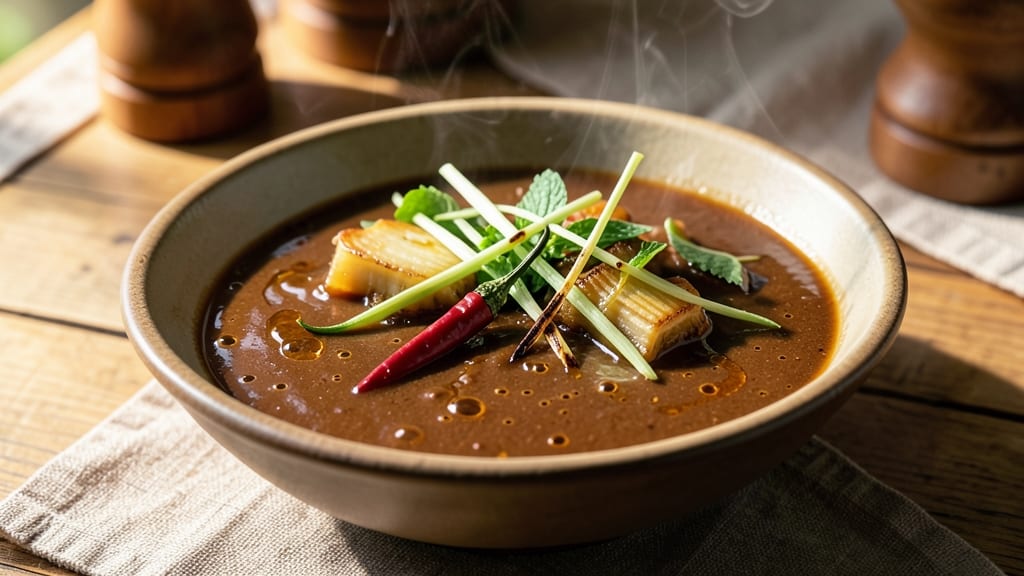
This authentic Thai brown sauce transforms ordinary dishes into vibrant, umami-packed masterpieces with just a few simple ingredients. The secret lies in balancing tamarind's tangy depth with coconut milk's creaminess, creating a sauce that's both complex and versatile.
I've perfected this recipe over years of testing, ensuring every spoonful delivers that signature Thai restaurant flavor at home.
The foundation starts with a fragrant paste of lemongrass, galangal, and kaffir lime leaves—essential for that authentic aroma. Simmered with tamarind, palm sugar, and fish sauce, the sauce develops a rich, caramelized depth that coats proteins and vegetables beautifully.
What makes this sauce truly special is its ability to elevate everything from pad thai to grilled meats with minimal effort.
By the time you're done, you'll have a smooth, glossy sauce with layers of sweet, sour, and savory flavors that keep well in the fridge for up to two weeks. The best part?
It's incredibly forgiving—adjust the sweetness or tang to your taste without sacrificing authenticity. This is the sauce that will make your Thai dishes taste like they came straight from Bangkok.
Use it as a dipping sauce for spring rolls, a stir-fry glaze, or a marinade for satay skewers. The possibilities are endless, and the results are always restaurant-quality. Let's get started on making this essential pantry staple.
Ingredients for authentic thai brown sauce
Nine aromatic ingredients blend into a sauce that captures Bangkok's soul in every spoonful.
| Ingredient | Amount | Notes |
|---|---|---|
| Tamarind Paste 🍈 | ½ cup | Unrefined for authentic tang |
| Galangal Root 🌿 | 3 inches | Fresh, peeled, sliced thin |
| Kaffir Lime Leaves 🍋 | 4 whole | Stems removed, torn |
| Lemongrass Stalks 🌿 | 4 whole | Bruised, bottom 6 inches used |
| Palm Sugar 🍯 | ½ cup | Or light brown sugar |
| Fish Sauce 🐟 | ¼ cup | Red Boat preferred |
| Coconut Milk 🥥 | 1 can (13.5 oz) | Full-fat, chilled overnight |
| Shallots 🧅 | 4 whole | Peeled, thinly sliced |
| Garlic Cloves 🧄 | 6 cloves | Peeled, smashed |
| Thai Chili Peppers 🌶️ | 2 whole | Seeds removed for mild sauce |
| Salt 🧂 | 1 tsp | Diamond Crystal preferred |
The galangal and kaffir lime leaves are non-negotiable for authentic aroma—Asian markets have the freshest cuts. Look for galangal with tight, pale knobs (the good stuff, not the rubbery kind). Thai Kitchen sells frozen galangal if fresh isn't available, but it's not the same. For lime leaves, avoid yellowed or wilted ones—they lose potency fast. The lemongrass should be vibrant green with no brown spots, and the shallots should be firm with papery skins. If you can't find palm sugar, light brown sugar works in a pinch, though it lacks the caramel depth.
No galangal? Ginger at half the amount gives some warmth, but you'll miss the citrusy depth. Running low on fish sauce? Soy sauce plus a pinch of sugar mimics the umami, though it won't be identical. The chili peppers can be swapped for red pepper flakes (1/2 tsp), but fresh Thai chilies add that signature heat. For coconut milk, full-fat is essential—light versions won't emulsify properly. And if you're using pre-packaged tamarind paste, strain out any fibrous bits for a silky texture. The sauce's balance is delicate—taste as you go and adjust with more tamarind for tang or palm sugar for sweetness.
This sauce develops richer flavors over time, so make a double batch if you can. Store in a sealed jar in the fridge for up to 2 weeks, or freeze for 3 months. The fat from coconut milk rises to the top—just stir before using. It's magical on everything from noodles to grilled proteins, but trust me, the leftovers taste even better the next day as the flavors meld. For extra authenticity, let it sit at room temperature for 10 minutes before serving—it'll smell like a Bangkok street market.
Why You'll Love This Recipe
- No Chopping Chaos: I swear by this recipe because the prep is ridiculously simple—just bruise the galangal and lemongrass, no diceing or mincing. The tamarind paste and palm sugar do all the heavy lifting while you simmer, so it’s basically hands-off once you start.
- Tamarind Tang Magic: That first bite? Chef’s kiss. The tamarind’s deep, sour punch cuts through the sweetness of palm sugar, while the galangal and kaffir lime leaves add this earthy, citrusy depth. It’s the kind of flavor that makes you want to drizzle it on everything—even toast.
- Pantry Staple Power: Between us, this sauce is my secret weapon for lazy nights. Toss it with stir-fried noodles, glaze grilled chicken, or even mix it into marinades. Honestly, I’ve used the last jar three times this week, and it’s still the star.
- Lasts for Weeks: I make a big batch and store it in the fridge—it keeps for months if you can resist it. Plus, the ingredients are cheap (especially if you buy galangal frozen), so you’re not breaking the bank for something this versatile. My college budget still thanks me.
Step-by-step instructions for authentic Thai brown sauce
Here's how to build this complex sauce layer by layer—each ingredient plays a crucial role in the final balance.
Toast Aromatics for Deep Foundation
Heat a heavy-bottomed pot over medium heat and add the sliced galangal root, bruised lemongrass stalks, sliced shallots, smashed garlic cloves, and whole Thai chili peppers. Toast for 5-7 minutes until the shallots turn golden brown and release their sweet aroma. This step develops the sauce's aromatic complexity—don't rush it, or the flavors won't meld properly.
Here's the thing—galangal has a peppery, citrusy bite that needs time to release its oils. You'll know it's ready when the mixture smells intensely aromatic and the shallots begin to caramelize. Add the torn kaffir lime leaves now—they'll infuse their floral notes as the sauce develops. Keep the heat at medium to prevent burning while allowing the aromatics to develop fully.
Build the Tangy-Sweet Base
Reduce heat to medium-low and stir in the 0.5 cup tamarind paste and 0.5 cup palm sugar. Cook for 3-4 minutes until the sugar begins to dissolve and the mixture becomes syrupy. This is where the sauce's signature balance of sweet and tangy emerges—tamarind's sourness will mellow as it cooks.
Watch carefully as the mixture thickens slightly. You want it to coat the back of a spoon but still be pourable. If it starts to darken too quickly, reduce heat to low. The tamarind paste will foam slightly—this is normal and indicates the acid is activating. Stir frequently to prevent sticking, as sugar can burn easily at this stage.
Incorporate Coconut Milk and Simmer
Pour in the 1 can (13.5 oz) chilled coconut milk and bring to a gentle simmer. Let it cook uncovered for 10-12 minutes until the liquid reduces by about 25% and thickens noticeably. The sauce should coat a spoon but still flow smoothly. This reduction concentrates the flavors and creates that signature brown color.
I like to skim off any foam that rises to the surface during this time—it's mostly protein from the coconut milk. The sauce should smell rich and complex, with notes of caramelized sugar, citrusy galangal, and floral lime. If it's not thickening enough, simmer for another 2-3 minutes, but don't let it boil vigorously or it may separate.
Finish with Fish Sauce and Salt
Remove from heat and stir in the 0.25 cup fish sauce and 1 tsp salt. Let the sauce rest for 5 minutes—the flavors will meld even more during this time. Taste and adjust seasoning: you want a perfect balance of sweet, sour, salty, and umami. Most Thai brown sauces need a touch more salt to round out the flavors, so don't be shy with the Diamond Crystal.
Here's where authenticity matters most: the fish sauce should be the final touch, not the first. It needs time to integrate with all the other flavors. The sauce should be glossy, thick enough to coat the back of a spoon, and have that distinctive brown hue. If it's too thick, whisk in 1-2 tablespoons of hot water to reach your desired consistency.
Strain and Store for Maximum Flavor
Strain the sauce through a fine-mesh sieve into a clean bowl, pressing gently on the solids to extract maximum flavor. Discard the solids—they've done their job. Let the sauce cool to room temperature, then transfer to an airtight container. It will continue to develop flavor as it sits, so make it a day ahead if possible for the best results.
This sauce keeps well in the refrigerator for up to 2 weeks, though the flavors actually improve over time. The longer it sits, the more complex and balanced it becomes. Use it to glaze proteins, drizzle over noodles, or reduce it further for a sticky glaze. Each batch develops slightly differently based on your ingredients, so trust your taste buds when adjusting seasoning.
Pro Tips For Making Authentic Thai Brown Sauce
- BLEND GALANGAL FIRST: I learned this the hard way—adding whole galangal slices straight into the pot means you’ll just be chewing on fibrous chunks. Peel the root and slice it thinly (about 1/8-inch), then pulse it in a blender with a splash of water until it turns into a smooth, pale green paste. This releases the flavor and avoids the texture disaster.
- CONTROL THE TAMARIND: Tamarind paste is a beast if you don’t balance it. Start with half the amount called for, taste, then add the rest gradually—it’s easier to fix under-sour than overpower the dish. If it’s too strong, a pinch of palm sugar or a splash of coconut milk can dial it back.
- LOW AND SLOW: Crank the heat to medium-low after the initial simmer. I used to rush this, and the sauce would either scorch or taste flat. Let it bubble gently for at least 20 minutes, stirring occasionally, so the galangal and kaffir lime leaves infuse without turning bitter.
- USE FRESH LIME LEAF: Dried kaffir lime leaves work in a pinch, but fresh ones make a real difference. Tear them into rough pieces and bruise them slightly with your fingers before adding—this releases their citrusy aroma without turning the sauce bitter. Skip the drying step; fresh is brighter.
Troubleshooting this dish
Sauce Too Thin?
If your sauce isn't thickening enough during simmering, reduce the heat to low and cook uncovered for an extra 5-7 minutes. The coconut milk's natural fats will continue to break down, creating a glossy consistency.
For an immediate fix, whisk in 1 tablespoon of cornstarch mixed with 2 tablespoons water—simmer for 1-2 minutes until thickened. Just don't overdo it, or the sauce will turn gluey. 🌡️
Grainy Texture?
Uneven texture usually means the tamarind paste wasn't fully dissolved. For future batches, whisk the tamarind with 2 tablespoons warm water before adding to the pot. If you're already mid-recipe, strain the sauce through a fine-mesh sieve lined with cheesecloth for ultra-smooth results.
The solids will trap any undissolved fibers and give you a velvety finish.
Overpowering Fish Sauce?
Fish sauce can dominate if added too early. Always stir it in after removing from heat—this lets the other flavors develop first. For a milder taste, reduce by 1 tablespoon and balance with ½ teaspoon of sugar or 1 teaspoon of lime juice.
If you've already added too much, thin the sauce with 1 tablespoon water and let it sit for 10 minutes before tasting again.
Burnt Aroma?
This happens when sugar caramelizes too quickly. Keep heat at medium-low when adding palm sugar and stir constantly. If you notice a burnt smell, immediately remove from heat and stir in 1 tablespoon coconut milk to mellow the flavor.
For next time, reduce the sugar by 1 tablespoon—authentic Thai brown sauce should be balanced, not overly sweet.
Separated Sauce?
Rapid boiling can cause coconut milk to separate. To fix it, whisk in 1 tablespoon of coconut milk and return to low heat for 2-3 minutes, stirring constantly.
For prevention, avoid high heat—simmer gently at 180°F (just below a rolling boil). If separation persists, blend the sauce briefly with an immersion blender for a smooth texture.
Not Tangy Enough?
Tamarind's tang should be the backbone of your sauce. If it tastes flat, add ½ teaspoon of citric acid (found in baking aisles) or 1 teaspoon of lime juice. For a deeper tang, simmer the sauce uncovered for an extra 5 minutes—this concentrates the acidity.
If using store-bought tamarind paste, opt for unrefined brands like Thai Kitchen for authentic sourness.
Nutrition facts
Frequently asked questions
What makes this brown sauce different from regular Thai curry pastes?
This sauce is a liquid condiment, not a dry paste—it's richer, smoother, and designed to be used as a glaze, dipping sauce, or marinade. While curry pastes rely on ground spices, this sauce builds flavor through slow-simmered aromatics like galangal and kaffir lime leaves, creating layers of umami and citrusy depth that pastes can't match.
Can I make this sauce without galangal?
Yes, but you'll lose some authentic complexity. Substitute ½ the amount of fresh ginger (about 1.5 inches) for the galangal, though it won't replicate the citrusy, peppery notes. The sauce will still taste delicious—just slightly different. For the closest match, use galangal powder if available, but fresh is always better.
How can I use this sauce beyond stir-fries?
This versatile sauce works as a glaze for grilled meats, a dipping sauce for spring rolls, or even a marinade for satay skewers. Try reducing it by half for a sticky glaze, or thin it with water for a quick pad thai sauce. It also pairs beautifully with coconut rice or as a dressing for summer rolls. The possibilities are endless!
Why does the sauce need to rest before using?
Resting allows the flavors to fully meld—the tamarind's tang softens, the coconut milk's richness settles, and the fish sauce integrates without overpowering. For best results, let it sit for at least 30 minutes (or overnight) before using. This step is crucial for that restaurant-quality depth.
Can I freeze this sauce for longer storage?
Yes! Portion into ice cube trays or small containers, then freeze for up to 3 months. Thaw in the fridge overnight—never at room temperature. The texture may separate slightly after freezing, so give it a quick stir or whisk before using. It's perfect for meal prep!