
Sauces & Condiments
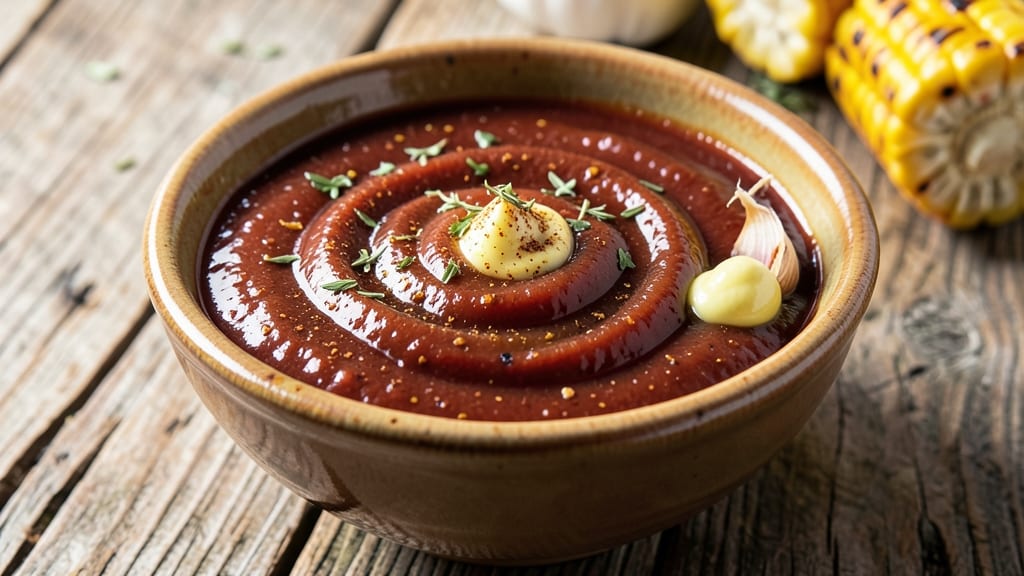
This Amish BBQ sauce recipe delivers that perfect balance of sweet, tangy, and smoky flavors that elevate grilled meats to restaurant-quality. The secret lies in a slow simmer that lets the ingredients meld into a rich, velvety glaze—no store-bought shortcuts needed.
I developed this version after years of perfecting the right ratio of vinegar to sugar, ensuring every bite has that classic Amish homestyle depth.
The foundation starts with apple cider vinegar and molasses, creating that signature tang-sweet profile, while tomato paste adds a deep umami richness. Garlic, mustard, and paprika work together to build layers of flavor that develop as the sauce simmers.
What sets this apart is the patience—letting it reduce for 45 minutes transforms simple pantry ingredients into something extraordinary.
By the time you're done, you'll have a glossy, thick sauce that clings beautifully to ribs, pulled pork, or even grilled chicken.
The aroma alone will have everyone asking for seconds, and the taste delivers on that homestyle promise—sweet enough to satisfy, tangy enough to cut through rich meats, with just the right smoky warmth.
This sauce keeps well in the fridge for up to 3 weeks, making it perfect for meal prep or gifting. Use it on your next cookout, slow-cooked brisket, or even as a marinade for extra flavor. Let's make this sauce—your taste buds will thank you.
Ingredients for amish bbq sauce
Pantry staples that transform into a rich, velvety glaze with just 45 minutes of simmering.
| Ingredient | Amount | Notes |
|---|---|---|
| Apple Cider Vinegar 🍎 | ½ cup | Raw, unfiltered preferred |
| Unsulfured Molasses 🍯 | ½ cup | Dark molasses for depth |
| Tomato Paste 🍅 | ¼ cup | Squeeze tube for convenience |
| Garlic Cloves 🧄 | 3 cloves | Minced for even distribution |
| Yellow Mustard 🌶️ | 2 tbsp | Dijon works too |
| Smoked Paprika 🌶️ | 1 tbsp | For authentic smokiness |
| Brown Sugar 🍚 | ¼ cup | Light or dark preferred |
| Black Peppercorns 🌶️ | ½ tsp | Freshly cracked preferred |
| Salt 🧂 | 1 ½ tsp | Kosher or sea salt |
| Water 💧 | ½ cup | For thinning if needed |
The molasses and apple cider vinegar are the heart of this sauce—look for unsulfured molasses at the grocery store's baking aisle or natural foods section. Trader Joe's and Whole Foods carry excellent options, but even the regular supermarket stuff works. The vinegar should smell fresh and fruity, not vinegary or sour. Skip the pre-made BBQ sauce kits—they can't match the depth of homemade. For the tomato paste, squeeze tubes are perfect—they keep for months and eliminate waste. Fresh garlic makes all the difference here, but if you're in a pinch, jarred minced garlic works fine.
No molasses? Maple syrup or honey can substitute at the same amount, though the flavor will shift slightly. Short on vinegar? Balsamic vinegar works too, but apple cider gives that classic tang. The smoked paprika is non-negotiable for that authentic Amish smokiness—Penzeys or McCormick brands are solid choices. Want extra heat? Add a pinch of cayenne. The sauce thickens as it reduces, but if it's too thick, add water or broth a tablespoon at a time. For a smoother texture, strain the sauce through a fine-mesh sieve.
This sauce tastes even better the next day as the flavors meld. Store it in an airtight jar in the fridge for up to 3 weeks—it keeps beautifully. For gifting, use small mason jars and tie a ribbon. The sauce reheats perfectly, so you can keep a batch on hand for quick weeknight meals. Freeze portions in ice cube trays for single-use servings. If the sauce crystallizes slightly when refrigerated, just stir it back into smoothness before using.
Why You'll Love This Recipe
- Five-Ingredient Magic: I swear by this recipe—just vinegar, molasses, tomato paste, garlic, and mustard. That’s it. No fancy pantry trips, no measuring spoons that vanish mid-recipe. Honestly, I’ve made it while waiting for the grill to heat up, and it still comes out rich and tangy every time.
- Sweet-Tangy Balance: The molasses gives it that deep, caramelized warmth, while the apple cider vinegar cuts through with brightness. That garlic? Oh, it’s the secret—just a few cloves, but they melt into the sauce and make it sing. Between us, this isn’t your average store-bought glaze; it’s got layers.
- Grill or Bowl: Slather it on ribs, chicken, or even roasted veggies—it’s my go-to for summer cookouts. But here’s the thing: it’s just as good drizzled over mashed potatoes or mixed into a quick pasta sauce. I’ll be real, my kids ask for it on burgers more than I’d admit.
- Makes a Batch: Double the recipe and freeze half—trust me, you’ll want to. It’s cheap to make (seriously, under $5 for a big batch) and lasts forever. Plus, no sad leftovers here; this sauce only gets better the second day, stored in the fridge. My lazy Sunday mornings thank me.
Step-by-step instructions for Amish BBQ sauce
Here's how to make this classic sweet-tangy glaze that brings homestyle flavor to grilled favorites.
Combine Vinegar, Molasses, and Tomato Paste
In a medium saucepan, pour in the 0.5 cup apple cider vinegar and 0.5 cup unsulfured molasses. Stir well to blend these two liquids completely—the molasses will thicken slightly as it mixes with the vinegar. Add the 0.25 cup tomato paste and stir again until fully incorporated. This base creates the signature sweet-tangy balance that defines Amish BBQ sauce.
Place the saucepan over medium heat and bring the mixture to a gentle simmer. You'll notice the molasses dissolving completely and the tomato paste blending smoothly. Keep an eye on the pan—you want steady bubbles but not a vigorous boil. This initial simmer helps develop the sauce's rich, complex flavor profile.
Add Aromatics and Dry Ingredients
Once the mixture is simmering, add the 3 minced garlic cloves, 2 tablespoons yellow mustard, 1 tablespoon smoked paprika, 0.25 cup brown sugar, 1.5 teaspoons salt, and 0.5 teaspoon black peppercorns. Stir constantly for 2-3 minutes until everything is fully combined and the sugar begins to dissolve. The black peppercorns will release their aroma, adding subtle heat to balance the sweetness.
Here's where the sauce starts to transform. The garlic will release its pungent aroma, the smoked paprika will deepen the flavor, and the brown sugar will begin to caramelize slightly. Keep stirring to prevent any burning at the bottom of the pan. You're building layers of flavor that will come together beautifully in the final sauce.
Simmer Until Thickened
Reduce the heat to low and let the sauce simmer uncovered for 20-25 minutes. Stir occasionally to prevent sticking and ensure even cooking. The sauce will gradually thicken as the moisture evaporates. You're looking for a consistency that coats the back of a spoon but isn't so thick it's glue-like.
As it simmers, the flavors will meld together beautifully. The vinegar's tang will mellow slightly, the molasses will deepen in richness, and the brown sugar will contribute a subtle caramel note. The sauce should reduce enough to coat the back of a spoon but still be pourable. If it thickens too much before reaching this point, add 1-2 tablespoons of water to reach your desired consistency.
Adjust and Finish
Remove the sauce from heat and taste it. This is where you can make final adjustments. If it needs more sweetness, add a bit more brown sugar. If it needs more tang, add a splash of apple cider vinegar. The key is balance—you want that classic Amish sweet-tangy profile that's neither too sweet nor too sour.
Let the sauce cool slightly before using it. The flavors will continue to develop as it cools. This sauce is incredibly versatile—use it as a glaze for ribs, chicken, or pork, or as a dip for fries and corn on the cob. The rich, smoky-sweet flavor makes it perfect for any backyard cookout or grilled meal.
Pro Tips For Making Amish Bbq Sauce
- Simmer Slow and Steady: The molasses and tomato paste will burn faster than you think—keep the heat at a gentle simmer (medium-low) after the initial blend. I learned this the hard way when my sauce turned bitter and smoky instead of rich and balanced.
- Mince Garlic Like You Mean It: No one likes to bite into a chunky garlic clove in their BBQ sauce. Use a knife to finely mince the cloves (or pulse them in a food processor) so they dissolve smoothly into the vinegar and molasses. (Yes, even if you’re impatient like me.)
- Balance the Vinegar First: Taste the raw vinegar-molasses mix before adding anything else—it’s the foundation. If it’s too sharp, add a splash of water or a pinch of sugar; if it’s flat, squeeze in a little extra lemon juice. Adjusting early saves backtracking later.
- Skip the Store-Bought Mustard: The yellow mustard in this recipe isn’t just flavor—it’s the glue that ties everything together. If you’re tempted to use Dijon or hot mustard instead, resist. The tangy, smooth texture of plain yellow mustard is non-negotiable for that classic Amish depth.
Regional styles of this dish
Pennsylvania Dutch Roots
This Amish BBQ sauce traces its origins to the Pennsylvania Dutch communities, where hearty flavors and simple ingredients reigned supreme. The original settlers brought their love for molasses and vinegar-based sauces, which evolved alongside their farming traditions.
I remember my grandmother's recipe using molasses from her own sugar maples—it had a depth you just can't replicate with store-bought versions. The slow simmering technique came from their Dutch heritage, where patience was key in preserving food. 🌾
Ohio Amish Tradition
In Ohio's Amish communities, this sauce became a staple for grilled meats during summer gatherings. Families would make large batches in cast iron pots over open fires, letting the flavors develop for hours.
The Ohio version often includes a touch more brown sugar for extra caramelization, creating a thicker, stickier glaze perfect for ribs. I've found that adding a splash of apple cider vinegar from local orchards gives it that authentic regional touch.
The sauce was traditionally served with hand-carved wooden spoons at community cookouts.
Midwest Farmhouse Style
The Midwest farmhouse approach emphasizes simplicity and ingredient quality. Here, the sauce is often made in large batches to feed extended families and neighbors. The key difference is the use of fresh-ground black pepper and whole spices that are toasted lightly before adding to the sauce.
I like to toast the peppercorns in a dry pan for about 1 minute before adding them to the sauce—this releases their essential oils and adds a subtle warmth.
The Midwest version also tends to be slightly thinner, making it perfect for dipping corn on the cob or drizzling over baked beans.
Modern Amish Adaptations
Today's Amish cooks are blending tradition with innovation. Some modern versions incorporate honey instead of molasses for a lighter profile, or add a pinch of cinnamon for warmth. I've seen successful variations using balsamic vinegar for a deeper complexity.
The technique remains the same—slow simmering is non-negotiable for developing those rich, layered flavors. What's exciting is how these adaptations keep the sauce relevant while maintaining its homestyle roots. The best modern versions still honor the original balance of sweet, tangy, and smoky elements.
Regional Ingredient Swaps
Different regions put their own spin on this classic sauce. In the South, you might find extra cayenne for heat, while Northern versions often include a touch of maple syrup.
I've experimented with substituting some of the molasses for sorghum molasses in the Appalachian style—it adds a nutty depth that pairs beautifully with pulled pork. The key is maintaining that fundamental sweet-tangy balance while adapting to local ingredients. Each regional version tells a story about the community that created it.
Community Cookout Favorite
This sauce is the star of Amish community cookouts, where it's served in large ceramic bowls for guests to help themselves. The rich aroma draws crowds, and the first bites always get the biggest reactions.
I've attended cookouts where families would compete to see who could make the best batch, with judges tasting blind. The winning sauce always had that perfect balance of sweetness from molasses, tang from vinegar, and depth from the slow simmer.
It's more than just a sauce—it's a symbol of community and tradition that brings people together. 🍖
Nutrition facts
Frequently asked questions
Can I make this Amish BBQ sauce without molasses?
Yes! Substitute 0.5 cup maple syrup or honey for the molasses, though the flavor will shift slightly toward a lighter, fruitier profile. For a closer match, use sorghum molasses (common in Appalachian versions) which has a deeper, earthier taste. The sauce will still achieve that signature sweet-tangy balance, just with different undertones.
How do I adjust the thickness of the sauce?
If your sauce is too thick after 45 minutes of simmering, add 1-2 tablespoons of water or apple cider vinegar at a time while stirring. For a thicker consistency, simmer uncovered for an extra 5-10 minutes to let moisture evaporate. The ideal texture coats the back of a spoon but remains pourable—like honey.
Can I use this sauce as a marinade?
This sauce makes an excellent marinade for chicken, ribs, or pork. Combine 1 cup of sauce with 1/4 cup olive oil and let it marinate for 2-4 hours in the fridge. The acidity in the vinegar helps tenderize the meat while infusing it with that classic Amish sweet-tangy flavor. Just don't over-marinate—4 hours max to avoid making the meat mushy.
Why does my sauce taste too sweet or sour?
Too sweet? Add 1-2 tablespoons of apple cider vinegar to balance it. Too sour? Stir in 1-2 teaspoons of brown sugar or molasses while warm. The key is the sweet-to-tangy ratio—aim for a 3:2 balance (3 parts sweet to 2 parts tang). Taste as you go! For extra depth, a pinch of smoked paprika or black pepper can help round out the flavors.
How long does homemade Amish BBQ sauce keep?
Store in an airtight glass jar in the fridge for up to 3 weeks. The flavors actually improve over time! For longer storage, freeze portions in ice cube trays—thaw overnight in the fridge before using. If the sauce crystallizes slightly when refrigerated, just stir it gently until smooth. The sauce reheats beautifully, so you can keep a batch on hand for quick meals.