
Sauces & Condiments
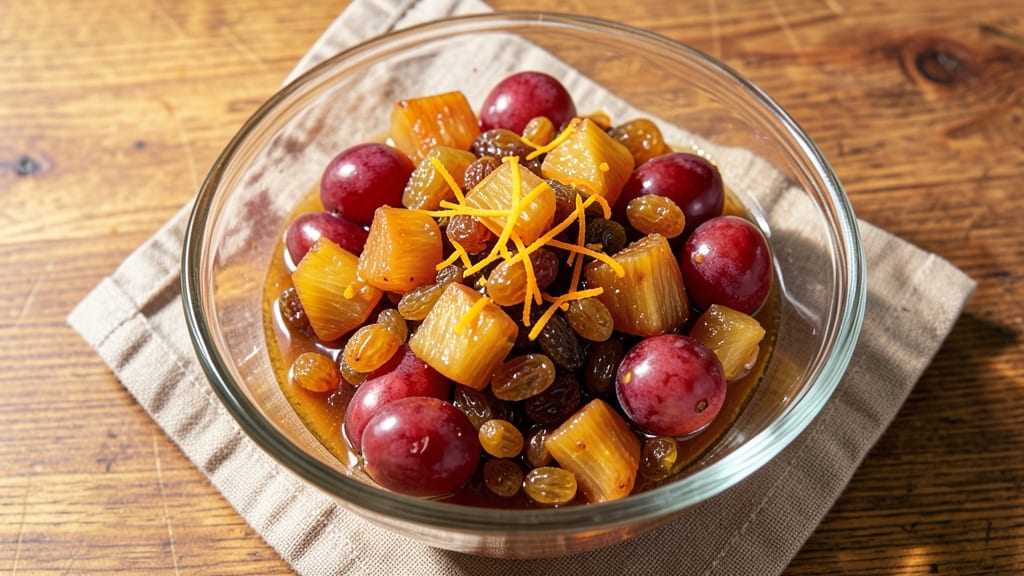
This ambrosia sauce recipe transforms simple pantry staples into a velvety, citrus-kissed topping that elevates everything from ham to fruit salads. The secret lies in marinating dried fruit and citrus zest overnight, creating a glossy, fragrant sauce with just the right balance of sweet and tart.
I developed this version after realizing how much better store-bought ambrosia tasted when made fresh—with real pineapple, raisins, and a touch of vanilla for depth.
The beauty of this sauce is its versatility—it glides over holiday hams, brightens vanilla ice cream, or adds a sophisticated touch to pound cakes. Unlike traditional recipes that rely on gelatin, this version uses a simple cornstarch slurry for that signature creamy texture without the jelly-like consistency.
The citrus marinade infuses the fruit with vibrant flavor, while a splash of bourbon (optional) adds warmth that lingers on the tongue.
What makes this recipe stand out is how effortlessly it comes together: just simmer, reduce, and chill. The result is a smooth, glossy sauce with visible fruit pieces that hold their shape, perfect for drizzling or spooning.
It’s the kind of condiment that turns ordinary desserts into showstoppers—whether you’re glazing a holiday centerpiece or topping a simple fruit tart.
For modern adaptations, swap honey for maple syrup and use agar-agar instead of cornstarch for a vegan version that still delivers that creamy finish. The sauce keeps well in the fridge for up to a week, making it ideal for meal prep or gifting. Ready to transform your desserts?
Ingredients for ambrosia sauce
Pantry staples meet citrus magic for this velvety ambrosia sauce—simple ingredients, big flavor.
| Ingredient | Amount | Notes |
|---|---|---|
| Dried Pineapple Chunks 🍍 | 1 cup | Finely chopped, not pre-cut |
| Seedless Red Grapes 🍇 | 1 cup | Chopped into small pieces |
| Golden Raisins 🍈 | 1 cup | Plump, not shriveled |
| Orange Zest 🍊 | 1 tbsp | Freshly grated, no pith |
| Lemon Juice 🍋 | ½ cup | Freshly squeezed |
| Vanilla Extract 🌸 | 1 tbsp | Pure, not imitation |
| Bourbon 🥃 | 2 tbsp | Optional, for depth |
| Unflavored Gelatin 🧴 | 1 ½ tsp | Or 1 tbsp agar-agar |
| Granulated Sugar 🍬 | ½ cup | Adjust to taste |
| Heavy Cream 🥛 | ½ cup | Cold for best texture |
| Cornstarch 🌾 | 1 tbsp | For thickening slurry |
| Cold Water 💧 | 2 tbsp | For cornstarch slurry |
The dried fruit is non-negotiable here—Trader Joe's or bulk bins at Whole Foods have the best quality. Look for plump raisins and pineapple chunks without added oils or preservatives. The citrus zest should be vibrant, not dried out, so grab fresh oranges from the produce section. For the grapes, seedless is key—red seedless grapes give that classic ambrosia color. If you're using agar-agar instead of gelatin, Bob's Red Mill brand is my go-to for reliable results. The bourbon? Maker's Mark adds a luxurious touch, but any good-quality bourbon works.
No dried fruit? Fresh pineapple and grapes work in a pinch, but the texture won't be quite the same. Swap raisins for chopped dates if you prefer. The gelatin can be replaced with agar-agar for a vegan version, but you'll need to adjust the cooking time. For a tangier sauce, add a splash more lemon juice. The cornstarch slurry is your secret weapon—mix it with cold water first to avoid lumps. If you're feeling fancy, toast the raisins lightly in a dry pan for 2-3 minutes to deepen their flavor. And if bourbon isn't your thing, a splash of orange liqueur works beautifully too.
This sauce tastes even better the next day as the flavors meld. Store it in an airtight container in the fridge for up to 1 week. For gifting, portion into small jars and tie with ribbon—it's always a hit. If you're prepping ahead, make the citrus marinade first and store it separately until you're ready to finish the sauce. The texture thickens as it chills, so if it's too thick after refrigerating, whisk in a splash of cold water or heavy cream to loosen it up.
Why You'll Love This Recipe
- No Chopping Needed: I swear by this—just soak the dried pineapple and grapes in warm water for 15 minutes, then toss them with raisins and citrus. No knife skills required, and the texture is perfect every time.
- Sweet-Tart Magic: That balance of chewy dried fruit, bright orange zest, and a squeeze of lemon? It’s like a fruity hug for your taste buds, especially when drizzled over yogurt or ice cream.
- Holiday Crowd Pleaser: Between us, this sauce disappears at Thanksgiving, Christmas, and even summer potlucks. It’s sweet enough for kids, sophisticated enough for adults, and takes zero effort to impress.
- Pantry Staple Power: Honestly, you’re already stocked—raisins, dried fruit, and citrus are always lurking in my cupboards. Make a big batch, store it for weeks, and use it in desserts, oatmeal, or even savory glaze. Zero waste, all flavor.
Step-by-step instructions for ambrosia sauce
This citrus-infused dessert sauce comes together with precise timing and gentle heat—here's how to build layers of flavor.
Prepare the Fruit Base
In a medium mixing bowl, combine the 1 cup dried pineapple chunks, 1 cup seedless red grapes, and 1 cup golden raisins. Add the 1 tbsp orange zest, ½ cup lemon juice, 1 tbsp vanilla extract, and 2 tbsp bourbon (if using). Stir gently to distribute the citrus and alcohol evenly—this marinade will infuse the fruit for at least 4 hours (or overnight in the fridge). The longer it sits, the more vibrant the flavors become.
Here's the thing—don't skip the marinating. The acidity from the lemon juice and orange zest will soften the dried fruit while keeping it from turning mushy. After soaking, drain any excess liquid but reserve ¼ cup for later use in the sauce. This liquid carries concentrated fruit flavor that you don't want to waste.
Bloom the Gelatin and Create a Cornstarch Slurry
In a small bowl, sprinkle the 1½ tsp unflavored gelatin over ¼ cup cold water from the reserved marinade. Let it bloom for 5 minutes—you'll see it thicken slightly as it absorbs moisture. In a separate small bowl, whisk together the 1 tbsp cornstarch and remaining 1½ tbsp cold water (from the ingredients list) until smooth. This slurry will later help stabilize the sauce without making it gummy.
Real talk: blooming gelatin properly is crucial. If you microwave it or add it directly to hot liquids, it'll never set correctly. The cold water activates the gelatin molecules, allowing them to fully hydrate and create that perfect creamy texture we're after in the final sauce.
Build the Sauce Base
In a medium saucepan, combine the marinated fruit (with any remaining liquid), ½ cup granulated sugar, and the bloomed gelatin mixture. Cook over medium-low heat, stirring constantly with a silicone spatula, until the mixture reaches 160°F on an instant-read thermometer. This gentle heat will melt the gelatin completely while preserving the fruit's texture.
Watch for the sauce to thicken slightly—it should coat the back of a spoon but still be pourable. If it starts to look too thin, reduce the heat slightly and let it simmer for another 1-2 minutes. The sugar will help balance the acidity from the citrus while adding natural sweetness that complements the fruit flavors.
Incorporate the Cream and Finish
Remove the saucepan from heat and let the mixture cool for 2-3 minutes. Then, slowly whisk in the ½ cup cold heavy cream—this is where the sauce gets its signature velvety texture. Return the pan to low heat and stir continuously until the cream is fully incorporated and the sauce reaches 170°F. The sauce should now be thick enough to coat the back of a spoon but still have a glossy sheen.
For the final touch, stir in the cornstarch slurry while maintaining low heat. Cook for another 1-2 minutes until the sauce reaches 175°F and thickens to a perfect coating consistency. Here's where it gets fun—taste and adjust the sweetness if needed by adding a pinch more sugar or a splash of lemon juice. The sauce should be sweet enough to complement desserts but not overpower the natural fruit flavors.
Chill and Set
Transfer the sauce to a clean bowl and let it cool to room temperature. Then, cover with plastic wrap pressed directly onto the surface to prevent a skin from forming. Refrigerate for at least 4 hours (or overnight) until fully set. This chilling step is non-negotiable—it allows the gelatin to fully set and the flavors to meld completely.
When ready to serve, give the sauce a quick whisk to restore its silky texture. The final product should be creamy yet firm enough to hold its shape when spooned over desserts like pound cake, ice cream, or fresh berries. Each bite should deliver bursts of tropical fruit with a smooth, citrus-kissed creaminess that makes it irresistible.
Pro Tips For Making Ambrosia Sauce
- Soak the Fruit Separately: Dried pineapple and grapes absorb liquid at different rates—toss them in warm water for 10 minutes before combining, or the pineapple will stay chewy while the grapes turn mushy. I learned this the hard way when my first batch had one texture too many.
- Use a Fine-Mesh Strainer: When draining the soaked fruit, a regular colander leaves behind sticky residue that clogs your sauce. A fine-mesh strainer catches the good bits while letting the liquid flow freely—no more scraping dried fruit off your hands or strainer.
- Balance the Sweetness: Golden raisins are sweeter than they look, and dried pineapple can taste bitter if over-soaked. Taste as you go: if the mix leans too cloying, add a splash of lemon juice (start with 1 tablespoon) to cut through it. Your taste buds will thank you.
- Toast the Raisins: Skip the pre-soaked raisins from the store—they’re limp and flavorless. Instead, dry-toast golden raisins in a skillet over medium heat for 2–3 minutes until fragrant and slightly puffed. The caramelized edges add depth that no jarred version can match.
Storing and reheating your leftovers
Refrigerator Storage
Store your freshly made ambrosia sauce in an airtight container with a lid, pressing plastic wrap directly onto the surface to prevent skin formation. Keep it refrigerated at 40°F or below for up to 7 days—the flavors actually deepen as it sits, becoming more vibrant with each passing day.
I like using glass jars with snap-on lids for easy portioning and reuse. The sauce thickens slightly when chilled, so give it a quick whisk before serving to restore its silky texture. 💫
Freezer Preservation
For longer storage, portion the sauce into freezer-safe containers or silicone molds, leaving ½-inch headspace for expansion. Freeze for up to 3 months, though I recommend using it within 2 months for best quality.
When ready to use, thaw overnight in the refrigerator and whisk vigorously to restore smoothness. Avoid refreezing once thawed, as this can alter the texture. For gifting, freeze in small jars and wrap with festive ribbon—it’s a showstopper at holiday gatherings. ❄️
Reheating Methods
For best results, reheat ambrosia sauce gently on the stovetop. Transfer to a saucepan over low heat and add 1-2 tablespoons of cold water to prevent scorching. Stir constantly until warmed through to 165°F, then whisk in a splash of heavy cream to restore its velvety consistency.
Microwaving is possible but can break down the gelatin—heat in 20-second intervals, stirring between each, until just warmed. Never boil the sauce, as this will make it grainy. 🔥
Texture Reset Tips
If your chilled sauce becomes too thick, whisk in 1 teaspoon of cold water at a time until it reaches a pourable consistency. For a thinner finish, stir in 1 tablespoon of cold heavy cream. If the sauce separates, gently reheat it while stirring until smooth, then chill again.
The key is patience—ambrosia sauce is delicate, and rushing reheating can ruin its signature glossy finish. I’ve found that reheating in short bursts preserves both texture and flavor beautifully. ✨
Garnish and Serve
Before serving, garnish with a sprinkle of toasted coconut flakes or a few fresh mint leaves for visual appeal. Drizzle over vanilla ice cream, spoon onto pound cake, or use as a glaze for ham.
The sauce’s vibrant color and citrus notes make it perfect for brightening up dessert platters. For a festive touch, pipe it into decorative swirls using a pastry bag with a star tip. 🌟
Nutrition facts
Frequently asked questions
Can I make this ambrosia sauce without gelatin?
Yes! For a vegan version, replace the gelatin with 1 tbsp agar-agar powder dissolved in ¼ cup warm water. Add it to the sauce at the end and simmer for 3-5 extra minutes to fully activate. The texture will be firmer but still creamy when chilled.
How do I fix a sauce that's too thick or too thin?
For a thick sauce, whisk in 1 tsp cold water at a time until smooth. If it's too thin, stir in 1 tbsp cold heavy cream and reheat gently to 170°F while stirring. Never microwave—it breaks down the gelatin and makes the sauce grainy.
What's the best way to store leftover ambrosia sauce?
Keep it in an airtight container in the fridge for up to 7 days. For longer storage, freeze in portions with ½-inch headspace for up to 3 months. Always thaw overnight in the fridge and whisk before serving to restore texture.
Can I use fresh fruit instead of dried?
Fresh fruit works but requires adjustments. Swap 1 cup dried pineapple for 1 cup fresh pineapple (drained and chopped) and 1 cup grapes for 1 cup diced fresh grapes. Reduce the lemon juice to ¼ cup since fresh fruit has less acidity. Simmer the sauce longer to thicken properly.
Why does my ambrosia sauce look cloudy?
Cloudiness usually means the gelatin didn't fully dissolve or the sauce was heated too quickly. Gently reheat while stirring until smooth, then chill again. For a glossy finish, ensure all ingredients are room temperature before combining and avoid boiling. The sauce should be translucent with visible fruit pieces.