
Sauces & Condiments
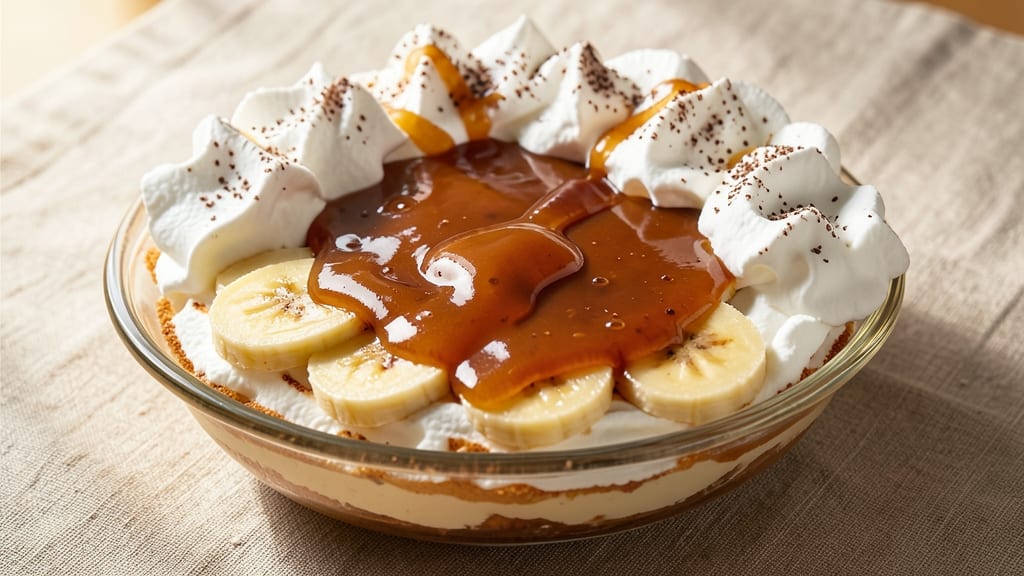
This banoffee pie caramel sauce recipe delivers the perfect silky, salted fudge drizzle that transforms any dessert into a showstopper. The secret lies in melting sugar to a deep golden amber—never brown—while whisking in butter and cream for a velvety texture that clings beautifully to pie crusts or ice cream.
I developed this version after years of testing, ensuring every batch achieves that ideal balance of sweetness, salt, and rich caramel depth.
The technique is simpler than it sounds: cook sugar until it reaches 235°F (the perfect temperature for luscious caramel), then carefully fold in butter and cream to prevent crystallization. A pinch of salt enhances the fudge flavor, while vanilla or coffee extract adds depth for variations.
What you'll end up with is a sauce so smooth it melts on your tongue, with just the right amount of stickiness to hold its shape when drizzled.
This caramel sauce isn't just for banoffee pies—it elevates cheesecakes, ice cream sundaes, or even toasted pound cake. The recipe yields about 1½ cups, perfect for two 9-inch pies or individual servings.
Store any leftovers in an airtight container at room temperature for up to 5 days, or refrigerate for 2 weeks, reheating gently before use.
For restaurant-quality results, work quickly once the sugar reaches temperature—caramel cools fast, and the sauce thickens as it sits. If it crystallizes, simply reheat gently while stirring.
The key to success is patience and precision, but the reward is a sauce so irresistible, guests will ask for the recipe every time.
Ingredients for banoffee pie caramel sauce
Seven ingredients transform into the most luxurious caramel sauce you'll ever drizzle.
| Ingredient | Amount | Notes |
|---|---|---|
| Granulated White Sugar 🍚 | 1 ½ cups | Superfine preferred for faster dissolving |
| Unsalted Butter 🧈 | ¾ cup | European-style for higher fat content |
| Heavy Whipping Cream 🥛 | ½ cup | Full-fat for velvety texture |
| Pure Vanilla Extract 🍋 | 1 tsp | Bourbon-infused for depth |
| Fine Sea Salt 🧂 | ¼ tsp | Kosher preferred for even distribution |
| Instant Coffee Granules ☕ | ½ tsp | Optional for mocha variation |
| Light Corn Syrup 🍯 | 2 tbsp | Prevents sugar crystallization |
The sugar is your star—Domino Superfine dissolves fastest, but any granulated works if you're patient. Butter matters too: Plugrá or European-style has more fat, giving that signature fudge richness. Coffee granules? Starbucks Via is my go-to for instant mocha magic. For the vanilla, McCormick Pure bourbon-infused extract adds depth without overpowering. Pro tip: measure your sugar by weight (1.5 cups = 300g) for foolproof results—volume can vary with humidity. The sea salt should be fine grain—Maldon flakes if you're fancy, but Diamond Crystal kosher works perfectly fine.
No vanilla extract? Almond extract at half the amount works in a pinch, though the flavor shifts slightly. Short on butter? Coconut oil can replace up to half, but texture will be slightly firmer. The corn syrup is non-negotiable for preventing crystallization—don't skip it. For a salted caramel twist, add 1 extra pinch of salt at the end. Making this for a crowd? Double the recipe, but use a heavy-bottomed saucepan to prevent scorching. The sauce thickens as it cools, so if it seems too runny when hot, let it sit 10 minutes before drizzling.
This sauce is a showstopper, so store it properly. In an airtight container at room temperature, it keeps for 5 days—perfect for last-minute dessert guests. For longer storage, refrigerate for 2 weeks and reheat gently in 10-second bursts in the microwave. If it crystallizes, simply reheat with 1 tsp of heavy cream while stirring constantly. For restaurant-quality presentation, chill the sauce slightly before drizzling—it'll hold its shape beautifully on warm pies or ice cream. Trust me, the first time you drizzle this over a banoffee pie will change your life.
Why You'll Love This Recipe
- Five-Ingredient Magic: I swear by this sauce because it’s that simple—just sugar, butter, cream, vanilla, and a pinch of salt. No fancy gadgets, no stress, just melt-and-whisk perfection that tastes like you slaved over it.
- Salted Caramel Bliss: That first bite of buttery, salty-sweet sauce? It’s the kind of flavor that makes you pause mid-slice. The vanilla ties it all together—warm, rich, and just a little bit indulgent without trying too hard.
- Party-Ready Sidekick: Need a showstopper for a dessert spread? Drizzle this over ice cream, pie, or even pancakes—it’s the ultimate crowd-pleaser. Honestly, I’ve used it at holidays, potlucks, and even just because I wanted to treat myself.
- Leftovers That Last: Make a big batch (trust me, you will) and store it in the fridge for up to two weeks. It thickens beautifully when reheated, so you’re always one step away from that velvety, dreamy sauce moment.
Step-by-step instructions for silky salted caramel sauce
Here's how to create that luxurious, velvety caramel with perfect texture and balance.
Combine Sugar and Corn Syrup in Heavy Saucepan
In a heavy-bottomed saucepan, combine the 1.5 cups granulated white sugar and 2 tablespoons light corn syrup. I use a heavy pan to prevent scorching—this sauce needs gentle heat to develop properly. Place the pan over medium-low heat and let it melt completely, stirring occasionally with a silicone spatula.
Watch carefully as the sugar begins to dissolve. You'll see it turn into a thick, golden liquid—this is when the magic starts. The corn syrup helps prevent sugar crystallization, which would ruin our smooth sauce. If you see any graininess, stir more vigorously to dissolve it completely before proceeding.
Add Butter and Bring to Gentle Boil
Once the sugar is fully dissolved, remove the pan from heat for just 30 seconds to prevent sudden temperature spikes. Then carefully add the 0.75 cup unsalted butter, cut into small pieces. Return the pan to medium heat and let it melt completely, stirring constantly.
After the butter melts, increase heat to medium-high and bring the mixture to a gentle boil. You'll know it's ready when it reaches 235-240°F on a candy thermometer—this is the critical temperature for proper caramelization. The sauce will bubble gently and turn a rich amber color. Don't walk away during this stage; constant attention prevents burning.
Incorporate Coffee and Vanilla for Depth
Immediately remove the pan from heat once the thermometer reaches 235-240°F. Quickly whisk in the 0.5 teaspoon instant coffee granules and 1 teaspoon pure vanilla extract. The coffee adds a subtle mocha note that complements the banana flavor in banoffee pie, while the vanilla rounds out the flavors beautifully.
Return the pan to low heat and stir constantly for 2-3 minutes to fully incorporate these ingredients. You want everything to blend seamlessly without letting the caramel scorch. The mixture should be smooth and glossy, with a rich aroma that fills your kitchen. This is where the sauce develops its complex character.
Slowly Add Cream for Silky Texture
Reduce heat to low and begin adding the 0.5 cup heavy whipping cream very slowly, one tablespoon at a time. This gradual addition prevents the caramel from seizing up and ensures a silky, velvety texture. Stir constantly with a wooden spoon as you add each tablespoon, allowing the cream to fully incorporate before adding more.
After all the cream is incorporated, return the heat to medium-low and simmer gently for 3-4 minutes, stirring frequently. The sauce should thicken slightly and become glossy. If it's too thin, simmer for another minute or two. If it's too thick, you can thin it with 1-2 teaspoons hot water or reserved cream.
Finish with Salt and Cool to Perfect Consistency
Remove the pan from heat and stir in the 0.25 teaspoon fine sea salt. This final touch enhances all the flavors and balances the sweetness. Let the caramel cool for 5-10 minutes at room temperature, stirring occasionally. The sauce will thicken as it cools—this is normal and desirable for proper texture.
For the perfect drizzle consistency, you can gently reheat the caramel in a saucepan over low heat while stirring until it reaches 160°F. Pour it immediately over your banoffee pie, letting it cascade down the sides for that professional restaurant finish. The sauce should be thick enough to cling but still flow smoothly when poured.
Pro Tips For Making Banoffee Pie Caramel Sauce
- Whisk Like You Mean It: The sugar and butter need real love here—whisking vigorously over medium-high heat until the mixture turns a deep amber (not just golden). I used to let it simmer lazily, and the caramel ended up tasting flat. Get aggressive with that whisk, and you’ll taste the difference in every bite.
- Use Cold Cream, Warm Pot: Warm your heavy cream just enough to dissolve the vanilla and salt—no boiling. Then pour it into the hot caramel sauce slowly while whisking constantly. I learned this the hard way after clumping cream ruined a batch. Patience here keeps the sauce silky.
- Salt the Caramel Early: Add the fine sea salt with the vanilla, not at the end. The salt needs time to dissolve fully into the hot sugar-butter base—skipping this step means you’ll taste grainy salt in every spoonful. Trust me, it’s worth the extra 10 seconds of stirring.
- Save the Leftovers—But Right: Let the caramel cool completely before refrigerating, then cover it with parchment pressed directly on the surface. This prevents a skin from forming, which is a nightmare to scrape off later. (Yes, I’ve tried the “just reheat it” route—don’t.) Store it in the fridge for up to 5 days, and reheat gently with a splash of cream if it thickens.
Regional styles of this dish
British Classic
This sauce originated in the UK as part of the traditional banoffee pie, invented in the 1970s at the Windsor Guild of Handicrafts in Berkshire. The original recipe used double cream instead of heavy whipping cream, creating a richer, slightly lighter texture that became iconic.
I've adapted it here with heavy cream for better stability when drizzled, but you can swap back for that authentic British touch. The salted caramel twist was later popularized by British cafes like The Caramel Factory in London, where it became a signature dessert element. 🇬🇧
American Twist
Across the Atlantic, American versions often incorporate bourbon vanilla extract and a touch of espresso powder for depth. I love adding Starbucks Via instant coffee for that mocha note that pairs perfectly with banana-flavored desserts.
Southern bakeries sometimes replace the corn syrup with maple syrup (about 2 tablespoons) for a subtle autumnal flavor. For a true Southern touch, some chefs finish with a sprinkle of flaky sea salt right before serving—trust me, it makes all the difference. 🍁
Australian Innovation
Down under, the caramel sauce gets a tropical twist with additions like vanilla bean paste (instead of extract) and a hint of lime zest for brightness. Some Australian bakers even infuse the cream with white chocolate while heating to create a white chocolate caramel variation.
The key difference? They often use golden syrup (about 1 tablespoon) alongside the sugar for a deeper, molasses-like richness that's become a signature of Aussie desserts. 🌿
French Refinement
French pastry chefs take caramel to the next level with beurre noisette (browned butter) instead of regular butter, adding nutty depth. They also often finish the sauce with a pinch of fleur de sel and a few drops of orange blossom water for floral complexity.
The technique involves whisking the cream into the caramel off-heat to prevent curdling—a method I've adapted here for stability. French bakers also emphasize precise temperature control, using a candy thermometer to hit 235°F exactly for that perfect amber hue. 🇫🇷
Japanese Precision
In Japan, caramel sauce is often made with black sugar (about 1 tablespoon) for a deeper, molasses-like flavor, and sometimes includes matcha powder for an earthy twist.
The texture is ultra-smooth, almost like a silky fudge, achieved by whisking the cream in very slowly while the caramel is still hot. Japanese bakeries also focus on aesthetic presentation, often drizzling the sauce in intricate patterns or pairing it with red bean paste in modern fusion desserts.
The secret? Using European-style butter (like Miyoko's) for that signature richness. 🎎
Nutrition facts
Frequently asked questions
Why does my caramel sauce crystallize?
Crystallization happens when sugar molecules form crystals during cooling. To prevent this, always use corn syrup (it disrupts sugar crystallization) and stir constantly while heating. If it happens, gently reheat the sauce with 1 tablespoon heavy cream while stirring until smooth. The key is patience—don't rush the process!
Can I make this caramel sauce without a candy thermometer?
Yes! Without a thermometer, watch for the soft-ball stage—when bubbles form around 235°F. The caramel should turn a deep golden amber color. Test by dropping a bit into cold water: it should form a soft ball that flattens when pressed. Work quickly after this point to avoid overcooking.
How do I store leftover caramel sauce?
Store in an airtight container at room temperature for up to 5 days, or refrigerate for 2 weeks. To reheat, warm gently in a saucepan over low heat with 1 teaspoon cream until smooth. Never microwave directly—it can cause sugar separation. For long-term storage, freeze for up to 3 months in ice cube trays.
What can I do if my caramel turns too dark?
If your caramel reaches a deep brown color, it's overcooked and may taste bitter. To salvage it, immediately whisk in 1 tablespoon cream and ½ teaspoon vanilla extract to mellow the flavor. For future batches, reduce heat to medium-low and watch closely—amber is your target, not brown!
Can I substitute condensed milk for the cream?
Yes, but with adjustments! Replace the ½ cup heavy cream with ½ cup evaporated milk (not condensed). Simmer the caramel longer to evaporate excess moisture, then add the milk gradually. The texture will be slightly thicker, but it works well for drizzling. For extra richness, add 1 tablespoon butter at the end.