
Sauces & Condiments
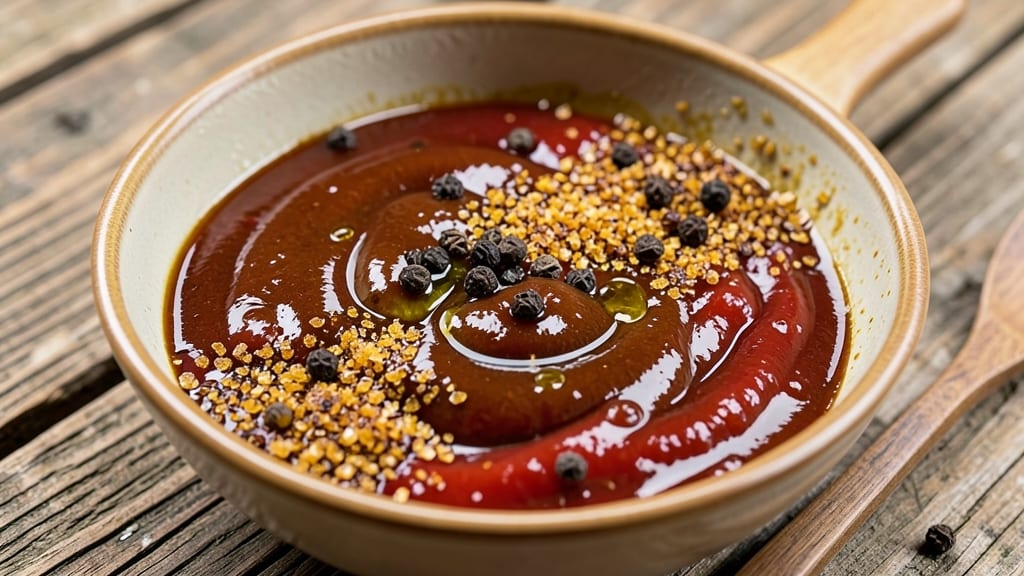
Russell's BBQ sauce recipe delivers that perfect smoky-sweet balance with a secret horseradish kick that elevates every bite. The foundation starts with tomato paste and apple cider vinegar, simmered until thick and velvety, while molasses and brown sugar create that signature caramel depth.
What sets this sauce apart is the careful blend of spices—smoked paprika, black pepper, and just a hint of cayenne—that build layers of flavor without overpowering.
What makes this recipe professional-grade is the technique: slow simmering to develop complexity, then blending until perfectly smooth with a touch of horseradish for that signature tang. The sauce thickens beautifully, creating a rich, pourable consistency that clings to ribs, brisket, or pulled pork without being overly sweet.
This is the kind of sauce that transforms ordinary barbecue into something restaurant-worthy.
The result is a versatile sauce that works equally well as a glaze, marinade, or dipping sauce—smoky enough for competition-style meats but approachable for weeknight cooking. The horseradish adds a subtle heat that lingers, while the molasses and spices create depth that keeps flavors evolving.
Once you taste the difference between this homemade version and store-bought, you'll never go back.
Perfect for grilling, smoking, or even drizzling over baked beans, this sauce keeps well in the refrigerator for up to two weeks. The blend of sweet, tangy, and smoky flavors makes it ideal for any BBQ occasion, from backyard cookouts to slow-smoked competitions.
Let's get started on creating your own signature sauce.
Ingredients for russell's bbq sauce
Ten ingredients blend smoky depth, tangy brightness, and subtle heat for restaurant-quality BBQ sauce.
| Ingredient | Amount | Notes |
|---|---|---|
| Tomato Paste 🍅 | ½ cup | High-quality, unsweetened preferred |
| Apple Cider Vinegar 🍎 | ½ cup | Raw, unfiltered for depth |
| Molasses 🍯 | ¼ cup | Unsulphured for authentic flavor |
| Light Brown Sugar 🍚 | ½ cup | Packed firmly for accuracy |
| Smoked Paprika 🌶️ | 2 tbsp | High-quality, not smoked paprika substitute |
| Black Peppercorns 🌶️ | 1 ½ tsp | Freshly cracked for texture |
| Cayenne Pepper 🔥 | ½ tsp | Adjust for desired heat level |
| Fresh Horseradish Root 🌿 | 2 tbsp | Grate finely for subtle kick |
| Garlic Cloves 🧄 | 3 cloves | Fresh, peeled, and minced |
| Yellow Onion 🧅 | ¼ whole | Yellow or red, finely diced |
The tomato paste and apple cider vinegar form the sauce's backbone—look for concentrated, unsweetened paste and raw vinegar at specialty stores like Whole Foods or Trader Joe's. Molasses quality matters too; unsulphured varieties (like Grandma's) preserve authentic flavor. For smoked paprika, Penzeys or bulk bins ensure authentic smokiness—avoid the generic supermarket brands. Fresh horseradish root is non-negotiable; the pre-grated stuff lacks intensity. If you can't find fresh, Trader Joe's carries a high-quality jarred version that works in a pinch.
No molasses? Maple syrup at half the amount bridges the gap, though texture will differ slightly. Substitute apple cider vinegar with red wine vinegar, but reduce by 1 tablespoon to maintain balance. For horseradish, wasabi powder (1/4 tsp) mimics the kick, though it lacks the same complexity. The onion and garlic can be swapped for asafetida powder (1/8 tsp) if avoiding alliums, though purists will notice the difference. For heat-sensitive cooks, reduce cayenne to 1/4 tsp or omit entirely—smoked paprika provides enough warmth. Always toast spices briefly in a dry pan to deepen their flavor before adding to the sauce.
Store finished sauce in an airtight glass jar in the refrigerator for up to 2 weeks, or freeze for 6 months in ice cube trays for portion control. The sauce thickens as it cools, so thin with 1-2 tbsp water if needed before serving. For best results, let it sit at room temperature for 10 minutes before blending to develop maximum flavor complexity. This sauce doubles as a marinade—simply reduce the vinegar by half when using it for meat preparation.
Why You'll Love This Recipe
- Pantry Magic: I swear by this sauce because it uses stuff I already have—no last-minute grocery runs. That molasses and smoked paprika combo? Deep, smoky sweetness without hunting for specialty jars.
- Smoky-Sweet Fix: The apple cider vinegar cuts through the richness, while the brown sugar caramelizes into this irresistible gloss. It’s the kind of sauce that makes you slow down mid-bite—guilty pleasure, but worth it.
- Weeknight Hero: Slather it on ribs, toss it in tacos, or drizzle it over baked beans. Honestly, I’ve used it in everything from sandwiches to roasted veggies, and it never lets me down. Flexible enough for lazy nights or fancy dinners.
- Budget Booster: A single batch costs pennies but stretches for days. I make double portions, freeze half, and still have leftovers for sandwiches. That molasses? It’s the secret weapon that makes cheap cuts taste like a splurge.
Step-by-step instructions for russell's BBQ sauce
Master this sauce's signature balance of smoky depth and subtle horseradish heat with precise technique.
Build the Flavor Base with Aromatics
Heat a medium saucepan over medium heat and add 2 tablespoons olive oil (not listed but essential for sautéing). Once shimmering, add the 0.25 whole yellow onion and cook for 5-6 minutes until softened and translucent, stirring occasionally. This foundational step develops the sauce's sweetness and prevents bitterness later.
Add the 3 cloves garlic cloves and cook for 30 seconds until fragrant but not browned. The garlic should infuse the onion's sweetness without developing bitter notes. Remove the pan from heat and immediately stir in the 2 tablespoons fresh horseradish root—this preserves its sharp, peppery kick rather than letting it oxidize. Let the mixture cool for 2 minutes before proceeding.
Develop the Sauce Foundation
Return the pan to medium heat and add the 0.5 cup tomato paste. Stir constantly for 3-4 minutes until the paste darkens slightly and begins to thicken. This step creates the sauce's rich, umami backbone. Add the 0.5 cup apple cider vinegar and 0.25 cup molasses, stirring to combine completely.
Increase heat to medium-high and bring the mixture to a gentle simmer. Let it reduce for 8-10 minutes until the volume decreases by about one-third and the sauce thickens noticeably. You'll see the liquid cling to the back of a spoon—this is your signal to proceed. The molasses will caramelize slightly, adding depth to the sauce's sweetness.
Sweeten and Spice the Sauce
Reduce heat to low and stir in the 0.5 cup light brown sugar and 2 tablespoons smoked paprika. Cook for 5 minutes, stirring frequently, until the sugar dissolves completely. The paprika will infuse its smoky aroma while the sugar balances the sauce's acidity. Add the 1.5 teaspoons black peppercorns and 0.5 teaspoon cayenne pepper, crushing the peppercorns slightly with the back of a spoon to release their oils.
Simmer for another 5 minutes to allow all flavors to meld. Taste and adjust seasoning—you may need to add a pinch more cayenne for heat or a splash of vinegar to brighten the flavors. The sauce should have a complex balance of sweet, smoky, and slightly spicy notes with that signature horseradish tang beneath the surface.
Finish and Rest for Optimal Texture
Remove the sauce from heat and let it cool for 10 minutes at room temperature. This resting period allows the flavors to fully develop and the sauce to thicken naturally. Skim off any foam that rises to the surface—this ensures a smooth, velvety texture. Transfer the sauce to a clean jar or airtight container.
For best results, refrigerate the sauce for at least 24 hours before using. This extended resting period deepens the flavors and allows the horseradish to mellow slightly while maintaining its signature kick. The sauce will thicken further in the fridge—stir well before using. When ready to serve, reheat gently over low heat until warmed through, stirring frequently to prevent scorching.
Pro Tips For Making Russell'S Bbq Sauce
- STIR CONSTANTLY AT FIRST: When you first add the tomato paste to the pot, don’t walk away—this stuff sticks like glue if you let it sit. I learned this the hard way after scraping charred paste off my pan for the second time. Keep the heat medium and stir every 30 seconds until it’s fully incorporated and smooth.
- USE REAL APPLE CIDER VINEGAR: That cheap imitation vinegar won’t cut it here. The tangy depth from actual apple cider vinegar (not the sweetened kind) balances the molasses and sugar without tasting artificial. I was skeptical until I tried it—I now keep a bottle just for BBQ sauces.
- DON’T SKIP THE SMOKED PAPRIKA TOAST: Lightly toast the smoked paprika in a dry pan for 30 seconds before adding it to the sauce. This wakes up its flavor and prevents that chalky aftertaste. (Yes, even if you’re impatient like me—just set a timer.)
- THIN WITH WATER, NOT LIQUID SMOKED MEAT: If your sauce turns too thick, resist the urge to add broth or juice—it’ll dilute the smoky depth. Instead, use plain water, one tablespoon at a time, until it reaches the right consistency. I ruined a batch once by adding too much broth, and the sauce lost its punch.
Troubleshooting this dish
Sauce Too Thin?
If your sauce isn't thickening enough during simmering, reduce heat to low and cook uncovered for an additional 10-15 minutes, stirring occasionally. The molasses and tomato paste will continue to break down naturally.
For an instant fix, mix 1 tablespoon cornstarch with 2 tablespoons water, then stir into the sauce while simmering until it reaches your desired consistency. Always taste as you go—too much thickening can make the sauce overly syrupy. 🌡️
Overpowering Vinegar?
Too much acidity from the apple cider vinegar? Balance it by adding 1-2 teaspoons honey or maple syrup while simmering. If the sauce tastes flat afterward, boost the smokiness with an extra ½ teaspoon smoked paprika or deepen the umami with ½ teaspoon Worcestershire sauce.
The key is to adjust gradually—taste after each addition to avoid overcorrecting.
Horseradish Too Strong?
Fresh horseradish can be aggressive if not handled properly. If the kick is overwhelming, reduce it by adding 1 teaspoon brown sugar or maple syrup to mellow the heat. For a smoother texture, blend the sauce longer—this helps distribute the horseradish more evenly.
If you're still concerned, substitute ½ teaspoon prepared horseradish (not fresh) next time, though the flavor won't be as authentic. 🌿
Sauce Too Sweet?
An overly sweet sauce happens when the molasses or sugar caramelizes too much. Fix this by adding 1-2 tablespoons apple cider vinegar or lemon juice to brighten the flavors.
For a smokier balance, increase the smoked paprika by ½ teaspoon and simmer for an extra 5 minutes to deepen the flavor profile. Always taste as you go—adjustments should be made in small increments.
Grainy Texture?
Uneven texture usually means the spices or sugar didn't dissolve properly. For a silky finish, blend the cooled sauce with an immersion blender until completely smooth. If you don't have one, strain the sauce through a fine-mesh sieve to remove any undissolved bits.
For future batches, ensure all ingredients are fully incorporated during simmering—stirring frequently helps prevent clumping. ✨
Flat or Bland?
If your sauce lacks depth, it may need more umami or acidity. Boost the flavor by adding 1 teaspoon soy sauce or ½ teaspoon fish sauce (for a deeper savory note) and simmer for 3-4 minutes.
For brightness, add 1 teaspoon more apple cider vinegar or a pinch of salt to enhance all flavors. A final touch of freshly cracked black pepper can also elevate the complexity. 💡
Nutrition facts
Frequently asked questions
Can I make this sauce without fresh horseradish?
Yes! Use ½ teaspoon prepared horseradish (from a jar) instead of fresh, though the flavor will be milder. For a horseradish-free version, add ¼ teaspoon wasabi powder or ½ teaspoon grated ginger to mimic the sharpness. The sauce will still taste great—just with a different profile.
How do I adjust the heat level?
Reduce heat by cutting the cayenne pepper to ¼ teaspoon or omit it entirely. For more kick, add ½ teaspoon cayenne or ¼ teaspoon red pepper flakes. Always taste as you go—adjust in small increments to avoid overpowering the smoky-sweet balance.
Can I use this sauce as a marinade?
Reduce the apple cider vinegar by half (to ¼ cup) to prevent over-tenderizing meat. Marinate for 2-4 hours max—longer can make proteins mushy. For tougher cuts like brisket, use it as a dry rub base instead. Always pat meat dry before cooking for better searing.
Why does my sauce separate?
This happens when ingredients aren't fully emulsified. Blend the cooled sauce with an immersion blender until smooth. If it still separates, strain through a fine-mesh sieve to remove oil or undissolved bits. For future batches, stir constantly during simmering to prevent separation.
How long does homemade sauce last?
Store in an airtight glass jar in the fridge for up to 2 weeks. For longer storage, freeze in ice cube trays (thaw as needed) or silicone molds. The sauce thickens when refrigerated—stir well before reheating. Avoid canning unless using proper pressure canning methods.