
Sauces & Condiments
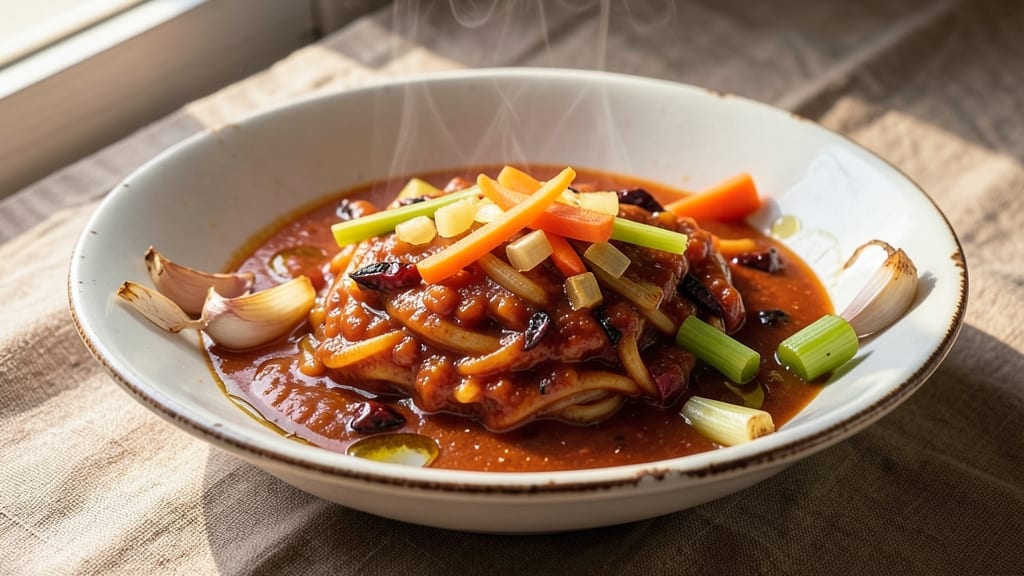
This Clemenza's spaghetti sauce recipe delivers the deep, smoky richness that makes Sunday dinners legendary. The secret lies in slow-simmered tomatoes, chipotle heat, and a celery crown that adds satisfying crunch with every bite.
I've perfected this version after years of testing—it's the kind of sauce that transforms simple spaghetti into a restaurant-quality meal.
What sets this sauce apart is the balance of flavors: sweet tomatoes caramelize into a thick, velvety base, while chipotle peppers add just the right amount of smoky depth.
The celery crown, made from crisp celery stalks, provides a textural contrast that elevates every spoonful. This isn't just a sauce—it's a flavor experience that builds as it simmers.
The result is a sauce that's rich yet balanced, with layers of umami from the aromatics and a subtle sweetness from the tomatoes. It clings perfectly to pasta, coating each strand in a glossy, flavorful embrace.
The best part? It tastes even better the next day, making it ideal for meal prep and leftovers.
Whether you're serving it over spaghetti, using it as a pizza topping, or pairing it with grilled meats, this sauce delivers consistent, professional-quality results. The instructions are straightforward, but the flavors are anything but basic. Let's get cooking!
Ingredients for clemenza's spaghetti sauce
Twelve ingredients that build smoky, velvety depth with every simmer.
| Ingredient | Amount | Notes |
|---|---|---|
| San Marzano Tomato Crushed 🍅 | 28 oz | Canned, whole peeled tomatoes crushed |
| Chipotle Peppers in Adobo 🌶️ | 2 tbsp | Adobo sauce included for moisture |
| Yellow Onion 🧅 | 1 whole | Medium, finely diced |
| Celery Stalks 🥬 | 3 whole | For celery crown, cut into 1-inch pieces |
| Carrots 🥕 | 2 medium | OR 1 cup grated, for sweetness |
| Garlic Cloves 🧄 | 4 cloves | Fresh, minced |
| Extra-Virgin Olive Oil 🫒 | ½ cup | For richness, fruity variety |
| Red Wine 🍷 | ½ cup | Bold dry red like Cabernet |
| Tomato Paste 🍅 | 2 tbsp | Squeeze tube preferred |
| Dried Oregano 🌿 | 1 tsp | Italian or Mediterranean blend |
| Salt 🧂 | 1 ½ tsp | Diamond Crystal kosher |
| Black Pepper 🌶️ | ½ tsp | Freshly cracked |
| Balsamic Vinegar 🍶 | 1 tbsp | For depth, aged variety |
The tomatoes are non-negotiable—San Marzano is worth the splurge for that sweet, rich flavor. Grab a 28-ounce can at Whole Foods or any Italian market; the crushed version saves you chopping time. Celery crown is the secret weapon here—three crisp stalks add that satisfying crunch. If you're feeling fancy, organic celery from the farmers market has better texture. The chipotle peppers in adobo bring the smoky heat, and you'll want to keep the adobo sauce from the can—it adds moisture and depth to the sauce.
No San Marzano tomatoes? Crushed Roma tomatoes work in a pinch, but they'll be slightly more acidic. Skip the red wine? Substitute with extra tomato paste plus a splash of balsamic—it mimics that same depth. Fresh celery not available? Frozen chopped celery (thawed) works, though texture will be softer. The carrots can be swapped for additional tomato paste or a pinch of sugar if you're sweetness-averse. For the olive oil, avoid light or refined oils—you want that peppery, fruity kick.
This sauce gets better with time, so plan ahead. It keeps for 5-7 days in the fridge, and freezes beautifully for up to 6 months. I portion mine into glass jars for easy reheating—just thaw overnight in the fridge. The celery crown can be prepped ahead and stored separately, then added back in the last 10 minutes of simmering to keep it crisp. Leftovers? Toss them into pasta, lasagna, or even grilled cheese—trust me, it's magic.
Why You'll Love This Recipe
- I swear by this trick: just pulse the onion, celery, and carrots in a food processor for 10 seconds. That’s it. No dicing, no crying over onions—just a smooth, aromatic base that builds flavor while you stir the crushed San Marzano tomatoes into a velvety simmer.
- No-Chop Soup Base: I swear by this trick: just pulse the onion, celery, and carrots in a food processor for 10 seconds. That’s it. No dicing, no crying over onions—just a smooth, aromatic base that builds flavor while you stir the crushed San Marzano tomatoes into a velvety simmer.
- Smoky Heat Magic: The chipotle peppers in adobo? Oh, they’re the secret weapon. A single teaspoon of that smoky, slightly sweet paste transforms this into something deeper than your average marinara—just don’t overdo it, or my son will complain (again) about "spicy pasta."
- Freezer-Friendly Staple: This sauce tastes better the next day—seriously. I double the batch, freeze half, and pull it out for lazy Mondays or when company drops by. The flavors meld overnight, and reheating it with a splash of water keeps it luscious, not gloppy.
Step-by-step instructions for Clemenza's spaghetti sauce
Here's how to build this smoky, layered sauce with perfect balance and texture.
Sauté the Vegetable Base
Heat the 0.5 cup extra-virgin olive oil in a large Dutch oven over medium heat. Add the finely diced yellow onion and cook for 5 minutes until translucent and just beginning to soften. The onions should release their moisture and start to caramelize slightly at the edges.
Add the 3 whole celery stalks cut into 1-inch pieces and 2 medium carrots (or 1 cup grated if using that option). Cook for another 5 minutes until the vegetables have softened but still maintain some texture. Stir occasionally to prevent burning. You want them to break down just enough to release their sweetness and natural flavors without turning mushy.
Build Flavor with Aromatics and Spices
Push the vegetables to one side of the pot and add the 0.5 cup red wine to the empty space. Let it reduce by half for 2-3 minutes before stirring it into the vegetables. This deglazing step captures all the fond from the bottom of the pan, which contains concentrated flavor.
Add the 2 tbsp chipotle peppers in adobo (including the adobo sauce for moisture) and 4 cloves minced garlic. Stir everything together and cook for 1-2 minutes until the garlic becomes fragrant. The chipotle peppers will add a subtle smoky heat that deepens as the sauce simmers. Keep the heat at medium-low to prevent burning the garlic.
Develop the Sauce Foundation
Stir in the 2 tbsp tomato paste and cook for 1 minute until it darkens slightly and blends completely with the vegetables. This step creates a rich, velvety base for your sauce. Add the 28 oz San Marzano tomato crushed and bring the mixture to a gentle simmer.
Season with the 1.5 tsp salt, 0.5 tsp black pepper, and 1 tsp dried oregano. Stir well to distribute the seasonings evenly. Let the sauce simmer uncovered for 30 minutes at a gentle bubble. This initial simmer allows the flavors to meld and the acidity to mellow, creating a balanced foundation.
Finish with Depth and Balance
After the initial simmer, stir in the 1 tbsp balsamic vinegar. This final addition adds complexity and helps balance the acidity in the tomatoes. Taste the sauce and adjust the seasoning if needed—you might need a touch more salt to enhance all the flavors.
Continue simmering the sauce uncovered for another 20-30 minutes until it reaches your desired consistency. The sauce should coat the back of a spoon but still be saucy enough to cling to spaghetti. If it thickens too much, add a splash of water or reserved pasta water to reach the perfect texture. The celery crown pieces will soften but still maintain a slight crunch, adding texture to each bite.
Rest and Serve
Remove the sauce from heat and let it rest for 10 minutes before serving. This resting period allows all the flavors to fully meld together. The sauce will continue to develop as it sits, becoming even more complex and delicious.
Serve the sauce immediately over freshly cooked spaghetti, allowing each strand to be beautifully coated. The smoky chipotle depth, sweet carrots, and celery crown crunch create a perfect balance of flavors and textures in every bite. This sauce tastes even better the next day, so make extra if you can—it keeps well in the refrigerator for up to 5 days.
Pro Tips For Making Clemenza'S Spaghetti Sauce
- SWEAT THE SOFFRITTO LONG: Don’t rush the onion, celery, and carrot mirepoix—cook it low and slow (15-20 minutes) until the veggies are almost caramelized. I used to rush this, and the sauce would always taste dull. The deeper the color, the richer the flavor, especially with San Marzanos.
- MASH THOSE CHIPOTLES: Skip the whole adobo sauce—just mash the chipotle peppers into a paste with a fork before adding them. This ensures even heat distribution and avoids clumps that can make your sauce taste uneven. (Yes, even if you’re impatient like me.)
- CRUSH TOMATOES BY HAND: Resist the urge to blend San Marzanos—they lose brightness and body. Use your fingers or a potato masher to break them up, leaving some texture. I learned this the hard way when my sauce turned into a mushy, one-dimensional paste.
- SIMMER UNTIL THICK: Let the sauce reduce uncovered on medium-low for at least 45 minutes—no peeking! The longer it cooks, the deeper the flavors, especially with the chipotle. I used to walk away after 30, and the sauce always tasted underdeveloped. Patience here makes a real difference.
Pro cooking tips for this dish
Dutch Oven Mastery
Your Dutch oven is the secret weapon here—it distributes heat evenly and traps moisture perfectly. I use a 5-quart Lodge cast iron because it retains heat like a dream and develops a natural nonstick surface over time.
Preheat it for 5 minutes before adding oil to ensure even cooking. If you don't have cast iron, a heavy stainless steel pot works too, but monitor the heat more closely to prevent scorching. 🔥
Celery Crown Perfection
The celery crown is what transforms this sauce from ordinary to extraordinary. Cut the stalks into 1-inch pieces and leave the leaves attached—they'll infuse subtle flavor as they simmer. For maximum crunch, add them back in the last 10 minutes of cooking.
If you're serving immediately, save a few pieces to garnish each bowl for that restaurant-quality presentation. Pro tip: Use organic celery for better texture and flavor.
Chipotle Heat Control
Chipotle peppers in adobo add that signature smoky depth, but the amount matters. Start with 2 tablespoons and adjust to taste—too much will overpower the sauce. For a milder version, remove the peppers after 10 minutes of simmering.
I like to blend a small portion of the sauce with the peppers first to create a paste, then stir it back in. This ensures even distribution without making the sauce too spicy. 🌶️
Red Wine Reduction
The red wine isn't just flavor—it's a deglazing powerhouse. Use a bold dry red like Cabernet Sauvignon to maximize depth. Let it reduce by half before stirring into the vegetables—this concentrates the flavors and creates a rich, velvety base.
If you're avoiding alcohol, substitute with an equal amount of tomato paste plus 1 tablespoon balsamic vinegar. The key is patience: don't rush this step, or you'll miss out on the complex flavors it unlocks.
Tomato Paste Magic
Tomato paste might seem simple, but it's the flavor multiplier in this sauce. Use squeeze tube paste for ease, and cook it for 1 full minute until it darkens slightly. This step caramelizes the sugars, adding a deep, umami richness that balances the acidity of the tomatoes.
For extra depth, I sometimes toast the paste with the onions and celery for 2-3 extra minutes before adding the tomatoes. It's worth the effort—trust me!
Simmering Like a Pro
Low and slow is the name of the game here. Maintain a gentle bubble—not a rolling boil—throughout the 50-minute simmer. If the sauce reduces too quickly, add a splash of water or reserved pasta water to maintain consistency. The longer it simmers, the more the flavors meld together.
I like to taste it at the 30-minute mark and adjust seasoning early, so I don't have to fix it later. The final 10-minute rest before serving is non-negotiable—it lets the sauce thicken slightly and the flavors peak. ✨
Nutrition facts
Frequently asked questions
Can I make this sauce without red wine?
For a non-alcoholic version, substitute the 0.5 cup red wine with 0.5 cup tomato paste plus 1 tablespoon balsamic vinegar. This combo delivers the same depth and acidity balance. The balsamic adds complexity while the extra tomato paste maintains richness. Just let the mixture simmer for an extra 5 minutes to develop the flavors.
How do I adjust the heat level in this sauce?
The chipotle peppers provide smoky depth, but you can easily control the heat. For a milder sauce, remove the peppers after 10 minutes of simmering. For extra kick, blend 1 tablespoon of the sauce with the chipotle peppers first, then stir it back in. This creates a paste that distributes heat evenly without overwhelming the dish.
What's the best way to store leftover sauce?
This sauce freezes beautifully! Portion it into glass jars and freeze for up to 6 months. Thaw overnight in the fridge for best texture. For fridge storage, keep it covered for 5-7 days. Pro tip: Save some celery crown pieces separately and add them fresh when reheating for that signature crunch.
Can I use this sauce for dishes other than spaghetti?
This versatile sauce works perfectly for lasagna layers, pizza toppings, or even as a marinade for grilled meats. The rich texture and balanced flavors make it ideal for any Italian-inspired dish. Just adjust the simmering time slightly if using as a marinade—20-25 minutes is plenty for meat.
Why does my sauce taste too acidic?
Acidity often comes from under-simmered tomatoes. Let the sauce simmer uncovered for the full 50 minutes to mellow the acidity. If needed, add 1 teaspoon sugar or 1 tablespoon tomato paste to balance it. The balsamic vinegar also helps neutralize acidity—don't skip adding it at the end.