
Sauces & Condiments
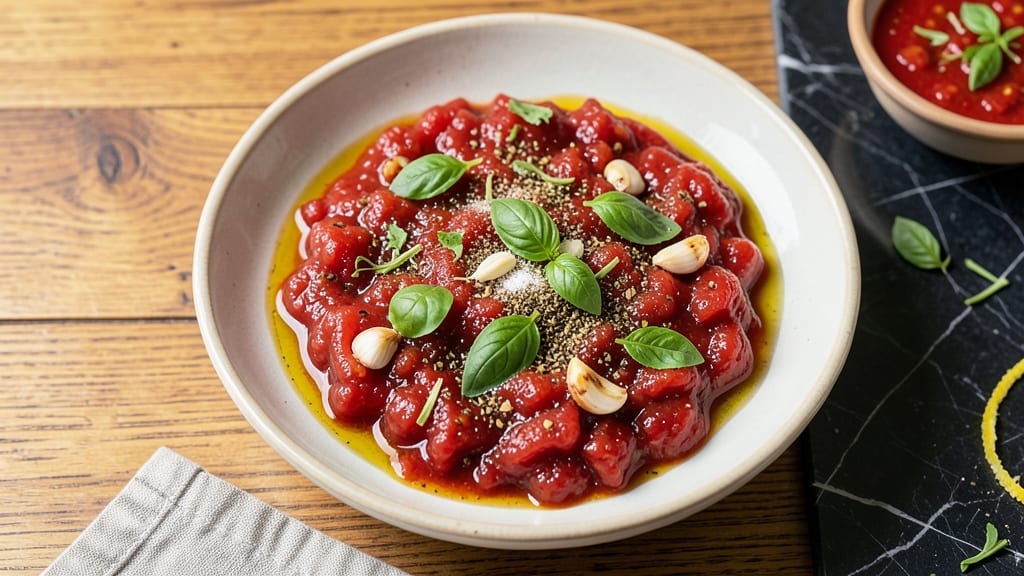
This Boston pizza sauce recipe delivers the rich, slightly sweet tomato base that defines New England-style pizza—where every bite carries deep garlic notes and aromatic herbs.
The secret lies in simmering crushed tomatoes with olive oil until they break down into a velvety, concentrated sauce, then finishing with fresh basil and a touch of sugar to balance acidity.
Unlike thin, tangy marinara, Boston sauce embraces a thicker, slightly chunky texture that clings perfectly to cheese and crust.
The foundation starts with high-quality crushed tomatoes (never canned—fresh or high-end brands make all the difference) and a slow simmer to develop natural sweetness.
I add minced garlic and dried oregano early to build flavor depth, then finish with fresh basil and a pinch of sugar to mimic the sauce’s signature balance.
This method preserves authentic taste while keeping prep simple—no blenders required for the classic version, though blending creates a smoother texture if preferred.
What sets this sauce apart is its versatility: use it on Boston-style pizza, as a marinade for grilled meats, or even as a pasta sauce. The key is patience—simmering until the sauce thickens and flavors meld creates a sauce that’s richer than store-bought but still easy to replicate.
Once you taste the difference, you’ll never go back to bottled versions.
For those who prefer a smoother texture, blend the sauce after simmering, but resist the urge to over-blend—Boston sauce should still carry visible tomato pieces for that authentic bite.
Store it in the fridge for up to a week or freeze for longer shelf life. Let’s make this sauce—your pizza nights will never be the same.
Ingredients for boston pizza sauce
Nine simple ingredients transform into Boston pizza sauce with deep garlic and herb notes.
| Ingredient | Amount | Notes |
|---|---|---|
| Crushed Tomatoes 🍅 | 28 oz | High-quality, not canned |
| Extra-Virgin Olive Oil 🫒 | ½ cup | For richness and depth |
| Garlic Cloves 🧄 | 6 cloves | Minced for deep flavor |
| Dried Oregano 🌿 | 1 tsp | Mediterranean variety preferred |
| Fresh Basil Leaves 🌿 | ¼ cup | Chopped for bright finish |
| Granulated Sugar 🍚 | 1 tbsp | Balances acidity |
| Salt 🧂 | 1 tsp | Diamond Crystal preferred |
| Black Pepper 🌶️ | ½ tsp | Freshly ground preferred |
| Red Wine Vinegar 🍷 | 1 tbsp | For subtle tang |
| Freshly Ground Black Pepper 🌶️ | ¼ tsp | Optional, for extra bite |
The crushed tomatoes are the heart of this sauce—San Marzano or high-quality brands make all the difference. Skip the canned tomatoes labeled 'pasta sauce' or 'marinara' (they're often watered down). Trader Joe's and Whole Foods carry excellent options, or grab a 28-ounce can from the Italian section. Fresh basil is ideal, but dried oregano (Mediterranean blend) adds that classic depth. The garlic? Six cloves give you that signature Boston flavor—don't skimp here. For the olive oil, Californian or Italian varieties with fruity notes work best. I always grab a small bottle at Costco for this recipe.
No crushed tomatoes? Blend whole peeled tomatoes until chunky for a close substitute. Fresh basil wilting? Dried basil at one-third the amount works in a pinch. The red wine vinegar can be swapped for balsamic vinegar at half the quantity, but it'll have a slightly sweeter profile. Want to skip the sugar? Add an extra tablespoon of tomato paste for natural sweetness. The sauce should be thick but still spoonable—if it's too thin, simmer uncovered for another 10-15 minutes. For a smoother texture, blend after simmering, but leave some chunks for that authentic Boston bite.
This sauce keeps beautifully in the fridge for up to 1 week—taste improves as flavors meld. For longer storage, freeze in ice cube trays or small containers for 3 months. The olive oil on top helps preserve freshness. Double the recipe and freeze half—you'll want to make this often. I always keep a jar in the fridge for quick pizza nights. Reheat gently on the stove or microwave until warm through. The sauce thickens as it cools, so thin with a splash of water if needed.
Why You'll Love This Recipe
- Pantry Powerhouse: I swear by this sauce because it uses what I always have—crushed tomatoes, olive oil, and garlic. No fancy shopping trips or forgotten spices; just open the can, grab the jar, and you’re golden.
- Garlic-Basil Magic: That first taste of fresh basil and roasted garlic? It’s like a little Italian vacation in your mouth. The olive oil ties everything together so smoothly, it’s hard to believe it’s just five ingredients.
- Weeknight & Party Star: Between us, this sauce works for both Tuesday dinners and Sunday gatherings. Slather it on flatbread for a quick bite or toss it with pasta when unexpected company shows up. It’s the MVP of easy meals.
- Leftovers That Don’t Suck: Unlike store-bought sauce that turns weird after a few days, this one actually improves when reheated. I make a big batch, freeze half, and still crave it weeks later—proof it’s worth the effort.
Step-by-step instructions for Boston-style pizza sauce
This method delivers that iconic Boston pizza sauce—smooth, rich, and packed with garlic and herb depth.
Sauté Garlic in Olive Oil Until Fragrant
Heat the 0.5 cup extra-virgin olive oil in a medium saucepan over medium-low heat. Add the 6 cloves minced garlic cloves and cook for 3-4 minutes until they become golden and deeply fragrant—not browned, just perfumed. Watch closely; garlic burns quickly, and that bitter taste ruins everything.
Here's the thing—low heat is key. You want the garlic to release its sweet, mellow flavor without turning bitter. If you see it starting to darken, immediately reduce the heat or remove the pan from the burner. This step builds the sauce's aromatic foundation, so don't rush it.
Add Tomatoes and Simmer for Depth
Pour in the 28 oz crushed tomatoes and stir well to combine with the garlic oil. Bring the mixture to a gentle simmer over medium heat, then reduce to low heat. Let it cook uncovered for 20-25 minutes, stirring occasionally, until the sauce begins to thicken slightly and the raw tomato flavor mellows.
You'll notice the sauce darken and develop a glossy sheen as it reduces. This is when the natural tomato sugars caramelize, creating that rich, velvety texture Boston pizza sauce is famous for. If it looks too thin after 20 minutes, let it cook another 5 minutes—it'll thicken as it cools.
Season and Balance the Flavors
Remove the sauce from heat and stir in the 1 tbsp granulated sugar, 1 tsp salt, 0.5 tsp black pepper, 1 tbsp red wine vinegar, 1 tsp dried oregano, and 0.25 cup chopped fresh basil leaves. The sugar balances the acidity of the tomatoes and vinegar, while the vinegar adds a subtle tang that brightens everything.
Taste and adjust seasoning—this is where you fine-tune. I usually add a pinch more salt or a splash of vinegar if needed. The basil should be finely chopped so it distributes evenly. Let the sauce sit off heat for 5 minutes to let all the flavors meld together completely.
Strain for Silky Smooth Texture (Optional)
For that ultra-smooth Boston-style sauce, strain the mixture through a fine-mesh sieve into a clean bowl. This removes any remaining basil stems or garlic pieces, giving you a velvety consistency perfect for spreading. If you prefer a rustic texture, skip this step—just stir everything together.
Here's what I've found: straining makes a noticeable difference, especially for thin-crust pizzas where you want that smooth, even coat. But if you love texture, keep those little herb bits—they add character. Either way, the sauce should be ready to use immediately or store for up to 5 days in the refrigerator.
Pro Tips For Making Boston Pizza Sauce
- SIMMER LOW AND SLOW: I learned this the hard way—after burning three batches of sauce, I finally figured out that Boston pizza sauce isn’t about high drama. Keep the heat at a gentle simmer (around 180°F/82°C) for at least 45 minutes. The crushed tomatoes need time to break down into a velvety texture, not a charred mess.
- MINCE THAT GARLIC: Skip the whole cloves if you want a smooth sauce—this isn’t Italian marinara. Mince 4–5 garlic cloves finely (almost into a paste) so they dissolve completely. No visible specks means no bitter surprises when you spread it on the crust.
- SALT THE TOMATOES FIRST: Resist the urge to wait until the end. Sprinkle 1–2 teaspoons of kosher salt directly over the crushed tomatoes while they’re raw—this pulls out excess water before cooking. Less water = richer sauce later. (Yes, even if you’re impatient like me.)
- TOAST THE OREGANO: Dry-toast the dried oregano in a separate pan over low heat for 30 seconds until fragrant. Then stir it into the sauce at the very end. This wakes up its flavor instead of letting it turn bitter from sitting in the acid of the tomatoes. (Sounds weird, but it works.)
Pro cooking tips for this dish
Garlic Perfection
This is where the magic happens—6 cloves of minced garlic sautéed in 0.5 cup extra-virgin olive oil until fragrant but never browned. I use a microplane for garlic because it creates a finer texture that blends seamlessly.
Cook over medium-low heat for 3-4 minutes—any longer, and you risk bitterness. 🧄
Pro tip: If you're nervous about burning garlic, try peeling and mincing the cloves first, then storing them in the freezer until ready to use. Frozen garlic cooks more slowly, giving you extra time to adjust the heat.
I also like to add a pinch of salt to the garlic while sautéing—it draws out moisture and prevents sticking.
Simmering Secrets
Simmering the sauce uncovered for 20-25 minutes on low heat is critical. This slow reduction allows the tomatoes to break down naturally, creating a thicker, more concentrated sauce without needing thickeners. I stir occasionally to prevent sticking, but avoid over-mixing—this can create a glaze on the bottom.
Watch for the sauce to darken slightly and develop a glossy sheen—this indicates caramelization. If it's still too thin after 25 minutes, let it cook another 5 minutes.
The sauce will continue to thicken as it cools, so don't overdo it while hot. A laser thermometer helps monitor the pan's temperature—keep it between 180°F and 200°F for even cooking.
Balancing Flavors
The 1 tbsp granulated sugar and 1 tbsp red wine vinegar are non-negotiable for that perfect balance. The sugar mellows the acidity of the tomatoes, while the vinegar adds a bright, tangy note.
I always taste the sauce before adding the basil—this ensures the base flavors are well-balanced. Adjust with extra salt or vinegar as needed.
For a deeper herb profile, I sometimes add ½ tsp dried thyme along with the oregano. Fresh basil should be finely chopped—I use a knife and cutting board rather than a pulse in a food processor to avoid bruising the leaves.
Let the sauce rest off heat for 5 minutes before tasting—flavors meld during this time. 🌿
Texture Control
Straining the sauce through a fine-mesh sieve gives you that smooth, velvety texture perfect for thin-crust pizzas. If you prefer a chunkier texture, skip this step—just stir in the basil and let it steep.
For a middle-ground, blend the sauce briefly with an immersion blender for 5-10 seconds to break up larger pieces while keeping some texture.
If the sauce is too thick after cooling, thin it with 1-2 tbsp water or tomato juice. For extra richness, stir in 1 tbsp tomato paste while simmering.
I always make a small batch first to test the consistency—this sauce should coat the back of a spoon but still hold its shape when spread. 🥄
Nutrition facts
Frequently asked questions
What makes Boston pizza sauce different from regular marinara?
Boston sauce is richer, slightly sweetened, and has a thicker, chunkier texture compared to thin marinara. It uses more garlic (6 cloves vs 2-3), a touch of sugar to balance acidity, and often includes red wine vinegar for brightness. The sauce is simmered longer to develop depth, creating that signature velvety consistency perfect for Boston-style thin crust.
Can I substitute crushed tomatoes with tomato sauce?
Yes, but expect a smoother texture. Use 28 oz tomato sauce instead of crushed tomatoes and blend briefly if you want a closer match. For best results, add 1 tbsp tomato paste to thicken it naturally. The sauce will still taste great, though the chunky texture will be lost.
How do I fix sauce that's too acidic?
Add ½ tsp sugar or 1 tsp tomato paste to mellow the acidity. For extra brightness, balance with ½ tsp salt or a pinch of baking soda (¼ tsp max). Stir well and let it sit for 5 minutes before tasting again. Never add more vinegar—it'll make the sauce even sharper.
Can I make this sauce in a slow cooker?
Combine all ingredients in a slow cooker on low heat for 3-4 hours instead of simmering. Stir occasionally and add 1 tbsp tomato paste if it gets too thin. The slow cooker method develops deeper flavors but requires more time. For faster results, use high heat for 1.5-2 hours.
Why does my sauce taste bland after cooking?
Boston sauce needs time to develop flavor—simmer uncovered for 20-25 minutes minimum. If it's still bland, boost it with extra garlic powder, a pinch of red pepper flakes, or a splash of fish sauce (¼ tsp). Fresh herbs like basil or parsley added at the end also brighten the flavor. Taste as you go!