
Sauces & Condiments
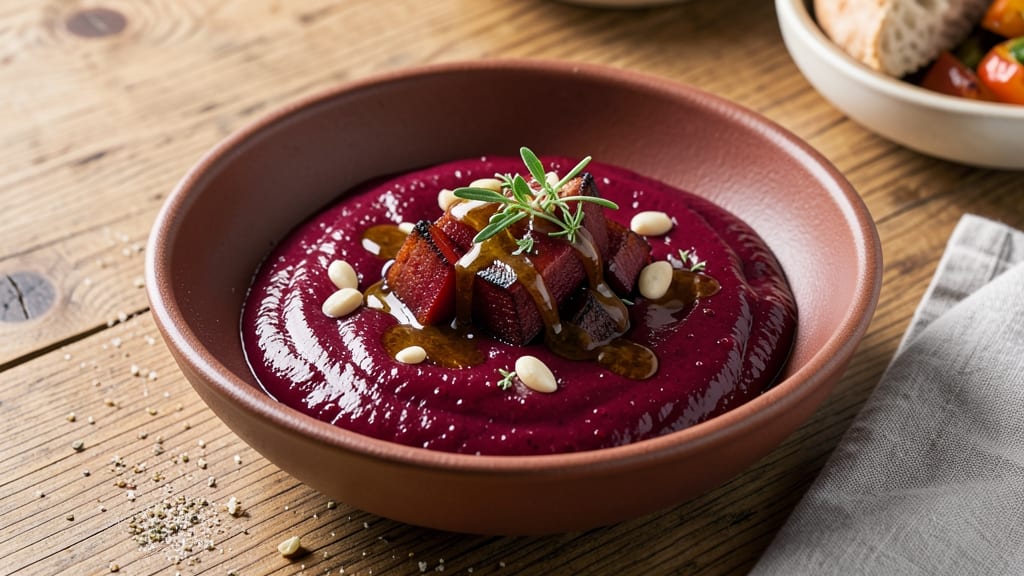
This creamy beetroot sauce transforms humble roasted beets into a velvety, earthy condiment that elevates every dish it touches. The secret lies in blending tender, caramelized beets with a touch of maple syrup and plant-based cream, creating a sauce that’s both vibrant and subtly sweet.
Perfect for drizzling over salads, pairing with roasted vegetables, or serving as a bold dip, this recipe proves vegan cooking can be rich, complex, and deeply satisfying.
The beauty of this beetroot sauce is its versatility—it works as a glaze for roasted meats, a vibrant dressing for grain bowls, or even a creamy dip for crudités. Roasting the beets first deepens their natural sweetness and mellows their earthiness, while a splash of apple cider vinegar adds brightness.
The result? A sauce that’s smooth, creamy, and packed with umami depth, all while keeping the vibrant pink hue that makes it visually stunning.
What sets this recipe apart is its simplicity—just a handful of pantry staples come together to create something restaurant-worthy. The blending technique ensures a silky texture without lumps, and the optional addition of fresh herbs or smoked paprika adds layers of flavor.
Whether you’re meal prepping for the week or whipping up a last-minute dinner, this sauce delivers restaurant-quality results in under 30 minutes.
Store it in an airtight container in the fridge for up to 5 days, or freeze for longer shelf life. The flavors only develop over time, making it a perfect make-ahead condiment. Ready to transform your meals with this creamy, earthy sauce? Let’s get started.
Ingredients for beetroot sauce
Pantry staples meet vibrant earthiness in this velvety beetroot sauce—creamy, sweet, and packed with umami.
| Ingredient | Amount | Notes |
|---|---|---|
| Fresh Beets 🍠 | 1 ½ lb | Medium size, peeled and chopped |
| Extra-Virgin Olive Oil 🫒 | ½ cup | For roasting and richness |
| Maple Syrup 🍯 | ¼ cup | Pure, grade B preferred |
| Coconut Milk 🥥 | ½ cup | Full-fat for creaminess |
| Apple Cider Vinegar 🍎 | 1 tbsp | For brightness and tang |
| Garlic Cloves 🧄 | 2 cloves | Minced for umami depth |
| Sea Salt 🧂 | ½ tsp | Diamond Crystal preferred |
| Black Pepper 🌶️ | ¼ tsp | Freshly ground for warmth |
| Smoked Paprika 🌶️ | ½ tsp | Optional for smoky depth |
| Fresh Thyme Leaves 🌿 | 1 tbsp | Optional for herbal note |
The beets are the star, so pick firm, medium-sized ones—they roast more evenly. Trader Joe's and Whole Foods often carry organic beets with the greens still attached, which is perfect since you can use those for a side salad. Roast them until tender and caramelized—this is where their natural sweetness really shines. For the olive oil, look for extra-virgin with a fruity aroma—it makes all the difference in the final sauce. The maple syrup should be pure, grade B if possible, as it has a deeper flavor than the lighter grades.
No coconut milk? Cashew cream or blended silken tofu works beautifully for creaminess. Short on maple syrup? Agave nectar or date syrup are good swaps, though maple has that distinct earthy note. The smoked paprika is optional but adds a wonderful depth—if you skip it, a pinch of liquid smoke can mimic it. Fresh thyme is ideal, but dried thyme at one-third the amount works in a pinch. For the garlic, roast it with the beets for a sweeter, mellow flavor instead of raw. If you're short on time, store-bought roasted garlic from the jar works too.
This sauce thickens as it cools, so thin with a splash of water or plant-based milk if needed. Store in an airtight container in the fridge for up to 5 days—the flavors actually improve over time. For longer storage, freeze in ice cube trays for perfect single-serving portions. Reheat gently on the stove with a splash of water to restore its silky texture. The vibrant pink color makes it perfect for garnishing, so save some of the roasted beets for that final touch.
Why You'll Love This Recipe
- Five-Ingredient Magic: The grocery list is short, and the prep is even shorter. Roast those beets whole—no peeling, no fuss—while you stir together coconut milk, maple, and vinegar in the same pot. Honestly, I’ve made this sauce with my eyes closed (and once, with my phone in my other hand).
- Sweet-Savory Balance: That first tangy-sweet bite? It’s like a hug for your taste buds. The maple syrup and vinegar play off the earthy beets while the coconut milk adds a creamy richness—no one ingredient overpowers, but together? Ridiculously good.
- Dress-Up Anything: Slather it on toast, drizzle it over roasted chicken, or toss it with grains. I’ve even used it as a dip for veggie sticks when I’m craving something fancy but don’t want to cook. Between us, it’s my secret weapon for turning simple meals into something special.
- Leftovers That Don’t Suck: This sauce actually improves the next day—thicker, deeper in flavor. Store it in the fridge for up to a week, and it’s ready to jazz up whatever you’re serving. (Yes, even on a Tuesday night.) Plus, the ingredients are cheap—you’ll save money without sacrificing taste.
Step-by-step instructions for earthy sweet beetroot sauce
Transform humble beets into a velvety sauce with balanced sweetness and subtle smokiness.
Roast the Beets Until Tender
Preheat your oven to 400°F and line a baking sheet with parchment paper. Toss the 1.5 lb fresh beets (peeled and chopped into 1-inch cubes) with 2 tablespoons of the extra-virgin olive oil and ½ teaspoon of the sea salt. Spread them in a single layer on the baking sheet.
Roast for 25-30 minutes, stirring halfway through, until the beets are fork-tender with slightly caramelized edges. The key here is patience—they should collapse easily when pierced but still hold their shape. If they brown too quickly, tent with foil to prevent burning while maintaining tenderness.
Build the Flavor Base
Transfer the roasted beets to a food processor or high-powered blender. Add the 2 cloves minced garlic, ½ teaspoon smoked paprika, ¼ teaspoon black pepper, and 1 tablespoon fresh thyme leaves. Pulse until the garlic is finely chopped but the beets remain slightly textured—this prevents an overly smooth, gluey consistency.
With the processor running, slowly drizzle in the remaining 0.33 cup extra-virgin olive oil and 1 tablespoon apple cider vinegar. This creates an emulsified base that will carry the sauce's rich, earthy notes. The vinegar brightens the sweetness while the olive oil adds luxurious mouthfeel.
Blend to Creamy Perfection
Add the 0.25 cup maple syrup and 0.5 cup coconut milk to the processor. Blend until completely smooth, scraping down the sides as needed. The sauce should reach a velvety consistency similar to a thick gravy—if it's too thick, add 1-2 tablespoons water to reach your desired texture.
For the ultimate test, spoon a small amount onto a chilled plate and let it sit for 1 minute. The sauce should hold its shape slightly but still spread easily with a spoon. This balance ensures it clings beautifully to meats, grains, or vegetables without being overly heavy.
Simmer for Depth of Flavor
Transfer the sauce to a saucepan and place over medium-low heat. Stir in the remaining 0.17 cup extra-virgin olive oil and simmer gently for 5-7 minutes, stirring occasionally. This step develops the sauce's complexity by allowing the natural beet sugars to caramelize slightly while the coconut milk's richness mellows.
Taste and adjust seasoning—you may need an additional pinch of salt or splash of vinegar to balance the sweetness. The sauce should finish with a harmonious blend of earthy beet, subtle smokiness, and a touch of tang. For serving, strain through a fine-mesh sieve if you prefer an ultra-smooth texture, or leave it slightly rustic for added visual appeal.
Pro Tips For Making Beetroot Sauce
- ROAST BEETS UNTIL SOFT: Peel and chop them into even chunks—about 1-inch cubes—and roast at 400°F (200°C) for 40-45 minutes. I used to undercook them for a "fresher" taste, but they turn to mush when blended raw. Roasting caramelizes the edges and makes the sauce silky, not gluey.
- PEEL WHEN COOL: Let roasted beets sit 10 minutes before peeling—hot skins slip off easier, but they’re still scorching. I learned this the hard way after burning my fingers twice. A damp paper towel helps if they’re stubborn, but most will peel clean after cooling.
- WHISK COCONUT MILK FIRST: Open the coconut milk can and give it a quick shake before adding it to the blender. The cream often separates, and if you blend it straight from the can, you’ll end up with a lumpy sauce. A quick stir guarantees a smooth, velvety texture every time.
- SALT THE MAPLE SYRUP: Add a pinch of flaky salt (½ tsp) to the maple syrup before blending—it balances the sweetness and cuts through the earthiness of the beets. I was skeptical until I tried it; now I can’t skip it. It’s the thing that makes the sauce taste finished, not just sweet.
Flavor customization for this beetroot sauce
Sweet & Tangy Twist
Balance the earthy beets with extra brightness by adding 1 tbsp lemon juice instead of apple cider vinegar. For a sweeter profile, increase the maple syrup to 3 tbsp and add ½ tsp vanilla extract for warmth.
This variation works beautifully as a glaze for roasted carrots or as a dip for fruit skewers. 🍯
Smoky & Spicy Kick
Boost the smokiness with 1 tsp chipotle powder or ½ tsp cayenne pepper for heat. Swap coconut milk for cashew cream to deepen the richness, and finish with a sprinkle of toasted cumin seeds for nutty complexity. This version pairs perfectly with grilled tofu or black beans. 🌶️
Herbal & Fresh
Infuse the sauce with fresh herbs like 1 tbsp chopped dill or 1 tsp tarragon for a bright, garden-fresh flavor. Reduce the maple syrup to 2 tbsp and add 1 tsp honey (or agave) to balance the herbal notes.
This lighter version shines in grain bowls or as a drizzle for roasted asparagus. 🌿
Creamy & Nutty
For a richer texture, blend in 2 tbsp tahini or 1 tbsp almond butter with the coconut milk. Add ½ tsp ground coriander for warmth and a pinch of sea salt to enhance the nutty depth. This variation is ideal for drizzling over Buddha bowls or pairing with falafel. 🥜
Umami Bomb
Elevate the sauce with 1 tbsp miso paste or 1 tsp soy sauce for umami depth. Use ½ cup vegetable broth instead of coconut milk to keep it lighter, and finish with 1 tsp toasted sesame oil.
This version is a game-changer for noodle dishes or as a dipping sauce for spring rolls. 🍜
Winter Spiced
Warm up the sauce with ½ tsp cinnamon and ¼ tsp nutmeg, then add 1 tbsp orange zest for a citrusy twist. Use ½ cup coconut yogurt instead of coconut milk for a tangier finish.
This seasonal variation is perfect for drizzling over roasted winter squash or pairing with baked apples. ❄️
Nutrition facts
Frequently asked questions
Can I use canned beets instead of fresh?
Yes, but with adjustments! Drain and rinse 1 (15 oz) can of beets, chop them, and roast for 10-15 minutes at 400°F to intensify their flavor. For extra creaminess, add 1 tbsp extra coconut milk to compensate for their softer texture. The sauce will still be delicious but slightly less vibrant in color.
How do I make this sauce thicker or thinner?
For a thicker sauce, simmer uncovered for 5-7 extra minutes to reduce. Need it thinner? Stir in 1-2 tbsp water or plant-based milk while warm. The sauce naturally thickens as it cools, so always adjust while still warm for best results.
What's the best way to store leftover beetroot sauce?
Transfer to an airtight container and refrigerate for up to 5 days. For longer storage, freeze in ice cube trays or small portions. Thaw overnight in the fridge—never microwave directly, as it can break the emulsion. The flavors actually deepen over time!
Can I make this sauce ahead of time?
This sauce tastes even better the next day as flavors meld. Make it 1-2 days ahead and store in the fridge. Reheat gently on low heat with a splash of water to restore its silky texture. Perfect for meal prep—just drizzle and enjoy!
Why did my sauce turn out grainy?
Over-blending can break down beets into a gluey texture, while under-blending leaves chunks. For silky results, blend until smooth but stop before it turns pasty. If it's too thick, add 1 tbsp water and blend again. The key is patience—let the sauce sit for 1 minute before testing texture.