
Sauces & Condiments
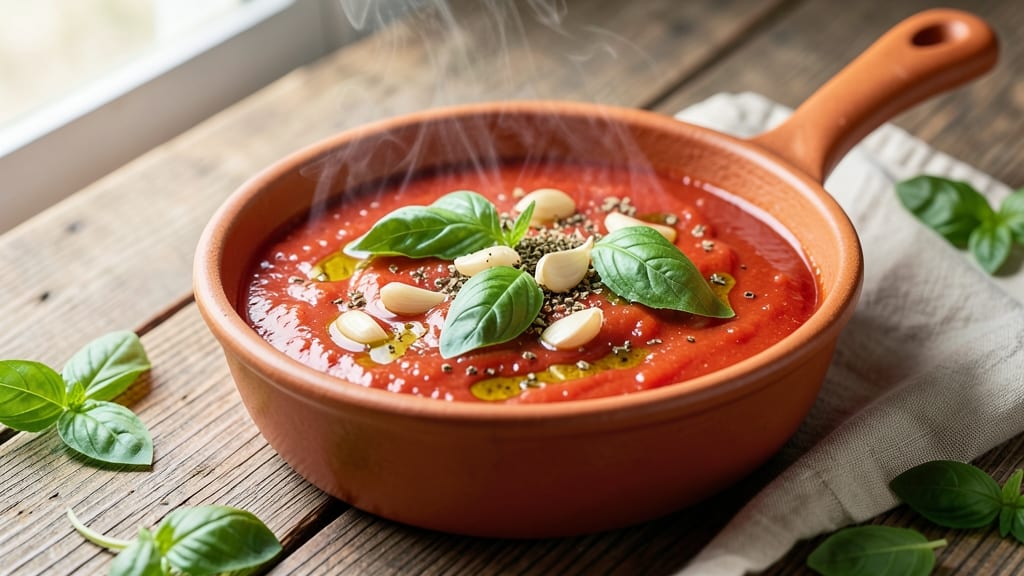
This basic Italian tomato sauce recipe transforms simple canned tomatoes into a rich, aromatic foundation for pasta, pizza, or any dish needing depth. The secret lies in simmering garlic, olive oil, and herbs until fragrant—just 20 minutes—before blending for a silky texture.
No fancy ingredients, just bold flavor built layer by layer.
What sets this sauce apart is its versatility: use it fresh over al dente pasta, freeze for future meals, or reduce it further for a thicker consistency. The blend of canned tomatoes (for convenience) and fresh garlic (for brightness) creates a balanced flavor that’s both comforting and restaurant-worthy.
It’s the kind of sauce that elevates everyday meals without requiring advanced techniques.
By the end, you’ll have a homemade sauce with a vibrant red hue, a hint of sweetness from the tomatoes, and a savory backbone from the garlic and herbs. The best part?
It keeps well in the fridge for up to a week or freezes perfectly for months, so you’ll always have a pantry staple ready to go. This is the sauce that makes Italian cooking feel effortless.
Ready to make it? The process is straightforward: sauté, simmer, blend, and adjust seasoning to taste. Whether you’re a beginner or a seasoned home cook, this recipe delivers reliable, foolproof results every time. Let’s get started.
Ingredients for basic italian tomato sauce
Nine simple ingredients build rich, aromatic Italian tomato sauce perfect for pasta or pizza.
| Ingredient | Amount | Notes |
|---|---|---|
| Canned San Marzano Tomatoes 🍅 | 28 oz | Crushed by hand for texture |
| Extra-Virgin Olive Oil 🫒 | ½ cup | High quality, fruity variety |
| Garlic Cloves 🧄 | 4 cloves | Freshly minced for brightness |
| Fresh Basil Leaves 🌿 | ½ cup | Packed, stems removed |
| Dried Oregano 🍃 | 1 tsp | Italian variety preferred |
| Salt 🧂 | 1 tsp | Diamond Crystal kosher preferred |
| Black Pepper 🌶️ | ½ tsp | Freshly ground for heat |
| Red Wine Vinegar 🍷 | 1 tbsp | For brightness and acidity |
| Granulated Sugar 🍚 | 1 tsp | Balances acidity |
San Marzano tomatoes are the gold standard here—their natural sweetness and low acidity create a balanced sauce. Whole peeled cans from Mueller or Costco work best; crush them by hand for that rustic texture. Fresh garlic is non-negotiable for brightness, but if you're short on time, garlic powder at half the amount works in a pinch. For basil, farmers market bunches have more flavor than grocery store containers. If you can't find Italian oregano, regular dried oregano works—just taste as you go. The olive oil should be fruity and peppery; California extra-virgin brands like Corto or Lucini are reliable choices.
No fresh basil? Dried basil at one-third the amount keeps the flavor profile intact. Short on tomatoes? Tomato paste mixed with water gives you similar depth. The red wine vinegar adds a subtle tang—substitute with lemon juice if needed. For a richer sauce, add a splash of pasta water at the end. The sugar balances acidity, but if your tomatoes are particularly sweet, you can skip it entirely. Always taste before blending—seasoning builds as it simmers, so adjust gradually. The key is patience; let it develop its flavors over those 20 minutes of simmering time.
This sauce keeps beautifully in the fridge for up to 7 days, with flavors deepening over time. For longer storage, freeze in ice cube trays—perfect for adding to future meals. Thicken it by simmering uncovered, or thin with water or broth as needed. The sauce also freezes well in airtight containers for up to 6 months. Label everything clearly; thaw overnight in the fridge for best results. A little goes a long way—start with 2 tablespoons per serving and adjust to taste.
Why You'll Love This Recipe
- No-Fuss Pantry Staple: I swear by this sauce because it lives in my pantry year-round. Open a can of San Marzano tomatoes, toss in garlic and olive oil—boom, you’ve got the base. No peeling, no chopping, no stress. The canned tomatoes do all the heavy lifting while I focus on the garlic sizzle and basil aroma.
- Garlic-Basil Magic: Between us, that first hit of garlic in olive oil is what makes this sauce sing. Then the basil—fresh, bright, and tossed in at the end—transforms it from good to ridiculously good. It’s the kind of flavor that makes you pause mid-bite and go, “Damn, that’s simple but perfect.”
- Weeknight to Weekend: This sauce works just as well on a Tuesday night with spaghetti as it does on a Sunday spread with grilled chicken. Freeze half the batch for lazy days, or use it to dress up toast with ricotta and a sprinkle of chili flakes. It’s my secret weapon for making everything feel special without extra effort.
- Budget-Friendly Powerhouse: A single can of tomatoes and a few cloves of garlic stretch to feed four people—and then some. The leftovers? Even better the next day, if that’s possible. I’ve made this sauce on $3 worth of ingredients, and it still tastes like I spent an hour in the kitchen. That’s the kind of recipe money can’t buy.
Step-by-step instructions for simmered Italian tomato sauce
A simple, foolproof method for rich, balanced tomato sauce with authentic Italian flavor.
Sauté Garlic in Olive Oil
Heat the 0.5 cup extra-virgin olive oil in a medium saucepan over medium-low heat. Add the 4 cloves freshly minced garlic and cook for 1-2 minutes until fragrant but not browned. Garlic burns quickly, so watch closely—you want color, not bitterness. The oil should shimmer gently around the garlic pieces.
This gentle cooking releases the garlic's sweet, aromatic essence without creating harsh flavors. If you notice the garlic turning golden, immediately reduce heat or remove the pan from the burner. The oil should remain clear with just a hint of garlic perfume at this stage.
Add Tomatoes and Seasonings
Pour in the 28 oz canned San Marzano tomatoes (crushed by hand if not pre-crushed) along with the 1 tsp dried oregano, 1 tsp salt, and 0.5 tsp black pepper. Stir gently to combine, ensuring the tomatoes are fully submerged in the oil. The mixture should bubble softly but not vigorously—adjust heat if needed to maintain medium-low.
I always stir clockwise first to ensure even distribution of seasonings. The tomatoes will release their natural juices immediately, creating a thick, vibrant base. Let the sauce simmer uncovered for 5 minutes to allow the flavors to meld before proceeding to the next step.
Balance Flavors with Vinegar and Sugar
Add the 1 tbsp red wine vinegar and 1 tsp granulated sugar, stirring well to incorporate. The vinegar brightens the sauce while the sugar gently balances the acidity from both the tomatoes and vinegar. Simmer the sauce uncovered for 10-12 minutes over low heat, stirring occasionally to prevent sticking.
You'll notice the sauce thicken slightly as it simmers. The color should deepen to a rich, ruby red, and you'll smell the complex interplay of tomato, garlic, and herbs. Taste occasionally during this time—this is when you can adjust seasoning if needed. The sauce should be well-seasoned but not overly salty or acidic.
Finish with Fresh Basil
Remove the sauce from heat and stir in the 0.5 cup packed fresh basil leaves. Let the sauce sit for 5 minutes off the heat to allow the basil to infuse its bright, sweet flavor. The basil will soften slightly but retain its vibrant green color, adding both visual appeal and freshness to the sauce.
This final step is crucial for that authentic Italian touch. The basil's aroma should dominate the other flavors, creating a fresh contrast to the rich tomato base. If you prefer a smoother texture, you can strain out the basil leaves after infusion, but I recommend leaving them in for maximum freshness and visual appeal.
Rest and Serve
Transfer the sauce to a serving bowl and let it rest for 10 minutes before serving. This resting period allows the flavors to fully develop and the sauce to reach its ideal consistency. The texture should be thick enough to coat the back of a spoon but still flow smoothly.
Serve immediately over pasta, with crusty bread, or alongside your favorite Italian dishes. The sauce will continue to improve as it sits, with flavors becoming more complex and balanced. For best results, use within 2-3 days or refrigerate for up to 5 days, reheating gently on the stove.
Pro Tips For Making Basic Italian Tomato Sauce
- CRUSH THE GARLIC: Slice those cloves lengthwise instead of mincing—thin, flat pieces release flavor without burning. I learned this the hard way after my kitchen smelled like a garlic factory while the sauce tasted bland. Toss them in whole for 30 seconds on medium-high, then stir—just enough to perfume, not brown.
- SALT THE TOMATOES: Dump the crushed San Marzano cans into a bowl first, season with a big pinch of salt, and let sit for 10 minutes. This breaks down the skins and balances the acidity—no more watery, thin sauce when you simmer. (Yes, even if you’re impatient like me.)
- STIR LOW AND SLOW: After adding tomatoes, drop the heat to low and let it bubble gently—no splattering, no scorching. I used to rush this and ended up with a bitter, thickened mess. Give it 20-30 minutes uncovered, stirring occasionally, until it’s just thick enough to coat the back of a spoon.
- FINISH WITH OIL AND BASIL: Off the heat, stir in a splash of olive oil (about 1 tablespoon) and a handful of torn basil leaves—this brightens the sauce and cuts through any lingering acid. Skip the basil early, or it’ll turn to mush. (Pro move: Save the stems for tea.)
Make-ahead tips for leftovers
Freezer Prep
Freeze your sauce in ice cube trays for portion control—each cube makes a perfect single-serving addition to pasta or pizza. Once frozen, transfer cubes to a ziplock freezer bag, squeezing out excess air to prevent freezer burn.
Label with the date and contents. These cubes thaw in 10 minutes in boiling water or overnight in the fridge. 🧊
Fridge Storage
Store your sauce in an airtight glass container (like a mason jar) in the fridge for up to 7 days. The flavors actually deepen over time, so it tastes even better the next day.
Always let it cool completely before refrigerating to prevent condensation from diluting the sauce. Stir before using to redistribute any settled basil leaves.
Batch Prep
Double the recipe and freeze half immediately for future meals. I like to make two batches on Sundays—one for the fridge and one for the freezer. This ensures you always have a fresh sauce ready without last-minute prep.
Just reheat gently on the stove with a splash of water if it thickens too much while frozen.
Acid Balance Tip
If your sauce tastes too acidic after reheating, add a pinch of granulated sugar (about ¼ tsp) to balance. For extra richness, stir in 1 tbsp heavy cream or pasta water while reheating.
The sauce should coat the back of a spoon but still be smooth—never force it to thicken by boiling too hard, or it'll turn rubbery.
Thickening Shortcut
Need a thicker sauce? Simmer it uncovered for 5-10 extra minutes on low heat. For an instant fix, mix 1 tsp cornstarch with 1 tbsp water, stir into the sauce, and simmer for 2 minutes until thickened.
This works especially well if you're using the sauce for lasagna or pizza where a thicker consistency is ideal.
Reviving Leftover Sauce
If your refrigerated sauce has separated, simply stir in 1 tbsp water or pasta water and reheat gently. The natural pectin in the tomatoes will help restore its smooth texture.
For extra flavor, add a pinch of salt and black pepper while reheating. Never microwave—always reheat on the stove to preserve the sauce's depth of flavor. ✨
Nutrition facts
Frequently asked questions
Can I use fresh tomatoes instead of canned?
Fresh tomatoes work but require extra prep. Use 4-5 large ripe tomatoes (peeled, seeded, and chopped) instead of canned. Simmer them longer (15-20 minutes) to break down their texture. For best results, roast the tomatoes first (broil for 5 minutes) to concentrate their sweetness before making the sauce.
How do I make this sauce thicker for pizza?
Simmer uncovered for 10-15 extra minutes on low heat to reduce. For instant thickening, mix 1 tsp cornstarch with 1 tbsp water, stir into the hot sauce, and simmer 2 minutes. Alternatively, blend in 1 tbsp tomato paste for a deeper flavor and thicker consistency.
What if my sauce tastes too acidic?
Add a pinch of sugar (¼ tsp) or 1 tbsp pasta water to balance. For richness, stir in 1 tbsp heavy cream or a splash of red wine. Never add sugar before tasting—some tomatoes are naturally sweeter. The sauce should taste vibrant, not sour.
Can I make this sauce in a slow cooker?
Sauté the garlic first, then transfer everything to the slow cooker on low for 4-5 hours. The flavors meld beautifully, and you can blend it smooth at the end. For thicker sauce, reduce on the stove afterward. Perfect for hands-off cooking during busy days!
Why does my sauce separate when refrigerated?
This is normal—tomato sauces often separate due to natural pectin. Stir in 1 tbsp water or broth** and reheat gently. The texture will restore itself. For prevention, let the sauce cool completely before refrigerating and stir well before storing.