
Sauces & Condiments
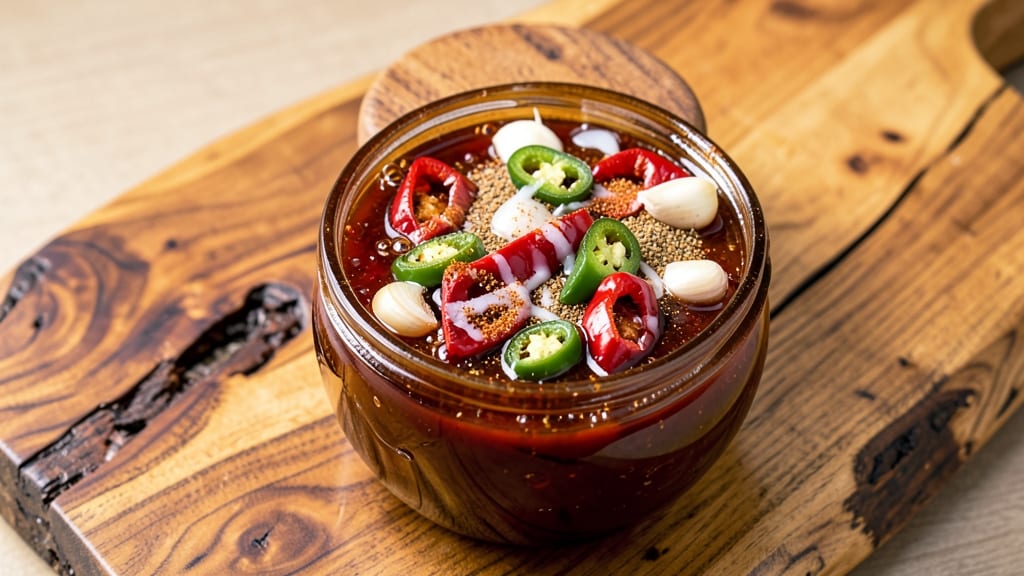
This base hot sauce recipe transforms simple ingredients into a vibrant, customizable condiment that adds depth to any dish. 🔥 The key lies in balancing fresh garlic, vinegar, and peppers to create a sauce with both heat and complexity—perfect for beginners eager to craft their own bold flavors from scratch.
Unlike store-bought versions, this recipe lets you control the spice level precisely, ensuring every batch delivers the exact kick you desire.
The foundation begins with a simple blend of vinegar, garlic, and peppers—whether you choose habanero for fiery heat or jalapeño for a milder tang. The sauce simmers just long enough to meld flavors without losing its bright, fresh character, while spices like cumin and smoked paprika add layers of warmth.
This method guarantees a smooth, well-rounded sauce that’s far more nuanced than anything bottled.
What makes this recipe truly versatile is its adaptability—scale it up for gifting or down for personal use, and adjust the heat by swapping peppers or adding honey for balance.
The result is a sauce that enhances everything from tacos to grilled meats, with a shelf life of months when stored properly. No fermentation required, just pure, customizable heat in minutes.
Whether you’re a home cook looking to elevate dishes or a sauce enthusiast seeking a fresh twist, this recipe delivers restaurant-quality results with minimal effort. The process is straightforward, the ingredients accessible, and the payoff undeniably satisfying. Let’s get started on crafting your perfect base.
Ingredients for base hot sauce
Nine simple ingredients create a customizable hot sauce with vibrant heat and depth.
| Ingredient | Amount | Notes |
|---|---|---|
| White Vinegar 💧 | 1 cup | Distilled white vinegar preferred |
| Fresh Garlic Cloves 🧄 | 6 cloves | Peeled and minced finely |
| Fresh Jalapeño Peppers 🌶️ | 4 whole | Seeds removed for mild heat |
| Fresh Habanero Peppers 🔥 | 1 whole | Seeds removed for balanced heat |
| Ground Cumin 🌿 | 1 tsp | Toasted for deeper flavor |
| Smoked Paprika 🌶️ | 1 tsp | For smoky depth |
| Salt 🧂 | ½ tsp | Kosher or sea salt |
| Honey 🍯 | 1 tbsp | Optional for sweet balance |
| Olive Oil 🫒 | 1 tbsp | For smooth texture |
The vinegar is the backbone—distilled white vinegar has the cleanest acidity, but apple cider vinegar adds subtle sweetness. Garlic and peppers are non-negotiable: fresh garlic cloves (not powder) and jalapeños/habaneros from a trusted source like Whole Foods or a Latin market ensure peak flavor. Roast the peppers first if you want extra depth, but raw works too. The habanero controls heat intensity—remove seeds for milder sauce. For extra smokiness, toast the cumin and smoked paprika in a dry pan for 30 seconds before adding.
No habanero? Double the jalapeños for milder heat, or swap in a pinch of cayenne. Short on vinegar? Apple cider vinegar or lemon juice works, but adjust sweetness with honey. The honey isn’t just for sweetness—it balances acidity and rounds out the heat. Substitute maple syrup if you’re avoiding honey. Olive oil is optional but adds a silky finish; avocado oil works too. For a smoother sauce, strain through a fine-mesh sieve after simmering. Store-bought vinegar is fine, but Bragg’s or Heinz are reliable brands for consistent results.
This sauce thickens as it sits—stir well before using. Keeps for 3-4 months in the fridge or 6 months frozen. Portion into small jars for gifting or single-use servings. The flavor improves over time, so make a big batch. If the sauce separates, whisk in a splash of vinegar to re-emulsify. For extra heat, add a pinch of red pepper flakes or a dash of hot sauce. The smoked paprika adds complexity, so don’t skip it—it’s worth the extra minute.
Why You'll Love This Recipe
- Pantry in 5 Minutes: I swear, this is the kind of recipe where you’re already chopping jalapeños while the vinegar boils—no fancy prep, just knife work and a blender. The cumin and garlic mellow out fast, so you’re not standing there waiting for magic.
- Heat You Control: That habanero packs a punch, but here’s the thing: you decide how much. Blend in half the seeds for a smoky kick, or scrape them all out for a cleaner burn. The vinegar’s acidity actually enhances the heat instead of drowning it—like a perfect balance.
- Game for Any Meal: Slather it on breakfast tacos, drizzle it over grilled corn, or use it as a wake-up call for buttered noodles. I’ve even poured it into marinades for chicken that tastes like it’s been kissed by fire. It’s the kind of sauce that makes you want to try it everywhere.
- Lasts Like a Champ: Make a big batch—it keeps for months in the fridge—and the flavor actually deepens over time. Honestly, I’ve had jars from last summer that still taste fresher than store-bought. Plus, vinegar’s cheap, so you’re not breaking the bank for bold flavor.
Step-by-step instructions for layered hot sauce
Here's how to build balanced heat with fresh peppers and aromatic spices.
🍳 Step 1: Toast the Spices for Depth
Heat a dry skillet over medium-low heat and add the 1 tsp ground cumin and 1 tsp smoked paprika. Toast for 30-45 seconds until fragrant and slightly darker—you'll smell the spices awakening. This step develops their natural oils and creates a smoky foundation for your sauce.
Watch closely as the spices cook—they burn quickly. When they release their aroma (you'll notice it filling your kitchen), immediately transfer them to a small bowl and set aside. The residual heat will continue to develop flavor, but removing them prevents bitterness.
🔪 Step 2: Prep and Cook the Peppers
In the same skillet (no need to clean it), add the 1 tbsp olive oil over medium heat. Add the 4 whole jalapeño peppers and 1 whole habanero pepper (seeds removed) cut into ¼-inch slices. Cook for 3-4 minutes until softened but not browned—you want them to retain their shape while releasing their oils.
Here's the thing—don't overcrowd the pan. Cook in batches if needed to prevent steaming. The peppers should be tender enough to mash easily with a fork but still hold their structure. Remove them and set aside with the toasted spices.
👨🍳 Step 3: Build the Base with Vinegar and Honey
In a medium saucepan, combine the 1 cup white vinegar, 1 tbsp honey, and 0.5 tsp salt. Bring to a gentle simmer over medium heat for 2-3 minutes until the honey dissolves completely. You're creating a balanced foundation where the acidity of the vinegar and sweetness of honey will complement the heat.
Taste the mixture—it should be tangy with a touch of sweetness. This is your flavor baseline before adding the peppers. If you prefer more sweetness, add another ½ tbsp honey now, but don't overdo it as the peppers will contribute their own natural sugars.
🥘 Step 4: Blend and Simmer for Complexity
Add the cooked peppers, toasted spices, and 6 cloves minced fresh garlic to the vinegar mixture. Bring to a boil, then reduce heat to low and simmer for 10-12 minutes. This slow cook allows the garlic to infuse without burning and lets the peppers' heat develop fully.
Stir occasionally and taste as you go. You're looking for a sauce that's vibrant and balanced—not just fiery. The acidity from the vinegar should cut through the heat, and the honey should round out any sharpness. If the sauce thickens too much, add 1-2 tbsp water to reach your desired consistency.
⏰ Step 5: Strain and Rest for Maximum Flavor
Let the sauce cool for 5 minutes, then strain through a fine-mesh sieve into a clean jar. Press on the solids with a spoon to extract every bit of flavor. The strained sauce should be smooth with a deep red-orange color—this indicates proper extraction of the peppers' oils and capsaicin.
Let the sauce sit at room temperature for 1 hour before using. This resting period allows the flavors to meld completely. The heat will mellow slightly, and the smoky, garlicky notes will become more pronounced. Store in the refrigerator for up to 2 weeks or process for longer shelf life.
Pro Tips For Making Base Hot Sauce
- CHAR THE PEPPERS FIRST: Toss whole jalapeños and habaneros in a dry skillet over medium-high heat for 30 seconds per side before chopping—they’ll blister and deepen in flavor without burning. I learned this the hard way after making sauce that tasted like vinegar and regret.
- USE COLD VINEGAR: Chill your white vinegar in the fridge for 10 minutes before adding it to the hot peppers and garlic. Cold vinegar mellows the heat slightly and prevents the sauce from turning cloudy or separating later. (Yes, I’ve seen both happen.)
- STRAIN THE GARLIC: After mincing garlic, press it through a fine-mesh strainer to remove the tough skin and pulp—this keeps the sauce silky smooth instead of grainy. I was skeptical until I tried it; now I can’t go back.
- TOAST THE CUMIN: Dry-toast the ground cumin in the same skillet as the peppers for 30 seconds until fragrant before adding vinegar. This step unlocks its earthy notes and prevents it from tasting raw or bitter. (Your future self will notice the difference.)
Wine and beer pairings for base hot sauce
Crisp White Wine
For a refreshing contrast to the sauce’s heat, reach for a dry Riesling or Sauvignon Blanc—both wines have bright acidity that mirrors the vinegar’s tang. A German Riesling with its crisp, slightly floral notes balances the habanero’s sharpness beautifully.
I love Dr. Loosen Blue Slate ($18) for its zesty lime character that cleanses the palate after each bite of spicy food. 🍷
Smoky Lager
A Mexican-style lager like Modelo Especial or Pacifico works surprisingly well with hot sauce. The beer’s subtle malt sweetness and light carbonation cut through the heat while complementing the cumin and smoked paprika in the sauce.
For a craft option, try Ballast Point Sculpin IPA—its piney hops and citrus notes stand up to the habanero’s intensity. 🍺
Spiced Rum Cocktail
Mix 1.5 oz dark rum (like Kraken Black Spiced Rum) with 0.5 oz lime juice and a splash of your hot sauce for a Spicy Rum Punch. The rum’s caramel and clove notes enhance the sauce’s smokiness, while the lime brightens the vinegar’s acidity.
Serve over crushed ice with a lime wedge for a bold, balanced drink. Perfect for sipping alongside tacos or grilled shrimp. 🌶️
Craft Beer Pairings
For a bold pairing, try a Belgian Witbier like Hoegaarden—its coriander and orange peel notes echo the cumin and citrus in the sauce. Alternatively, a smoked porter (like Founders Kentucky Breakfast Stout) mirrors the smoked paprika’s depth.
The beer’s roasted maltiness stands up to the heat while adding a rich contrast. 🍻
Non-Alcoholic Options
For a refreshing non-alcoholic match, blend sparkling water with 1 tbsp lime juice, 1 tsp honey, and a dash of hot sauce. The effervescence cools the palate, while the lime and honey balance the vinegar’s sharpness.
For a ready-made option, San Pellegrino Aranciata (orange soda) complements the sauce’s smoky-sweet profile. 💧
Regional Beer Twists
In the South, a Texas-style blonde ale (like Shiner Bock) pairs well with the sauce’s smoky heat. For West Coast flavors, a hazy IPA (like Modern Times Hazy Little Thing) adds fruity complexity.
In Latin America, a Mexican pale lager (like Tecate) keeps the pairing simple and refreshing. 🌎
Nutrition facts
Frequently asked questions
Can I adjust the heat level in this hot sauce?
For milder heat, reduce the habanero to ½ pepper or swap it for extra jalapeños. For extra spice, add ½ tsp cayenne pepper or include seeds from the habanero. Start with small adjustments—you can always add more heat later by blending in a few drops of hot sauce from a bottle.
Do I need to ferment this hot sauce?
No fermentation is required for this recipe! The vinegar and simmering process create a stable, shelf-stable sauce that’s ready to use immediately. Fermented hot sauces develop deeper complexity over time, but this method delivers bright, balanced heat without the waiting period. For extra depth, let it sit in the fridge for 1-2 weeks before using.
How long will this sauce keep?
Unopened, this sauce lasts 3-4 months in the refrigerator or 6 months in the freezer. Once opened, use within 2 weeks for best flavor. The vinegar acts as a natural preservative, but always store it in a clean, airtight container. For gifting, portion into small jars—each batch makes about 1½ cups.
Can I make this sauce without honey?
Yes! Skip the honey if you prefer a sharper, more acidic sauce. For sweetness alternatives, try ½ tsp maple syrup or 1 tsp agave nectar. The honey balances the vinegar’s tang and softens the heat, but it’s optional. If omitting, taste the sauce after simmering—you may want to add a pinch of salt to compensate for the missing sweetness.
What’s the best way to use leftover pepper solids?
Don’t waste those strained pepper solids! Blend them with olive oil for a quick pepper oil, or mix into mayo for homemade spicy aioli. You can also dry them out and crush into flakes for seasoning. For extra heat, simmer the solids in a little vinegar for 5 minutes to make a concentrated hot sauce booster. Every bit of flavor deserves a second life!