
Sauces & Condiments
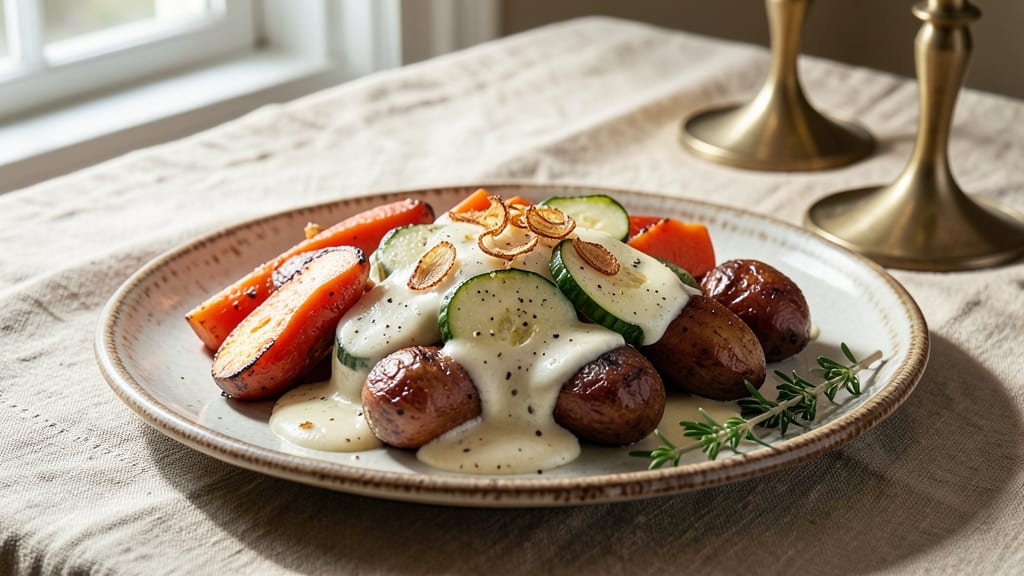
This baked vegetables in white sauce recipe transforms simple root vegetables into a creamy, comforting dish that feels like a restaurant-worthy meal. The secret lies in a velvety cheese sauce that clings to tender, caramelized vegetables, creating a harmonious blend of textures and flavors.
I developed this recipe after years of perfecting the balance between crispy edges and silky sauce—no soggy vegetables here.
The process begins with roasting vegetables like carrots, potatoes, and zucchini until they're tender but still hold their shape. Then, a simple white sauce made with butter, flour, milk, and cheese coats every bite, ensuring each forkful is rich and satisfying.
This method works for both weeknight dinners and special occasions, delivering restaurant-quality results with minimal effort.
By the time you pull this dish from the oven, you'll have perfectly roasted vegetables bathed in a golden, creamy sauce that's impossible to resist. The sauce caramelizes slightly on top, creating a crispy contrast to the tender vegetables beneath.
It's the kind of dish that pairs beautifully with crusty bread or a simple green salad, making it versatile enough for any meal.
Whether you're feeding a family or preparing a cozy meal for two, this recipe delivers warmth and comfort in every bite. The best part? It comes together in just 45 minutes, with most of that time spent baking.
Let's get started on this foolproof, crowd-pleasing dish that's sure to become a staple in your meal rotation.
Ingredients for baked vegetables in white sauce
Simple seasonal veggies meet rich white sauce for a cozy, restaurant-worthy dinner.
| Ingredient | Amount | Notes |
|---|---|---|
| Carrots 🥕 | 1 ½ lb | Medium size, cut into even chunks |
| Russet Potatoes 🥔 | 1 ½ lb | Peeled, cut into 1-inch cubes |
| Zucchini 🍆 | 2 medium | Sliced into 1/4-inch rounds |
| Unsalted Butter 🧈 | ½ cup | Cold, cubed for roasting |
| All-Purpose Flour 🌾 | ¼ cup | For sauce thickening |
| Whole Milk 🥛 | 1 ½ cups | Full-fat for creaminess |
| Shredded Cheddar Cheese 🧀 | 1 ½ cups | Sharp variety preferred |
| Garlic Cloves 🧄 | 4 cloves | Minced for sauce depth |
| Olive Oil 🫒 | 2 tbsp | For roasting vegetables |
| Salt 🧂 | 1 ½ tsp | Kosher or sea salt |
| Black Pepper 🌶️ | ½ tsp | Freshly ground |
| Dried Thyme 🌿 | ½ tsp | Or 1 tbsp fresh thyme |
| Fresh Parsley 🌿 | ¼ cup | Chopped, for garnish |
The vegetables are the foundation—carrots and potatoes add heartiness, while zucchini keeps it light. Russet potatoes work best for their fluffy texture, and organic carrots from the grocery store's produce section stay sweeter longer. I always grab sharp cheddar for the sauce—it melts perfectly and adds great flavor. The Whole Foods or Trader Joe's sections usually have the best selection of pre-shredded cheese, but if you're buying a block, grate it yourself for better texture. For the thyme, fresh is ideal but dried works in a pinch—just use less since it's more concentrated.
No sharp cheddar? Gruyère or Monterey Jack both melt beautifully. Running low on milk? Heavy cream at half the amount makes the sauce even richer. The zucchini can be swapped for asparagus or green beans if you prefer. For the roasting, olive oil is non-negotiable—it adds great flavor. If you're short on time, pre-cut frozen veggies work too, but fresh gives the best texture. The garlic can be minced ahead of time and stored in the fridge for up to 3 days—just don't overdo it, or the sauce gets bitter.
Roast the veggies until tender but still firm—about 25-30 minutes at 400°F. The sauce comes together in minutes, so you won't be waiting long. Leftovers keep for 3-4 days in the fridge, and the sauce reheats beautifully. I always make extra sauce—it's perfect on toasted bread or over mashed potatoes for another meal. For a make-ahead option, assemble the dish, cover, and refrigerate overnight before baking—it tastes even better the next day.
Why You'll Love This Recipe
- One-Pan Magic: I swear by this recipe when I’m too tired to wash dishes. Toss everything—carrots, potatoes, zucchini—onto a single sheet pan, drizzle with butter, and let the oven do the work. No pots, no pans, just golden, tender veggies waiting for you.
- Creamy Without Fuss: That white sauce? It’s just butter, flour, and a splash of milk—no heavy cream, no fancy ingredients. The flour thickens it just right, coating every bite in that buttery, velvety goodness. (Yes, even my picky husband asks for seconds.)
- Lunchbox Hero: Between us, this is my go-to for school lunches or office meals. The sauce stays creamy when reheated, and the veggies hold up perfectly. Pack it in containers, and you’ve got a lunch that’s actually exciting—no sad, wilted salads here.
- Budget Stretch: Russets and carrots are cheap, and this recipe stretches them into something fancy-feeling. I’ve fed four people for under $10, and no one ever guesses how simple it was. Honestly, it’s my secret for making groceries go further without sacrificing taste.
Step-by-step instructions for baked vegetables in white sauce
Here's how to create tender roasted vegetables smothered in a creamy, cheesy white sauce.
Prep and Roast the Vegetables
Preheat your oven to 400°F and line two baking sheets with parchment paper. Toss the 1.5 lb carrots and 1.5 lb russet potatoes (cut into 1-inch cubes) with 2 tbsp olive oil, 1 tsp salt, 0.25 tsp black pepper, and 0.25 tsp dried thyme. Spread them evenly on one baking sheet.
Arrange the 2 medium zucchini (sliced into ¼-inch rounds) on the second baking sheet with the same seasoning. Roast for 20-25 minutes, stirring halfway, until the edges are golden brown and the vegetables are tender when pierced with a fork. The potatoes should feel soft but not mushy.
Make the Creamy White Sauce
While the vegetables roast, melt 0.5 cup unsalted butter in a large skillet over medium heat. Add the 4 cloves minced garlic and cook for 30 seconds until fragrant—don't let it brown. Immediately whisk in 0.25 cup all-purpose flour and cook for 1-2 minutes until the mixture turns golden and smells nutty.
Gradually pour in the 1.5 cups whole milk while whisking constantly to prevent lumps. Bring the sauce to a gentle simmer and cook for 3-4 minutes until it thickens enough to coat the back of a spoon. Remove from heat and stir in 1.5 cups shredded cheddar cheese until fully melted and smooth.
Combine and Finish
Transfer the roasted vegetables to the skillet with the sauce. Stir gently to coat them evenly, letting the sauce cling to each piece. Return the skillet to low heat and simmer for 2-3 minutes until the vegetables absorb some of the sauce and everything is heated through.
Taste and adjust seasoning with additional salt or black pepper if needed. The sauce should be creamy but not overly thick—if it's too stiff, whisk in 1-2 tablespoons of milk to loosen it. Garnish with 0.25 cup chopped fresh parsley just before serving.
Serve Warm
Divide the vegetables and sauce among four serving dishes. The carrots and potatoes should be fork-tender with slightly crisp edges, while the zucchini should be soft but still hold its shape. Serve immediately while the sauce is still velvety and the vegetables are warm.
For extra richness, sprinkle with additional shredded cheese or serve with crusty bread to soak up any remaining sauce. This dish makes a comforting side or light main course, especially with grilled chicken or fish.
Pro Tips For Making Baked Vegetables In White Sauce
- CUT POTATOES UNIFORM: Russets break down unevenly, so slice them into ½-inch chunks—same thickness as carrots and zucchini. I learned this the hard way when my potatoes turned to mush while the outer edges stayed raw. Use a mandoline if you’re impatient, but a sharp knife works fine if you take your time.
- SWEAT VEGETABLES FIRST: Toss chopped veggies in a cold skillet with a pinch of salt, then cook over medium heat for 5 minutes before baking. This draws out moisture so they crisp instead of steaming into soggy lumps. (Yes, even if you’re skipping the stovetop step—just do it in the baking dish.)
- ROUX THICKENS FASTER: Melt butter over medium heat, then whisk in flour all at once before adding milk. Stirring in gradually makes you wait longer for that creamy texture. If the sauce splits, just lower the heat and keep whisking—it’ll come together.
- COVER WHILE BAKE TESTING: Tent the baking dish with foil for the first 20 minutes of baking. This traps steam so the sauce clings instead of evaporating into the oven. After that, uncover to let the edges brown—no need to babysit the whole time.
Perfect pairings for this baked vegetables in white sauce
Bread Pairings
Nothing beats this creamy dish with a warm, crusty baguette or sourdough. The bread soaks up the extra sauce beautifully, turning every bite into a flavorful experience. I love using a French-style baguette from Whole Foods—its crisp exterior contrasts perfectly with the soft vegetables.
For a heartier option, try a ciabatta roll with its airy interior that holds onto the sauce. 🥖
Protein Additions
Turn this dish into a complete meal by adding grilled chicken breast or salmon fillets. The protein pairs wonderfully with the creamy vegetables, balancing the richness. I often pan-sear 6-ounce chicken breasts with garlic and herbs before adding them to the baked vegetables.
For a lighter option, try poached shrimp or crispy tofu for a vegetarian twist.
Green Salad
A simple arugula salad with lemon vinaigrette cuts through the richness of the white sauce. Toss 4 cups baby arugula with 2 tbsp olive oil, 1 tbsp lemon juice, 1 tsp Dijon mustard, and a pinch of salt and pepper.
The peppery bite refreshes your palate between bites of the creamy vegetables. For extra crunch, add thinly sliced red onions and toasted walnuts.
Cheese Board
Serve this dish alongside a cheese board for a sophisticated spread. Include sharp cheddar (the same cheese used in the sauce), Gruyère, and brie for variety. Add crackers, grapes, and honey drizzle to round out the flavors.
The cheese board elevates the dish to a cozy, shareable meal perfect for gatherings. 🧀
Wine Pairings
A crisp Chardonnay with buttery notes complements the creamy sauce beautifully. Look for a California or French Chardonnay with hints of vanilla and citrus. For a lighter option, a Sauvignon Blanc from New Zealand adds a refreshing acidity that balances the richness.
If you prefer red wine, a Pinot Noir with its gentle tannins works well too. 🍷
Herb Garnishes
Fresh herbs elevate the dish with bright, aromatic notes. Sprinkle chopped parsley or chives over the top for a pop of color and freshness. For a bolder flavor, add thinly sliced basil or dill.
I also love a drizzle of hot honey for a touch of sweetness and spice that pairs perfectly with the creamy sauce. 🌿
Nutrition facts
Frequently asked questions
Can I use frozen vegetables instead of fresh?
Yes, but with adjustments! Use 1 lb frozen mixed vegetables (like peas, carrots, and green beans) instead of fresh. Thaw them first, pat dry, and roast for 15-20 minutes at 400°F—they'll cook faster than fresh. For best texture, avoid pre-cut frozen veggies with excess ice crystals.
How do I make this dish dairy-free?
Swap the butter for olive oil or vegan butter, use unsweetened almond milk instead of whole milk, and replace cheese with nutritional yeast or vegan cheddar. The sauce will still be creamy but lighter. For extra richness, add ½ cup coconut cream to the sauce.
Why did my sauce get lumpy?
Lumpy sauce usually means the flour and milk weren't combined properly. To fix it, whisk vigorously while adding the milk to the butter-flour mixture. If it's too thick, thin with 1-2 tbsp milk or water. For next time, strain the sauce through a fine-mesh sieve for ultra-smooth results.
Can I prep this ahead of time?
Roast the vegetables 1 day ahead and store them in the fridge. Reheat in the oven at 350°F for 10 minutes before adding the sauce. For the sauce, make it fresh or reheat gently on the stove—it thickens as it cools, so thin with milk if needed before serving.
What if I don't have sharp cheddar?
No problem! Use Gruyère, Monterey Jack, or even mozzarella for a milder flavor. For extra depth, add ½ tsp smoked paprika or 1 tbsp Dijon mustard to the sauce. Creamy cheeses like brie or camembert also melt beautifully but add a richer, tangier note.