
Sauces & Condiments
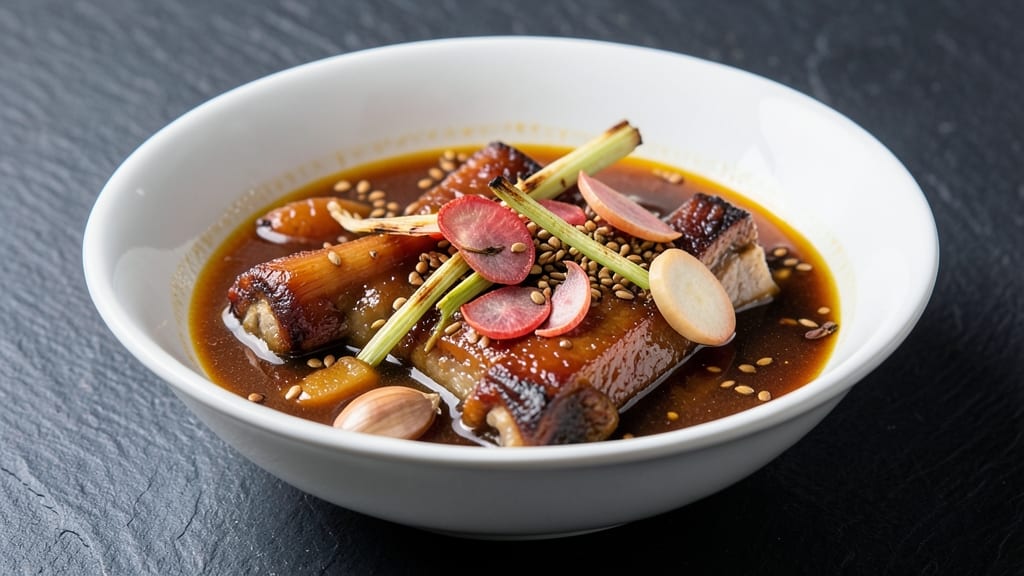
This bak kut teh sauce transforms simple pork bones into a fragrant, slow-simmered masterpiece—where lemongrass and spices unlock deep, herbal richness. 🌿 The secret lies in patience: hours of gentle simmering coax out collagen-rich broth that clings to ribs like liquid gold.
I’ve perfected this recipe after countless batches, balancing earthy spices with bright citrus to create a sauce that’s both comforting and vibrant.
The foundation starts with charred pork bones and aromatics—ginger, galangal, and lemongrass—that infuse the broth with layers of warmth and zing. A blend of coriander, cumin, and turmeric adds complexity, while tamarind and palm sugar lend subtle sweetness.
The result? A velvety sauce that’s rich enough to stand alone or braise ribs until they’re fall-off-the-bone tender.
What sets this sauce apart is its versatility—use it as a braising liquid for ribs, a dipping sauce for dumplings, or even a flavorful base for noodles. The consistency is key: reduce it until syrupy, then adjust with water or stock to your preference.
Every spoonful delivers that perfect harmony of umami, spice, and citrus brightness.
For those who prefer adjustments, reduce the chili for milder heat or swap pork bones for mushrooms and tofu for a vegetarian twist. The technique remains the same—slow simmering unlocks the same depth of flavor. Let’s create this aromatic sauce that’ll elevate your meals effortlessly.
Ingredients for bak kut teh sauce
Fresh aromatics and slow-simmered bones create this vibrant, umami-rich sauce—perfect for ribs or noodles.
| Ingredient | Amount | Notes |
|---|---|---|
| Pork Bones 🍖 | 2 lb | Charred for deep flavor |
| Fresh Lemongrass Stalks 🌿 | 4 whole | Bruised to release oils |
| Fresh Galangal Slices 🌿 | 3 pieces | Substitute ginger if unavailable |
| Fresh Ginger Root 🧅 | ½ cup | Peeled and sliced thin |
| Garlic Cloves 🧄 | 8 cloves | Smashed for intensity |
| Coriander Seeds 🌶️ | 1 tbsp | Toasted lightly for aroma |
| Cumin Seeds 🌶️ | 1 tsp | Toasted for depth |
| Turmeric Powder 🌶️ | 1 tsp | Brightens the sauce |
| Dried Chili Peppers 🔥 | 2 pieces | Adjust for heat preference |
| Tamarind Paste 🍯 | 2 tbsp | Dissolved in warm water |
| Palm Sugar 🍯 | ½ cup | Or substitute brown sugar |
| White Wine 🍷 | ½ cup | Dry variety preferred |
| Water 💧 | 6 cups | For simmering broth |
| Fish Sauce 🍶 | 1 tbsp | Umami depth (optional) |
| Salt 🧂 | 1 tsp | Adjust to taste |
Lemongrass and galangal are the heart of this sauce—Asian markets carry the best quality, but if you can't find galangal, extra ginger works in a pinch. Look for stalks with tight, pale leaves and firm roots. The pork bones should be charred over a flame first—this adds a smoky depth that's non-negotiable. Costco often has pre-charred bones if you're short on time, but nothing beats doing it yourself. For the spices, Penzeys or bulk bins at Whole Foods ensure maximum freshness—ground spices lose potency fast.
No galangal? Double the ginger and add a pinch of cardamom for that floral note. Running out of tamarind? Lime juice plus a teaspoon of sugar mimics the tangy-sweet balance. The fish sauce is optional but adds that signature umami punch—Red Boat is my go-to brand. For a vegetarian version, swap pork bones for shiitake mushrooms and tofu, but simmer them longer to extract flavor. The palm sugar can be substituted with brown sugar, though it'll lack that caramel-like depth. And if you're worried about chili heat, remove seeds and membranes before adding.
This sauce gets better with time—3-4 hours of simmering is ideal, but if you're in a hurry, pressure cook it for 45 minutes. Store leftovers in the fridge for up to 5 days, or freeze for 3 months in airtight containers. I like to portion it into ice cube trays for easy use—just thaw and reheat. The sauce thickens as it cools, so always add a splash of water or stock when reheating. Trust me, the first time you use this on ribs? You'll be hooked.
Why You'll Love This Recipe
- Pantry to Pot Fast: Honestly, this sauce starts with bones and herbs—no fancy prep. Toss in the lemongrass, galangal, and ginger (all prepped in 5 minutes), let it simmer, and boom. You’re done. My lazy Sundays now include this because it’s that simple.
- Umami Bomb: The pork bones melt into the broth, turning it rich and deep, while the garlic and galangal add that sharp, aromatic kick. It’s the kind of flavor that makes you pause mid-sip—like a secret handshake for your taste buds.
- Herb Swaps Welcome: No lemongrass? Use lime zest. Galangal missing? Extra ginger works. I’ve even thrown in a bay leaf when desperate. The bones and garlic anchor the flavor, so it’s forgiving—ideal for when the market’s half-empty and you’re half-asleep.
Step-by-step instructions for bak kut teh sauce
Here's how to build this aromatic, slow-simmered sauce from scratch—layering flavors that develop over hours.
🔥 Step 1: Char the Pork Bones for Deep Flavor
Preheat your oven to 400°F. Place the 2 lb pork bones on a baking sheet and roast for 20-25 minutes until they develop a deep mahogany crust. This charring creates the signature smoky depth that defines bak kut teh.
Turn the bones occasionally so they brown evenly. You'll know they're ready when they smell intensely caramelized and the exterior has a glossy sheen from rendered fat. Let them cool slightly before proceeding—this prevents steam from diluting your sauce later.
🍳 Step 2: Toast the Spices and Aromatics
Heat a dry skillet over medium heat and toast the 1 tbsp coriander seeds and 1 tsp cumin seeds for 2-3 minutes until fragrant and lightly golden. Transfer them to a spice grinder and pulse until finely ground—this releases their essential oils for maximum flavor.
In the same skillet, add the 4 whole lemongrass stalks (bruised by pounding lightly with the side of your knife) and 3 pieces galangal slices (peeled if needed). Sauté for 3-4 minutes until the lemongrass releases its citrusy aroma and the galangal softens slightly. Remove and set aside with the toasted spices.
🍳 Step 3: Build the Base with Ginger, Garlic, and Chili
In the same skillet, add 0.5 cup fresh ginger root (peeled and sliced) and 8 cloves garlic (smashed). Cook for 3-4 minutes until the ginger softens and becomes translucent, and the garlic turns golden brown. Add the 2 pieces dried chili peppers and cook for 1 more minute to infuse their heat.
Transfer this aromatic mixture to a large pot. Add 1 tsp turmeric powder and stir to combine. This is where the sauce gets its golden hue and earthy complexity—don't skip this step. The turmeric will bloom beautifully as it simmers.
🥘 Step 4: Simmer the Sauce for Herbal Depth
Add the charred pork bones, toasted spices, ginger-garlic-chili mixture, 6 cups water, and 0.5 cup white wine to the pot. Bring to a boil, then reduce heat to low and simmer uncovered for 2 hours. Skim off any foam that rises to the surface during the first 30 minutes—this ensures a clear, flavorful broth.
After 2 hours, the bones should be tender enough to pull apart with a fork. Remove them and set aside for later use (they're perfect for serving over rice). Strain the broth through a fine-mesh sieve into a clean pot, pressing gently on the solids to extract maximum flavor.
🥘 Step 5: Balance and Finish the Sauce
Return the strained broth to the pot and add 2 tbsp tamarind paste (dissolved in ¼ cup warm water), 0.5 cup palm sugar, 1 tbsp fish sauce, and 1 tsp salt. Stir well to combine. Simmer for another 15-20 minutes until the sauce thickens slightly and the flavors meld into a harmonious balance.
Taste and adjust seasoning—add more tamarind for tang, sugar for sweetness, or fish sauce for umami depth. The finished sauce should be fragrant with lemongrass, slightly sweet, and deeply savory with a hint of spice. Serve warm over rice with the shredded pork bones and extra chili peppers on the side.
Pro Tips For Making Bak Kut Teh Sauce
- Char Pork Bones First: I learned this the hard way—skipping the char makes the broth pale and weak. Sear the pork bones in a dry pot over medium-high heat until they turn deep brown in spots (about 5-7 minutes per side). The Maillard reaction unlocks flavors that simmering alone can’t achieve.
- Bruise Galangal and Ginger: Fresh galangal and ginger release their oils better when they’re tenderized. Smash them lightly with the flat side of a knife or a meat mallet before adding to the pot—this ensures their aromatic compounds infuse the broth instead of floating as bitter chunks.
- Don’t Rush the Lemongrass: I used to toss in whole stalks and wonder why the sauce lacked brightness. Split the lemongrass lengthwise and scrape out the pale inner core—it’s the most flavorful part. Bruise it just enough to soften, but leave it intact so it doesn’t turn to mush.
- Simmer Low and Long: After the initial sear and aromatics, drop the heat to the lowest setting you can tolerate. A slow simmer (2-3 hours) extracts collagen from the bones, but too much bubbling makes the sauce cloudy. Cover the pot and let it do its work—patience here makes the difference.
Best sauces and condiments for these flavors
Lemongrass-Infused Dipping Sauce
This sauce doubles as a vibrant dipping sauce for dumplings or spring rolls. Strain the finished sauce through a fine-mesh sieve into a bowl, then whisk in 1 tbsp lime juice and 1 tbsp chopped cilantro.
Serve chilled or at room temperature—it pairs perfectly with crispy fried appetizers. The bright citrus cuts through the richness of fried foods beautifully. 🌿
Spicy Chili Oil Finish
For an extra kick, finish your sauce with 2 tbsp chili oil (homemade or store-bought). Heat the chili oil in a small pan until fragrant, then drizzle it into the sauce just before serving.
This adds a fiery, aromatic layer that enhances the lemongrass and galangal flavors. I like to use Lao Gan Ma chili oil for authentic heat. 🔥
Sweet and Tangy Glaze
Reduce the sauce by half in a saucepan until it reaches a syrupy consistency. Use this glaze to brush onto grilled meats or roasted vegetables for a sticky, flavorful finish.
The tamarind and palm sugar create a perfect balance of sweetness and tang. I love using it on grilled chicken thighs or eggplant for a restaurant-quality touch. ✨
Vegetarian Adaptation
Swap the pork bones for shiitake mushrooms and tofu to create a vegetarian version. Simmer 8 oz shiitake mushrooms (sliced) and 1 block firm tofu (pressed and cubed) in the broth for 2 additional hours to extract maximum flavor.
The umami from mushrooms mimics the depth of pork bones beautifully. 🌱
Herbal Garnish Options
Elevate your sauce with fresh garnishes. Top with thin slices of cucumber for a refreshing crunch, lime wedges for brightness, or crispy fried shallots for texture.
I also love adding a sprinkle of toasted sesame seeds for a nutty finish. These garnishes add visual appeal and complement the sauce's complex flavors. 💫
Nutrition facts
Frequently asked questions
Can I make bak kut teh sauce without pork bones?
Yes! For a vegetarian version, use 8 oz shiitake mushrooms and 1 block firm tofu instead. Simmer them for 2 extra hours to extract maximum umami. The mushrooms will mimic the meaty depth of pork bones beautifully.
How do I adjust the spice level in this sauce?
Remove the seeds and membranes from dried chili peppers for milder heat, or keep them for extra spice. For a smoky kick, add ½ tsp smoked paprika during the final simmer. Always taste as you go—you can reduce heat by adding more tamarind or sugar.
What’s the best way to store leftover sauce?
Store in an airtight container in the fridge for up to 5 days, or freeze for 3 months. Portion into ice cube trays for easy use—just thaw and reheat. The sauce thickens when cold, so always add a splash of water or stock when reheating.
Can I use this sauce for other dishes besides ribs?
Use it as a dipping sauce for dumplings, a glaze for grilled meats, or a base for noodle soups. The rich herbal notes work beautifully with tofu, chicken, or vegetables. For extra brightness, stir in lime juice before serving.
Why does my sauce smell amazing but taste bland?
This usually means the aromatics (lemongrass, galangal, ginger) weren’t cooked long enough. Simmer uncovered for 3-4 hours to extract full flavor. If using store-bought galangal, toast it first to intensify its aroma. Also, ensure your fish sauce is high-quality—it adds critical umami depth.