
Sauces & Condiments
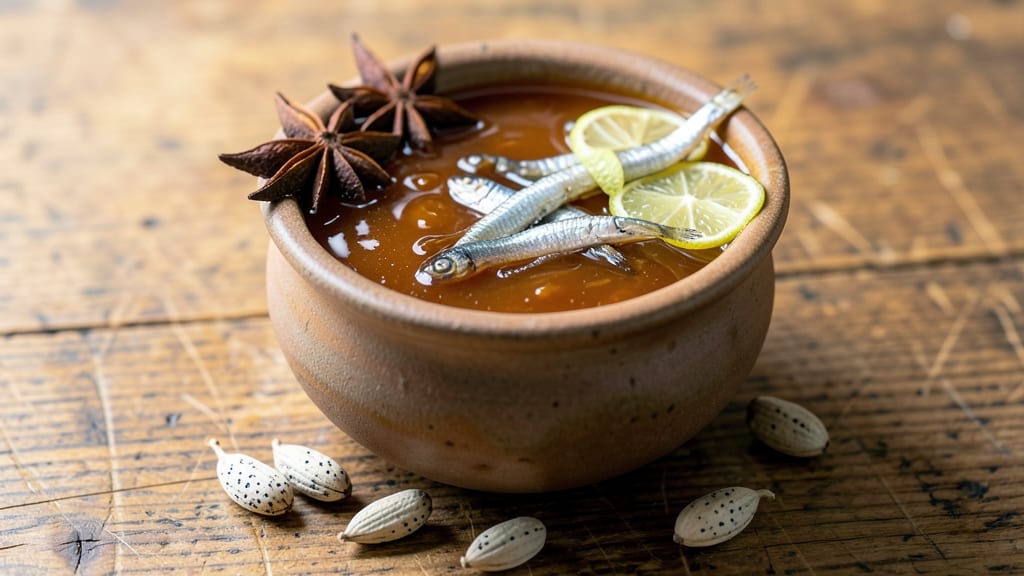
This authentic Vietnamese fish sauce recipe delivers the deep, salty-sweet umami that defines Southeast Asian cuisine. 💛 The traditional fermented version requires patience—small fish, salt, and water aged for months—but the flavor transformation is worth every moment.
What starts as a simple brine becomes a complex, aromatic condiment with layers of savory depth and subtle anise notes.
The key to authentic fish sauce lies in the fermentation process, where enzymes break down the fish and salt into concentrated umami. While commercial versions often use shortcuts, this recipe stays true to tradition, though I’ve included a simplified paste method for those who prefer immediate results.
The aging period—whether weeks or months—determines the sauce’s intensity, with longer fermentation yielding richer, more complex flavors.
Once complete, you’ll have a dark, syrupy sauce that’s essential for marinades, dipping sauces, and dressings. A single spoonful transforms simple dishes into restaurant-quality meals. The balance of salt, sweetness, and funky depth is what makes this sauce indispensable in Vietnamese cooking—and now, in your kitchen.
Storage is simple: keep it airtight in a cool, dark place, where it continues to develop flavor over time. Whether you’re making it for the first time or perfecting your technique, this is the sauce that will elevate every dish it touches.
Ingredients for authentic vietnamese fish sauce
Nine ingredients, months of patience, and a sauce that transforms everything it touches.
| Ingredient | Amount | Notes |
|---|---|---|
| Small Salted Anchovies 🐟 | 2 cups | Packed, whole, no salt added |
| Non-Chlorinated Water 💧 | 2 cups | Filtered or boiled-cooled |
| Diamond Crystal Kosher Salt 🧂 | 1 ½ cups | Fine grain preferred |
| Fresh Ginger Root 🧄 | ½ cup | Julienned, peeled |
| Star Anise Pods 🌿 | 4 whole | Lightly crushed |
| Cardamom Pods 🌿 | 2 whole | Lightly crushed |
| Cinnamon Sticks 🌿 | 2 pieces | Broken into 1-inch pieces |
| Brown Sugar 🍯 | ¼ cup | Light or dark |
The anchovies are non-negotiable—fresh, small, and salt-packed from Asian markets or specialty stores. Avoid canned varieties, which lack the delicate umami. For salt, Diamond Crystal kosher dissolves cleanly, but any fine grain works. Ginger needs to be freshly julienned—dried won’t cut it. Star anise and cardamom? Whole pods from Penzeys add that authentic depth. Skip pre-ground spices—they lose potency fast. If you can’t find whole spices, toast and grind them yourself for maximum flavor.
No star anise? Double the cinnamon for warmth, but you’ll miss the anise notes. Fresh ginger too spicy? Reduce to 0.25 cup and add 1 tbsp of sugar to balance. Short on anchovies? Use 1 cup shrimp shells instead, but ferment longer. The brown sugar can be swapped for white sugar or coconut sugar—just adjust to taste. For a quicker version, blend everything into a paste and age for 2-3 weeks instead of months. The water must be non-chlorinated—chlorine inhibits fermentation.
Ferment in a sterilized glass jar with an airlock or loose lid to prevent mold. Store in a cool, dark place—basements or pantries work best. Taste after 4 weeks; it’ll be strong but raw. Let it go 6-12 months for that classic, funky depth. Strain through a fine-mesh sieve before bottling. Keeps indefinitely in the fridge once opened—it just gets better with time. A little goes a long way: 1 tsp per dish is plenty.
Why You'll Love This Recipe
- Pantry-to-Pot Magic: I swear by this recipe because it uses what you already have—no fancy shopping trips. Just toss in those tiny salted anchovies, a splash of filtered water, and a pinch of kosher salt, then let the ginger and star anise work their alchemy. It’s the kind of thing I make when I’m too tired to order takeout but still crave that deep, umami punch.
- Umami Bomb: The moment those anchovies break down with the ginger and star anise? Chef’s kiss. That salty-sweet fermented heat isn’t just background flavor—it’s the star. Drizzle it over rice bowls, toss it in marinades, or sip it straight (yes, really) and you’ll understand why Vietnamese kitchens always have a jar on hand.
- Endless Uses: This sauce isn’t just for fancy dinners—it’s my go-to for lazy Sundays, quick stir-fries, or even a splash in homemade mayo. I keep a small bottle in the fridge for when I’m prepping meals for the week, and it turns even the simplest dishes into something special. (Pro tip: It’s ridiculously good on grilled shrimp.)
- Budget Game-Changer: A little goes a long way, and honestly? It’s cheaper than buying store-bought. Those anchovies cost pennies, and the spices last forever. Plus, once it’s fermented, I stretch one batch into weeks of meals—no waste, just flavor. My wallet and taste buds both win.
Step-by-step instructions for authentic Vietnamese fish sauce
Here's how to craft this aromatic fermented sauce with layers of umami and spice—just like in Vietnam.
🍳 Step 1: Prepare the Anchovy Base
Rinse the 2 cups small salted anchovies under cold water to remove excess salt, then drain thoroughly. In a clean, non-reactive stainless steel pot, combine the anchovies with the 2 cups non-chlorinated water and bring to a gentle simmer over medium-low heat. You want just enough heat to maintain a low bubble—no boiling, or you'll lose delicate flavors.
Simmer for 10-12 minutes until the anchovies completely dissolve and the liquid reduces slightly. The mixture should smell intensely fishy but sweet—this is your umami foundation. Strain through a fine-mesh sieve into a clean bowl, pressing gently on the solids to extract every last drop of flavor. Discard the anchovy solids.
👨🍳 Step 2: Build the Spice Infusion
In the same pot (don't rinse it—the fishy residue is flavor gold), add the 1.5 cups Diamond Crystal kosher salt and 0.25 cup brown sugar. Stir over low heat until the salt fully dissolves and the sugar caramelizes slightly—about 3-4 minutes. This salt-sugar brine will balance the fishiness and add depth.
While the brine heats, lightly crush the 4 whole star anise pods, 2 whole cardamom pods, and break the 2 pieces cinnamon sticks into 1-inch pieces. Add these to the pot along with the 0.5 cup julienned fresh ginger root. Bring the mixture to a gentle simmer and cook for 8-10 minutes until the spices release their aromatic oils—you'll smell that signature anise-cinnamon warmth.
⏰ Step 3: Combine and Ferment
Return the strained anchovy liquid to the pot and stir to combine with the spice mixture. Let the entire blend cool to room temperature—this prevents unwanted bacterial growth during fermentation. Once cool, transfer the mixture to a clean, sterilized glass jar with an airtight lid.
Seal the jar and let it ferment at room temperature for 7-10 days, opening the lid daily to release built-up gases. You're looking for a tangy, funky aroma to develop—this means fermentation is working. After 10 days, refrigerate to halt fermentation. The sauce will continue mellowing in the fridge for up to 3 months.
🥘 Step 4: Strain and Finish
After refrigeration, strain the sauce through a fine-mesh sieve into a clean bowl, pressing gently on the solids to extract all liquid. The strained sauce should be deep amber with visible spice particles—this is your finished product. Discard the solids or compost them.
Taste and adjust seasoning if needed—add a pinch more salt if it's too mild, or a splash of water if it's too thick. Store in a sterilized glass jar in the refrigerator for up to 6 months. Use this sauce sparingly—just 1 teaspoon can transform a dish with its complex umami-spice profile.
Pro Tips For Making Authentic Vietnamese Fish Sauce
- Simmer Slow and Low: After burning my first batch trying to rush it, I learned to keep the heat at a bare simmer—just enough to see tiny bubbles, not a rolling boil. Vietnamese fish sauce needs time to develop its depth, and high heat will cook off the delicate flavors before they even form.
- Rinse Anchovies Twice: Salted anchovies taste like seawater if you skip this step. Rinse them under cold water twice to remove excess salt, then pat them dry—this keeps the final product balanced and lets the ginger and star anise shine without fighting against a salty overpower.
- Crush Ginger Roughly: My grandmother swore by this, and she was right: chop the ginger into thick slabs (no need to mince) and crush it with the flat side of your knife. This releases more aromatic oils without turning the sauce bitter, and you’ll taste it in every drop.
- Strain Through Cheesecloth: I know, I know—it’s a pain to wash and wring out cheesecloth. But skipping it leaves behind fish bits that make the sauce look (and taste) homemade in the best way. If you’re lazy like me, use a fine-mesh strainer first, then a coffee filter for the final pass—it’s still better than nothing.
Best sauces and condiments for this dish
Nước Chấm Foundation
This fish sauce is the backbone of nước chấm, Vietnam’s iconic dipping sauce for pho and bun cha. Mix 1 tablespoon of your finished sauce with 1 tablespoon lime juice, 1 teaspoon fish sauce (yes, another layer!), 1 teaspoon sugar, and 1 clove minced garlic.
Thin with 2 tablespoons water and serve with fresh herbs like Thai basil and cilantro. 💛 The balance of funky fermentation and bright citrus is pure magic.
Marinade Magic
Use this sauce to marinade grilled shrimp or tofu for 30-60 minutes before cooking. Combine 2 tablespoons fish sauce, 1 tablespoon lime juice, 1 teaspoon brown sugar, and 1 clove minced garlic.
The umami depth caramelizes beautifully on the grill, creating a sticky, aromatic crust. I love this on lemongrass shrimp skewers—it’s a game-changer.
Glaze for Meats
Reduce ¼ cup fish sauce with 2 tablespoons honey and 1 tablespoon soy sauce over medium-high heat until syrupy (about 5 minutes). Brush this glaze on grilled pork chops or duck breast in the last 5 minutes of cooking.
The caramelized crust locks in juices while adding a smoky-sweet contrast to the rich meat. 🔥
Soup Enhancer
Add 1 teaspoon fish sauce to pho broth or tom yum soup in the final 5 minutes of simmering. The fermented funk complements the lemongrass and galangal, deepening the broth’s complexity.
For extra richness, stir in 1 teaspoon coconut milk after adding the sauce—it smooths the texture while keeping the umami intact.
Salad Dressing
Whisk 1 tablespoon fish sauce, 2 tablespoons rice vinegar, 1 teaspoon sesame oil, and 1 teaspoon honey for a bold dressing. Toss with shredded cabbage, carrots, and crispy shallots for a Vietnamese-inspired slaw.
The anise notes in the sauce add a subtle warmth that pairs perfectly with the crunch. 🌿
Fermented Depth Booster
For quick-pickled vegetables, mix 1 tablespoon fish sauce with 2 tablespoons rice vinegar, 1 teaspoon sugar, and 1 clove crushed garlic. Toss with thinly sliced daikon or cucumber—the funky fermentation cuts through the sweetness, creating a tangy, umami-packed condiment.
Store in the fridge for up to 1 week for maximum flavor development.
Nutrition facts
Frequently asked questions
Can I use canned anchovies instead of salt-packed ones?
No, canned anchovies won't work—they lack the delicate umami and salt balance needed for authentic fish sauce. Salt-packed anchovies from Asian markets contain the right enzymes for fermentation. If you absolutely must substitute, use 1 cup shrimp shells instead, but ferment for 2-3 extra weeks to achieve similar depth.
How do I know when fermentation is complete?
Look for a tangy, funky aroma (like sour pickles) and a slightly bubbly surface—this means fermentation is working. After 7-10 days at room temperature, the sauce should taste salty-sweet with a hint of funk. Move it to the fridge to halt fermentation; it’ll continue mellowing for up to 3 months.
What if mold grows during fermentation?
Discard it immediately—mold means contamination. To prevent this, use sterilized glass jars, keep the lid loose (not airtight), and store in a cool, dark place (like a pantry). If you see any fuzzy spots, toss the batch and start fresh with a clean jar.
Can I speed up fermentation with heat?
Never heat the jar—high temperatures kill beneficial bacteria and encourage mold. The fermentation process relies on natural enzymes at room temperature. For a quicker (but less authentic) version, blend everything into a paste and age for 2-3 weeks in the fridge instead of months.
How much fish sauce should I use in recipes?
Start with 1 teaspoon per dish—this sauce is potent! For soups, use 1 tsp per bowl of broth; for marinades, 2 tbsp per pound of protein; and for dressings, 1 tbsp per 2 tbsp vinegar**. Taste as you go; you can always add more, but you can’t take it out!