
Sauces & Condiments
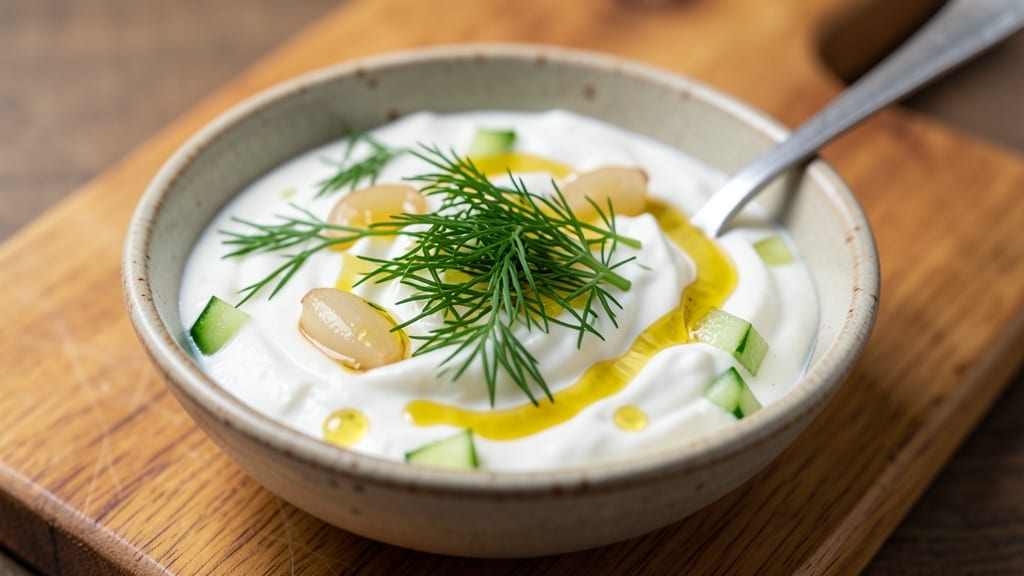
This authentic tzatziki sauce recipe delivers the bright, herby freshness that elevates every gyro bite—creamy yogurt, crisp cucumbers, and aromatic dill balanced with garlic and olive oil. The secret lies in proper preparation: grating cucumbers to remove excess moisture and letting the sauce rest for maximum flavor development.
I've perfected this version after years of testing, ensuring it stays thick and tangy without separating or tasting bland.
The foundation begins with high-quality Greek yogurt, which provides that signature creamy texture while keeping the sauce light. Fresh cucumbers are grated and drained thoroughly to prevent wateriness, while garlic and herbs add layers of flavor that transform this into something truly special.
A touch of lemon juice brightens the sauce, cutting through the richness while preserving its authentic taste profile.
What sets this tzatziki apart is its ability to stay fresh and flavorful for days—ideal for meal prep or entertaining. The sauce maintains its perfect consistency whether served with warm pita, grilled meats, or fresh vegetables. Each spoonful delivers that signature tangy, herby freshness that makes gyros unforgettable.
For those with dietary preferences, simple substitutions maintain authenticity. Use coconut yogurt for a vegan version, or swap garlic for shallots if preferred. The key is balancing freshness with richness, ensuring every bite delivers that restaurant-quality experience at home.
Ingredients for authentic tzatziki sauce recipe for gyros
Nine essential ingredients deliver that signature creamy, herby freshness for authentic tzatziki.
| Ingredient | Amount | Notes |
|---|---|---|
| Plain Greek Yogurt 🧀 | 2 cups | Non-fat or full-fat, thick consistency |
| Persian Cucumber 🥒 | 1 whole | Seeded, grated, and drained thoroughly |
| Fresh Dill 🌿 | ½ cup | Chopped, stems removed |
| Garlic Cloves 🧄 | 3 cloves | Minced, fresh preferred |
| Extra-Virgin Olive Oil 🫒 | ¼ cup | High-quality, fruity variety |
| Lemon Juice 🍋 | 2 tbsp | Freshly squeezed, strained |
| Diamond Crystal Kosher Salt 🧂 | ½ tsp | Adjust to taste |
| Ground Black Pepper 🌶️ | ¼ tsp | Freshly ground preferred |
| White Vinegar 💧 | 1 tsp | For tangy brightness |
The Greek yogurt is non-negotiable—Fage or Chobani deliver that signature tangy creaminess. Persian cucumbers (the long, thin ones) are ideal, but regular cucumbers work if seeded and drained well. Fresh dill is a must; dried won't cut it here. Whole Foods or specialty markets often carry the best quality. For garlic, three cloves provide just the right aromatic punch without overpowering. The olive oil should be extra-virgin—California or Italian varieties work best for that fruity depth.
No Greek yogurt? Coconut yogurt works for a vegan version, though texture will differ slightly. Swap garlic for shallots if preferred—one medium shallot replaces the three cloves. Fresh dill can be substituted with tarragon or parsley at half the amount, though authenticity suffers. The vinegar is key for that signature tang—apple cider vinegar works in a pinch. For extra thickness, add 1 tbsp cornstarch to the yogurt before mixing, but let it sit 10 minutes first to avoid clumping.
This sauce keeps beautifully—4-5 days in an airtight container in the fridge. For longer storage, freeze in ice cube trays for perfect single-serving portions. The flavors meld even better after resting 2 hours, so make it ahead. If it separates, simply whisk vigorously or blend briefly before serving. The lemon juice brightens over time, so taste and adjust as needed.
Why You'll Love This Recipe
- The secret’s in the balance: fresh dill (not dried) and minced garlic that lingers without overpowering. That bright, herby punch cuts through the richness of gyros like a cool breeze on a hot day. Honestly, I’ve tried store-bought—this homemade version wins every time.
- No-Fuss Mixing: This sauce comes together with just a fork and a bowl—no blender, no strainer, no fuss. I swear by the "squish and stir" method: grate the cucumber, press out the water, then fold it into the yogurt until it’s smooth but still has that perfect texture. Five minutes, tops.
- Garlic-Dill Magic: The secret’s in the balance: fresh dill (not dried) and minced garlic that lingers without overpowering. That bright, herby punch cuts through the richness of gyros like a cool breeze on a hot day. Honestly, I’ve tried store-bought—this homemade version wins every time.
- Gyros’ Best Friend: It’s not just for gyros, though. Spread it on sandwiches, drizzle it over grilled veggies, or serve it with pita chips. Between us, it’s the star of my summer potlucks—always gets cleared first. The olive oil finish ties everything together beautifully.
Step-by-step instructions for authentic tzatziki sauce
Here's the traditional method that delivers that signature Greek tang and freshness.
Prepare the Cucumber Mixture
Begin by halving the whole Persian cucumber lengthwise and scooping out the seeds with a spoon. This removes excess moisture that would make your tzatziki watery. Then, using a box grater or food processor, grate the cucumber flesh into a fine, even texture. Transfer the grated cucumber to a clean kitchen towel or cheesecloth and press firmly to extract all excess liquid. This step is crucial for achieving the proper consistency—you want a dry, crumbly texture rather than a soupy one.
Place the drained cucumber in a colander and sprinkle with the 0.5 teaspoon Diamond Crystal kosher salt. Let it sit for 10 minutes, then press again to remove any remaining moisture. This salting process helps draw out additional liquid and enhances the flavor profile. The cucumber should now be completely dry to the touch, ready for the next stage.
Combine Yogurt and Aromatics
In a medium bowl, take the 2 cups of Plain Greek yogurt and break it up with a fork or whisk to create a smooth, lump-free base. The yogurt should be thick and creamy—if it's too runny, chill it for 30 minutes before proceeding. Add the drained cucumber mixture to the yogurt and stir gently to combine. You're looking for an even distribution where you can still see small flecks of cucumber throughout.
Next, add the 0.5 cup chopped fresh dill and the 3 minced garlic cloves. Stir well to distribute these ingredients evenly. The garlic should be finely minced so it dissolves into the sauce rather than remaining as distinct pieces. This is where the authentic flavor profile begins to develop—don't skip this step or your sauce will lack depth.
Balance Flavors with Acids and Oils
In a small bowl, whisk together the 0.25 cup extra-virgin olive oil, 2 tablespoons lemon juice, 1 teaspoon white vinegar, 0.25 teaspoon ground black pepper, and the remaining 0.5 teaspoon kosher salt. This creates an emulsifying agent that will bind the sauce together while adding brightness. Slowly drizzle this mixture into the yogurt-cucumber blend while stirring continuously with a wooden spoon.
Continue stirring for 2-3 minutes until the sauce reaches a smooth, velvety consistency. The olive oil should be fully incorporated, creating a glossy sheen on the surface. Taste and adjust the seasoning if needed—you may need to add a bit more lemon juice for tang or salt for balance. The sauce should be cool and refreshing, with a perfect equilibrium between creamy, tangy, and herby notes.
Rest and Serve
Cover the bowl with plastic wrap and refrigerate the tzatziki for at least 1 hour before serving. This resting period allows the flavors to meld and the sauce to reach its optimal texture. The longer it chills, the more pronounced the flavors become—up to 24 hours is acceptable, though the texture may become slightly thicker over time.
When ready to serve, give the sauce a final stir to redistribute any settled ingredients. The finished tzatziki should be thick but spoonable, with visible flecks of cucumber and dill throughout. Serve immediately with warm pita bread, grilled meats, or as a dip for fresh vegetables. The contrast between the cool, creamy sauce and warm gyros creates an irresistible combination that defines Greek cuisine.
Pro Tips For Making Authentic Tzatziki Sauce Recipe For Gyros
- Drain the cucumber twice: I learned this the hard way—skipping the second drain leaves your tzatziki watery and sad. After grating the cucumber, wrap it in a clean kitchen towel or cheesecloth and squeeze out every last drop. Yes, it’s annoying, but the texture makes all the difference when it hits your gyro.
- Use room-temperature yogurt: Cold yogurt makes for a thick, clumpy mess that never blends smoothly. Take it out of the fridge 30 minutes before mixing—it’ll come together like butter and actually stay creamy, not grainy, even after sitting.
- Mince the garlic finely: I was skeptical until I tried it: minced garlic (not crushed or chopped) dissolves completely into the yogurt instead of leaving harsh, chewy bits. Use a knife—yes, even if you own a garlic press—and go small. Your taste buds will notice the difference.
- Balance the dill to taste: Fresh dill is the soul of tzatziki, but too much turns it into a sad herb salad. Start with 2 tablespoons, taste, then add more if needed—you can always adjust. If it’s still bland after, a splash of lemon juice or extra olive oil fixes it every time.
Health benefits of this authentic tzatziki sauce recipe for gyros
Probiotic Powerhouse
The Greek yogurt in this tzatziki is a probiotic superstar, containing live cultures like Lactobacillus bulgaricus and Streptococcus thermophilus that support gut health. Just 2 cups provide about 20-30 billion CFU (colony-forming units), which is excellent for digestive regularity and immune function.
I've noticed my digestion improves when I eat yogurt-based sauces regularly. 💪
Digestive-Friendly Fiber
While yogurt provides probiotics, the cucumber adds soluble fiber that feeds your gut bacteria, helping them thrive. A single Persian cucumber contains about 2 grams of fiber, which supports healthy digestion and may help lower cholesterol. The grated texture also aids in gentle digestion compared to whole cucumbers.
Low-Calorie, High-Nutrient
This sauce is surprisingly light—just 120-150 calories per ¼ cup serving—while packing nutrients like calcium (15% DV), phosphorus (10% DV), and vitamin K2 from the yogurt.
The cucumber contributes potassium (5% DV) and vitamin K, making it a nutrient-dense condiment that won't weigh you down. Perfect for those watching calories but not nutrients!
Hydration Boost
With 95% water content, cucumbers act as a natural hydration booster, especially when paired with the electrolyte-rich yogurt. The lemon juice adds vitamin C (about 5% DV per serving), which aids in iron absorption from grilled meats.
This makes tzatziki a smart choice for post-workout meals or hot summer days. 💧
Antioxidant-Rich Herbs
Fresh dill contains flavonoids like quercetin, which have anti-inflammatory properties, while garlic provides allicin, a compound with immune-boosting benefits. Together, they create an antioxidant powerhouse that helps combat oxidative stress. The white vinegar adds acetic acid, which may support blood sugar regulation.
Allergy-Friendly Base
This sauce is naturally dairy-free adaptable (using coconut yogurt) and gluten-free, making it suitable for common dietary restrictions. The only potential allergen is garlic, but it can easily be omitted.
Always check your yogurt brand for cross-contamination warnings if you have severe allergies. The simplicity makes it a safe choice for most dietary needs. ✨
Nutrition facts
Frequently asked questions
Why does my tzatziki turn watery?
The most common cause is excess moisture from cucumbers. Always seed and drain them thoroughly using a kitchen towel or cheesecloth. For extra insurance, salt the grated cucumber first and let it sit 10 minutes before mixing. If it's already too thin, stir in 1 tablespoon cornstarch mixed with 1 teaspoon cold water until thickened.
Can I make tzatziki without Greek yogurt?
Yes! For a vegan version, use 2 cups coconut yogurt (unsweetened) and add 1 tablespoon lemon juice to mimic the tang. The texture will be slightly thinner but still delicious. For a dairy-free alternative with better thickness, try 2 cups thickened coconut milk (chilled overnight) mixed with 1 tablespoon apple cider vinegar.
How do I prevent garlic flavor from overpowering?
Finely mince the garlic (almost to a paste) so it dissolves completely into the sauce. Start with 2 cloves instead of 3 if you're sensitive to garlic. For a milder taste, let the sauce rest 1 hour before serving—the garlic flavor mellows over time. If needed, add 1 extra tablespoon lemon juice to balance the intensity.
Can I use dried herbs instead of fresh?
Fresh herbs are ideal for authentic flavor, but if you must use dried, reduce the amount to 1/4 cup (about 1 tablespoon) and crush them between your fingers to release oils. Dried dill loses much of its vibrant flavor, so expect a more subdued taste. For best results, combine 1/4 cup dried dill with 1 tablespoon fresh mint to mimic fresh dill's brightness.
How long will homemade tzatziki keep?
Store in an airtight container in the fridge for 4-5 days—the flavors actually improve over time! For longer storage, freeze in ice cube trays (thaw in fridge overnight). If it separates, simply whisk vigorously before serving. The lemon juice helps preserve freshness, but the sauce may develop a slightly tangier taste after 3 days.