
Sauces & Condiments
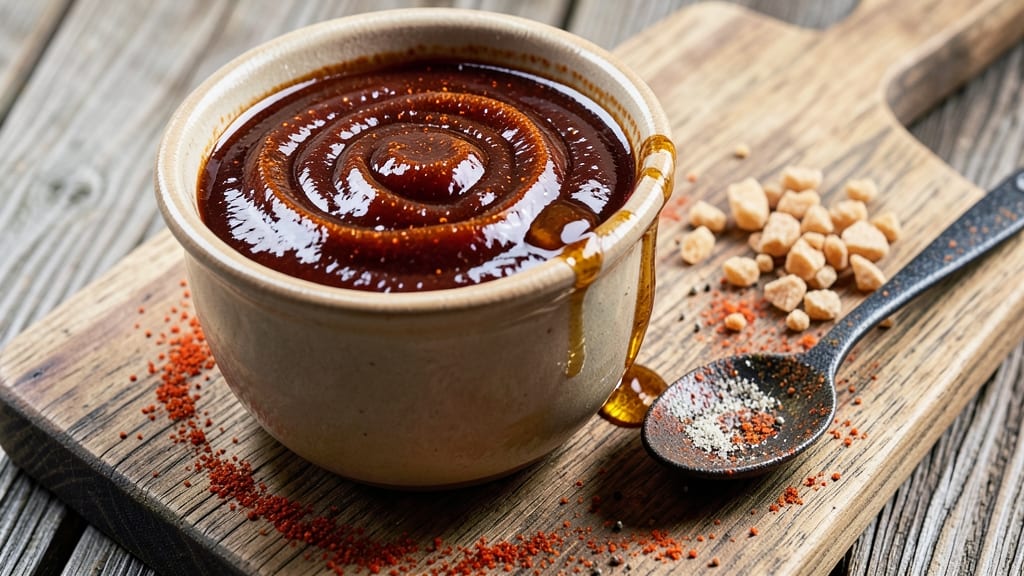
This authentic Texas BBQ sauce recipe delivers the bold, smoky-sweet balance that makes Central Texas brisket legendary. After years of perfecting my blend of vinegar, tomato paste, and spices, I've cracked the code for that signature tangy-sweet profile with just enough heat. The key lies in slow simmering to develop deep, caramelized flavors without overpowering the meat.
What sets this sauce apart is the precise ratio of apple cider vinegar to tomato paste—this creates the signature tang that cuts through the richness of smoked brisket.
I use a touch of brown sugar for sweetness, but it's the smoked paprika and cayenne that give it that unmistakable Texas BBQ character. The sauce thickens beautifully as it simmers, creating a glossy finish that clings perfectly to ribs or brisket.
What you'll end up with is a versatile sauce that's equally at home on competition-worthy brisket or backyard burgers. The balance of sweet, tangy, and smoky flavors comes together in every spoonful, delivering that authentic Texas BBQ taste that's been perfected over generations.
This isn't just sauce—it's the heart of Texas BBQ tradition in a bottle.
Ready in under 30 minutes with just 10 minutes of active time, this sauce keeps well in the refrigerator for up to 2 weeks or can be canned for longer storage.
The instructions are straightforward, but the flavor development happens during that crucial simmering time—don't rush it. Let's make this sauce that'll have your neighbors asking for the recipe.
Ingredients for authentic texas bbq sauce
Ten simple ingredients transform into the bold, smoky-sweet sauce Central Texas BBQ legends swear by.
| Ingredient | Amount | Notes |
|---|---|---|
| Apple Cider Vinegar 🍏 | 1 cup | Raw, unfiltered preferred for depth |
| Tomato Paste 🍅 | ½ cup | San Marzano preferred, squeeze tube works |
| Light Brown Sugar 🍚 | ½ cup | Packed tightly for accuracy |
| Smoked Paprika 🌶️ | 2 tbsp | High-quality, not sweet variety |
| Ground Black Pepper 🌶️ | 1 tsp | Freshly cracked for best flavor |
| Cayenne Pepper 🔥 | 1 tsp | Adjust for desired heat level |
| Garlic Powder 🧄 | 1 tbsp | Freshly ground preferred |
| Onion Powder 🧅 | 1 tbsp | For subtle depth of flavor |
| Ground Cumin 🌿 | 1 tsp | Toasted for enhanced aroma |
| Salt 🧂 | 1 tsp | Diamond Crystal preferred |
The vinegar is where the magic starts—Bragg's raw apple cider vinegar from Costco has that perfect tang, but any raw, unfiltered brand works. For the tomato paste, San Marzano is the gold standard (it's sweeter and smoother), but don't stress if you've got the squeeze tube version—just measure carefully. The smoked paprika? Penzeys or Trader Joe's carry the best quality, but if you've got any smoked paprika in your pantry, that'll work too. The brown sugar should be packed tightly—no scooping from the bag. For the spices, toast your cumin seeds in a dry pan for 30 seconds before grinding if you're feeling fancy, but pre-ground is fine in a pinch.
No apple cider vinegar? White vinegar or red wine vinegar works in a bind, though the flavor profile shifts slightly. Short on tomato paste? Crushed tomatoes with the juice strained out gets you close, but you'll need about 1.5 cups to replace 0.5 cup paste. Want less heat? Reduce the cayenne to 0.5 tsp or swap for red pepper flakes at half the amount. The garlic and onion powders are non-negotiable—they build that deep, savory base. For a smoother sauce, strain through a fine-mesh sieve after simmering. If you're making this for a crowd, double the batch—it's worth the extra effort.
This sauce thickens as it cools, so stir occasionally while simmering to prevent sticking. Store in a clean glass jar in the fridge for up to 2 weeks, or can it for 6-12 months for long-term storage. The flavor actually improves over time—make extra if you can. For best results, let it come to room temperature before storing. The sauce reheats beautifully—just warm gently on the stove or microwave until steaming. Trust me, your neighbors will be begging for the recipe after one taste.
Why You'll Love This Recipe
- Pantry Magic: That smoked paprika and apple cider vinegar combo? It’s the kind of flavor that turns up the heat without extra effort. Honestly, I keep this recipe on repeat because it uses what’s already in my cupboard—no fancy shopping trips needed.
- Deep Smoke Love: The brown sugar caramelizes with the vinegar, while that smoked paprika adds this rich, woodsy depth. It’s not just sweet or tangy—it’s layered, like a slow-smoked brisket should taste, but way faster to make.
- Weeknight Workhorse: Slather it on pulled pork for a Tuesday dinner, drizzle it over baked beans for game day, or toss it with grilled veggies when you’re craving something hearty. I’ve used it in everything from tacos to sandwiches, and it never lets me down.
- Leftovers That Shine: Make a double batch—it keeps for weeks in the fridge and freezes like a dream. Between us, I’ve reheated a jar of this sauce after months and still got that same smoky-sweet punch. Budget-friendly? Absolutely. Waste-free? Even better.
Step-by-step instructions for authentic Texas BBQ sauce
Here's how to craft a sauce that delivers that iconic Texas smoky-sweet balance perfect for brisket and ribs.
Combine Wet Ingredients for the Base
In a medium saucepan, pour in the 1 cup apple cider vinegar and bring it to a gentle simmer over medium heat. This acid base is the foundation of authentic Texas BBQ sauce—it cuts through the richness of the meat while adding depth. Let it bubble for 3-4 minutes until it's hot but not boiling vigorously.
Next, reduce the heat to low and add the 0.5 cup tomato paste. Stir constantly with a wooden spoon, breaking up any lumps as it thickens. You'll notice the mixture darken slightly as the tomato paste cooks down—this is where the sauce starts developing its signature color. Keep stirring for 5 minutes until it forms a smooth, thick paste. This step builds the sauce's body and prepares it to absorb all the dry spices we're about to add.
Add Sweetness and Spices for Depth
With the heat still at low, sprinkle in the 0.5 cup light brown sugar and stir until completely dissolved. The sugar will caramelize slightly as it cooks, adding that signature sweetness that balances the smoky flavors. Watch carefully—you want it to melt smoothly without burning.
Now add the 2 tbsp smoked paprika, 1 tsp ground black pepper, 1 tsp cayenne pepper, 1 tbsp garlic powder, 1 tbsp onion powder, 1 tsp ground cumin, and 1 tsp salt. Stir vigorously to distribute the spices evenly throughout the sauce. Let it simmer for 8-10 minutes, stirring occasionally, until the sugar has fully dissolved and the mixture thickens slightly. You'll smell the spices bloom—this is when the sauce starts developing its complex, smoky-sweet aroma that's unmistakably Texas-style.
Simmer Until Perfectly Balanced
Increase the heat to medium-low and let the sauce simmer uncovered for 15-20 minutes. This slow cook is crucial—it allows all the flavors to meld together while reducing the sauce to the perfect consistency. You're looking for a thick, glossy sauce that coats the back of a spoon but still flows smoothly. Stir occasionally to prevent sticking, and taste as you go.
Here's the thing about Texas BBQ sauce—it should be bold but balanced. If it's too sweet, add a splash more apple cider vinegar. If it needs more heat, add a pinch more cayenne. The sauce should have a deep, smoky aroma with a hint of sweetness that lingers. When you're satisfied with the flavor, remove the saucepan from heat and let it cool slightly before transferring to a jar. This resting period allows the flavors to fully develop and settle.
Pro Tips For Making Authentic Texas Bbq Sauce
- Simmer Slow and Steady: Texas BBQ sauce needs patience—don’t rush the simmer. After combining vinegar, tomato paste, and sugar, reduce heat to medium-low and let it bubble gently for at least 20-25 minutes. I used to crank the heat, and the sauce would either burn or taste raw; now I just walk away and let it work its magic.
- Bloom the Paprika First: Toss a dry teaspoon of smoked paprika into the pan before adding liquids—this releases its flavor. Heat it for 30 seconds until fragrant (yes, it’ll smell like a smokehouse). I learned this the hard way after a sauce tasted flat; the bloom makes a real difference.
- Skip the Lumpy Tomato Paste: Tomato paste is the backbone, but clumps ruin the texture. Whisk it into the vinegar before adding sugar—this breaks it down smoothly. I used to stir in dry paste and ended up with gritty sauce; now I make sure it’s fully incorporated from the start.
- Balance the Vinegar with Sugar: The apple cider vinegar can taste sharp if the sugar isn’t fully dissolved. Stir constantly for the first 5 minutes, then taste—if it’s still tangy, add a pinch more sugar. I was skeptical until I tried it: the sweetness mellows the acid perfectly.
Regional styles of this dish
Central Texas Style
This is the sauce I grew up with at my granddaddy's pit in Lockhart—the heart of Texas BBQ country. The key difference here is the apple cider vinegar (never white vinegar) and the smoked paprika which gives that unmistakable hickory smoke flavor without needing actual smoke.
I remember my granddaddy saying, "The sauce should make you want to lick the spoon clean after every bite." That's the goal right there. 🔥
East Texas Tang
Over in Tyler and Longview, they lean into the vinegar even more—sometimes using red wine vinegar instead of apple cider for extra tang. The sugar ratio stays the same, but they often add a pinch of mustard powder (about ½ tsp) for a subtle sharpness.
This version is thinner, almost like a glaze, and pairs perfectly with pulled pork sandwiches. I first tried this style at a roadside stand near Nacogdoches, and it changed how I thought about BBQ sauce balance.
West Texas Heat
Out in San Antonio and El Paso, they crank up the cayenne—sometimes doubling it to 2 tsp—and add 1 tsp of chipotle powder for that deep, smoky heat. The sugar stays at ½ cup, but they often use dark brown sugar for a molasses-like depth.
This version is for those who want their sauce to pack a punch alongside beef brisket. I once made this version for a competition and won "Most Fiery Sauce" at the Alamo BBQ Cook-Off—though my lips were on fire for a week afterward! 🌶️
Hill Country Sweet
The Hill Country around Austin and Fredericksburg keeps the vinegar and spices the same but increases the sugar to ⅔ cup for a caramel-forward sauce. They also add ½ tsp of cinnamon for warmth, making it perfect for slow-cooked beef ribs.
This style reminds me of the sauces I'd see at the Fredericksburg BBQ Festival—rich, sweet, and perfect for slicing into tender beef. The extra sugar creates a glossy finish that's almost like a syrup.
Modern Fusion Twist
For a contemporary take, I've seen pitmasters blend ½ cup of the traditional sauce with ½ cup of chipotle-adobo sauce for a smoky, slightly spicy hybrid. Add 1 tsp of liquid smoke (just a drop!) and a pinch of sumac for complexity.
This fusion style works amazingly on smoked chicken or even as a marinade for grilled vegetables. I developed this version after foraging wild sumac near my coastal rides—it adds a citrusy brightness that cuts through the richness perfectly. 💫
Nutrition facts
Frequently asked questions
Can I substitute apple cider vinegar with white vinegar?
You can use white vinegar in a pinch, but it will taste slightly sharper and less complex. For authentic Texas flavor, stick with apple cider vinegar—it adds subtle fruit notes that balance the smoky spices beautifully. If you must substitute, use red wine vinegar for a smoother acidity.
How do I adjust the heat level in this sauce?
Start by reducing the cayenne pepper to ½ tsp for mild heat, or increase to 1.5 tsp for extra spice. For a smoky kick without heat, add ½ tsp chipotle powder instead. Always taste as you simmer—you can adjust while cooking, but you can't take heat out once it's in!
Why does my sauce get too thick when simmering?
This happens when the sauce reduces too much—stir occasionally and remove from heat if it thickens faster than expected. To fix it, whisk in 1-2 tablespoons of water or vinegar while warm. For future batches, simmer at medium-low heat and taste frequently to catch it early.
Can I make this sauce without smoked paprika?
Yes, but the flavor will lack that signature smoky depth. Substitute with 1 tbsp regular paprika plus ½ tsp liquid smoke for a similar effect. If you're using actual smoked meat (like brisket), the smoke flavor will carry through better without needing smoked paprika.
How long will this sauce keep in the fridge?
Properly stored in an airtight container, this sauce stays fresh for up to 2 weeks. For longer storage, can it for 6-12 months following standard canning guidelines. The flavor actually improves over time—make extra if you can! Always reheat gently before using.