
Sauces & Condiments
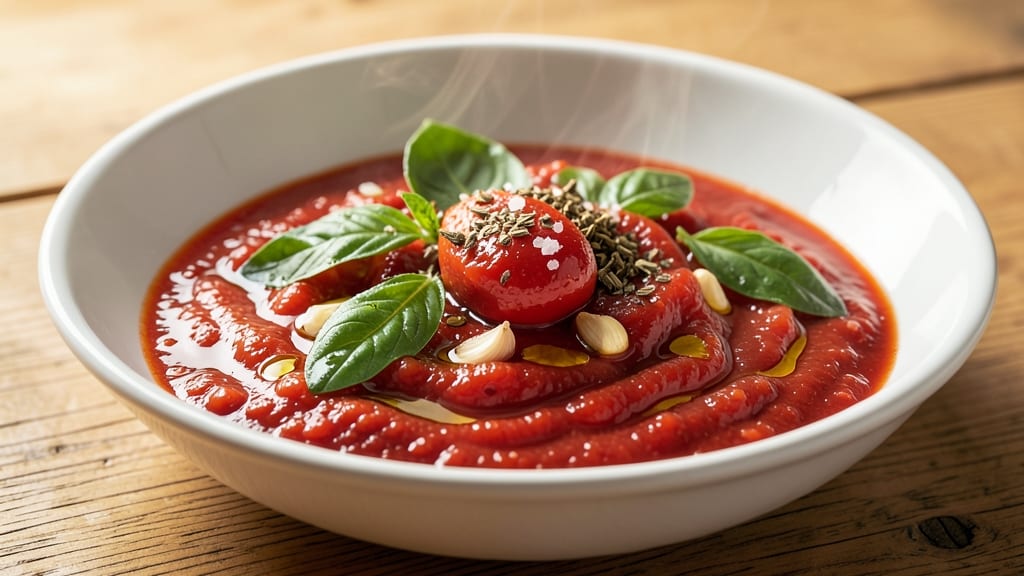
This authentic Sicilian tomato sauce transforms simple ingredients into a deeply flavorful, slow-simmered masterpiece that captures the heart of Italy's sun-drenched kitchens. The secret lies in quality—San Marzano tomatoes, extra-virgin olive oil, and a gentle simmer that develops complex flavors without overpowering them.
Unlike commercial sauces, this recipe preserves the natural sweetness and acidity of ripe tomatoes, building depth through time rather than sugar or artificial enhancers.
The process is straightforward but requires patience: crushed tomatoes, garlic, and olive oil cook low and slow until the flavors meld into a velvety, aromatic sauce with just the right balance of chunkiness and smoothness.
Fresh basil added at the end delivers that signature Sicilian brightness, while a touch of oregano grounds the sauce in tradition. This isn't just a sauce—it's a foundation for pasta, grilled fish, or crusty bread that carries the essence of Sicilian cooking.
What makes this sauce truly authentic is its restraint—no added sugar, no heavy seasoning, just the natural sweetness of tomatoes and the depth of olive oil. The result is a sauce that's rich yet light, vibrant yet sophisticated, perfect for those who appreciate the subtle art of Italian cuisine.
Once you taste the difference, store-bought versions will never satisfy again.
With minimal ingredients and a single pot, this sauce is both approachable and impressive, ideal for weeknight dinners or special occasions. The best part? It tastes even better the next day as the flavors continue to develop. Let's create something that tastes like a slice of Sicily in every spoonful.
Ingredients for authentic sicilian tomato sauce
Quality ingredients transform into a velvety Sicilian tomato sauce with depth and brightness.
| Ingredient | Amount | Notes |
|---|---|---|
| San Marzano Crushed Tomatoes 🍅 | 28 oz | Canned, whole tomatoes preferred |
| Extra-Virgin Olive Oil 🫒 | ½ cup | High-quality, fruity variety |
| Garlic Cloves 🧄 | 4 cloves | Fresh, peeled, lightly crushed |
| Fresh Basil Leaves 🌿 | ¼ cup | Packed, stems removed |
| Dried Oregano 🍃 | 1 tsp | Italian or Mediterranean variety |
| Salt 🧂 | 1 ½ tsp | Diamond Crystal kosher salt |
| Black Pepper 🌶️ | ½ tsp | Freshly cracked preferred |
| Red Wine Vinegar 🍷 | 1 tbsp | For brightness, optional |
The foundation begins with San Marzano tomatoes—their natural sweetness and low acidity are non-negotiable for authentic flavor. Whole, crushed tomatoes from a can preserve texture better than pre-crushed; avoid brands with added salt or preservatives. For olive oil, Calabrian or Sicilian varieties elevate the sauce, though any extra-virgin with fruity notes works. Garlic should be fresh, never powdered—its aroma develops beautifully during the slow simmer. Penzeys Spices or local Italian markets are ideal for oregano, but the dried kind from your pantry suffices if labeled Italian or Mediterranean.
No San Marzano tomatoes? High-quality whole peeled tomatoes (like Muir Glen) work in a pinch, but avoid sauces with added sugar or salt. Substitute red wine vinegar with lemon juice at half the amount for brightness, though the acidity won't be identical. Fresh basil is essential for that signature Sicilian zing—dried basil at one-third the amount lacks the aromatic punch, but it's better than nothing. For a deeper flavor, toast the garlic cloves lightly in olive oil before adding them to the sauce. The oregano can be omitted entirely if you prefer a more modern interpretation, but it grounds the sauce in tradition.
This sauce develops best over time—reheat gently on low heat to preserve texture. Store in an airtight container in the fridge for up to 5 days, or freeze for 3 months in ice cube trays for single-serving portions. The basil should be added fresh at the end, just before serving, to maintain its vibrant aroma. For a restaurant-quality touch, finish with a drizzle of high-quality olive oil and a sprinkle of flaky sea salt.
Why You'll Love This Recipe
- I’ll be real: my old tomato sauce recipe was a disaster—burnt, watery, or both. This one? Just crush the tomatoes, simmer, and let the olive oil work its magic. Twenty minutes max, and you’ve got a sauce so rich it’ll make you forget takeout exists. (Yes, even on a Tuesday night.)
- Sunshine in a Jar: I swear, the moment those San Marzano tomatoes hit the pan with olive oil, the kitchen smells like summer in Sicily. No fancy techniques—just low heat, a little patience, and the garlic softening into golden threads. That’s it. The kind of sauce that makes you want to slow down and savor every step.
- No-Waste Magic: Between us, this sauce is my pantry’s secret weapon. Use it tonight for pasta, tomorrow on grilled chicken, and the next day in a frittata—no extra shopping needed. The basil and oregano keep it bright, so it never tastes stale, even after three days in the fridge. Honestly, I’ve lost count of how many meals it’s saved me.
- Weeknight Alchemy: I’ll be real: my old tomato sauce recipe was a disaster—burnt, watery, or both. This one? Just crush the tomatoes, simmer, and let the olive oil work its magic. Twenty minutes max, and you’ve got a sauce so rich it’ll make you forget takeout exists. (Yes, even on a Tuesday night.)
Step-by-step instructions for authentic Sicilian tomato sauce
Master this slow-cooked foundation of Sicilian cuisine—where simple ingredients transform into rich, aromatic sauce.
Bloom the Aromatics in Olive Oil
Heat the 0.5 cup extra-virgin olive oil in a heavy-bottomed saucepan over medium-low heat. Add the 4 lightly crushed garlic cloves and 1 teaspoon dried oregano, stirring constantly for 2-3 minutes until the garlic releases its fragrance but doesn't brown. This gentle cooking prevents bitterness while building flavor depth.
Watch for the oil to shimmer—this indicates proper heat control. If it darkens too quickly, reduce heat immediately. The oregano should dissolve completely, infusing the oil with its earthy notes. This aromatic base is the soul of authentic Sicilian sauce, so don't rush this step.
Incorporate the Tomatoes and Season
Pour in the 28 oz San Marzano crushed tomatoes, stirring to combine with the oil. Add the 1.5 teaspoons salt and 0.5 teaspoon black pepper, then bring to a gentle simmer over medium heat. The sauce should bubble softly—never a rolling boil, as this would break down the tomato texture.
Here's the thing—San Marzano tomatoes are naturally sweet and low-acid, so we're not adding lemon or extra salt. Let the tomatoes' natural sweetness shine while the salt enhances their flavor without overpowering. Stir occasionally to prevent sticking, but avoid aggressive mixing that could create foam.
Slow-Simmer for Deep Flavor Development
Reduce heat to low and let the sauce simmer uncovered for 45-60 minutes, stirring every 10-15 minutes. You're looking for a sauce that thickens slightly but remains silky, with flavors melding into a cohesive whole. The sauce should reduce by about 25%, intensifying its concentration.
This long, gentle cooking is crucial—it allows the tomatoes' natural sugars to caramelize and develop complex flavors. The sauce should coat the back of a spoon with a velvety texture. If it thickens too much, add 1-2 tablespoons water to maintain balance. Resist the urge to rush; patience is what makes this sauce authentic.
Finish with Basil and Vinegar
Remove the sauce from heat and stir in the 0.25 cup fresh basil leaves and 1 tablespoon red wine vinegar. The basil should wilt slightly, releasing its bright, herbal notes. The vinegar adds a subtle acidity that brightens the sauce without overpowering its natural sweetness. Let the sauce steep off heat for 5 minutes to fully absorb these final flavors.
Taste and adjust seasoning if needed—this is where you fine-tune the balance. The sauce should be rich but not overly salty, sweet but not cloying. The basil should be detectable but not dominant. For best results, serve immediately while the basil's freshness is at its peak, but it will keep well in the refrigerator for 5-7 days.
Pro Tips For Making Authentic Sicilian Tomato Sauce
- Sweat the Garlic Slowly: I learned this the hard way—crispy garlic burns fast and turns bitter. Instead of frying it hard, add the minced cloves to the olive oil over medium-low and let them cook for 3-4 minutes until just golden, not brown. This keeps the flavor rich without bitterness, which is non-negotiable in Sicilian sauce.
- Salt the Tomatoes Early: Add a pinch of salt (about ½ teaspoon) to the crushed San Marzano tomatoes as soon as they hit the pot. This draws out excess water and intensifies the flavor—no need to wait for the full simmer. (Yes, even if you’re impatient like me.)
- Skip the Boil, Simmer Gently: After adding the tomatoes, reduce heat to low and let the sauce bubble softly—never a rolling boil. A hard boil breaks down the texture and makes the sauce watery. Stir occasionally, and if it thickens too fast, add a splash of water. Patience here makes all the difference.
- Toast the Oregano First: Before adding dried oregano to the sauce, lightly toast it in a dry pan for 10 seconds until fragrant. This wakes up its flavor and prevents it from tasting like dust. Sprinkle it in at the end—just enough to taste, about ½ teaspoon. (Your future self will notice the upgrade.)
Dietary considerations for authentic sicilian tomato sauce
Gluten-Free Adaptation
This sauce is naturally gluten-free since it contains no wheat-based ingredients. However, if you're using store-bought oregano or other seasonings, always check labels for hidden gluten. I recommend Penzeys Italian oregano or a certified gluten-free brand to ensure safety.
The sauce pairs beautifully with gluten-free pasta like barilla gluten-free spaghetti or de cecco gluten-free penne, which absorb the sauce perfectly without altering its authentic flavor. 🌱
Low-Sodium Options
The original recipe uses 1.5 teaspoons Diamond Crystal kosher salt, but for a lower-sodium version, reduce this to 0.5 teaspoon and let the natural sweetness of the San Marzano tomatoes shine.
If you're following a strict low-sodium diet, omit the salt entirely and enhance flavor with an extra 1 tablespoon red wine vinegar or a pinch of crushed red pepper flakes for depth. Taste as you go—this sauce is forgiving and can be adjusted easily.
Vegetarian and Vegan
This sauce is already vegetarian and vegan-friendly, relying solely on plant-based ingredients. For extra richness, stir in 1 tablespoon nutritional yeast at the end for a cheesy, umami note. I also love adding 1 teaspoon balsamic glaze for a touch of sweetness that complements the tomatoes beautifully.
This version works perfectly as a base for vegan pasta dishes or as a marinade for grilled vegetables like eggplant or zucchini. ✨
Allergen-Friendly Tips
If you're avoiding garlic due to allergies, substitute with 1 teaspoon garlic-infused olive oil (available at specialty stores) or omit entirely—just reduce the olive oil to 0.4 cup to maintain balance.
For those with basil allergies, replace it with 0.1 cup finely chopped fresh parsley or 0.5 teaspoon dried thyme for a different but equally aromatic finish. Always test small amounts of new ingredients first to ensure safety.
Sugar-Free and Natural
Unlike many commercial sauces, this recipe avoids added sugar entirely, relying instead on the natural sweetness of San Marzano tomatoes. If you're managing blood sugar, this sauce is an excellent choice—just be mindful of portion sizes, as tomatoes do contain natural sugars.
For even more balance, add 1 teaspoon apple cider vinegar alongside the red wine vinegar to help moderate the sweetness. The result is a sauce that's rich, flavorful, and perfectly aligned with natural dietary preferences. 💪
Nutrition facts
Frequently asked questions
Why does authentic Sicilian tomato sauce use San Marzano tomatoes?
San Marzano tomatoes are the gold standard for this sauce because of their natural sweetness and low acidity, which creates a perfectly balanced, rich flavor without needing added sugar or lemon. Their thick flesh also holds up better during slow simmering, maintaining texture while developing depth. The volcanic soil of Mount Vesuvius gives them their signature sweetness—no other tomato compares for authentic Sicilian results!
Can I make this sauce without fresh basil?
Yes, but you'll lose that signature Sicilian brightness. For a similar effect, use 1 tablespoon dried basil (one-third the amount) or 1 teaspoon basil pesto stirred in at the end. If you prefer a different herb, try thyme or marjoram for a more rustic flavor. The key is adding it fresh at the very end to preserve aroma.
How do I adjust the texture—smooth vs. chunky?
For a smooth sauce, blend half the finished sauce with an immersion blender before mixing back in. For chunky texture, simply reduce the simmering time to 30 minutes instead of 60. Traditional Sicilian sauces often have small tomato pieces, so resist the urge to over-blend—authenticity comes from that rustic texture.
What's the best way to store leftovers?
Store in an airtight container in the fridge for up to 5-7 days, where flavors actually improve. For freezing, portion into ice cube trays, then transfer to a freezer bag—this makes it easy to use just what you need. When reheating, warm gently on low heat with a splash of water to prevent thickening. The sauce freezes beautifully and tastes even better after a day or two!
Can I use this sauce for dishes other than pasta?
This versatile sauce works perfectly with grilled fish (like branzino or sea bass), crusty bread as a dip, or as a marinade for chicken or lamb. For pizza, use it as a base with fresh mozzarella and basil. The key is balancing the sauce's richness with complementary proteins or carbs—it's the foundation that makes any dish sing!