
Sauces & Condiments
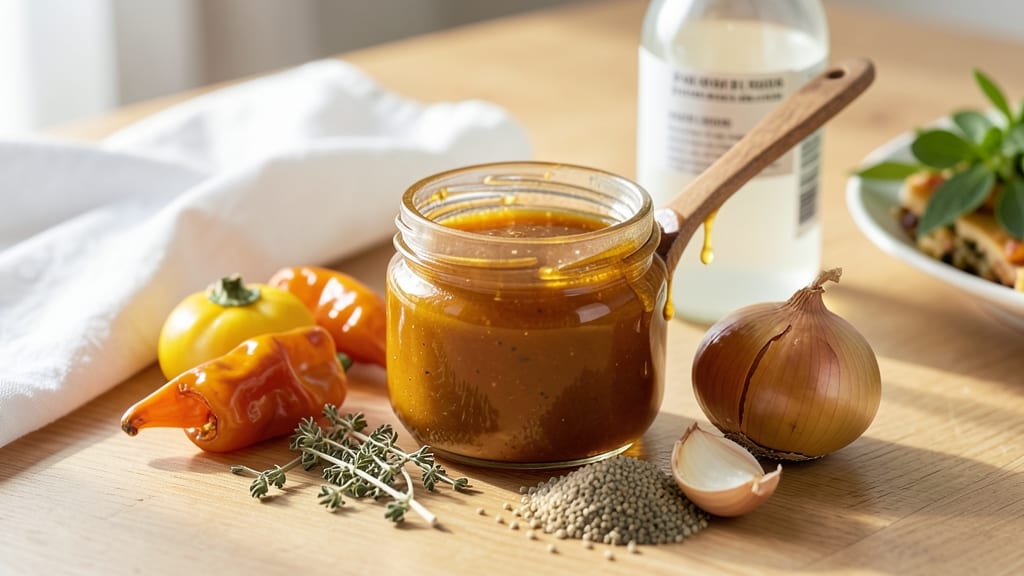
This authentic Puerto Rican hot sauce transforms every dish with its smoky, fiery character—just like the mojo criollo served at island parrillerías. 🔥 The secret lies in charring onions over an open flame, then blending them with ají dulce peppers, garlic, and a touch of vinegar for that signature tang.
I’ve perfected this recipe after years of tasting versions from Puerto Rican kitchens, where it’s used to baste pernil, drizzle over arroz con gandules, or spice up simple tostones.
The process is simple but intentional: charring the onions deepens their flavor, while the ají dulce peppers (or a substitute like habanero) provide a balanced heat that’s not overwhelming. Oregano and cumin add earthy warmth, and a splash of vinegar brightens the sauce without masking its bold personality.
Unlike store-bought versions, this one develops complexity over time—especially if you let it ferment for a few days.
What you’ll end up with is a vibrant, medium-hot sauce with layers of smokiness, garlic punch, and a subtle sweetness from the charred onions.
It’s versatile enough to elevate grilled meats, seafood, or even eggs, but it’s the kind of sauce that makes you crave Puerto Rican flavors in every bite. The best part? It keeps well in the fridge for weeks, so you’ll always have a taste of the island on hand.
Ready to make it? The key steps are charring, blending, and fermenting—each one building on the last to create a sauce that’s authentically Puerto Rican. Let’s get started.
Ingredients for authentic puerto rican hot sauce
Nine ingredients, one smoky, fiery sauce that brings island flavor to every dish.
| Ingredient | Amount | Notes |
|---|---|---|
| Yellow Onions 🧅 | 2 whole | Charred over flame for depth |
| Ají Dulce Peppers 🌶️ | 4 whole | Or habanero for heat substitute |
| Garlic Cloves 🧄 | 6 cloves | Peeled, roasted with onions |
| White Vinegar 💧 | ½ cup | White or apple cider vinegar |
| Ground Cumin 🌿 | 1 tsp | Toasted for deeper aroma |
| Dried Oregano 🍃 | 1 tsp | Mexican oregano preferred |
| Salt 🧂 | 1 tsp | Kosher or sea salt |
| Olive Oil 🫒 | ¼ cup | Extra-virgin for richness |
| Water 💧 | ½ cup | For blending consistency |
| Brown Sugar 🍚 | 1 tbsp | Balances heat slightly |
The onions are non-negotiable—char them over an open flame until blackened in spots. Trader Joe's sells yellow onions perfect for this, but any large yellow or red will work. For the ají dulce peppers, Latin markets are your best bet, but habanero peppers (seeds removed) make a great substitute if you can't find them. The garlic should be roasted alongside the onions—this adds a sweet, caramelized depth. I always double-check my vinegar is white or apple cider; balsamic won't cut it here.
No ají dulce? Habanero or Scotch bonnet peppers work in a pinch, but reduce the amount by half to avoid overwhelming heat. Swap the brown sugar for maple syrup if you prefer, though traditional recipes stick with sugar. The cumin and oregano are earthy anchors—don't skip toasting the cumin (30 seconds in a dry pan) for maximum flavor. For extra tang, add a splash of lime juice after blending, but keep it optional since the vinegar already provides brightness. If your sauce turns out too thick, a splash of water or vinegar fixes it instantly.
This sauce keeps for 3-4 weeks in the fridge, with flavor deepening over time. For long-term storage, transfer to sterilized jars and keep in the pantry for up to 6 months. I always make a double batch—one to use immediately, one to gift. The sauce pairs perfectly with grilled meats, fried plantains, or even scrambled eggs. If you're feeling adventurous, let it ferment for 3-5 days in a warm spot before using—it develops a funky, complex flavor that's absolutely addictive.
Why You'll Love This Recipe
- No-Chop Nightmare: The ají dulce and onions caramelize in the same pot—no fancy prep, just a knife for the garlic. I swear, I’ve made this while scrolling through my phone.
- Sweet Heat Balance: That ají dulce brings a fruity, slightly sweet kick that cuts through the vinegar’s sharpness—like a hug for your taste buds. Honestly, it’s the kind of sauce you’ll reach for instead of store-bought.
- Pantry-to-Table Magic: A splash on rice, a drizzle over mofongo, or a dip for plantains—this stuff elevates everything. My kids even ask for it on their tacos. (Yes, even on a Tuesday night.)
- Lasts a Month: One batch stretches forever, and the cumin deepens in flavor over time. Budget win: I buy peppers in bulk and never regret it.
Step-by-step instructions for authentic Puerto Rican hot sauce
This fiery mojo criollo delivers authentic Puerto Rican heat with charred depth and balanced sweetness.
🔥 Step 1: Char the Onions and Peppers Over Flame
Cut the 2 whole yellow onions in half lengthwise and the 4 whole ají dulce peppers in half from stem to base. Place them on a heatproof surface over a gas flame (or under a broiler) and char until the onions develop blackened patches and the peppers blister and darken—about 10-12 minutes. The onions should smell intensely sweet and caramelized, while the peppers will soften and release their smoky aroma.
Here's the thing—this charring step is non-negotiable for authentic flavor. It creates that deep, smoky complexity that separates homemade mojo from store-bought versions. Once charred, transfer everything to a bowl and cover with a towel to steam for 5 minutes. This helps loosen the skins so they peel easily.
🍳 Step 2: Roast the Garlic and Blend the Base
While the onions and peppers steam, peel the 6 garlic cloves and add them to a dry skillet over medium heat. Toast them for 2-3 minutes until golden and fragrant—you'll smell that nutty aroma that signals perfect roasting. Remove from heat immediately to prevent burning.
Transfer the charred onions, peppers, and roasted garlic to a blender. Add the 0.5 cup white vinegar and 0.5 cup water. Blend until completely smooth, scraping down the sides as needed. The mixture should be silky with no visible chunks—this ensures a professional texture in your sauce.
👨🍳 Step 3: Toast the Spices and Build the Sauce
In a small dry skillet over medium-low heat, toast the 1 tsp ground cumin and 1 tsp dried oregano for 30 seconds until fragrant. Immediately transfer to a bowl to cool—this prevents the spices from losing their volatile oils when added to the hot mixture later.
With the blender running, slowly drizzle in the 0.25 cup olive oil while blending continuously. This emulsifies the sauce and creates that luxurious mouthfeel. Add the toasted spices, 1 tsp salt, and 1 tbsp brown sugar, blending until fully incorporated. The brown sugar will help balance the heat slightly, creating that perfect sweet-spicy-savory profile.
⏰ Step 4: Simmer and Reduce for Depth
Pour the blended sauce into a saucepan and bring to a gentle simmer over medium heat. Let it cook uncovered for 15-20 minutes until reduced by about 25%. You'll see the sauce thicken slightly and develop a glossy sheen—this is when the flavors meld together beautifully. Stir occasionally to prevent sticking, but don't over-stir or you'll break the emulsion.
Taste and adjust seasoning if needed. For more heat, add a pinch of cayenne or more charred pepper. For more depth, add a splash of the reserved vinegar. The sauce should be vibrant red with a thick, syrupy consistency—like a cross between a sauce and a molasses. Let it cool completely before bottling.
🍽️ Step 5: Bottle and Age for Maximum Flavor
Transfer the cooled sauce to clean glass bottles or jars. Seal tightly and store in a cool, dark place for at least 1 week before using—this aging process allows the flavors to develop and mellow. The longer it ages, the more complex the flavor becomes. When ready to use, shake well before serving to re-emulsify any separated oils.
This mojo criollo keeps in the refrigerator for up to 3 months, with flavors actually improving over time. Use it to drizzle over grilled meats, mix into marinades, or serve as a condiment with fried plantains and rice. The charred onion depth and balanced heat make it uniquely Puerto Rican—far beyond what you'll find in most hot sauces.
Pro Tips For Making Authentic Puerto Rican Hot Sauce
- CHAR THE ONIONS LOW: I learned this the hard way—ají dulce peppers need a flavor base that doesn’t burn. Sauté the onions and garlic in a dry pan on medium-low until they’re deep golden, not brown. If you rush it, you’ll end up with bitter, ashy bits that ruin the sauce’s bright sweetness.
- PEEL THE GARLIC WRONG: Skip the whole clove. Instead, smash each garlic clove flat with the side of your knife, peel off the skin, then chop. This keeps more of the flavor intact and prevents the sauce from turning bitter—something that happens more often than you’d think when using whole cloves.
- VINEGAR FIRST, NOT LAST: Add the white vinegar early in the cooking process, not as a final splash. Simmer it with the onions and peppers for 5 minutes before adding the cumin. This helps break down the peppers’ heat and sweetness faster, giving you a smoother, more balanced sauce—no more waiting for it to mellow after blending.
- STRAIN THE PEPPERS: Unless you’re going for a chunky, rustic texture, strain the blended sauce through a fine-mesh sieve after cooking. The seeds and membranes from ají dulce peppers can make the sauce grainy or overly bitter. It’s an extra 30 seconds, but it makes a real difference in texture.
Perfect pairings for authentic puerto rican hot sauce
Grilled Meat Basters
This mojo criollo is a game-changer for grilling—it’s the secret weapon I use when basting pernil or churrasco on the grill. 🔥 The charred onion depth and smoky heat cut through the richness of fatty meats like pork shoulder or beef ribs.
I like to reduce it slightly before using as a baste (simmer uncovered for 5-10 minutes until syrupy) so it clings better to the meat. For extra drama, brush it on in the final 2-3 minutes of grilling to create a caramelized crust.
Fried Plantain Companion
Puerto Rican cuisine revolves around fried plantains (tostones or maduros), and this hot sauce takes them to the next level. The natural sweetness of the plantains pairs perfectly with the sauce’s balanced heat and smoky notes.
I serve it in a small bowl alongside the plantains, letting guests drizzle it on as they like. For an extra touch, sprinkle crumbled queso fresco on top of the plantains before adding the sauce—it adds a creamy contrast that’s pure comfort food.
Seafood Elevator
While mojo criollo is traditionally used with meats, it’s also fantastic with seafood. The acidity from the vinegar brightens fish like red snapper or mahi-mahi, while the charred onions add a caramelized sweetness that balances the fish’s natural oils.
I like to marinate grilled shrimp in a mix of 2 tbsp mojo criollo, 1 tbsp olive oil, and 1 tsp lime juice for 15-20 minutes before grilling. The result? A dish that tastes like it came straight from a beachside chinchorro in Vieques.
Breakfast Game-Changer
Don’t sleep on this sauce for breakfast! A drizzle over scrambled eggs or huevos rancheros adds a smoky, spicy kick that wakes up your taste buds. I also love mixing 1 tbsp mojo criollo into refried beans for a quick, flavor-packed side dish.
For a Puerto Rican-inspired brunch, serve it with tostones and avocado slices—it’s a flavor combo that’s become a weekend staple in my kitchen. 🍳
Cocktail & Drink Pairings
This hot sauce isn’t just for food—it’s a fantastic cocktail mixer. A dash in a Piña Colada (yes, really!) adds a spicy-sweet contrast that’s surprisingly refreshing. I also love adding ½ tsp mojo criollo to a rum punch or even a mojito for a tropical, fiery twist.
For non-alcoholic drinks, mix 1 tbsp sauce with iced tea or ginger ale for a spicy, tangy sipper. Just be warned: it’s addictive once you try it this way!
Fermented Mojo
For the adventurous, take your mojo criollo to the next level by fermenting it. After blending the base, pour it into a clean glass jar and let it sit at room temperature for 3-5 days (cover loosely with a cloth).
The fermentation process develops a funky, umami depth that’s reminiscent of hot sauce fermentations like Sriracha. Once fermented, strain out any solids and store in the fridge. This version is perfect for dipping empanadillas or adding to arroz con gandules—it’s a flavor explosion in every bite. 💫
Nutrition facts
Frequently asked questions
Why do I need to char the onions and peppers?
Charring creates that signature smoky depth found in authentic Puerto Rican hot sauces. The process caramelizes the natural sugars in the onions and intensifies the peppers' flavor, giving your sauce a complex, almost caramelized sweetness that store-bought versions can't match. Skip this step, and you'll miss the heart of what makes this sauce taste authentically island-inspired.
Can I adjust the heat level in this recipe?
For milder heat, reduce the number of ají dulce peppers to 2-3 or swap them for 1-2 mild habaneros (remove seeds). For extra kick, add ½ tsp cayenne pepper or increase the habanero count. The brown sugar already helps balance heat, so adjust carefully—taste as you go during the simmering step to perfect your preferred level.
What's the difference between this and store-bought Puerto Rican hot sauces?
Homemade mojo criollo has layers of complexity you won't find in commercial versions. The charred onions and fermented depth create a smoky, slightly funky profile that's far more nuanced than the sweet-and-spicy bottled sauces. Plus, you control the heat level and ingredients—no artificial preservatives or diluted flavors here. Think of it as the difference between a fresh-brewed cup of coffee and instant.
How long should I ferment the sauce, and is it necessary?
Fermentation is optional but recommended for maximum depth. Let it sit for 3-5 days at room temperature (covered loosely) to develop funky, umami notes. For a quicker version, skip fermentation and store in the fridge—it'll still taste amazing, just with less complexity. If fermenting, strain before bottling to remove any solids. The longer you ferment, the more intense (and potentially spicy) the flavor becomes.
Can I make this sauce without a blender?
You can try, but texture will suffer. For a smooth sauce, use a food processor or immersion blender. If you must improvise, finely chop the charred onions and peppers, then mash them with a potato masher. The result will be chunkier but still flavorful—just not as silky. For best results, invest in a good blender; the smooth texture is key to that restaurant-quality finish.