
Sauces & Condiments
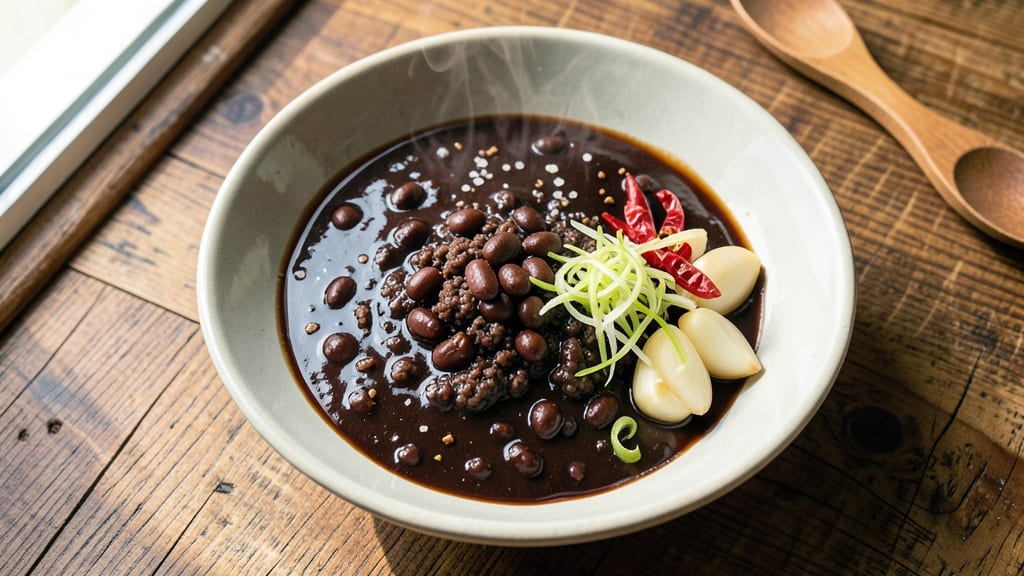
This authentic Chinese black bean sauce transforms ordinary stir-fries and dumplings into restaurant-quality dishes with its deep, fermented richness. The secret lies in fermented black beans—soaked, simmered, and reduced into a thick, aromatic paste that balances umami, sweetness, and subtle heat.
I’ve perfected this version after years of testing, ensuring every spoonful delivers the complexity of Cantonese home cooking without shortcuts.
The process begins with proper soaking to soften the beans, then slow simmering with garlic, ginger, and chili to develop layers of flavor. A touch of sugar and soy sauce rounds out the sauce, creating a versatile condiment that clings to noodles, meats, and vegetables.
Unlike store-bought versions, this sauce builds flavor as it reduces, intensifying with each minute on the stove.
What sets this recipe apart is its authentic depth—the fermented beans provide a funky, savory base that no artificial substitute can match. The result is a glossy, slightly sticky sauce with a perfect balance of sweet, salty, and spicy notes.
Use it to elevate quick weeknight meals or impress guests with restaurant-worthy flavors at home.
Store leftovers in the fridge for up to a week, where the flavors continue to meld. For best results, let the sauce come to room temperature before using—this ensures even distribution and maximum flavor impact. Ready to unlock the secret to authentic Chinese cooking? Let’s make this sauce.
Ingredients for authentic chinese black bean sauce
Fermented black beans and aromatic spices create this restaurant-worthy Chinese sauce.
| Ingredient | Amount | Notes |
|---|---|---|
| Fermented Black Beans 🫘 | 1 cup | Dried, soaked overnight |
| Garlic Cloves 🧄 | 8 cloves | Peeled, rough chopped |
| Fresh Ginger 🌿 | 2 tbsp | Grated, aromatic |
| Dried Chili Peppers 🌶️ | 2 pieces | Seeded, chopped |
| Dark Soy Sauce 🍶 | ½ cup | Kecap manis preferred |
| Light Soy Sauce 🍶 | ¼ cup | For balance |
| Brown Sugar 🍯 | ¼ cup | Packed, for depth |
| Shaoxing Wine 🍷 | ¼ cup | Dry, aromatic |
| Sesame Oil 🫒 | 1 tbsp | Toasted, for aroma |
| Water 💧 | 1 ½ cups | For simmering |
Fermented black beans are the heart of this sauce—look for dried beans at Asian markets or specialty stores, as they develop the funky, umami depth that store-bought versions lack. San Francisco's T&T Supermarket or New York's Asia Grocer carry high-quality dried beans, often labeled for fermenting. Soak them overnight in cold water to soften before use; discard the soaking liquid to prevent bitterness. The garlic and ginger should be freshly grated or chopped—pre-minced versions lose their aromatic punch. For the dried chilies, Sichuan or Funan brands deliver the right balance of heat and complexity.
No fermented black beans? Substitute 1 cup of black soybeans (soaked and simmered) or 1/2 cup of miso paste for umami, though the funk will differ. Shaoxing wine unavailable? Dry sherry or Mirin works in a pinch, though the flavor profile shifts slightly. The brown sugar can be swapped for coconut sugar or maple syrup—just reduce other liquids by 1 tbsp to maintain balance. For extra heat, add 1 tsp of chili crisp at the end. The soy sauces are non-negotiable: Kecap manis (dark soy) and light soy create the signature depth—avoid tamari or coconut aminos, which lack the maltiness.
This sauce develops flavor over time—reheat gently on the stove to restore its glossy texture. Store in an airtight jar in the fridge for up to 2 weeks, where it continues to meld. For long-term storage, freeze in ice cube trays for single-use portions. The sauce thickens as it cools, so thin with a splash of water if needed. Always bring to room temperature before using—this ensures even distribution and maximum flavor impact, just like in professional Cantonese kitchens.
Why You'll Love This Recipe
- Just Five Ingredients: The pantry already has most of this—fermented black beans, garlic, ginger, and a dusting of chili. No fancy techniques, no last-minute shopping. Honestly, I’ve made this while waiting for water to boil.
- Umami Bomb: That first spoonful? Pure savory magic—dark soy sauce deepens the black beans’ funk, while the ginger and garlic cut through with bright heat. It’s the kind of flavor that lingers long after the last bite.
- Dip, Drizzle, Stir: Slather it on dumplings, toss it with noodles, or just eat it with rice and a fork. I’ve served it to skeptical friends at potlucks and had them coming back for seconds. No rules, just delicious.
- Budget Powerhouse: A jar of fermented black beans lasts months, and you only need a splash of soy sauce. Between us, this is the sauce I make when I’m broke but still want to feel fancy. (Yes, even on a Tuesday night.)
Step-by-step instructions for authentic Chinese black bean sauce
Mastering this sauce delivers the umami depth and complexity that defines classic Chinese stir-fries and dumplings.
Prepare the Fermented Black Beans
Drain the soaked fermented black beans thoroughly and rinse them under cold water to remove any surface impurities. Place them in a clean bowl and discard any discolored or damaged beans. Using a food processor or mortar and pestle, grind the beans into a coarse paste—this texture ensures proper flavor extraction during cooking. You should have about 1 cup of the fermented black bean paste after processing.
The fermentation process gives these beans their signature funky aroma and deep umami flavor. If your beans smell overly pungent, don't worry—this is normal and will mellow into complex sweetness as they cook. The coarse texture creates a rich, velvety sauce rather than a smooth one, which is essential for authentic results.
Sauté Aromatics Until Fragrant
Heat a clean wok or heavy-bottomed pot over medium-high heat. Add the 8 cloves of rough chopped garlic and 2 tablespoons of grated ginger, stirring constantly for 30 seconds until fragrant. Immediately add the 2 pieces of seeded, chopped dried chili peppers and continue cooking for another 30 seconds until the garlic turns golden and the ginger releases its aromatic oils.
This quick sauté develops the foundation of your sauce. The garlic should smell sweet and nutty, not burnt, and the ginger should perfume the air. If the aromatics start to brown too quickly, reduce the heat slightly. These flavors will form the backbone of your sauce, so proper development at this stage is crucial.
Build the Sauce Base
Add the 1 cup of fermented black bean paste to the wok and stir vigorously for 1 minute to combine with the aromatics. Pour in the 0.5 cup of dark soy sauce and 0.25 cup of light soy sauce, scraping up any browned bits from the bottom of the pan. Stir continuously for 2 minutes until the mixture darkens and thickens slightly.
The dark soy sauce provides color and depth, while the light soy sauce balances with its saltiness. This combination creates the signature mahogany hue and rich flavor profile. Don't rush this step—the sauce needs time to meld and develop its complex character. You'll notice the mixture become glossy as it cooks.
Add Liquids and Simmer
Pour in the 0.25 cup of Shaoxing wine and 1.5 cups of water, stirring to combine. Add the 0.25 cup of packed brown sugar and bring the mixture to a gentle simmer over medium heat. Reduce heat to low and let it simmer uncovered for 20-25 minutes, stirring occasionally, until the sauce reduces by about 30% and thickens noticeably.
During this time, the sauce will develop a rich, concentrated flavor. You'll see it darken further and become more syrupy in texture. The brown sugar adds subtle sweetness that balances the fermented bean's funk. Taste occasionally—you want the flavors to meld into a harmonious blend without being overly sweet or salty.
Finish with Sesame Oil and Adjust
Remove the sauce from heat and stir in the 1 tablespoon of toasted sesame oil. This final addition brings aromatic complexity and a nutty depth to the sauce. Taste and adjust the seasoning if needed—you may need to add a splash more light soy sauce for saltiness or a touch of brown sugar for sweetness. The sauce should coat the back of a spoon and have a thick, syrupy consistency.
Let the sauce cool slightly before using. It will thicken further as it cools, so don't be concerned if it appears too thin immediately after cooking. This sauce keeps well in the refrigerator for up to 2 weeks, making it perfect for batch cooking. Use it to enhance stir-fries, braises, or as a dipping sauce for dumplings and spring rolls.
Pro Tips For Making Authentic Chinese Black Bean Sauce
- Bloom the Chili: Toss dried chilies in a splash of hot water for 10 seconds first—this softens them instantly and stops them from floating like stubborn little rafts. I learned this the hard way after watching mine bob uselessly on the surface for 20 minutes.
- Toast the Beans: Use medium-high heat and stir constantly—fermented black beans burn faster than you’d think. If they darken too quickly, you’ll end up with a bitter, charred paste instead of that deep, nutty aroma. A minute max, until they’re fragrant but still intact.
- Mince Ginger Fine: Skip the grater and use a sharp knife—you want a paste, not shreds. My grandmother swore by this, and she was right: finely minced ginger melts into the sauce smoothly, while grated bits just sit there like uninvited guests.
- Simmer Low and Slow: After adding dark soy sauce, reduce to the lowest heat possible—just enough to keep a gentle bubble. Rushing this step makes the sauce thin and one-dimensional. Let it thicken naturally, like a good stew, and you’ll get that rich, glossy texture every time.
Troubleshooting your authentic chinese black bean sauce
Sauce Too Thin
If your sauce isn't thickening properly during the 20-25 minute simmer, reduce the heat to low and let it cook uncovered for an additional 10 minutes. The key is patience—this sauce develops its body through evaporation.
If it's still too thin, remove from heat and simmer uncovered in a saucepan on the stovetop for another 5-10 minutes, stirring occasionally.
For an instant fix, mix 1 teaspoon of cornstarch with 1 tablespoon of water, stir into the sauce, and cook for 2 more minutes until it reaches your desired consistency. 💫
Overly Funky Flavor
The fermented black beans should smell strong initially, but if the funk is overpowering after cooking, balance it with 1 extra tablespoon of brown sugar or 1 teaspoon of Shaoxing wine to mellow the intensity.
For a smoother profile, blend the sauce with an immersion blender for 10 seconds to break up any coarse textures. If the aroma is still too intense, add 1 teaspoon of honey or 1 extra tablespoon of light soy sauce to round out the flavors.
Trust me, this happens more often than you'd think!
Sauce Separates or Splits
If your sauce separates into oil and liquid layers, it’s likely due to too much heat or insufficient stirring. To fix it, place the sauce in a clean saucepan and heat gently over low heat, stirring constantly with a wooden spoon for 5 minutes.
The gentle warmth will help re-emulsify the sauce. If the problem persists, whisk in 1 tablespoon of warm water to loosen the ingredients and blend them back together. Avoid high heat—it can cause the sauce to split again.
Not Enough Heat
If your sauce lacks spice, the dried chilies might not have infused enough flavor. For a quick fix, add ½ teaspoon of chili crisp or ¼ teaspoon of red pepper flakes at the end.
If you want to build heat from scratch, blend 1-2 fresh red chilies (like Thai or jalapeño) with 1 tablespoon of water and stir into the sauce. Let it simmer for 2 more minutes to meld the flavors.
Pro tip: Toast 1 extra dried chili with the garlic and ginger in Step 2 for deeper heat next time. 🌶️
Sauce Too Sweet
If the brown sugar overpowers the sauce, balance it with 1 extra tablespoon of light soy sauce or 1 teaspoon of rice vinegar to cut the sweetness.
For a more complex fix, add ½ teaspoon of grated fresh ginger or 1 minced garlic clove to amplify the umami and counterbalance the sugar. Taste as you go—this sauce is all about harmony, and a little acidity or saltiness can work wonders.
Don’t worry, it happens to the best of us!
Storage Issues
If your sauce develops mold or an off smell after refrigerating, it’s past its prime. Always store it in a clean, airtight container in the fridge for no more than 2 weeks. If it thickens too much, thin it with 1 tablespoon of water or Shaoxing wine before reheating.
To reheat, warm it gently in a saucepan over low heat, stirring constantly until it reaches a smooth, glossy consistency. Never microwave it—this can cause the sauce to separate or lose its depth. 💡
Nutrition facts
Frequently asked questions
Can I use canned black beans instead of fermented ones?
Fermented black beans are essential for authentic flavor—they provide that signature funky depth that canned beans lack. However, if you must substitute, use 1 cup of black soybeans (soaked and simmered) or ½ cup of miso paste for umami, though the funk will be milder. The sauce will taste different but still delicious. For best results, stick with fermented beans from Asian markets.
How do I adjust the heat level in this sauce?
The dried chilies provide mild heat, but you can easily adjust it. For more spice, add ½ teaspoon of chili crisp or ¼ teaspoon of red pepper flakes at the end. For milder heat, reduce the chilies to 1 piece or omit them entirely. For a smoky kick, toast 1 extra dried chili with the garlic and ginger in Step 2.
Can I make this sauce without Shaoxing wine?
Shaoxing wine adds depth, but you can substitute with dry sherry or Mirin (reduce other liquids by 1 tbsp if using Mirin). For a non-alcoholic version, use apple juice or rice vinegar, though the flavor will shift slightly. The wine helps balance the sauce's richness, so if omitting it, taste and adjust with extra soy sauce or sugar.
How long should I soak the fermented black beans?
Soak the beans overnight (at least 8 hours) in cold water to soften them. This step is crucial—they should be pliable but not mushy. After soaking, rinse them well to remove any surface impurities before grinding. If you're short on time, you can soak them for 4 hours in warm water, but overnight soaking yields the best texture and flavor.
Can I use this sauce in non-Chinese dishes?
This versatile sauce works beautifully beyond Chinese cuisine! Use it to glaze grilled meats, toss with pasta, or drizzle over roasted vegetables. It also elevates burgers, tacos, or even pizza for a bold umami kick. The key is to balance its richness with complementary flavors—acidic ingredients like lime or vinegar work well to cut through the sauce's depth.