
Sauces & Condiments
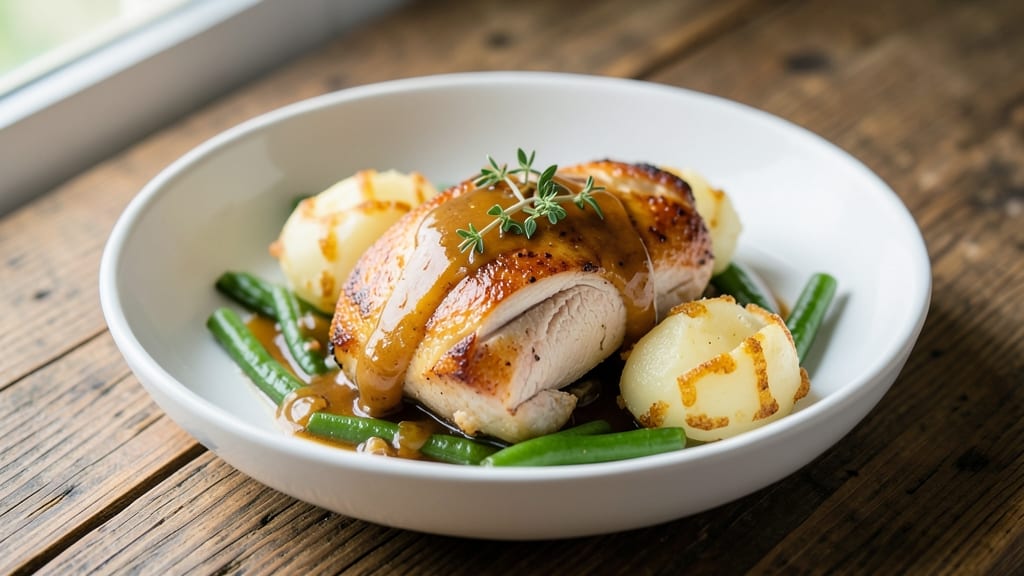
This au sauce recipe delivers velvet-smooth umami richness that elevates any protein or vegetable in just 15 minutes. The secret lies in a classic butter-wine reduction with shallots, garlic, and fresh herbs, creating a sauce so versatile it transforms simple meals into restaurant-worthy dishes.
I developed this version after years of testing—it’s the perfect balance of depth and simplicity, with no complicated techniques required.
The foundation starts with a light roux that thickens the sauce beautifully, while white wine adds brightness and helps deglaze the pan for maximum flavor extraction.
Fresh thyme and parsley contribute herbal notes that cut through the richness, while a splash of heavy cream at the end adds luxurious body without overpowering the dish. This sauce works equally well with chicken, fish, or even roasted vegetables.
What makes this recipe stand out is its foolproof consistency—no lumps, no separation, just a glossy, clingy sauce that clings to every bite. The umami depth comes from proper caramelization of the shallots and garlic, while the wine ensures it’s never heavy.
Once mastered, you’ll reach for this sauce for every weeknight dinner.
Store leftovers in the refrigerator for up to 5 days or freeze for 3 months, though I doubt it will last that long. The best part?
It doubles easily, so you can always have extra on hand for spontaneous meals. Let’s create this sauce that will become your new kitchen staple.
Ingredients for au sauce
Nine ingredients, one pan—this velvety au sauce transforms ordinary meals into restaurant-worthy dishes.
| Ingredient | Amount | Notes |
|---|---|---|
| Unsalted Butter 🧈 | ½ cup | Cold, cubed for roux |
| Shallots 🧅 | ¾ cup | Finely minced, vibrant color |
| Garlic Cloves 🧄 | 4 cloves | Peeled, minced for depth |
| Dry White Wine 🍷 | ½ cup | Bold, dry variety preferred |
| Heavy Cream 🥛 | ¼ cup | Full-fat for richness |
| Fresh Thyme Leaves 🌿 | ¼ cup | Finely chopped, stems removed |
| Fresh Parsley Leaves 🌿 | ¼ cup | Chopped, for brightness |
| All-Purpose Flour 🌾 | 1 tbsp | For light roux |
| Diamond Crystal Kosher Salt 🧂 | ½ tsp | Adjust to taste |
| Freshly Ground Black Pepper 🌶️ | ¼ tsp | For subtle heat |
The butter is your flavor anchor—European-style unsalted melts beautifully and adds depth without overpowering. Shallots are key here; French shallots from the specialty section at Whole Foods or Trader Joe's have the best flavor, but regular grocery store shallots work fine if they're fresh. Look for firm, pale bulbs with no green sprouts. Garlic should be freshly minced—pre-minced garlic loses flavor fast. For the wine, Sauvignon Blanc or Pinot Grigio are my go-tos, but any dry white will do. Avoid sweet wines—they'll throw off the balance.
No white wine? Chicken or vegetable stock with a splash of lemon juice works in a pinch, though the sauce will be slightly lighter. Fresh herbs are ideal, but dried thyme at one-third the amount gets you close. The flour is for the roux—don't skip it, or your sauce will be too thin. For extra umami, add 1 tsp fish sauce or soy sauce at the end (though this makes it vegetarian-friendly). The heavy cream should be cold when added—this prevents curdling. If you're avoiding dairy, coconut cream works but has a different texture.
This sauce thickens as it cools, so thin with a splash of warm water if needed. Store in an airtight container in the fridge for 5 days, or freeze for 3 months. I always double the batch—it disappears fast. For extra richness, whisk in 1 tbsp cold butter at the end. The sauce reheats beautifully, though it's best fresh. If making ahead, cool completely before refrigerating to prevent skin formation.
Why You'll Love This Recipe
- Foolproof Technique: I swear by this method—softening shallots in butter until they’re caramelized but not browned. It’s the secret to that rich, balanced flavor without burning a single thing. (Yes, even if you’re not a pro.)
- Wine’s Magic Touch: That splash of dry white wine? It’s not just for show—it deglazes the pan, lifts the sauce, and cuts through the cream so it doesn’t taste heavy. Honestly, it’s the difference between “good” and “I’ll make this again.”
- Sauce for Everything: Slather it on steak, drizzle it over roasted veggies, or toss it with pasta—this sauce is my go-to for weeknights and dinner parties alike. Between us, it’s the reason I keep white wine in the fridge.
- Leftovers That Shine: This sauce actually improves the next day—thickens just right and tastes even richer. I double the batch on Sundays, freeze half, and thank my past self when I’m scrambling for a last-minute sauce. (No regrets.)
Step-by-step instructions for velvet-smooth au sauce
Here's how to craft a restaurant-quality au sauce with layers of umami and velvety texture.
Create a Light Roux for Thickening
Melt the 0.5 cup unsalted butter in a medium saucepan over medium heat. Once fully melted, reduce heat to low and whisk in the 1 tablespoon all-purpose flour immediately. This creates a light roux that will thicken your sauce without adding graininess. Cook for 1-2 minutes, stirring constantly, until the mixture turns a pale golden color and smells nutty—this signals the flour has fully cooked and lost its raw taste.
Watch the heat carefully—if it browns too quickly, you'll develop a bitter flavor. The roux should bubble gently but not color. This foundational step ensures your sauce will have that signature velvety consistency without being gluey or heavy.
Sweat Shallots Until Transparent
Add the 0.75 cup finely minced shallots to the roux and cook over medium-low heat, stirring frequently, for 5-6 minutes. You're looking for the shallots to soften completely and become translucent—this process, called sweating, removes their sharpness and develops their sweet, mellow flavor. The mixture should look like a smooth, pale paste with no visible chunks.
Here's the thing—don't rush this step. If the shallots start to brown, you've lost that delicate sweetness. The key is patience; let them cook slowly until they're completely tender. This is where the sauce builds its aromatic foundation.
Add Garlic and Deglaze with Wine
Stir in the 4 cloves minced garlic and cook for 30 seconds until fragrant but not browned—you want garlic flavor, not bitterness. Immediately pour in the 0.5 cup dry white wine and increase heat to medium-high. The wine will bubble vigorously as it reduces, scraping up all those flavorful browned bits from the pan bottom.
Let the wine reduce by about half—this takes 2-3 minutes. You'll notice the alcohol smell dissipates as it cooks off, leaving behind just the pure wine flavor. This deglazing step captures all the fond (those browned bits) that would otherwise stick to your pan, ensuring maximum flavor in every spoonful.
Build Depth with Cream and Herbs
Reduce heat to low and stir in the 0.25 cup heavy cream. Let it warm through gently for 2 minutes, then add the 0.25 cup chopped fresh thyme leaves and 0.25 cup chopped fresh parsley leaves. Simmer for 3-4 minutes until the sauce thickens slightly and coats the back of a spoon. The herbs will infuse their bright, fresh notes into the sauce while it develops its velvety texture.
This is where the sauce comes together—creamy richness from the cream balances the wine's acidity, while the herbs add brightness. Taste and adjust seasoning with 0.5 teaspoon kosher salt and 0.25 teaspoon black pepper. The sauce should be rich but not overpowering, with a perfect balance of umami and freshness.
Finish and Strain for Silky Perfection
Transfer the sauce to a blender or use an immersion blender to purée until completely smooth. Then strain through a fine-mesh sieve into a clean saucepan to remove any herb stems or shallot bits that might make the texture uneven. Return to low heat and keep warm—this sauce tastes best when served warm over grilled meats, roasted vegetables, or mashed potatoes.
The result should be a glossy, velvety sauce with just the right body—thick enough to coat but light enough to drizzle. If it thickens too much while reheating, whisk in a splash of warm water or stock to reach your desired consistency. This sauce keeps its velvety texture when reheated gently, making it perfect for serving family-style.
Pro Tips For Making Au Sauce
- Cook Shallots Low and Slow: I used to rush this step and end up with bitter, browned shallots—yuck. Sauté them over medium-low heat until they’re soft and translucent, not golden. A splash of wine early on helps dissolve the caramelized bits and keeps things silky.
- Deglaze with Wine Immediately: As soon as you remove the shallots and garlic, pour in that white wine right away—don’t let the butter cool. The alcohol will sizzle and lift all the browned bits off the pan, giving your sauce depth instead of a bland base.
- Use Cold Heavy Cream: Temper that cream like you’re making mac and cheese—add it slowly to the warm (not boiling) butter-wine mixture. Dumping cold cream straight into hot liquid curdles it faster than you can say "au gratin disaster."
- Salt the Butter Early: Toss in half the butter’s salt with the shallots, not at the end. The salt dissolves better when the butter’s melted, and it seasons the wine reduction before the cream even enters the picture—trust me, it matters.
Flavor customization for au sauce
Classic vs. Modern Twist
Start with the classic white wine au sauce foundation, but add 1 tbsp Dijon mustard at the end for a tangy depth that pairs perfectly with chicken or pork.
For a modern twist, swap the wine for ½ cup chicken stock and finish with 1 tsp fish sauce—this creates a pan-Asian-inspired umami bomb that works beautifully with shrimp or tofu. 🌟
Herb Variations
Swap thyme and parsley for fresh tarragon and chervil for a French bistro vibe—these herbs add an anise-like sweetness that elevates the sauce for fish dishes. For a Mediterranean twist, use fresh oregano and basil with a splash of lemon juice instead of wine.
Both versions keep the velvety texture while shifting the flavor profile completely.
Creamy vs. Light Options
For a lighter version, replace the heavy cream with ½ cup Greek yogurt—it adds tanginess and reduces richness without sacrificing thickness.
If you prefer extra decadence, stir in 2 oz mascarpone cheese at the end for a luxurious finish that pairs perfectly with roasted vegetables or grilled steak. The texture remains silky, just with a richer mouthfeel.
Spicy Heat Levels
Add ½ tsp smoked paprika for a subtle smoky warmth that complements grilled meats. For medium heat, stir in 1 tsp harissa paste at the end—it adds depth and a fruity kick.
If you love fiery sauces, finish with 1 tsp sriracha or ½ tsp cayenne pepper and a splash of lime juice for brightness. Adjust to taste, but always add heat gradually.
Vegetarian & Vegan Adaptations
For a vegetarian version, replace the butter with olive oil and use coconut cream instead of heavy cream. Boost umami with 1 tbsp nutritional yeast or 1 tsp miso paste for depth.
For a vegan option, thicken with cornstarch slurry (1 tbsp cornstarch + 2 tbsp water) instead of flour, and finish with vegan butter or cashew cream for richness. 💫
Global Fusion Flavors
Turn this into a Thai-inspired sauce by adding 1 tbsp fish sauce, 1 tsp palm sugar, and ½ tsp lemongrass paste at the end. For a Mexican twist, stir in 1 tbsp chipotle powder and ½ tsp cumin with a splash of lime juice.
Both versions keep the base technique but transform the sauce into something entirely new while maintaining that velvety texture. The possibilities are endless!
Nutrition facts
Frequently asked questions
Can I substitute white wine with something else?
If you don't have white wine, use ½ cup chicken or vegetable stock with 1 teaspoon lemon juice for brightness. For a non-alcoholic version, try apple cider vinegar or dry vermouth—both add depth without the alcohol. The key is maintaining acidity to balance the richness.
Why is my au sauce too thin?
This usually happens when the roux isn't cooked long enough or the sauce isn't reduced properly. Simmer uncovered for 3-5 extra minutes to thicken naturally. If still too thin, mix 1 teaspoon cornstarch with 1 tablespoon cold water, stir into the sauce, and cook for 1-2 minutes until thickened. Avoid over-stirring, which can break down the sauce's velvety texture.
How do I make this sauce vegetarian?
Replace the butter with olive oil and use coconut cream instead of heavy cream. Boost umami with 1 teaspoon miso paste or 1 tablespoon nutritional yeast. For extra richness, stir in 2 tablespoons vegan butter at the end. The texture remains silky, though slightly lighter than the original.
Can I make this sauce ahead of time?
Yes! This sauce actually tastes better the next day as flavors meld. Store in an airtight container in the fridge for up to 5 days. Reheat gently over low heat, stirring frequently, and thin with a splash of warm water or stock if needed. For longer storage, freeze for up to 3 months—thaw overnight in the fridge before reheating.
What's the best way to serve this sauce?
This versatile sauce elevates grilled chicken, fish, or steak, but also works beautifully with roasted vegetables, mashed potatoes, or even pasta. For extra drama, drizzle over seared scallops or spoon alongside perfectly cooked eggs. The velvety texture makes it ideal for dipping—try with crusty bread or fresh oysters. Always serve warm to highlight its aromatic depth.