
Sauces & Condiments
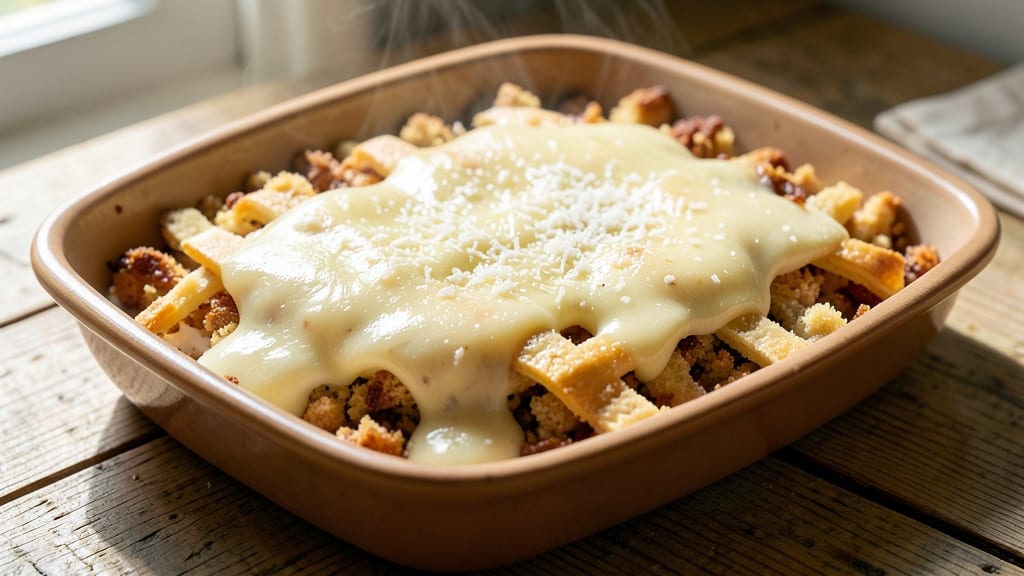
This au gratin cheese sauce recipe delivers the perfect balance of crispy golden top and velvety, rich base that transforms ordinary dishes into restaurant-worthy masterpieces. The secret lies in a precise technique that creates a caramelized crust while keeping the interior luxuriously smooth—no lumps or separation.
I developed this version after years of trial and error, ensuring it works flawlessly as a topping for potatoes, pasta, or even grilled chicken.
The foundation starts with a simple roux—equal parts butter and flour cooked until nutty—but the magic happens when you add the cheese gradually. Sharp cheddar provides the signature tang, while Gruyère adds nutty depth, and a splash of cream ensures that silky texture.
What sets this sauce apart is the final step: broiling until the surface turns crispy and golden, creating that irresistible contrast between textures.
Once you master this technique, you'll never settle for store-bought versions again. The sauce reheats beautifully, making it perfect for meal prep, and freezes well for up to three months without losing its velvety consistency.
Whether you're covering baked potatoes, drizzling over mac and cheese, or smothering grilled fish, this cheese sauce elevates every dish to new heights.
For extra depth, consider adding a splash of white wine or a pinch of Dijon mustard to the roux—both enhance the sauce's complexity without overpowering its creamy foundation.
The key is patience; letting the cheese melt slowly ensures a smooth, lump-free finish every time. Ready to transform your cooking? Here's how to make it.
Ingredients for au gratin cheese sauce
Six simple ingredients transform into a velvety sauce with a crispy golden crown.
| Ingredient | Amount | Notes |
|---|---|---|
| Unsalted Butter 🧈 | ½ cup | Cold, cubed for roux |
| All-Purpose Flour 🌾 | ½ cup | White or whole wheat |
| Sharp White Cheddar Cheese 🧀 | 1 ½ cups | Shredded, block preferred |
| Gruyère Cheese 🧀 | ½ cup | Shredded, aged for depth |
| Heavy Whipping Cream 🥛 | ½ cup | Full-fat for richness |
| Whole Milk 🥛 | ¼ cup | Warmed for smooth blend |
| Dijon Mustard 🍯 | 1 tsp | For subtle tang |
| Dry White Wine 🍷 | ¼ cup | Optional for depth |
| Salt 🧂 | ½ tsp | Kosher or sea salt |
| Ground Black Pepper 🌶️ | ¼ tsp | Freshly ground preferred |
The cheese is where this sauce shines. Sharp cheddar gives that classic tang, but Gruyère adds nutty depth—don't skip it. I always grab White Cheddar from the deli counter at Whole Foods for extra sharpness. If you're using pre-shredded, toss it in a food processor to break up the anti-caking agents. For Gruyère, Trader Joe's has a surprisingly good pre-shredded option that works in a pinch. The butter matters too—use unsalted so you control the seasoning, and keep it cold when making the roux for that perfect nutty flavor.
No Gruyère? Parmesan or Swiss work in a pinch, but the flavor won't be identical. Short on wine? Chicken stock adds body without alcohol. The mustard is non-negotiable for that subtle tang—Dijon is best, but yellow mustard in a squeeze bottle works if you're in a hurry. For the roux, low and slow is key—rushing it makes the sauce taste raw. If you burn it even a little, start over. The cream should be full-fat; light cream won't give you that luxurious texture. And if you're making this ahead, cool it completely before refrigerating to prevent a skin from forming.
This sauce reheats like a dream—just warm it gently on the stove or pop it in the microwave for 30 seconds. Keeps 3-4 days in the fridge, perfectly fine for 3 months frozen. For the crispy top, spread it thin on a baking sheet and broil for 2-3 minutes—watch it like a hawk. I like to make a double batch and freeze half; baked potatoes and mac and cheese are instant crowd-pleasers when you pull this out. Store leftovers in an airtight container with parchment paper pressed against the surface to keep it from drying out.
Why You'll Love This Recipe
- One-Pot Magic: I swear by this—just melt butter, whisk in flour, and let the cheese do the heavy lifting. No strainers, no extra bowls, just a silky sauce that feels like a hug in a pot.
- Cheese Love Bomb: Sharp white cheddar and nutty Gruyère? That’s my flavor obsession right there. The moment the cream comes together, it’s that rich, melty moment you’ll crave again and again.
- Weeknight to Dinner Party: Same sauce, endless uses—drizzle over roasted veggies, toss with pasta, or smother on potatoes. Honestly, I’ve even used it as a lazy fondue (no judgment).
- Leftovers That Don’t Suck: This sauce actually improves the next day—thicker, deeper, and still creamy. I make a double batch on Sundays and freeze half; by Wednesday, it’s my secret weapon for bland meals.
Step-by-step instructions for au gratin cheese sauce
Here's the method that delivers that perfect golden crust with a luscious, velvety interior every single time.
Create a Perfect Roux for Thickening
In a medium saucepan over medium heat, melt the 0.5 cup unsalted butter (cold and cubed as listed) without letting it brown. Once fully melted, reduce heat to low and gradually whisk in the 0.5 cup all-purpose flour all at once.
Cook the roux for 2-3 minutes, stirring constantly with a wooden spoon, until it turns a light golden color and smells nutty. This is your flavor foundation—don't rush it or the sauce will taste raw. The roux should look like wet sand and coat the back of a spoon smoothly. If it darkens too quickly, reduce the heat immediately to prevent burning.
Build Flavor with Wine and Cheese
Pour in the 0.25 cup dry white wine (if using) and whisk vigorously to deglaze the pan, scraping up any browned bits from the bottom. Let it simmer for 1-2 minutes until the alcohol smell dissipates completely.
Gradually add the 1.5 cups sharp white cheddar cheese and 0.5 cup gruyère cheese (shredded as listed), whisking constantly until fully melted and smooth. The cheese should disappear completely—if you see lumps, keep whisking over low heat until silky. This is where the sauce gets its rich, complex flavor profile, so don't skip this step.
Create the Velvety Base
Slowly pour in the 0.5 cup heavy whipping cream and 0.25 cup whole milk (warmed as listed) while whisking continuously. The mixture will thicken noticeably as it heats. Stir in the 1 tsp dijon mustard, 0.5 tsp salt, and 0.25 tsp ground black pepper until fully combined.
Continue cooking on low heat for 3-4 minutes, stirring constantly, until the sauce reaches a velvety consistency that coats the back of a spoon. It should be thick enough to hold its shape when drizzled but still pourable. If it's too thick, whisk in 1 tablespoon of milk at a time until you reach the perfect texture.
Achieve the Crispy Top (The Magic Moment)
Transfer the sauce to a baking dish suitable for broiling. For the crispy top, sprinkle an additional 0.25 cup shredded cheddar cheese evenly over the surface. Place the dish under a broiler for 2-4 minutes, watching carefully—you want the top to turn deep golden brown and develop bubbles while the bottom remains creamy.
Here's the thing—this step requires constant attention. The broiler can go from perfect to burned in seconds. As soon as you see the top develop a crispy, golden crust with bubbles forming, remove it immediately from the broiler. The sauce should be hot and bubbly underneath that crispy exterior. Serve immediately while the top is still crisp and the interior remains velvety smooth.
Pro Tips For Making Au Gratin Cheese Sauce
- Whisk Like You Mean It: The roux is where flavor hides—or gets ruined. Cook the butter and flour over medium heat until it’s a deep golden color (not brown, not pale), whisking constantly. I used to let it sit for even a second, and the sauce would taste flat. Keep that whisk moving like you’re stirring a pot of gold.
- Grate Cheese Fine: Skip the food processor—it turns cheese into glue. Use a box grater and pulse the cheddar and Gruyère in batches, stopping to stir the sauce between additions. The finer the shreds, the smoother the sauce, and the less chance of clumps. (Yes, even if you’re impatient like me.)
- Temper the Cream: Pouring cold cream into hot roux is a one-way ticket to scrambled sauce. Warm the cream first—just heat it in the same pot over low heat for 2-3 minutes until it’s steaming, not boiling. This keeps the sauce silky instead of breaking like a bad promise.
- Salt the Butter First: Unsalted butter needs seasoning before it hits the pan. Toss in a pinch of salt (about ¼ tsp) with the butter while melting—it dissolves completely and seasons the roux from the start. I learned this the hard way after tasting bland sauce that needed a whole extra tablespoon of salt later. (Your future self will thank you.)
Make-ahead tips for leftovers
Prep Ahead Secrets
Make the roux and cheese mixture up to 2 days ahead, then store it in an airtight container with parchment pressed against the surface. Reheat gently over low heat with 1-2 tablespoons of milk to restore creaminess.
I always prep this on Sunday nights for cheesy weeknight dinners—it's a total game-changer. 💫
Freezer-Friendly Tricks
For long-term storage, freeze the sauce in quart-sized freezer bags with 1-inch headspace. Thaw overnight in the fridge, then reheat on the stove with low heat—never microwave directly from frozen.
The texture remains velvety when done right. I keep a batch in my freezer specifically for last-minute baked potatoes or grilled chicken dinners.
Broiler Prep Shortcut
Preheat your broiler for 5 minutes before adding the sauce to ensure even crisping. Line your baking dish with parchment paper for easy transfer and cleanup. I like to use a 9x13-inch baking dish—it gives me enough surface area for that perfect golden crust.
Position the oven rack 4-5 inches from the heat source for optimal browning.
Reheating for Maximum Crisp
For the best texture, reheat the sauce in a skillet over medium-low heat until bubbly, then transfer to a broiler-safe dish. Finish with 2 minutes under the broiler to restore that crispy top.
The key is patience—rushing this step makes the sauce soggy. I often reheat just enough for one serving to keep the rest perfectly fresh.
Cheese Topping Prep
Pre-shred your topping cheese and store it in a separate airtight container. Sprinkle it just before broiling to prevent clumping. For extra crispiness, use a mix of cheddar and Parmesan—the Parmesan adds a nice nutty crunch.
I keep pre-shredded cheese in the freezer to maintain sharpness for up to 3 months. 🧀
Dish Pairing Prep
Pre-cook your base dishes (like potatoes or pasta) and store them separately. Reheat just before adding the sauce to maintain perfect temperature. For baked potatoes, I bake them ahead and reheat in foil at 375°F for 20 minutes. The sauce goes on right before serving to keep everything hot and crispy. This makes weeknight meals feel like restaurant-quality dining.
Nutrition facts
Frequently asked questions
Can I make this cheese sauce without wine?
Simply omit the wine and replace it with an equal amount of chicken stock or whole milk to maintain moisture. The sauce will still develop rich flavor—just without the wine's depth. For extra tang, add an extra ½ teaspoon of Dijon mustard to compensate for the missing acidity.
What's the best way to reheat leftovers for that crispy top?
Reheat the sauce in a skillet over medium-low heat until bubbly, then transfer to a broiler-safe dish. Finish with 2 minutes under the broiler—watch closely! The key is patience; rushing this step makes the sauce soggy. For extra crispiness, sprinkle 1 tablespoon of breadcrumbs mixed with 1 teaspoon of grated Parmesan before broiling.
Can I use this sauce on vegetables instead of potatoes?
Yes! This sauce works beautifully on roasted brussels sprouts, cauliflower, or even green beans. For best results, blanch the vegetables first to soften them, then top with the sauce. The crispy top pairs especially well with the texture of roasted veggies. Just add 1 teaspoon of fresh thyme to the roux for an herbal twist.
Why did my sauce turn out grainy?
Graininess usually happens when cheese melts too quickly or lumps form during cooking. Always whisk constantly when adding cheese, and keep the heat low. If using pre-shredded cheese, pulse it in a food processor to break up anti-caking agents. For extra smoothness, strain the sauce through a fine-mesh sieve after cooking. The key is patience—don't rush the melting process!
How much sauce should I make for a baked potato?
For a standard medium baked potato, use about ¼ cup of sauce per potato. Spread it thinly to create that signature crispy top. If you're serving it as a side for 4 people, plan for 1 cup total. For extra decadence, add a sprinkle of crispy fried onions or chives before serving.