
Sauces & Condiments
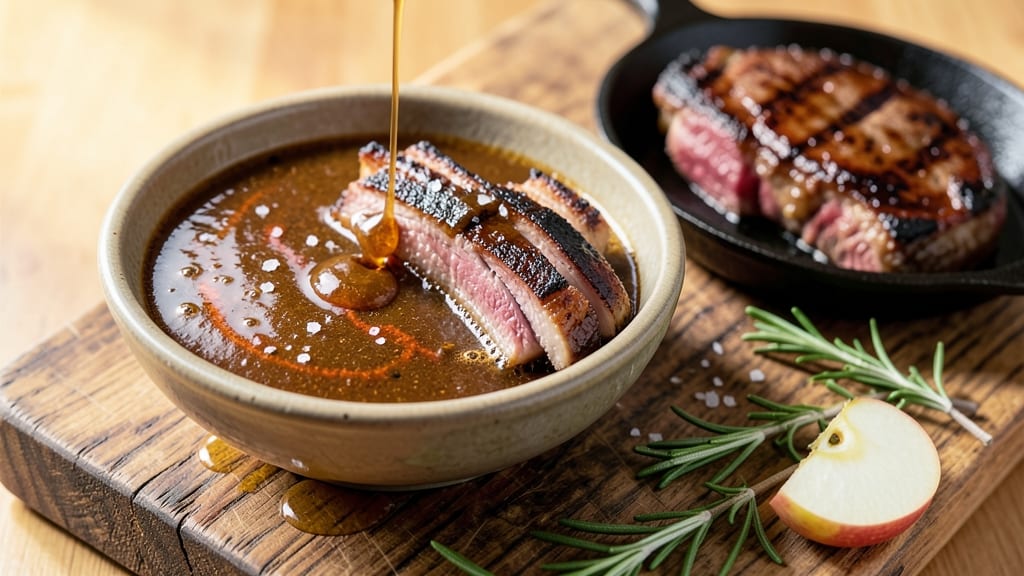
This applewood BBQ sauce recipe transforms ordinary grilled meats into smoky masterpieces with deep caramelized notes. The secret lies in applewood-smoked paprika and apple cider vinegar, creating a perfect balance of tangy, sweet, and charred flavors that linger on every bite.
Simmering reduces the sauce to a rich, glossy consistency ideal for glazing ribs, brisket, or even drizzling over roasted vegetables.
What sets this sauce apart is its complexity achieved through simple ingredients—brown sugar for caramel depth, molasses for richness, and a blend of spices like mustard and garlic powder for warmth.
The 30-minute simmering process intensifies the applewood aroma while concentrating the flavors into a velvety texture. Unlike store-bought versions, this homemade sauce delivers restaurant-quality depth with every application.
The result is a versatile sauce that enhances any dish it touches—whether you're finishing off slow-cooked pork shoulders or adding a smoky glaze to grilled chicken. The applewood notes provide a unique twist on classic BBQ flavors, making this sauce a standout for both backyard cookouts and weeknight meals.
With proper storage, it keeps for up to 3 months in the refrigerator or 6 months in the freezer, ensuring you always have premium flavor on hand.
Perfect for beginners and seasoned pitmasters alike, this recipe requires just 10 minutes of prep and 30 minutes of active cooking—no advanced techniques needed. The key is patience during the reduction phase, where the sauce transforms from a simple blend into a complex, aromatic masterpiece.
Once you taste the difference, you'll never go back to bottled versions again.
Ingredients for applewood bbq sauce
Nine ingredients, smoky depth, and a 30-minute simmer for restaurant-quality BBQ sauce.
| Ingredient | Amount | Notes |
|---|---|---|
| Applewood-Smoked Paprika 🌶️ | ½ cup | High-quality smoked paprika for depth |
| Apple Cider Vinegar 🍎 | ½ cup | Braeburn variety preferred |
| Brown Sugar 🍚 | ¾ cup | Light or dark works well |
| Molasses 🍯 | ¼ cup | Unsulphured for best flavor |
| Yellow Mustard 🥬 | 2 tbsp | Dijon or prepared mustard |
| Garlic Powder 🧄 | 2 tsp | Freshly ground preferred |
| Onion Powder 🧅 | 1 tsp | For subtle sweetness |
| Ground Black Pepper 🌶️ | ½ tsp | Freshly cracked for heat |
| Kosher Salt 🧂 | 1 ½ tsp | Diamond Crystal preferred |
| Water 💧 | ½ cup | Filtered or spring water |
The applewood-smoked paprika is non-negotiable here—Penzeys or Gourmet Spice Shop have the best quality. If you can't find it, regular smoked paprika plus a pinch of liquid smoke works in a pinch. The apple cider vinegar should be Braeburn or Granny Smith variety for that bright, crisp tang. I always grab mine from Whole Foods or my local cider mill. For the molasses, unsulphured is key—it's sweeter and less bitter. If you're using sulphured, reduce it by half to avoid overpowering the sauce. The brown sugar? Light or dark both work, but light gives a cleaner caramel flavor.
No applewood paprika? Substitute smoked paprika plus 1/2 tsp liquid smoke—trust me, it's close. Running low on molasses? Maple syrup at half the amount adds sweetness without the deep richness. The mustard can be swapped for Dijon or even a splash of hot sauce if you want extra kick. For the vinegar, red wine vinegar in a bind, but it'll lack that apple brightness. The garlic and onion powders are easy swaps—fresh minced garlic and onion if you're feeling fancy, but the powders work just as well. Just make sure to toast them lightly in a dry pan for 30 seconds to deepen their flavor.
This sauce keeps beautifully—3 months in the fridge or 6 months frozen in airtight containers. I always make a double batch because it disappears fast. For freezing, portion into ice cube trays, then transfer to a bag. Thaw overnight in the fridge before using. The sauce thickens as it cools, so add a splash of water if it gets too stiff. If you're using it on ribs or brisket, brush it on during the last 30 minutes of cooking for that perfect caramelized crust.
Why You'll Love This Recipe
- No-Stir Magic: I swear, this sauce comes together while I’m still debating whether to watch one more episode of my show. Just toss the applewood paprika, vinegar, and brown sugar into a pot—no measuring cups, no stress. The molasses thickens it effortlessly, and the mustard gives it that tangy kick without fuss.
- Smoky-Sweet Obsession: That first whiff of applewood paprika hitting the heat? Chef’s kiss. The vinegar cuts through the sweetness just enough to keep it bright, while the molasses adds this deep, caramelized richness that sticks to ribs like a dream. Honestly, I’ve caught myself licking the spoon mid-stir.
- Weeknight to BBQ Boss: Slather it on grilled chicken for Tuesday dinners, drizzle it over baked beans for game day, or toss it with roasted veggies when I’m pretending to be fancy. The mustard’s sharpness makes it work on everything—even cold cuts if I’m desperate. My kid’s soccer team has tasted it, and they’re not wrong.
- Leftovers That Lie: I always make double. The sauce thickens beautifully when reheated, so I keep a jar in the fridge for lazy mornings or last-minute guests. Between us, I’ve used it to revive sad takeout chicken and as a glaze for store-bought meatloaf. Budget hack? Yes. Life saver? Absolutely.
Step-by-step instructions for applewood BBQ sauce
Here's how to craft a rich, smoky sauce with layers of caramelized sweetness and deep applewood character.
Bloom the Spices in a Heavy Saucepan
Combine the 0.5 cup Applewood-Smoked Paprika, 2 tsp Garlic Powder, 1 tsp Onion Powder, 0.5 tsp Ground Black Pepper, and 1.5 tsp Kosher Salt in a heavy-bottomed saucepan. Heat over medium-low heat for 1-2 minutes, stirring constantly. You'll smell the spices awakening—this step develops their aromatic compounds before adding liquids.
Watch for the spices to darken slightly and release their oils. If they start to smoke, reduce the heat immediately. This gentle toasting prevents bitterness and ensures a smooth, balanced sauce. Keep the pan on heat while you prepare the remaining ingredients to maintain consistent temperature.
Add Vinegar and Molasses for Depth
Pour in the 0.5 cup Apple Cider Vinegar and 0.25 cup Molasses, stirring vigorously to dissolve the spices completely. The mixture will bubble gently—this is normal. Let it simmer uncovered over medium heat for 5-7 minutes, until slightly reduced by about 20%. You'll notice the vinegar sharpness mellowing as it cooks off.
Here's where the magic happens: the molasses begins caramelizing, deepening the sauce's color and adding that signature BBQ richness. Stir occasionally to prevent sticking, and resist the urge to walk away—molasses burns easily. The sauce should thicken noticeably by the end of this stage.
Incorporate Sweetness and Mustard
Add the 0.75 cup Brown Sugar and 2 tbsp Yellow Mustard, stirring until fully combined. Increase heat to medium-high and bring to a gentle boil. Let it boil vigorously for 3-4 minutes, stirring frequently, until the sugar dissolves completely and the sauce thickens to a glossy, syrupy consistency.
The mustard acts as an emulsifier here, helping bind the sauce's components. You'll see tiny bubbles form along the edges—this indicates proper thickening. If the sauce looks too thin after 4 minutes, continue simmering for another minute or two. The goal is a sauce that coats the back of a spoon but isn't glue-like.
Finish with Water and Final Adjustments
Reduce heat to low and stir in the 0.5 cup Water. Let the sauce simmer gently for 2-3 minutes to allow flavors to meld. Taste and adjust seasoning—add more Kosher Salt if needed for balance, or a splash more Apple Cider Vinegar if the sweetness feels overwhelming.
This final step ensures the sauce has proper body without being cloying. The water helps distribute flavors evenly and prevents the sauce from becoming too concentrated. For best results, let it cool completely before tasting again—flavors continue developing as it rests.
Rest and Store for Maximum Flavor
Transfer the sauce to a clean jar and let it cool to room temperature. For the deepest flavor, refrigerate for at least 4 hours (or overnight). This resting period allows the spices to fully infuse and the sauce to reach its ideal consistency. The next day, you'll notice the applewood notes have intensified and the sweetness has mellowed beautifully.
When ready to use, reheat gently over low heat, stirring occasionally, until warmed through. This sauce keeps well in the refrigerator for up to 3 weeks or can be frozen for 6 months. The longer it sits, the more complex and developed its flavors become—perfect for brushing on ribs, drizzling over pulled pork, or serving as a dipping sauce.
Pro Tips For Making Applewood Bbq Sauce
- Simmer Slow and Steady: I used to rush this sauce and end up with a thin, vinegary mess—don’t. Once you combine the vinegar, molasses, and brown sugar, reduce heat to medium-low and let it bubble gently for at least 20 minutes. You’re not racing; you’re building depth, and that takes time.
- Bloom That Paprika: Skip the "just sprinkle it" approach. Toast the applewood-smoked paprika in a dry pan over low heat for 30 seconds—just until it smells like a campfire. This wakes up its smoky flavor before it even hits the sauce, making the whole dish taste more intentional.
- Strain the Molasses: Molasses is notorious for grit, and nothing ruins a smooth sauce like tiny sediment. After mixing, pour the sauce through a fine-mesh sieve lined with cheesecloth into a clean pot. It’s a pain, but your sauce will taste like it was made by a pro, not a shortcut-taker.
- Balance the Mustard Last: Mustard can turn bitter if cooked too long, so add the yellow mustard only in the final 5 minutes of simmering. If you’re worried about heat, whisk it in off the stove and let the residual warmth blend it—your sauce will stay bright and tangy, not sharp and harsh.
Common mistakes when making great applewood bbq sauce
Skipping the Bloom
Blooming your spices in a dry pan for 1-2 minutes before adding liquids is crucial for developing their full flavor. I've seen many cooks skip this step, thinking it's optional, but it makes a huge difference in the depth of your sauce.
Without blooming, your spices will taste flat and underdeveloped, leaving your BBQ sauce missing that aromatic punch. Just 1 minute of toasting makes all the difference! 🌶️
Rushing the Reduction
Don't walk away from your sauce while it's simmering—especially during the molasses stage. I've burned more than one batch because I got distracted. Molasses has a low boiling point and can scorch quickly, turning your rich, caramelized sauce into a bitter mess.
Keep the heat at medium-low and stir frequently. The goal is a slow, controlled reduction that builds flavor, not a quick boil that ruins it.
Ignoring the Resting Time
Many people can't wait to use their fresh sauce and dive right in. But letting it rest for at least 4 hours (or overnight) allows the flavors to meld and intensify. Without this step, your sauce will taste disjointed—like the spices and sweetness are fighting each other.
The applewood notes need time to develop fully. I promise, the wait is worth it for that restaurant-quality depth. 💫
Using the Wrong Vinegar
Apple cider vinegar is the star of this sauce, but I've seen people substitute white vinegar or even balsamic, thinking they're similar. They're not! Apple cider vinegar brings that bright, crisp tang that balances the sweetness perfectly.
If you're out of apple cider, red wine vinegar is the next best option, but it won't have the same depth. Stick to the Braeburn or Granny Smith variety for the best results.
Over-Simulating the Sauce
Some recipes call for long simmering times to thicken the sauce, but that can lead to a gluey, overly concentrated mess. This sauce should coat the back of a spoon but still be pourable.
If you're simmering too long, you'll end up with a syrup-like consistency that's hard to work with. Keep an eye on it and aim for that perfect glossy, syrupy texture—not a thick paste. A gentle boil for 3-4 minutes is all you need.
Forgetting to Taste Adjust
After simmering, it's easy to think the sauce is done and just pour it over your food. But always taste and adjust before serving! You might need a pinch more salt or a splash of vinegar to balance the sweetness.
I've made this sauce dozens of times, and every batch needs a little tweak. Don't skip this final step—it's what turns a good sauce into a great one. 💡
Nutrition facts
Frequently asked questions
Can I substitute applewood-smoked paprika with regular smoked paprika?
Yes, but you'll need to add ½ teaspoon liquid smoke to match the depth of applewood flavor. The key is balancing that smoky character—without it, your sauce will taste more generic. For best results, use high-quality smoked paprika from brands like Penzeys or Gourmet Spice Shop.
How do I adjust the sweetness if my family prefers less sugar?
Reduce the brown sugar by ¼ cup and add 1 tablespoon apple cider vinegar to compensate for the tang. For extra depth, stir in ½ teaspoon cinnamon during the simmering phase. Always taste as you go—you can add more vinegar later if needed.
Can I make this sauce in a slow cooker instead of a stovetop?
Combine all ingredients in your slow cooker and cook on Low for 2-3 hours with the lid slightly ajar. Stir occasionally to prevent sticking. The slow cooker method develops flavors gently but may require 1 extra tablespoon water to reach the right consistency.
Why does my sauce look too thin after simmering?
This usually happens if you didn't simmer long enough or used too much water. Return the sauce to low heat and simmer uncovered for 5-10 more minutes, stirring frequently. If it still seems thin, mix 1 teaspoon cornstarch with 1 tablespoon water, stir it in, and simmer for 2 minutes.
What's the best way to use leftover sauce?
Store it in the fridge for up to 3 weeks or freeze in ice cube trays for easy portioning. Thaw overnight in the fridge before using. This sauce works perfectly as a marinade (reduce cooking time by half), dipping sauce for fries, or even a glaze for grilled vegetables. The applewood notes pair beautifully with caramelized onions too!