
Sauces & Condiments
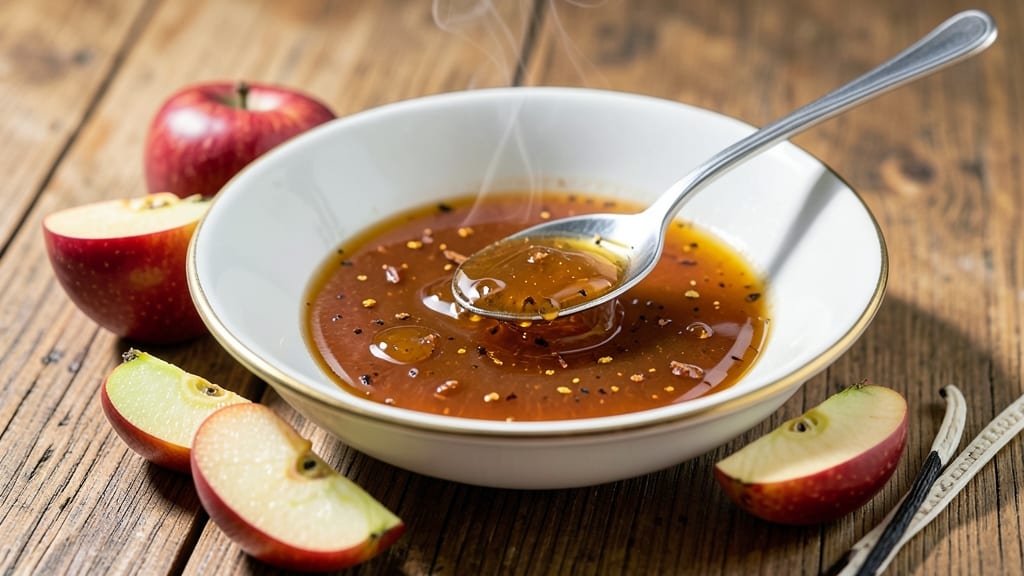
This apple reduction sauce recipe transforms simple apples into a velvety, concentrated sweetness perfect for elevating desserts, meats, or breakfast dishes.
The process is straightforward: simmer apples with sugar and acid until they break down into a glossy, syrupy sauce that clings beautifully to pancakes, roasted pork, or even vanilla ice cream.
What makes this sauce special is its versatility—it can be adjusted with spices like cinnamon or a splash of bourbon for depth, while its natural sweetness balances savory dishes effortlessly.
The magic happens at a gentle simmer, where the apples gradually dissolve into a rich, fragrant reduction. Unlike jam or compote, this sauce is smooth and drizzling-friendly, with a texture that’s neither too thick nor too thin.
The acid—whether lemon juice or vinegar—brightens the sweetness, creating a harmony that works equally well on a warm stack of cinnamon rolls or as a glaze for roasted chicken. It’s the kind of sauce that makes ordinary meals feel like a gourmet experience without requiring advanced techniques.
Once reduced, this sauce keeps beautifully in the fridge for up to two weeks or can be frozen for months, making it a pantry staple for quick flavor boosts. The possibilities are endless: drizzle it over cheesecake, swirl it into yogurt, or use it as a glaze for caramelized onions.
The key is patience—letting the sauce reduce slowly ensures a deeper, more complex flavor that’s far more impressive than anything store-bought. Ready to elevate your dishes with just a few ingredients?
For those who love customization, a pinch of cardamom or a splash of apple cider adds another layer of warmth, while a dash of vanilla extract enhances its dessert potential. The sauce’s natural sweetness also makes it a great base for cocktails, like a spiced apple reduction margarita.
Whether you’re prepping for a holiday feast or just want to add a touch of elegance to a weeknight dinner, this recipe delivers results that feel both professional and approachable.
Ingredients for apple reduction sauce
Nine simple ingredients transform tart apples into velvety, versatile sauce perfect for drizzling or pairing.
| Ingredient | Amount | Notes |
|---|---|---|
| Granny Smith Apples 🍎 | 4 medium | Peeled, cored, sliced |
| Granulated Sugar 🍚 | 1 cup | Light or dark brown preferred |
| Lemon Juice 🍋 | ¼ cup | Freshly squeezed |
| Water 💧 | ½ cup | For initial simmer |
| Ground Cinnamon 🌿 | 1 tsp | Optional for warmth |
| Vanilla Extract 🥛 | 1 tsp | Pure vanilla preferred |
| Apple Cider Vinegar 🍶 | 1 tbsp | For tangy depth |
| Unsalted Butter 🧈 | 2 tbsp | For richness at end |
| Salt 🧂 | ¼ tsp | Kosher or sea salt |
Granny Smiths are ideal—their tartness balances sweetness beautifully. Local farmers markets often have the freshest, or grab organic from Whole Foods if you want to avoid pesticides. For best results, use apples that are firm but ripe—no mealiness. If you can't find Granny Smiths, Honeycrisp or Fuji work well too, though they'll be slightly sweeter. The sugar is where you can get creative: turbinado or demerara add subtle caramel notes, while brown sugar deepens the molasses flavor. I usually grab the organic light brown sugar from Trader Joe's—it's consistent and affordable.
No Granny Smiths? Braeburn or Pink Lady apples add a nice balance of sweet and tart. Running low on lemon juice? White wine vinegar or apple cider vinegar work in a pinch—just reduce the amount by half. The butter at the end is non-negotiable for that silky texture, but if you're avoiding dairy, vegan butter or coconut oil will work just fine. For a boozy twist, swap the vanilla extract for bourbon or brandy—just reduce the water by 1 tablespoon to account for the alcohol content. The cinnamon is optional but adds warmth; if you prefer cardamom, use half the amount and toast the seeds first for deeper flavor.
This sauce thickens as it cools, so don't worry if it looks runny when done—it'll set up nicely. Store in a clean glass jar with a tight seal in the fridge for up to 2 weeks, or freeze for 3 months in ice cube trays for single-serving portions. The butter should be added off the heat to prevent graininess. For a smoother texture, strain through a fine-mesh sieve before storing. I always make a double batch—one for immediate use and one to freeze for holiday desserts.
Why You'll Love This Recipe
- Five-Ingredient Magic: I swear by this—just apples, sugar, lemon, water, and cinnamon. That’s it. No fancy gadgets, no peeling stress (peels add texture, honestly), and the sauce thickens itself as it simmers.
- Tart-Sweet Balance: Granny Smiths bring that sharp bite, but the sugar and lemon juice soften it into something rich and complex. It’s like autumn in a spoonful—bright enough to cut through rich meats or cheese, but sweet enough to make you linger.
- Pantry Staple Power: Between us, this is my go-to when I’ve got nothing but basics. A splash of lemon juice and a pinch of cinnamon turn cheap apples into something restaurant-worthy. (Yes, even on a Tuesday night when you’re craving something special.)
- Doubles as Glaze: Make a big batch—it keeps for weeks in the fridge and works as a glaze for roasted pork, a drizzle for pancakes, or even a fancy ice cream topping. I’ve used the same jar for three different meals without breaking a sweat.
Step-by-step instructions for apple reduction sauce
Transform tart Granny Smith apples into a velvety, concentrated sauce perfect for drizzling.
Prepare and Simmer the Apple Base
In a medium saucepan, combine the 4 medium peeled, cored, and sliced Granny Smith apples with the 0.5 cup water. Bring to a boil over medium-high heat, then immediately reduce to medium-low heat. Let the mixture simmer uncovered for 10-12 minutes until the apples break down and the liquid reduces by about half.
Stir occasionally to prevent sticking—you'll notice the apples soften and release their juices, creating a fragrant, slightly syrupy consistency. The goal is to create a loose purée without fully cooking the apples into mush. If the mixture starts to stick, add a splash of water, but don't over-dilute.
Add Sweetener and Acid for Balance
Once the apples have softened, stir in the 1 cup granulated sugar and the 0.25 cup lemon juice. Increase the heat to medium-high and bring the mixture back to a boil. Let it boil vigorously for 5-7 minutes, stirring frequently, until the sugar dissolves completely and the mixture thickens slightly.
This is where the magic happens—the sugar caramelizes just enough to deepen the apple flavor while the lemon juice brightens the natural tartness. Watch carefully to avoid burning; if the mixture darkens too quickly, reduce the heat slightly. The sauce should coat the back of a spoon but still be pourable.
Incorporate Aromatics and Reduce Further
Reduce the heat to low and stir in the 1 tsp ground cinnamon, 1 tsp vanilla extract, and 1 tbsp apple cider vinegar. Let the sauce simmer gently for 10-12 minutes, stirring occasionally, until it thickens to a syrupy consistency. You're looking for a reduction where the sauce coats a spoon but doesn't drip off immediately.
Here's the thing—this slow reduction develops the sauce's depth of flavor. The cinnamon and vinegar mellow out as they simmer, adding warmth and complexity. Taste as you go; if it needs more acidity, add a pinch more vinegar. If it's too sweet, balance with a splash of lemon juice. The sauce should be harmonious, with bright apple notes balanced by subtle spice.
Finish with Butter and Season
Remove the sauce from heat and let it cool slightly for 2-3 minutes. Stir in the 2 tbsp unsalted butter and the 0.25 tsp salt, whisking until the butter melts completely and the sauce becomes glossy. The butter adds richness and helps create a silky texture.
For the final touch, strain the sauce through a fine-mesh sieve if you prefer a smooth consistency, pressing on the solids with a spoon to extract every bit of flavor. Return the strained sauce to the pan and let it cool to room temperature. The sauce will thicken further as it cools, becoming even more concentrated and perfect for drizzling.
Store and Use
Transfer the finished sauce to a clean, airtight container and refrigerate for up to 1 week. The sauce will keep well in the fridge, and its flavor actually improves over time as the ingredients meld together. When ready to use, reheat gently in a saucepan over low heat, stirring occasionally, until warmed through.
This versatile sauce pairs beautifully with roasted meats, cheese boards, or even as a glaze for baked goods. The concentrated sweetness and tangy depth make it a standout addition to any dish. For best results, drizzle over warm desserts or use as a reduction for savory dishes like pork tenderloin or roasted chicken.
Pro Tips For Making Apple Reduction Sauce
- Simmer Slow and Steady: I learned this the hard way—blasting Granny Smiths on high heat turns them into glue. Keep the sauce at a gentle bubble (think tiny, lazy ripples) so the apples break down evenly and the sugar caramelizes instead of burning. This isn’t the time to rush.
- Core the Apples Properly: Peel, quarter, and remove the cores—but don’t stop there. Cut each piece into even ½-inch chunks (no bigger, no smaller). Uneven sizes mean some apples turn to mush while others stay stubbornly firm, and your sauce will have an annoying texture gap. A sharp knife and a steady hand make this easier than it sounds.
- Skip the Water Shortcut: I know, you’re thinking, "Why add water at all?" But here’s the thing: Granny Smiths release less juice than you’d expect, and skipping water means your sauce will cling to the bottom of the pan like a stubborn toddler. Use just enough (about ¼ cup) to keep things moving—enough to deglaze but not so much it dilutes the flavor.
- Balance the Sugar Early: Taste the raw apples first—yes, really. If they’re tart enough to make your mouth pucker, cut the sugar by 10 grams. Granny Smiths vary wildly, and you don’t want a sauce that tastes like candy or like someone forgot the fruit entirely. Start with ⅓ of the recipe’s sugar, then adjust as you go. You can always add more, but you can’t take it out.
Dietary considerations for these flavors
Sweetener Alternatives
This sauce works beautifully with natural sweeteners like maple syrup or honey—swap the sugar for ½ cup of either. Maple syrup adds a subtle earthiness, while honey brings floral notes.
For a keto-friendly version, use erythritol or monk fruit sweetener (about ½ cup), but reduce the liquid by 2 tbsp to account for moisture differences. 🍯
Low-Sugar Option
Cut the sugar to ½ cup and boost the acid with an extra 1 tbsp lemon juice or 1 tbsp apple cider vinegar to balance tartness. For a diabetic-friendly adaptation, use stevia (start with ½ tsp liquid stevia) and adjust to taste—it’s potent!
The sauce will be tangier but still rich. Always taste as you go to avoid over-acidifying.
Gluten-Free Assurance
All ingredients in this recipe are naturally gluten-free, but always check labels on vanilla extract and cinnamon for cross-contamination warnings. Brands like McCormick and Trader Joe’s offer certified gluten-free spices. For extra safety, use a dedicated saucepan if you’ve recently cooked gluten-containing foods. 🌾
Dairy-Free Adaptation
Replace the 2 tbsp unsalted butter with 2 tbsp coconut oil or vegan butter (like Miyoko’s) for a creamy texture. The sauce will still coat beautifully, though coconut oil adds a slight tropical note.
For a nut-free option, ensure your vanilla extract is nut-free (many brands are, but check labels).
Nut-Free and Allergen-Friendly
This recipe is naturally nut-free, but if you’re avoiding other allergens, opt for certified allergen-free vanilla extract (like Frontier Co-op) and organic apples to minimize risks. For egg-free needs, no adjustments are necessary—this sauce is entirely egg-free. Always double-check ingredient labels, especially for pre-made extracts or spices.
Nutrition facts
Frequently asked questions
Can I use any apples for this reduction sauce?
Granny Smith apples work best because their tartness balances the sweetness beautifully. For a sweeter sauce, try Honeycrisp or Fuji apples—just reduce the sugar by 1-2 tablespoons to avoid overpowering the flavor. Avoid overly soft or mealy apples, as they won't break down properly during reduction.
How do I know when the sauce is fully reduced?
The sauce is ready when it coats the back of a spoon but still drizzles smoothly. For a more concentrated version (like for glazes), reduce it further until it's almost syrupy—this takes 10-15 extra minutes of simmering. Test by chilling a small amount: if it thickens noticeably, it's perfect for drizzling.
Can I make this sauce without butter?
Yes! For a dairy-free version, replace the butter with 2 tbsp coconut oil or vegan butter (like Miyoko's). The sauce will still be rich and glossy, though coconut oil adds a subtle tropical note. If you're avoiding all fats, simply omit it—the sauce will be lighter but still flavorful.
Why did my sauce turn out too thick?
Over-reducing or using softer apples can make the sauce too thick. To fix it, stir in 1-2 tbsp warm water and reheat gently until smooth. For future batches, reduce heat slightly during the final simmer to control thickness. If it's still too thick after reheating, strain it through a fine-mesh sieve to remove any apple fibers.
How can I use this sauce beyond desserts?
This versatile sauce elevates savory dishes too! Drizzle it over roasted pork tenderloin, grilled chicken, or caramelized onions for a sweet-savory contrast. It also pairs well with cheese boards (especially goat cheese) or as a glaze for baked brie. The acidity cuts through richness, making it a great finishing touch.