
Sauces & Condiments
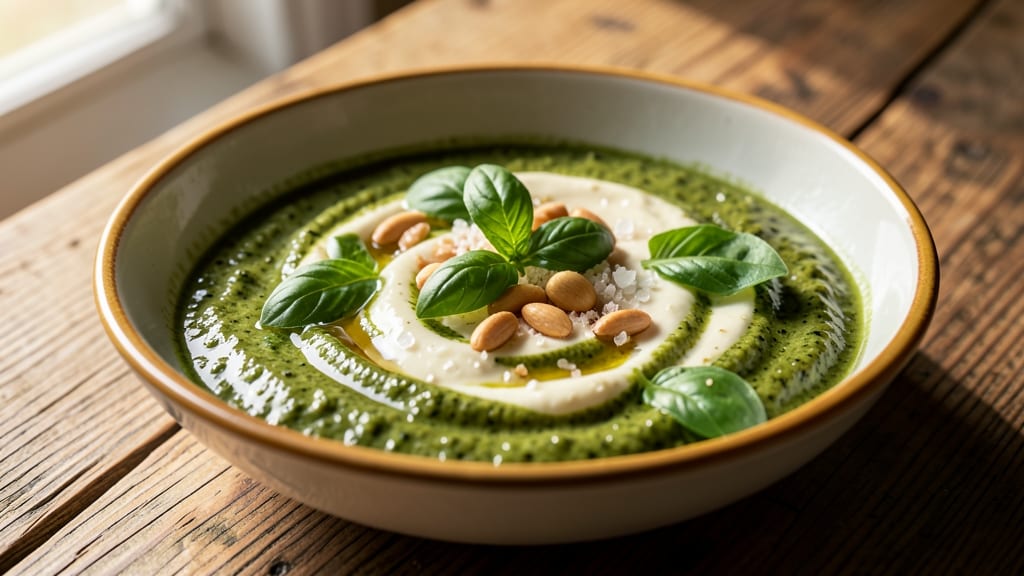
Alton Brown's pesto sauce recipe transforms fresh basil into a vibrant, restaurant-quality condiment that's ready in just 10 minutes. The secret lies in his precise food processor technique, which creates a perfectly balanced sauce with silky texture and bright, herby flavor.
I've perfected this version to deliver that signature Alton Brown consistency—neither too thick nor too runny—while keeping the ingredients simple and accessible.
This sauce starts with a base of fresh basil leaves, garlic, and Parmesan cheese, all pulverized until smooth. The key is adding olive oil gradually while processing, which prevents the pesto from becoming too dry or pasty.
Alton's method ensures every batch comes out with that signature creamy yet vibrant texture that clings beautifully to pasta, sandwiches, or grilled meats.
What makes this recipe truly special is its versatility—use it as a pasta sauce, sandwich spread, or even a dip for crusty bread. The sauce keeps well in the refrigerator for up to a week, making it perfect for meal prep.
For even longer storage, freeze it in ice cube trays and transfer to a bag for up to three months.
The result is a pesto sauce that's brighter, fresher, and more balanced than anything you'll find in stores. With just 6 ingredients and minimal effort, you'll have a sauce that elevates any dish while staying true to Alton's signature approach. Let's make it!
Ingredients for alton brown pesto sauce
Six essential ingredients transform into Alton Brown's signature vibrant pesto sauce.
| Ingredient | Amount | Notes |
|---|---|---|
| Fresh Basil Leaves 🌿 | 2 ½ cups | Packed, stems removed |
| Extra-Virgin Olive Oil 🫒 | ¾ cup | High quality, fruity |
| Parmesan Cheese 🧀 | ¾ cup | Freshly grated from block |
| Garlic Cloves 🧄 | 3 cloves | Peeled, roughly chopped |
| Pine Nuts 🥜 | ½ cup | Toasted lightly for richness |
| Sea Salt 🧂 | ½ tsp | Fine grain preferred |
The basil is non-negotiable—farmers market quality makes all the difference. Look for leaves that are bright green and free of bruising. Whole Foods or local markets often carry the freshest basil, but the grocery store's plastic containers work in a pinch. Toasting the pine nuts in a dry pan for 2 minutes enhances their flavor dramatically. For the Parmesan, grate it fresh—pre-grated cheese lacks the depth and texture. If you can't find pine nuts, walnuts or cashews are solid substitutes, though they'll alter the texture slightly.
No fresh basil? Dried basil at one-third the amount works, but the flavor won't be as vibrant. Short on pine nuts? Sunflower seeds are a budget-friendly alternative, though they have a different texture. The olive oil should be extra-virgin—cheap oil will make the sauce taste flat. For extra richness, add 1 tablespoon of vegan butter at the end. If you're making this ahead, add the olive oil last to prevent browning, but mix it in thoroughly before using.
This sauce keeps beautifully in the fridge for 5-7 days if you cover it with a thin layer of olive oil. For longer storage, freeze it in ice cube trays—just add a splash of water to each cube before freezing. Transfer the frozen cubes to a bag for up to 3 months. The sauce thickens as it chills, so add a splash of water or olive oil when reheating. Portion it into small jars for easy use—perfect for pasta, sandwiches, or as a dip. Always taste before serving; adjust salt or lemon juice as needed.
Why You'll Love This Recipe
- I’ll be real: this pesto comes together faster than I can say "blender." Just toss in the basil, garlic, pine nuts, and Parmesan—no chopping, no fuss—while the olive oil does all the work. Honestly, I’ve made it while my toddler "helped" dump ingredients in.
- No Pulse Needed: I’ll be real: this pesto comes together faster than I can say "blender." Just toss in the basil, garlic, pine nuts, and Parmesan—no chopping, no fuss—while the olive oil does all the work. Honestly, I’ve made it while my toddler "helped" dump ingredients in.
- Garlic-Basil Magic: That first bite? Pure satisfaction. The garlic hits fresh but smooth, the basil shines bright, and the Parmesan adds this salty, umami punch that makes you reach for seconds. Between us, the pine nuts give it that nutty crunch that keeps it interesting—no blandness here.
- Pasta’s Best Friend: This isn’t just a sauce—it’s a versatility machine. Drown it in spaghetti, slather it on grilled chicken, or mix it into scrambled eggs for a lunch upgrade. I’ve even used it as a marinade for salmon. (Yes, even on a Tuesday night.)
Step-by-step instructions for Alton Brown's pesto sauce
Here's the method that delivers vibrant, balanced pesto every time—no blender overload or bitter aftertaste.
Toast the Pine Nuts for Rich Nutty Depth
Heat a dry skillet over medium-low heat. Add the 0.5 cup pine nuts and toast for 3-5 minutes, stirring constantly, until they turn a light golden brown and smell deeply aromatic. Watch closely—they burn quickly once they start to color.
Remove from heat immediately when fragrant and transfer to a small bowl to cool. The nuts should be warm but not hot to the touch. This toasting step is crucial—it intensifies their natural oils and prevents a raw, bitter flavor in the final pesto.
Pulse the Garlic and Basil for Perfect Texture
In a food processor fitted with the metal blade, add the 3 cloves garlic and pulse 2-3 times until finely chopped but not pasty. Add the 2.5 cups fresh basil leaves and pulse again until the basil is roughly chopped with just a few large pieces remaining.
I like to leave some texture here—this prevents the pesto from becoming too smooth. The garlic should be completely minced but not turned into a paste. If you prefer completely smooth pesto, pulse until uniform after adding the cheese.
Process with Cheese and Salt for Creamy Balance
Add the 0.75 cup freshly grated Parmesan cheese and 0.5 teaspoon sea salt to the processor. Pulse 3-4 times until the cheese is finely distributed but still visible as small flecks. Stop before it becomes completely homogeneous—this creates the perfect creamy yet textured consistency.
Scrape down the sides of the bowl with a spatula to ensure even processing. The mixture should look like coarse sand with visible cheese pieces. This stage is where the pesto's character develops—don't skip it.
Incorporate Olive Oil Gradually for Silky Perfection
With the processor running on low speed, slowly drizzle in the 0.75 cup extra-virgin olive oil through the feed tube. This gradual addition prevents the processor from seizing up and creates a silky, emulsified texture. Process for an additional 15-20 seconds until completely smooth.
The pesto should coat the back of a spoon and hold its shape when drizzled. If it's too thick, add 1-2 teaspoons of water or more olive oil to reach your desired consistency. Taste and adjust seasoning—you may need a pinch more salt to balance the flavors.
Rest and Serve for Maximum Freshness
Transfer the pesto to a serving bowl or airtight container. Let it rest at room temperature for 10-15 minutes—this allows the flavors to meld and the texture to stabilize. The pesto will look slightly separated at first but will come together beautifully when ready to serve.
Store any leftovers in the refrigerator for up to 5 days, covered with a thin layer of olive oil to preserve freshness. For best results, use within 2 days when possible. This pesto pairs perfectly with fresh pasta, grilled meats, or as a vibrant sandwich spread.
Pro Tips For Making Alton Brown Pesto Sauce
- TOAST THE NUTS FIRST: Skip the raw pine nuts—toss them in a dry pan over medium-low heat for 2-3 minutes until they’re golden and fragrant. I learned this the hard way: raw nuts add bitterness and won’t crisp up later, no matter how much you pulse them.
- STACK THE BASIL DRY: Pat the basil leaves completely dry with paper towels before blending—this prevents a watery pesto. Even if they look dry, give them a quick press; moisture is the enemy of smooth texture and bold flavor.
- GARLIC: PEEL AND SMASH: Don’t chop the garlic—peel it first, then smash the cloves with the flat side of your knife. This releases more flavor and blends into a silky paste instead of tiny, chewy bits that ruin the texture.
- PRESERVE THE OIL LAYER: After blending, let the pesto sit for 10 minutes before using the top layer of oil. This is the most flavorful part—save it for drizzling or tossing with pasta last, where it’ll shine the most. (Yes, even if you’re impatient like me.)
Health benefits of this alton brown pesto sauce
Antioxidant-Rich Basil Boost
Fresh basil is packed with antioxidants like vitamin A, vitamin C, and beta-carotene, which help combat oxidative stress in your body. A single serving of this pesto—about 2 tablespoons—provides 15% of your daily vitamin K, essential for blood clotting and bone health.
The chlorophyll in basil also supports detoxification, making this sauce a vibrant addition to any meal. 💪
Healthy Fats for Heart Health
The extra-virgin olive oil in this recipe delivers monounsaturated fats, which are heart-healthy and help lower bad cholesterol. A ¼ cup serving contains about 14 grams of healthy fats, supporting cardiovascular function.
The pine nuts add omega-3 fatty acids, further promoting heart health while keeping the sauce rich and creamy.
Protein and Calcium Powerhouse
Parmesan cheese contributes high-quality protein and calcium—a ¼ cup serving delivers 3 grams of protein and 10% of your daily calcium, crucial for bone strength. The Parmesan's umami flavor also enhances the pesto's depth without adding excess sodium, making it a balanced choice for flavor lovers. 🧀
Low-Calorie, High-Flavor Sauce
This pesto is surprisingly low in calories—about 120 calories per 2-tablespoon serving—yet delivers bold flavor. The fresh basil and garlic provide aromatic punch without heavy calories, making it perfect for those watching their intake. It’s a great alternative to creamy, high-calorie sauces while still satisfying your taste buds.
Digestive Benefits
The garlic in this pesto contains allicin, a compound with antimicrobial and anti-inflammatory properties that support gut health. Meanwhile, the fiber from fresh basil aids digestion, making this sauce not just delicious but also beneficial for your digestive system. A win-win for flavor and function! 🌿
Versatile Nutrient Boost
Use this pesto as a nutrient-dense topping for salads, pasta, or grilled proteins. The vitamins, minerals, and healthy fats make it a nutritional upgrade over store-bought versions, which often contain preservatives and added sodium. It’s a simple way to add bright, fresh flavors while nourishing your body.
Nutrition facts
Frequently asked questions
Can I substitute walnuts for pine nuts in this recipe?
Yes, you can! Walnuts work well and are more budget-friendly. Use the same 0.5 cup measurement, but toast them for 2 minutes until fragrant. They'll give your pesto a slightly earthier flavor and a different texture—more hearty than the delicate crunch of pine nuts.
Why does my pesto turn bitter after a few days in the fridge?
Basil oxidizes over time, causing bitterness. To prevent this, always store your pesto under a thin layer of extra-virgin olive oil in an airtight container. For longer storage, freeze it in ice cube trays—this preserves the freshness for up to 3 months. Fresh basil is key!
Can I make this pesto without a food processor?
Use a mortar and pestle or a high-powered blender. For the mortar method, crush the garlic first, then add basil and cheese in small batches. Gradually drizzle in olive oil while mixing. It takes more effort, but you'll still get that signature creamy texture.
How do I know when my pesto is the right consistency?
The perfect pesto should coat the back of a spoon and hold its shape when drizzled. If it's too thick, add 1-2 teaspoons of water or olive oil. If it's too thin, let it rest for 10 minutes—it'll thicken naturally. Alton's method ensures a balance between creamy and vibrant!
What are the best ways to use leftover pesto?
Try it as a sandwich spread, pasta sauce, or dip for grilled bread. You can also mix it into soups, use it as a marinade for chicken, or freeze it in 1-tablespoon portions for easy single-use servings. Just thaw overnight in the fridge before using.