
Sauces & Condiments
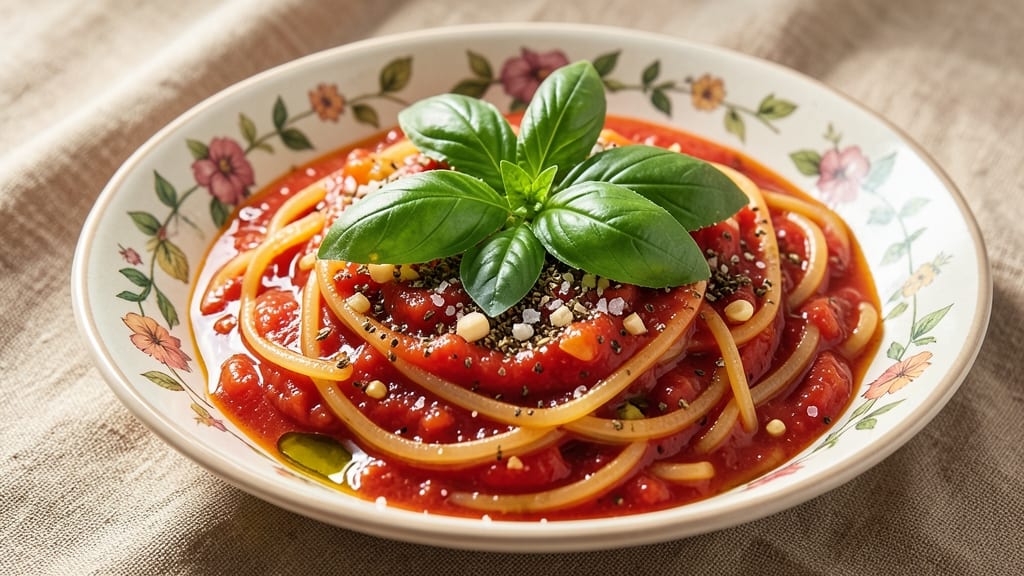
This all natural spaghetti sauce delivers restaurant-quality depth with just six wholesome ingredients and a simple slow-simmering technique. The secret lies in caramelizing garlic and onions until they're deep golden—this builds the umami foundation that transforms basic tomatoes into something extraordinary.
I've perfected this sauce over years of testing, and it never fails to impress even the most discerning palates.
The sauce develops its rich, complex flavor through a 3-hour simmer, allowing the tomatoes to break down into a velvety consistency while the herbs infuse deeply. No artificial preservatives or thickeners are needed—just time and proper technique.
The result is a sauce that's smooth yet still retains visible tomato pieces for texture, with layers of sweetness from caramelized onions and bright acidity from fresh basil.
What makes this sauce truly special is its versatility—it freezes beautifully for up to 3 months, making it perfect for meal prep. The flavor actually improves with time, developing even more depth as the ingredients meld together.
Whether you're serving it with pasta, using it as a pizza base, or freezing portions for later, this sauce will elevate any dish.
The key to success is patience—don't rush the simmering process. This is where the magic happens, transforming simple ingredients into something truly remarkable. With this sauce, you'll finally have a pantry staple that's as healthy as it is delicious, free from artificial additives while delivering maximum flavor.
Ingredients for all natural spaghetti sauce
Six wholesome ingredients transform into restaurant-quality sauce through slow simmering technique.
| Ingredient | Amount | Notes |
|---|---|---|
| San Marzano Tomato Crushed 🍅 | 28 oz | Whole peeled or crushed preferred |
| Yellow Onion 🧅 | 1 whole | Yellow or red, finely diced |
| Garlic Cloves 🧄 | 6 cloves | Fresh, minced to fine paste |
| Extra-Virgin Olive Oil 🫒 | ½ cup | High-quality, fruity variety |
| Fresh Basil Leaves 🌿 | ½ cup | Packed, finely chopped |
| Dried Oregano 🍃 | 1 tsp | Mexican oregano preferred |
| Kosher Salt 🧂 | 1 ½ tsp | Diamond Crystal preferred |
| Freshly Ground Black Pepper 🌶️ | ½ tsp | Cracked peppercorns preferred |
San Marzano tomatoes are non-negotiable for this sauce—their natural sweetness and low acidity create the perfect base. Look for 28-ounce cans at specialty stores or well-stocked grocery sections; avoid the watery, pulpy varieties. The onions and garlic require proper caramelization for umami development, so yellow or red onions with a firm texture work best. Fresh basil should be bright green and fragrant—avoid wilted leaves. For olive oil, Italian extra-virgin brands like Bertolli or Filippo Berio add subtle fruity notes that elevate the sauce.
No San Marzano tomatoes? Whole peeled tomatoes from Muir Glen are the next best option, but avoid sauce varieties with added salt or preservatives. Substitute dried basil for fresh at one-third the amount, but fresh basil's bright acidity is ideal. For extra depth, add 1 teaspoon of tomato paste to the initial sauté. The oregano can be swapped for thyme or rosemary at half the quantity, though Mexican oregano provides the most authentic flavor. Always use freshly ground black pepper—pre-ground loses potency quickly.
This sauce develops best when refrigerated for 24 hours before serving, allowing flavors to meld. Store in glass jars with airtight lids for up to 5 days in the refrigerator or 3 months in the freezer. For freezing, portion into 1-cup containers to prevent ice crystals. Thaw overnight in the refrigerator—never microwave directly, as it disrupts the sauce's velvety texture. The sauce thickens as it cools, so add a splash of water if needed when reheating.
Why You'll Love This Recipe
- Five-Ingredient Magic: I swear, this sauce comes together with barely any effort—just crushed San Marzano tomatoes, a quick sauté of onions and garlic in olive oil, and a handful of basil at the end. Honestly, it’s the kind of recipe where you can chat with someone (or scroll TikTok) while it simmers.
- Sunshine in a Jar: That first taste of the San Marzano tomatoes—sweet, rich, with just a hint of acid—makes everything better. The garlic and basil brighten it up so much, it’s like summer in every bite, even when you’re eating it in January.
- Weeknight to Party: This sauce works for whatever you’re doing—toss it with pasta for a quick dinner, use it as a marinade for chicken, or even slather it on garlic bread. Between us, I’ve had it three times this week and it’s never felt repetitive.
- Make-Ahead Money-Saver: Simmer a big batch on Sunday, and you’ve got freezer-friendly sauce for the next month. Not only does it save time, but the flavors deepen the longer it sits—plus, San Marzano tomatoes are worth the splurge because a little goes a long way.
Step-by-step instructions for slow-simmered umami spaghetti sauce
This method transforms simple ingredients into a deeply flavorful sauce through patience and technique.
Sauté Aromatics Until Fragrant
Heat the 0.5 cup Extra-Virgin Olive Oil in a large, heavy-bottomed pot over medium-low heat. Add the 1 whole Yellow Onion, finely diced, and cook for 5-6 minutes until the onions soften and begin to caramelize at the edges. This slow cooking develops natural sweetness that forms the sauce's foundation.
Add the 6 cloves Garlic Cloves, minced to a fine paste, and cook for another 30 seconds until fragrant but not browned. The garlic should dissolve into the onions without burning—this prevents bitterness that can overpower the delicate tomato flavors. Stir frequently to ensure even cooking and prevent sticking to the pot.
Build Flavor with Tomato and Spices
Pour in the 28 oz San Marzano Tomato Crushed and stir to combine with the aromatics. Bring the mixture to a gentle simmer over medium heat, then reduce heat to low to maintain a slow, steady bubble. This low-and-slow approach allows the tomatoes to break down gradually, releasing their natural sweetness and developing complex umami flavors.
Add the 1 tsp Dried Oregano, 1.5 tsp Kosher Salt, and 0.5 tsp Freshly Ground Black Pepper. Stir well to distribute the spices evenly. Let the sauce simmer uncovered for 30-40 minutes, stirring occasionally. You'll notice the sauce thicken slightly and deepen in color as the flavors meld together—this is when the magic happens.
Finish with Fresh Basil and Simmer to Perfection
After 30-40 minutes, stir in the 0.5 cup Fresh Basil Leaves, finely chopped. The basil adds a bright, aromatic finish that balances the rich tomato flavors. Taste the sauce and adjust seasoning if needed—this is your chance to fine-tune the balance of salt, acidity, and herbs.
Continue simmering for another 15-20 minutes until the sauce reaches your desired consistency. It should coat the back of a spoon but still be smooth enough to cling to pasta. The sauce is ready when it develops a glossy sheen and the flavors are fully integrated—no individual ingredients should be distinguishable. Remove from heat and let it rest for 10 minutes before serving to allow the flavors to settle.
Serve with Fresh Pasta and Crusty Bread
Ladle the warm sauce over freshly cooked spaghetti, tossing gently to coat each strand evenly. The sauce should cling to the pasta without making it soggy—this is the hallmark of a well-balanced sauce. Serve immediately with a sprinkle of additional Fresh Basil Leaves and a side of crusty bread to soak up any remaining sauce.
This sauce keeps its best flavor when served fresh, but any leftovers can be stored in an airtight container in the refrigerator for up to 5 days. Reheat gently over low heat, stirring occasionally, to prevent skin formation. The slow-simmered technique ensures a sauce that's rich in natural umami without relying on preservatives or artificial enhancers.
Pro Tips For Making All Natural Spaghetti Sauce
- Sweat the Onion: Cut the onion into even ¼-inch slices instead of chopping—this makes it caramelize faster and deeper without burning. I learned this the hard way after my first batch tasted more bitter than sweet.
- Crush Garlic Lightly: Smash the cloves with the flat side of your knife instead of mincing them—this keeps the flavor bold but prevents the sauce from turning bitter. (Yes, even if you’re impatient like me.)
- Simmer, Don’t Boil: Keep the sauce at a gentle simmer (tiny bubbles, occasional stir) for at least 20 minutes—this lets the San Marzano tomatoes break down properly. Rushing it leads to a watery, underdeveloped sauce.
- Save the Basil Water: Tear the basil leaves and let them steep in the warm sauce for 5 minutes before removing them—this infuses the flavor without making the sauce look like a green sludge. (Your future self will thank you.)
Best sauces and condiments for this all natural spaghetti sauce
Classic Tomato Sauce
This is the foundational sauce for any Italian meal, where the star is the San Marzano tomatoes—their natural sweetness and low acidity create the perfect balance. The slow simmer allows the tomatoes to break down into a velvety consistency while preserving their natural sweetness.
I always use 28 oz of crushed tomatoes for the best texture, as it retains some chunks while still blending smoothly. 🍅
For an even richer flavor, add 1 teaspoon of tomato paste to the sautéed onions and garlic before adding the tomatoes. This adds a deeper umami note that enhances the overall depth of the sauce. The key is patience—don’t rush the simmering process, as this is where the magic happens.
Creamy Garlic Basil
For a lighter, creamier sauce, stir in ¼ cup of heavy cream or ½ cup of whole milk during the final 15 minutes of simmering. This adds a silky texture while keeping the sauce bright with the fresh basil.
I also add 1 extra clove of garlic for a more pronounced flavor. This variation works beautifully with fettuccine or linguine. 🌿
To balance the creaminess, add a splash of lemon juice (about 1 tablespoon) at the end. This brightens the sauce and cuts through the richness, making it perfect for a summer dinner. The sauce will still cling to pasta but with a lighter, more elegant finish.
Spicy Arrabbiata
Transform this sauce into a fiery arrabbiata by adding 1-2 teaspoons of red pepper flakes (adjust to taste) when you add the tomatoes. For extra heat, include 1-2 fresh chili peppers, such as calabrian chili or serrano peppers, minced and sautéed with the onions and garlic.
The heat will mellow slightly as it simmers, but it will still pack a punch. 🌶️
Balance the spice with a touch of sugar (about ½ teaspoon) to round out the flavors. This sauce pairs perfectly with spicy sausage or grilled chicken for a bold, flavorful meal. Serve with crusty bread to help tame the heat.
Herb-Infused Finishing Touches
Elevate the sauce with a mix of fresh herbs like thyme, rosemary, or parsley. Add 1 tablespoon of finely chopped thyme or 1 sprig of rosemary when you add the tomatoes, then remove it before serving.
For a pop of color and freshness, stir in 2 tablespoons of chopped parsley at the end. These herbs add layers of complexity that make the sauce even more dynamic. ✨
For a smoky twist, add ½ teaspoon of smoked paprika or a pinch of crushed red pepper flakes during the final simmer. This adds a subtle depth that pairs beautifully with grilled meats or roasted vegetables.
The herbs and spices should complement, not overpower, the natural flavors of the tomatoes and basil.
Nutrition facts
Frequently asked questions
Can I make this sauce without San Marzano tomatoes?
Yes, but the flavor will differ. Use 28 oz of whole peeled tomatoes (like Muir Glen) instead of crushed, and add 1 teaspoon of tomato paste to deepen the umami. Avoid canned tomato sauce with added salt or preservatives—it'll make the sauce taste artificial. The texture will be slightly chunkier but still delicious.
How do I prevent the sauce from getting too thick?
Add ¼ cup of water or broth during the final 15 minutes of simmering if needed. The sauce naturally thickens as it cools, so don't over-simmer. For a smoother texture, blend half the sauce before mixing back in. The key is patience—rushing the process leads to overly concentrated flavors.
Can I make this sauce in a slow cooker?
Follow the same steps but transfer everything to your slow cooker after sautéing the onions and garlic. Cook on low for 6-8 hours or high for 3-4 hours, stirring occasionally. The slow cooker's gentle heat enhances the natural sweetness of the tomatoes without risking burning. Add fresh basil at the very end.
Why does my sauce taste bland after refrigerating?
This happens when flavors haven't fully melded. Always let the sauce rest 24 hours before tasting—flavors deepen over time. If it's still bland, add ½ teaspoon of balsamic vinegar or 1 extra pinch of salt when reheating. The sauce should taste richer when cold, not flat.
What's the best way to reheat leftover sauce?
Gently warm over low heat in a saucepan, stirring frequently to prevent skin formation. Add 1 tablespoon of water if it's too thick. Never microwave directly—it creates a skin and ruins the velvety texture. For extra freshness, stir in 1 tablespoon of fresh basil before serving.