
Sauces & Condiments
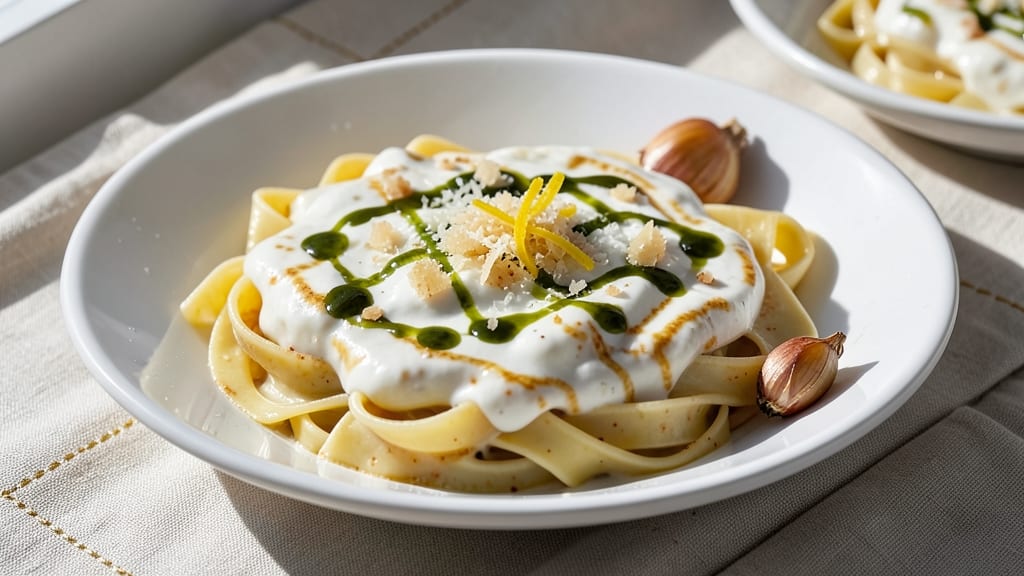
This Alfredo sauce recipe using Greek yogurt transforms classic richness into a lighter, tangier version that still clings perfectly to pasta. The secret lies in balancing creamy Greek yogurt with garlic, Parmesan, and a touch of cornstarch for that signature velvety texture—without the heavy cream.
I developed this after craving alfredo's comfort but wanting a lighter option that still delivered on flavor and creaminess.
The result is a sauce that's vegetarian-friendly, protein-rich, and versatile enough for pasta, dips, or protein toppings. Unlike traditional recipes, this version stays smooth and thickens naturally as it cools, making it ideal for meal prep.
The garlic and lemon zest add brightness that cuts through the richness, while the Parmesan provides that unmistakable cheesy depth.
What makes this sauce truly special is how it elevates simple meals—imagine twirled around fettuccine, drizzled over grilled chicken, or even as a creamy dip for veggies.
It reheats beautifully and keeps for up to 5 days in the fridge, so you can make a batch and use it all week. The best part? No one will guess it's lighter than classic alfredo.
For extra creaminess, strain the yogurt first to remove excess liquid, or whisk in a bit of cornstarch for instant thickening. Serve immediately for the silkiest texture, or let it sit for 10 minutes to thicken naturally. Here's how to make it perfectly every time.
Ingredients for alfredo sauce recipe using greek yogurt
Eight ingredients for a sauce that tastes rich but stays light and guilt-free.
| Ingredient | Amount | Notes |
|---|---|---|
| Plain Greek Yogurt 🥛 | 2 cups | Full-fat for creaminess (or 2% if preferred) |
| Extra-Virgin Olive Oil 🫒 | ½ cup | High quality, fruity variety |
| Fresh Garlic Cloves 🧄 | 4 cloves | Minced for best flavor |
| Parmesan Cheese 🧀 | 1 cup | Freshly grated from block |
| Cornstarch 🌾 | 1 tbsp | For thickening (or arrowroot powder) |
| Lemon Zest 🍋 | 1 tbsp | Brightens the whole sauce |
| Sea Salt 🧂 | ½ tsp | Adjust to taste |
| Black Pepper 🌶️ | ¼ tsp | Freshly ground preferred |
| Vegetable Broth 💧 | ½ cup | Low-sodium preferred |
| Nutritional Yeast 🍞 | 2 tbsp | For cheesy depth (optional) |
The Greek yogurt is the star—full-fat gives the best creaminess, but 2% works if you prefer. Strain it first if it's too thick by pressing it through a clean kitchen towel for 10 minutes. I grab Fage 5% or Siggi's from the store, but any plain Greek yogurt will do. Freshly grated Parmesan is non-negotiable here—pre-grated gets clumpy and lacks flavor. For the garlic, roast it first (400°F for 15 minutes) if you want a sweeter, deeper flavor. The olive oil should be the kind you'd drizzle on bread—none of that cheap cooking oil.
No cornstarch? Arrowroot powder works 1:1, or blend a pinch of flour with cold water to make a slurry. Short on Parmesan? Pecorino Romano is a great swap, or add an extra tablespoon of nutritional yeast for cheesy flavor. The vegetable broth keeps it light but adds depth—low-sodium is key so you don't over-salt. For extra richness, stir in a splash of unsweetened almond milk at the end. The lemon zest is optional but adds that bright pop that makes this sauce sing. Want it even lighter? Halve the yogurt and add an extra 0.25 cup of broth.
This sauce thickens as it cools, so strain it again before serving if it's too thin. Keeps for 5 days in the fridge, but the flavor actually improves after a night in the fridge—it mellows out beautifully. Freezes for 3 months if you portion it into ice cube trays first. I always make a double batch—one for pasta night, one for dipping grilled veggies. The leftovers reheat perfectly with a splash of water or broth to loosen it up.
Why You'll Love This Recipe
- No Heavy Cream Needed: I’ll admit, I was skeptical at first—swapping rich cream for tangy Greek yogurt? But the texture? Chef’s kiss. The cornstarch gives it that velvety cling without the greasy aftertaste, and the yogurt keeps it light enough to toss with fettuccine or drizzle over grilled chicken.
- Garlic-Parmesan Punch: Between us, this sauce is ridiculously flavorful for how little you do. Fresh garlic sizzled in olive oil until it’s just golden (not burnt, don’t mess this up) and folded into that yogurt base? It’s like a creamy, garlicky hug for your pasta—no heavy cream, no weird aftertaste, just pure, bright umami.
- Weeknight to Dinner Party: Honestly, this is my go-to for both lazy Tuesdays and when I’m hosting. For mealtime, it’s ready in 15 minutes. For company, I double the batch, add a splash of pasta water, and boom—elegant, restaurant-worthy sauce that doesn’t require a degree in culinary arts.
- Budget-Friendly Leftovers: I make a big batch and keep it in the fridge for up to five days. The yogurt keeps it fresh, and the Parmesan adds that aged richness without breaking the bank. Slather it on toast for breakfast, toss it with roasted veggies, or freeze half for those nights when you just can’t face cooking.
Step-by-step instructions for lightened-up Greek yogurt Alfredo
This creamy, tangy sauce comes together faster than you'd expect—no heavy cream needed.
Bloom the Cornstarch and Toast the Garlic
In a medium saucepan, whisk together the 2 cups plain Greek yogurt, 0.5 cup extra-virgin olive oil, and 1 tbsp cornstarch until completely smooth. The cornstarch will dissolve into the yogurt mixture, creating a natural thickening agent without lumps. I like to use a whisk for this step to ensure everything blends evenly—any clumps will make your sauce grainy.
Heat the saucepan over medium-low heat and add the 4 minced fresh garlic cloves. Let them cook gently for 2-3 minutes until they're fragrant but not browned—you want that sweet, mellow garlic flavor, not bitter notes. Stir occasionally so the garlic doesn't stick to the bottom. This low-and-slow approach prevents the yogurt from curdling, which is the biggest risk when heating dairy-based sauces.
Add Broth and Nutritional Yeast for Depth
Pour in the 0.5 cup vegetable broth and scrape up any browned bits from the bottom of the pan—those contain concentrated flavor. Add the 2 tbsp nutritional yeast and stir well. The nutritional yeast gives this sauce that extra cheesy depth without needing extra dairy. Let the mixture simmer gently for 3-4 minutes, stirring occasionally, until it begins to thicken slightly. You're looking for a consistency where it coats the back of a spoon but isn't gluey yet.
Here's where it gets good: Taste and adjust the seasoning with 0.5 tsp sea salt and 0.25 tsp black pepper. The yogurt's natural tang might need a little extra salt to balance it out. If you're using full-fat yogurt, you might need slightly less salt than if you're using 2%. This is your chance to customize it to your taste—just remember, you can always add more salt later if needed.
Incorporate the Parmesan and Lemon Zest
Remove the sauce from heat and let it cool for 1 minute—this prevents the Parmesan from seizing up when added to hot liquid. Then, gradually whisk in the 1 cup freshly grated Parmesan cheese until fully melted and smooth. The cheese should blend in completely, giving the sauce that classic Alfredo color and rich flavor. If you're using pre-shredded cheese, you might end up with a slightly grainier texture, so freshly grating makes a noticeable difference.
Add the 1 tbsp lemon zest and stir well. The lemon zest brightens up the whole sauce, cutting through the richness of the yogurt and Parmesan. Give it one final taste—you should notice the tangy, creamy, slightly nutty, and cheesy flavors all coming together. If the sauce is too thick, you can thin it with a splash of warm water or more broth. If it's too thin, let it sit for another minute or two to thicken further.
Finish and Use Immediately
For the best texture, use the sauce immediately over pasta, grilled chicken, or roasted vegetables. The sauce will continue to thicken slightly as it sits, so if you're not using it right away, keep it warm over low heat, stirring occasionally to prevent a skin from forming. I like to toss it with hot pasta right before serving—this helps the sauce cling beautifully to each strand.
This sauce keeps its creamy texture without being heavy, thanks to the yogurt's natural protein content. It's also much lighter than traditional Alfredo, making it perfect for those watching their fat intake but still craving rich, cheesy goodness. Store any leftovers in an airtight container in the refrigerator for up to 3 days, though I find it's best used fresh. When reheating, do so gently over low heat to prevent curdling.
Pro Tips For Making Alfredo Sauce Recipe Using Greek Yogurt
- Warm the Yogurt First: Cold Greek yogurt will curdle like a science experiment gone wrong. Gently warm it in a small saucepan over low heat—just until it reaches room temperature (about 5 minutes)—before mixing it with anything else. I learned this the hard way when my sauce separated into a sad, lumpy mess.
- Toast the Garlic Lightly: Fresh garlic cloves should sizzle in olive oil for 30 seconds until fragrant but not brown—burnt garlic tastes bitter and overpowers the sauce. Remove them immediately with a slotted spoon; you’ll only need 1-2 minced cloves for this recipe, not a whole head.
- Mix Cornstarch with Cold Water: Skip the dry cornstarch and make a slurry with 1 teaspoon cornstarch + 1 tablespoon cold water. Whisk it into the warm yogurt mixture slowly to thicken without clumping—dry cornstarch creates lumps that ruin the silky texture.
- Grate Parmesan Fresh: Pre-shredded cheese is coated with anti-caking agents that make the sauce grainy. Use a microplane or fine grater for ¼ cup freshly grated Parmesan—it dissolves smoothly into the yogurt and adds depth the store-bought version can’t match.
Wine and beer pairings for this recipe
White Wine Pairings
A crisp, dry Italian white wine like Pinot Grigio from Alto Adige or Vermentino from Sardinia complements this Greek yogurt Alfredo beautifully. Their bright acidity and citrus notes mirror the lemon zest in the sauce, while their light body won’t overwhelm the dish.
I always reach for a chilled bottle of Santa Margherita Pinot Grigio—it’s my go-to for balancing the creamy richness without making the sauce taste heavy. 🍷
For something slightly bolder, try a dry sparkling wine like Prosecco—the bubbles cut through the sauce’s creaminess, cleansing your palate between bites. A 2018 La Gioiosa Prosecco from Italy adds a festive touch while keeping the meal feeling light and refreshing.
Avoid oaky whites like Chardonnay, as they’ll clash with the yogurt’s tang.
Light Beer Options
If you prefer beer, opt for a crisp lager with subtle malt sweetness to match the sauce’s creamy profile. A Peroni or Heineken works perfectly—their clean, effervescent quality balances the richness without adding bitterness.
For a craft option, try a Belgian witbier like Hoegaarden, which adds a touch of spice and citrus from coriander and orange peel. 🍺
Avoid heavy stouts or IPAs—their bold hoppiness will compete with the sauce’s delicate garlic and lemon notes. Instead, stick to pilsners or pale ales with a light malt profile, like Leffe Blonde or Blue Moon.
These beers enhance the dish without overpowering it, making each bite feel fresh and balanced.
Unexpected Pairings
For a non-alcoholic twist, sparkling water with a squeeze of lemon or iced hibiscus tea (like Adawale) adds a refreshing contrast. The tartness of the tea or lemon enhances the sauce’s brightness, while the effervescence keeps your palate clean.
I love serving this with sparkling water infused with cucumber slices for a spa-like touch. ✨
If you’re serving this with grilled shrimp or chicken, a rosé wine like Miraval adds a fruity, floral note that pairs surprisingly well with the yogurt’s tang. The wine’s balance of acidity and sweetness makes it a versatile choice for both casual and elevated meals.
Nutrition facts
Frequently asked questions
Can I use regular yogurt instead of Greek yogurt?
Regular yogurt will work, but Greek yogurt's higher protein and thicker texture create a creamier, more stable sauce. If you must substitute, strain regular yogurt through a clean towel for 10-15 minutes to remove excess liquid first. You may need to add 1 extra tablespoon of cornstarch to achieve the same thickness.
Why did my sauce turn grainy?
Graininess usually happens when the yogurt curdles from overheating or when Parmesan is added too quickly to hot liquid. Always heat the yogurt mixture over low-medium heat and let it cool slightly before adding cheese. For extra smoothness, whisk in a splash of cold water or broth to temper the heat.
How can I make this sauce even lighter?
Reduce the yogurt to 1.5 cups and add 0.5 cup unsweetened almond milk instead of olive oil. You can also replace 0.25 cup of Parmesan with 1 tablespoon nutritional yeast for extra cheesy flavor without added fat. The lemon zest will help balance the lighter texture.
Can I freeze this Greek yogurt Alfredo?
Yes, but portion it into ice cube trays first for easy use later. Once frozen, transfer cubes to a freezer bag. Thaw overnight in the fridge and stir in a splash of warm water or broth to restore creaminess. Freeze for up to 3 months for best quality.
What's the best pasta to use with this sauce?
This lighter sauce works beautifully with fettuccine, linguine, or pappardelle due to their wide, flat surfaces that hold the sauce well. For extra texture, try gluten-free brown rice or chickpea pasta—they absorb the sauce differently but pair wonderfully with the yogurt's tang.