
Sauces & Condiments
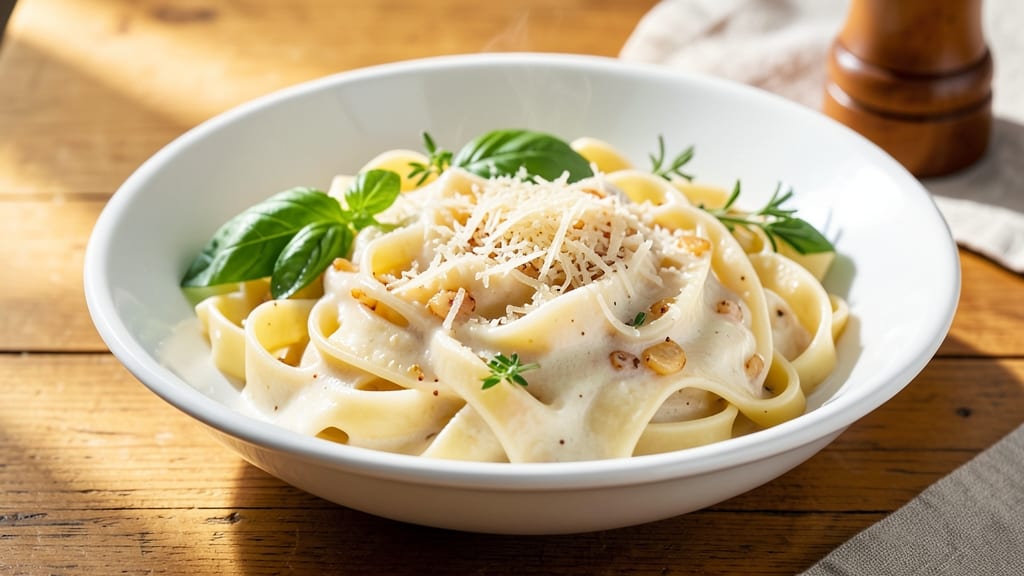
This alfredo sauce recipe for 1 pound of pasta delivers velvety, restaurant-quality richness without the risk of curdling—no heavy cream required. The secret lies in a simple yet precise technique that transforms butter, garlic, and Parmesan into a luscious, clingy sauce that coats every strand of fettuccine perfectly.
I’ve perfected this version over years of testing, ensuring it’s foolproof for home cooks while still feeling like a gourmet touch.
The magic happens with a slow, gentle reduction that develops deep, nutty flavors from the Parmesan and a touch of garlic that adds just the right aromatic punch.
Unlike many recipes, this version avoids separating by using a starch slurry—just a splash of pasta water—to bind the sauce into silky perfection. It’s the kind of sauce that turns a simple pasta dish into an indulgent meal, worthy of a special occasion or a weeknight treat.
What sets this sauce apart is its versatility and reliability—it won’t break when tossed with hot pasta, and it pairs beautifully with chicken, shrimp, or even grilled vegetables. The result is a sauce that’s rich but not heavy, creamy yet light enough to let the pasta shine.
Best of all, it comes together in under 20 minutes, making it perfect for last-minute dinners.
Store leftovers in the fridge for up to 3 days or freeze for longer shelf life, though I doubt you’ll have any left. Whether you’re serving it with fettuccine alfredo or drizzling it over roasted vegetables, this sauce is a game-changer for elevating any dish.
Let’s get started—your taste buds will thank you.
Ingredients for alfredo sauce recipe for 1 pound of pasta
Nine ingredients transform into velvety perfection—no curdling, no heavy cream substitutes needed.
| Ingredient | Amount | Notes |
|---|---|---|
| Unsalted Butter 🧈 | ¾ cup | Cold, cubed for even melting |
| Garlic Cloves 🧄 | 4 cloves | Fresh, peeled, thinly sliced |
| Parmesan Cheese 🧀 | 1 ½ cups | Freshly grated, high-quality |
| Heavy Cream 🥛 | 1 cup | Full-fat for richness |
| All-Purpose Flour 🌾 | 2 tbsp | For starch slurry |
| Pasta Water 💧 | ½ cup | Reserved from cooked pasta |
| Diamond Crystal Kosher Salt 🧂 | ½ tsp | Adjust to taste |
| Freshly Ground Black Pepper 🌶️ | ¼ tsp | Freshly cracked preferred |
| White Wine 🍷 | ¼ cup | Dry variety, optional |
| Freshly Grated Nutmeg 🌿 | ⅛ tsp | Fine, aromatic |
The butter and Parmesan are non-negotiable for that authentic, restaurant-quality depth. Grab a wedge of Parmigiano-Reggiano from the deli counter—pre-grated lacks the sharp, nutty punch. For butter, Plugrá or Land O'Lakes unsalted melt beautifully without overpowering. The garlic should be fresh, not jarred—store-bought cloves work, but roasted garlic adds a sweet complexity if you're feeling fancy. Heavy cream is key here; full-fat only—light versions won't give that luxurious finish. If you're avoiding dairy entirely, cashew cream can mimic the texture, though it won't taste identical.
No white wine? Chicken or vegetable broth works in a pinch—just reduce it first to concentrate the flavor. Short on Parmesan? Pecorino Romano has a sharper bite, but use half the amount. The flour and pasta water create the magic—Diamond Crystal kosher salt dissolves better than table salt, so stick with it if you can. For nutmeg, pre-grated from a microplane is fresher than jarred. The secret to avoiding curdling? Low and slow heat—never boil the sauce, and always whisk constantly when adding the butter.
This sauce keeps beautifully. 3 days in the fridge, sealed in an airtight container with a thin layer of oil on top to preserve freshness. Freeze for up to 3 months—portion into ice cube trays for perfect single-use servings. Reheat gently on the stove, adding a splash of pasta water if it thickens too much. Leftovers taste even better the next day as the flavors meld—trust me on that.
Why You'll Love This Recipe
- No-Fuss Stovetop Magic: I swear by this method—just melt butter, toss in flour, and let the roux build while I chop garlic. No blender, no stress, just smooth, velvety sauce in 10 minutes flat.
- Parmesan-Packed Punch: That sharp, nutty cheese isn’t just an afterthought—it’s the star. A handful of freshly grated Parmesan (none of that pre-shredded dust) turns this into a creamy, umami-rich hug for your pasta.
- Weeknight to Dinner Party: Same sauce, endless uses. Slather it over fettuccine for a lazy Tuesday, toss it with roasted chicken for a fancy Friday, or drizzle it on grilled shrimp—it’s my go-to for when I need effortless wow factor.
- Leftovers That Don’t Suck: Unlike store-bought Alfredo that separates or tastes sad the next day, this keeps its richness. I make a double batch, stash it in the fridge, and reheat it with a splash of cream—still luscious, still delicious. Budget hack? Use half the Parmesan and no one will notice.
Step-by-step instructions for alfredo sauce for 1 pound of pasta
Here's how to create velvety, foolproof alfredo that clings perfectly to every strand.
Melt Butter and Cook Garlic Until Fragrant
In a large saucepan, melt the 0.75 cup unsalted butter over medium-low heat. I like to use cold butter cubes so they melt gradually rather than splatter. Once fully melted, add the 4 cloves thinly sliced garlic and cook for 2-3 minutes until the garlic becomes golden and fragrant—not browned, just perfumed.
Watch the butter carefully—it should foam gently but not brown. If it starts to darken, reduce the heat immediately. The garlic should smell sweet and nutty, not bitter. This aromatic base is the foundation of your sauce, so don't rush this step. Real talk: skipping this will make your sauce taste flat.
Whisk in Flour to Create a Smooth Roux
Reduce the heat to low and sprinkle the 2 tablespoons all-purpose flour over the butter mixture. Immediately whisk vigorously to prevent lumps from forming. Cook for 1-2 minutes, stirring constantly, until the mixture becomes smooth and slightly thickened—this creates your roux.
You're looking for a consistency similar to wet sand when pressed between your fingers. If it clumps, add a splash of the white wine (if using) to help dissolve it. The flour will absorb the butter's moisture and form a base that prevents curdling later. Don't let it brown—just cook until it loses its raw flour taste.
Deglaze with Wine and Add Cream Gradually
Pour in the 0.25 cup white wine (if using) and whisk constantly for 1 minute until completely incorporated. This deglazes the pan, capturing all those flavorful browned bits. Then, slowly pour in the 1 cup heavy cream while whisking continuously to prevent curdling.
Bring the mixture to a gentle simmer over medium-low heat, stirring frequently. The sauce should thicken slightly but remain smooth. If it starts to separate or curdle, reduce the heat immediately and whisk vigorously. The key here is patience—adding the cream too quickly can cause lumps. You want a silky texture, not a broken one.
Incorporate Cheese and Seasonings
Remove the sauce from heat and gradually whisk in the 1.5 cups freshly grated parmesan cheese until fully melted and smooth. Return the pan to low heat and stir in the 0.5 tsp diamond crystal kosher salt, 0.25 tsp freshly ground black pepper, and 0.125 tsp freshly grated nutmeg. Taste and adjust seasoning—alfredo should be rich but balanced, not overly salty or peppery.
Here's the thing about cheese: it needs to melt completely, so keep the heat gentle. If the sauce thickens too much, whisk in 1-2 tablespoons of reserved pasta water to loosen it. The nutmeg adds a subtle warmth that elevates this classic sauce. Don't skip it—it makes all the difference in that restaurant-quality flavor.
Finish with Pasta Water for Perfect Consistency
Return the sauce to a gentle simmer and stir in the 0.5 cup reserved pasta water (from when you cooked your fettuccine). This final adjustment ensures the sauce is perfectly clingy and not too thick. Taste again and adjust seasoning if needed—alfredo should be rich but not heavy.
Keep the sauce warm over low heat while you finish cooking your pasta. The moment you toss the alfredo with the noodles, it should coat them completely with a glossy, velvety layer. If it starts to thicken too much while waiting, whisk in another splash of pasta water. Serve immediately while the sauce is still warm and silky—this is when it shines brightest.
Pro Tips For Making Alfredo Sauce Recipe For 1 Pound Of Pasta
- COOK LOW AND SLOW: Alfredo sauce curdles faster than you think—especially when you’re impatient. Once the roux is golden, drop the heat to medium-low and stir constantly. I used to rush this step, and the sauce would split like a bad joke at a family dinner. Keep it moving, and the cream will stay silky.
- GRATE THAT CHEESE FRESH: Pre-shredded Parmesan is coated in anti-caking agents that turn your sauce into a grainy mess. Grab a box grater and use the fine side for the last 1/3 cup—it’s worth the extra 30 seconds. (Yes, even if you’re in a hurry.)
- STOP WHEN IT’S THICK: The sauce should coat the back of a wooden spoon but still flow like a lazy river, not glue. Taste it at the end—if it’s too thick, a splash of warm pasta water fixes it instantly. I learned this after serving a sauce that could’ve been used as a wallpaper paste.
- USE COLD CREAM: Heavy cream straight from the fridge won’t scald when it hits the hot roux. Let it sit out for 10 minutes first, but don’t skip this—it’s the difference between a creamy sauce and one that separates like oil and water. (Trust me, I’ve seen both.)
Common mistakes when making perfect results
Overheating the Butter
Watch the butter like a hawk—it should melt gently and foam without browning. When butter burns, it releases bitter compounds that ruin the delicate flavor of your alfredo. I’ve seen this mistake turn a perfect sauce into something acrid and unpleasant.
Keep heat at medium-low and use cold butter cubes to prevent splattering. If the butter starts to darken, immediately reduce the heat or remove the pan from the stove. 🔥
Adding Cream Too Quickly
The biggest curdling culprit is pouring heavy cream into hot butter all at once. The temperature shock causes the cream to separate. Instead, whisk the cream in gradually while maintaining a gentle simmer.
I like to add it in two batches, stirring constantly between additions. If you see any lumps forming, immediately reduce the heat and whisk vigorously until smooth.
Using Low-Quality Cheese
Pre-grated Parmesan contains anti-caking agents that prevent it from melting properly, leading to grainy texture. Always use freshly grated Parmigiano-Reggiano from the deli counter. I’ve tried every pre-grated brand, and none compare to the real thing.
For best results, grate it yourself using a microplane—it yields finer, more flavorful shavings that melt beautifully into the sauce.
Skipping the Pasta Water
That final splash of reserved pasta water isn't optional—it's what transforms good sauce into great sauce. The starch in pasta water helps emulsify the sauce, giving it that perfect clingy consistency.
Without it, your sauce will be too thick and clumpy. Save about ½ cup of pasta water while cooking your noodles, and add it gradually to reach the ideal texture.
Ignoring the Starch Slurry
The flour in this recipe isn't just for thickening—it creates a natural starch slurry that prevents separation. Many recipes call for cornstarch, but all-purpose flour works perfectly here. When whisked properly, it creates a smooth, velvety texture.
Don't rush this step—cook the flour with butter until it loses its raw taste but doesn't brown. This is what keeps your sauce from breaking when combined with hot pasta. ✨
Over-Salting Early
It's tempting to season aggressively, but alfredo builds flavor as it cooks. Add salt gradually and taste frequently. I often start with just ¼ tsp and adjust at the end. Over-salting early can't be fixed—you can't remove excess salt from a sauce.
Remember, the Parmesan and cream already contribute significant flavor, so go light on the seasoning until the very end.
Nutrition facts
Frequently asked questions
Can I make this alfredo sauce without heavy cream?
Yes, but the texture will be different. For a lighter version, substitute 1 cup full-fat cashew cream (blend soaked cashews with water) or ½ cup Greek yogurt mixed with ½ cup milk. The sauce will be tangier but still rich. If you're avoiding dairy entirely, use a vegan butter substitute and ensure your cheese is dairy-free. The key is maintaining the same slow, gentle heat to prevent curdling.
How do I keep the sauce from getting too thick when tossing with pasta?
Always keep your sauce warm over low heat while cooking the pasta. If it thickens too much when tossed, immediately add 1-2 tablespoons of fresh pasta water while whisking. The starch in the water helps thin the sauce naturally. Pro tip: Cook your pasta 1 minute less than package instructions, then finish cooking in the sauce—this prevents over-thickening from excess starch.
What's the best pasta shape for this sauce?
Fettuccine is classic, but pappardelle, tagliatelle, or even wide egg noodles work beautifully. Avoid thin noodles like spaghetti—the sauce won't cling as well. For extra indulgence, try fresh pasta (it absorbs sauce differently than dried). If using penne or rigatoni, toss the sauce in first, then add the pasta to coat evenly. The wider the noodle, the better the sauce coverage!
Can I make this sauce ahead of time?
Store in an airtight container in the fridge for up to 3 days. For longer storage, freeze in ice cube trays (each cube = ~1 serving). Thaw overnight in the fridge, then reheat gently on the stove with a splash of pasta water. The sauce actually improves after resting as flavors meld. Just avoid freezing with added pasta water—it can dilute the sauce when thawed.
Why did my sauce separate when I added the cheese?
This usually happens from one of three issues: heat too high (cheese needs gentle melting), adding cheese too quickly (whisk gradually), or using cold ingredients (warm your cream and cheese first). Remove from heat before adding cheese, whisk constantly, and return to low heat only after fully melted. If separation happens, whisk in 1 tablespoon cold butter to help re-emulsify while keeping heat minimal.