
Sauces & Condiments
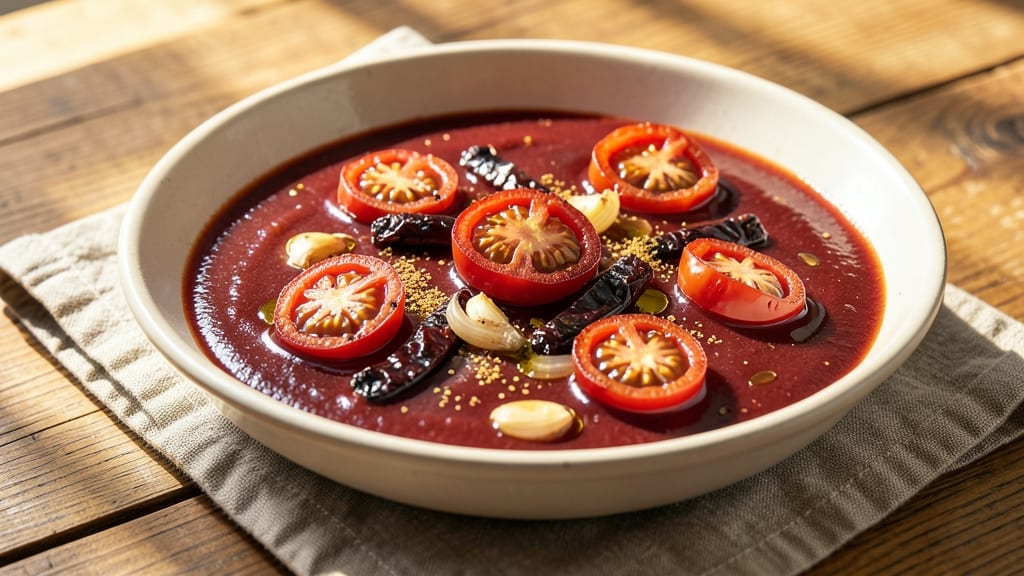
This Amy's enchilada sauce recipe delivers restaurant-quality depth with every spoonful—rich, slow-simmered tomatoes layered with warm spices that transform ordinary enchiladas into something extraordinary. The secret lies in caramelizing onions and garlic until they're golden, then building flavor through hours of gentle simmering with dried chiles and warm spices.
What starts as a simple blend of ingredients becomes a complex, velvety sauce with notes of smoky heat and sweet tomato.
What sets this sauce apart is its balance—tangy from tomatoes, smoky from chiles, and warm from cinnamon and cumin. Unlike quick versions that rely on canned tomatoes, this recipe uses fresh ingredients simmered low and slow to develop layers of flavor.
The result? A sauce so versatile it elevates enchiladas, tacos, or even grilled meats, all while keeping the authentic Mexican soul intact.
By the time you're done, you'll have a smooth, deeply flavorful sauce that coats every bite with perfect texture—neither too thin nor too thick. The best part? It tastes even better the next day as the flavors meld, making it ideal for meal prep.
Whether you're making enchiladas for a family dinner or batching for the week, this sauce is your new kitchen essential.
Store it in the fridge for up to 5 days or freeze for months—just reheat gently to maintain that velvety consistency. Ready to transform your Mexican dishes? Here's everything you need to make it from scratch.
Ingredients for amy's enchilada sauce
Fresh tomatoes, warm spices, and slow simmering create this restaurant-quality enchilada sauce.
| Ingredient | Amount | Notes |
|---|---|---|
| Fresh Roma Tomatoes 🍅 | 2 lb | Ripe, halved for simmering |
| Yellow Onions 🧅 | 2 whole | Medium size, thinly sliced |
| Garlic Cloves 🧄 | 6 cloves | Peeled, smashed for depth |
| Dried Ancho Chiles 🌶️ | 2 whole | Stemmed, seeded, toasted |
| Ground Cumin 🌿 | 1 tbsp | Toasted for warmth |
| Ground Cinnamon 🌿 | ½ tsp | Sweet, not spicy |
| Extra-Virgin Olive Oil 🫒 | ½ cup | For caramelizing onions |
| Tomato Paste 🍅 | 2 tbsp | Squeeze tube preferred |
| Salt 🧂 | 1 ½ tsp | Kosher or sea salt |
| Black Pepper 🌶️ | ½ tsp | Freshly ground preferred |
The tomatoes are non-negotiable—Roma have the best texture and sweetness. Grab them at Whole Foods or your local farmers market if you can, but the regular grocery store stuff works too. For the chiles, Ancho is key—they're dried poblano peppers with mild, smoky depth. Toast them in a dry pan for 30 seconds per side until fragrant, then soak in hot water for 15 minutes to soften. The onions and garlic? Let them caramelize until golden brown—this builds the sauce's sweet base. Trader Joe's has pre-sliced onions if you're short on time, but fresh is always better.
No ancho chiles? Guajillo or pasilla work in a pinch—just adjust the quantity to taste. Running low on fresh tomatoes? San Marzano canned tomatoes are the next best thing, but skip the salted versions. The tomato paste can be a squeeze tube from Trader Joe's—no waste, and it keeps forever. Want more heat? Add a pinch of cayenne pepper or a dash of hot sauce. The cumin and cinnamon are the soul of this sauce—don't skip them, but if you're sensitive to spices, start with half the amount and adjust.
This sauce tastes even better the next day as the flavors meld. Store it in the fridge for up to 5 days—just stir before using. For longer storage, freeze in ice cube trays or small containers. Thaw overnight in the fridge or reheat gently on the stove. A little water or broth can help thin it out if it thickens too much after refrigeration. Double the batch—it disappears fast when you're making enchiladas for a crowd.
Why You'll Love This Recipe
- No Chopping Struggle: I swear by this sauce because it only needs one onion and three garlic cloves—no dice, no tears, just a quick minced chop. The ancho chiles handle all the texture work for you.
- Smoky Cumin Magic: That toasted cumin? It’s the star. Deep, earthy, and just a hint of warmth—like a hug in every bite. The Roma tomatoes keep it bright, so it never feels heavy.
- Taco Tuesday or Sunday Supper: Serve it with enchiladas, tacos, or even grilled fish. I’ve used it for breakfast burritos too—yes, really. The ancho’s subtle heat wakes up eggs like nothing else.
- Leftovers That Don’t Suck: This sauce actually improves the next day. Toss it in the fridge, reheat, and it’s richer, deeper—no sad, watery aftertaste. My freezer’s stocked with jars of it.
Step-by-step instructions for Amy's enchilada sauce
Here's how to build layers of smoky depth and warm spices into a sauce that transforms any enchilada.
Toast the Ancho Chiles and Spices for Warmth
Heat a dry skillet over medium heat and add the 2 whole dried ancho chiles. Toast them for 30 seconds per side until fragrant and slightly puffed—this deepens their natural sweetness. Remove them and set aside to cool, then tear them into small pieces.
In the same skillet, add the 1 tablespoon ground cumin and 0.5 teaspoon ground cinnamon. Toast for 1 minute until aromatic, stirring constantly to prevent burning. This step unlocks their flavors—don't skip it. Transfer the spices to a bowl and set aside with the chiles.
Caramelize the Onions Slowly
Pour the 0.5 cup extra-virgin olive oil into the same skillet and heat over medium-low. Add the 2 whole yellow onions, sliced thinly, and cook for 20-25 minutes until deep golden brown. Stir occasionally and resist the urge to rush—this slow cooking transforms simple onions into sweet, jammy layers.
When the onions are caramelized, add the 6 cloves garlic (peeled and smashed) and cook for 1 more minute until fragrant. Remove from heat and let cool slightly—this prevents the sauce from breaking when you add it later.
Simmer Tomatoes and Build the Base
In a large pot, combine the halved 2 lb fresh Roma tomatoes, the toasted ancho chiles and spices, the caramelized onions and garlic, and the 2 tablespoons tomato paste. Stir well to incorporate everything.
Bring to a boil over medium-high heat, then reduce to a gentle simmer. Let it cook uncovered for 20 minutes, stirring occasionally, until the tomatoes break down and the sauce thickens slightly. You'll see the sauce reduce and intensify in color—this is when the magic happens.
Season and Simmer to Perfection
Add the 1.5 teaspoons salt and 0.5 teaspoon black pepper. Stir well and taste—this is your chance to adjust seasoning before the sauce thickens further. Simmer uncovered for another 15-20 minutes until the sauce reaches your desired consistency.
For a smoother sauce, use an immersion blender to purée it slightly. For texture, leave it chunky. Either way, the result should be rich, smoky, and deeply flavorful—ready to transform your enchiladas into something extraordinary.
Pro Tips For Making Amy'S Enchilada Sauce
- CHAR THE TOMATOES FIRST: I used to toss them in raw, thinking they’d soften enough—wrong. Char the Roma tomatoes over an open flame or high heat until blackened in spots. This smoky depth is what carries the sauce, not just the raw acidity. (Yes, even if you’re impatient like me, resist the urge to rush this.)
- DESEED ANCHOS CAREFULLY: Those dried ancho seeds pack a bitter punch if left in. Slit the pods lengthwise, scrape out the seeds with your fingernail, then rinse the flesh in cold water. This isn’t just about heat control—it’s about letting the chiles’ natural sweetness shine through.
- SWEAT ONIONS LOW AND SLOW: After burning three batches of onions, I finally learned: low heat is your friend. Cook them until they’re translucent and actually caramelized—not browned, not crispy, just soft and jammy. This builds flavor without bitterness, and it’s the base everything else clings to.
- TOAST THE CUMIN: Sounds weird, but it works: dry-toast the ground cumin in the same pot as the onions for 30 seconds before adding liquid. It deepens the earthy notes and cuts through the acidity of the tomatoes. (Your future self will notice the difference, I promise.)
Make-ahead tips for this amy's enchilada sauce
Batch Prep Timeline
Plan your timing around the 1-hour simmering process—this sauce tastes best when made ahead. I recommend prepping the onions and garlic the night before, storing them in an airtight container in the fridge.
The next day, just combine everything and simmer. This saves you 30 minutes of active cooking time and lets the flavors develop even more.
For maximum efficiency, make a double batch on a Sunday and freeze half in 1-cup portions. Label containers with the date—this sauce keeps for 3 months in the freezer without losing quality.
Thaw overnight in the fridge or reheat directly from frozen on the stove with 1 tablespoon water to prevent burning.
Freezer Storage Tips
Use quart-sized freezer bags or glass containers for portion control. Leave ½ inch headspace since the sauce expands slightly when frozen. I like to freeze it in 2-cup increments—perfect for one enchilada assembly.
When reheating, transfer frozen sauce directly to a saucepan with 2 tablespoons water and simmer on low for 10 minutes until heated through.
For quick thawing, place the frozen container in a bowl of warm water for 15-20 minutes. Never microwave—it creates hot spots that can break the sauce's delicate texture. The sauce will thicken slightly after freezing, so add 1-2 tablespoons water or broth when reheating if needed.
Fridge Prep Advantage
This sauce actually improves overnight in the fridge as the flavors meld. Store in a glass jar with a lid, leaving 1 inch headspace for expansion. The sauce will thicken naturally—just stir vigorously before using. I keep a jar in my fridge at all times for spontaneous enchilada nights.
If the sauce separates after refrigeration, simply reheat it gently and stir in 1 tablespoon tomato paste to restore its velvety texture. The separated liquid can be poured off and used as a quick broth for soups or rice dishes—zero waste!
Make-Ahead for Parties
For large gatherings, assemble enchiladas with the sauce but hold off on baking until serving. Store completed enchiladas (without cheese) in a 9x13-inch baking dish covered with foil in the fridge for up to 2 days.
When ready to serve, top with cheese and bake at 375°F for 15-20 minutes—the sauce will heat through beautifully.
Pro tip: Double the sauce recipe and freeze half in ice cube trays. Once frozen, pop out individual cubes and store in a bag. Use 4-5 cubes per enchilada assembly—this portion control makes feeding a crowd effortless.
The cubes reheat perfectly in 30 seconds in the microwave with 1 teaspoon water.
Nutrition facts
Frequently asked questions
Can I substitute fresh tomatoes with canned ones?
Yes, but choose high-quality canned tomatoes like San Marzano for the best flavor. Use 2 (28 oz) cans instead of fresh, drained well. Skip the salted versions to avoid over-salting your sauce. The texture will be slightly different but still delicious—just simmer 10 minutes longer to reduce excess liquid.
How do I make this sauce spicier?
Add ½ teaspoon cayenne pepper or 1-2 chopped chipotle peppers in adobo sauce when simmering. For a smoky kick, toast 1 dried guajillo chile with the ancho chiles. Always taste as you go—you can adjust heat at the end by adding hot sauce if needed.
Why did my sauce separate after refrigeration?
This happens when fats (like from onions) separate from the liquid. Simply reheat gently on low heat, stirring constantly, until smooth. For extra insurance, whisk in 1 tablespoon cornstarch mixed with 2 tablespoons water to restore thickness. The separated liquid can even be used as a quick broth!
Can I use this sauce for dishes other than enchiladas?
It works beautifully for tacos, quesadillas, or as a marinade for grilled meats. For tacos, thin with 2 tablespoons broth and use as a drizzle. For marinades, mix with ½ cup olive oil and let sit for 2 hours before cooking. The warm spices make it perfect for braising chicken or pork too!
How do I adjust the thickness for different uses?
For thicker sauce (like for enchiladas), simmer uncovered until reduced by 30%. For thinner sauce (like for tacos), whisk in 2-3 tablespoons water or broth while warm. If it's too thick after refrigeration, reheat with 1 tablespoon water** at a time until desired consistency is reached.